
How to sow and grow radish
Radishes are a great addition to your Makkelijke Moestuin. They grow fast and easy 🙂
This variety produces huge radishes in 4 - 6 weeks: as big as ping-pong balls. They have a soft flavor and don't get soft or mealy.
This variety produces huge radishes in 4 - 6 weeks: as big as ping-pong balls. They have a soft flavor and don't get soft or mealy.
What are radishes?
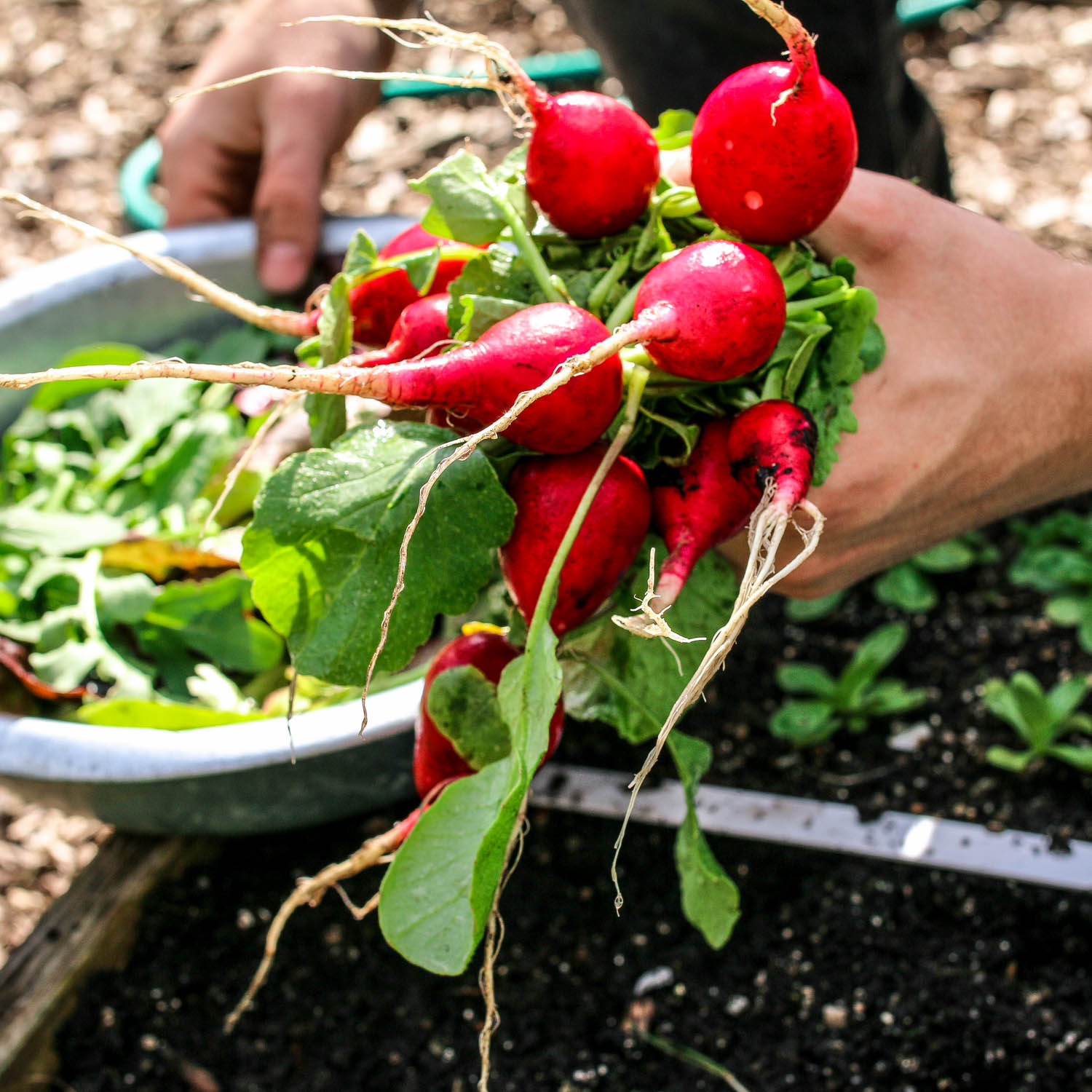
Radish is part of the cruciferous plant family, like arugola, bak choi, and dino kale.
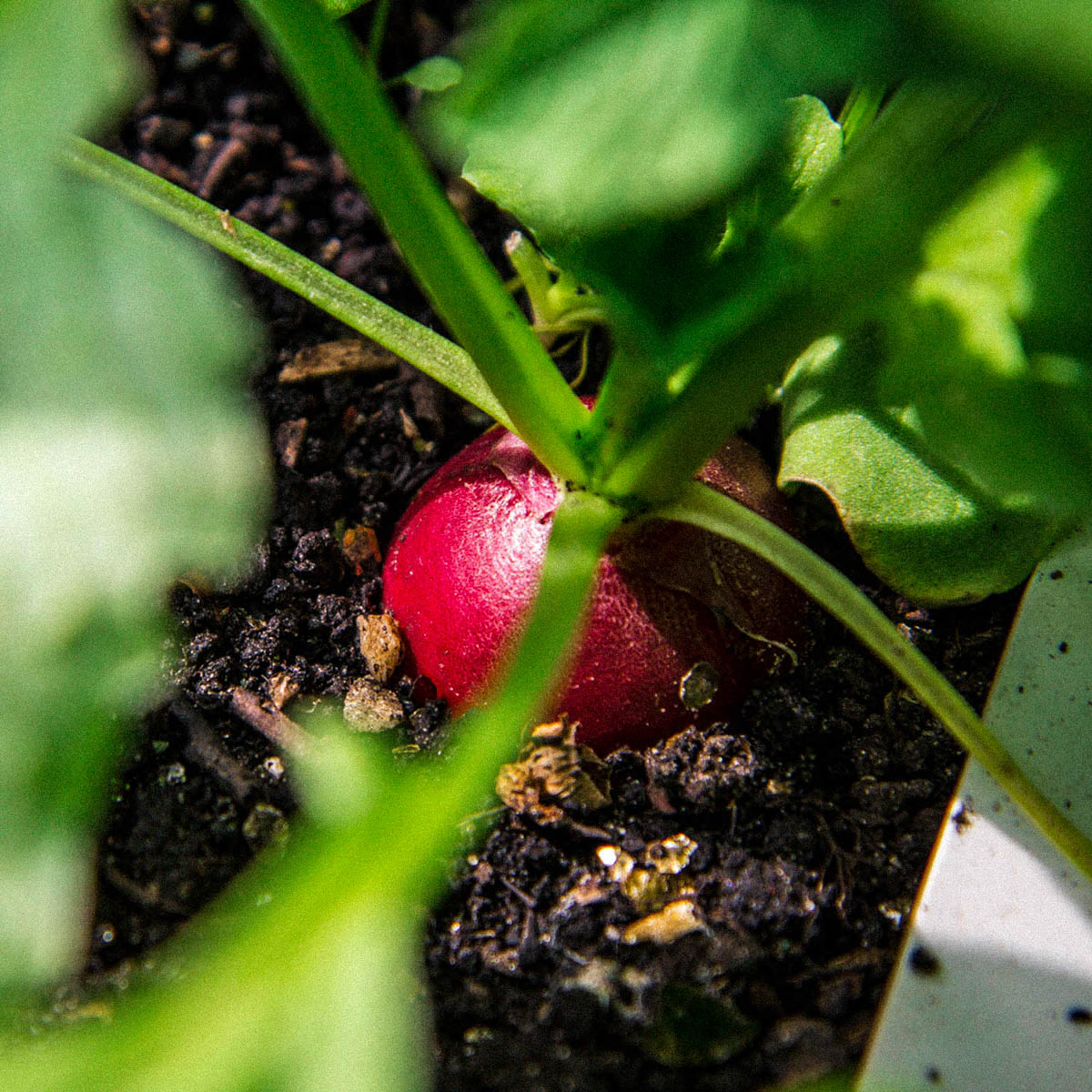
The radish tubers grow at the top of the root, just below the leaves. The skin is almost always red on the outside and white on the inside, ours too. Other varieties have white, purple, or red/white skin.
Most people eat the tubers by themselves raw.
Radishes have a tangy taste due to the mustard oil in them. The radishes produce mustard oil when there's a lot of sunlight. So, radishes are spicier in the summer than in early spring or late fall.
The radish tubers grow at the top of the root, just below the leaves. The skin is almost always red on the outside and white on the inside, ours too. Other varieties have white, purple, or red/white skin.
Most people eat the tubers by themselves raw.
Radishes have a tangy taste due to the mustard oil in them. The radishes produce mustard oil when there's a lot of sunlight. So, radishes are spicier in the summer than in early spring or late fall.
Vitamins and minerals in radish plants
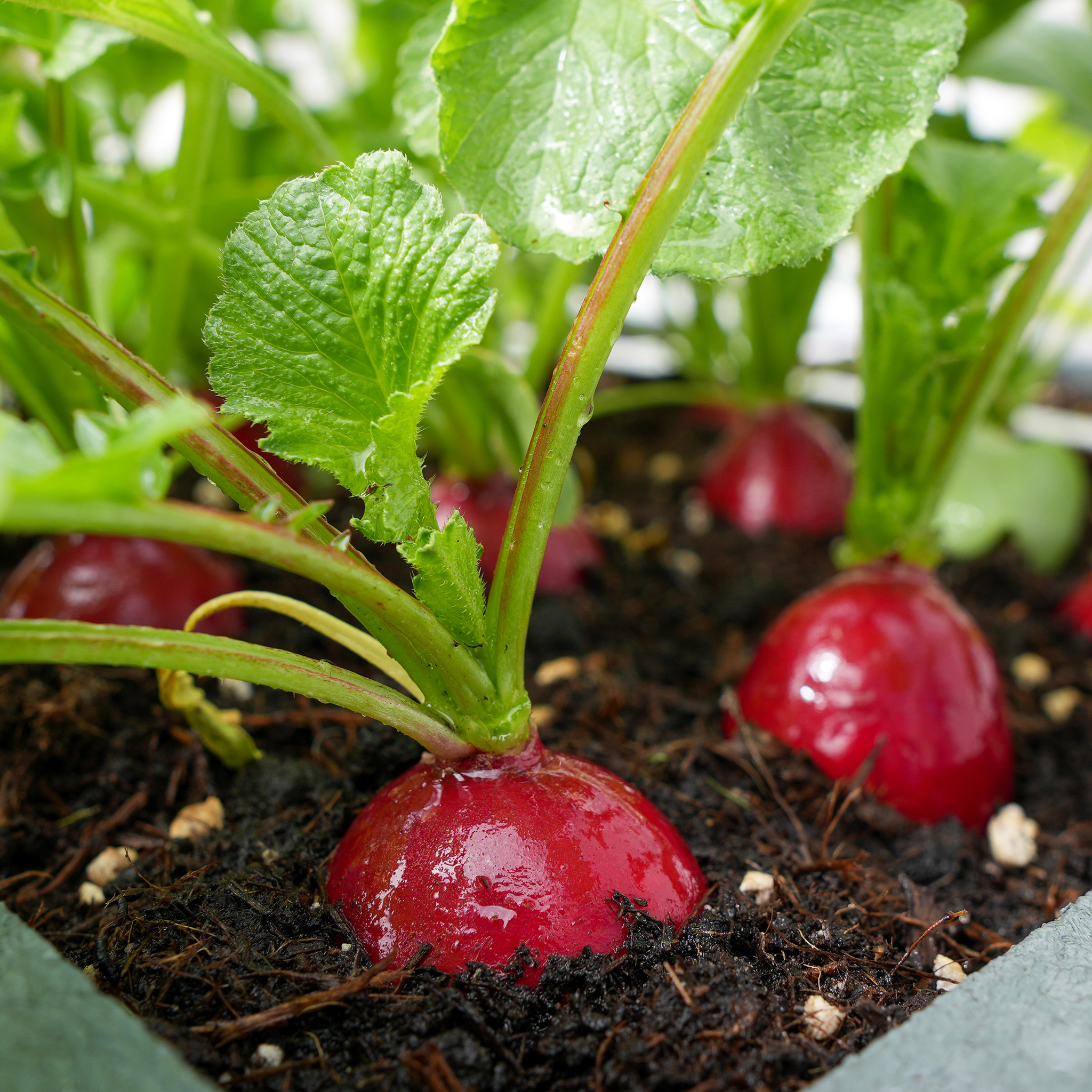
Radishes are super healthy: rich in calcium and vitamin C. They also have quite a bit of iron. Radishes contain lots of fiber too, which is good for your intestinal tract and digestion. The leaves are also edible: full of iron and folic acid.
Radishes are good for the kidneys, are diuretic, and help to eliminate toxins. Research shows that some substances in radishes can even kill cancer cells. Radishes are often recommended to people to help with jaundice, acne, and psoriasis.
Radishes are good for the kidneys, are diuretic, and help to eliminate toxins. Research shows that some substances in radishes can even kill cancer cells. Radishes are often recommended to people to help with jaundice, acne, and psoriasis.
More about our Giant Radish
Radishes are super fun to plant in your garden: they grow really fast.
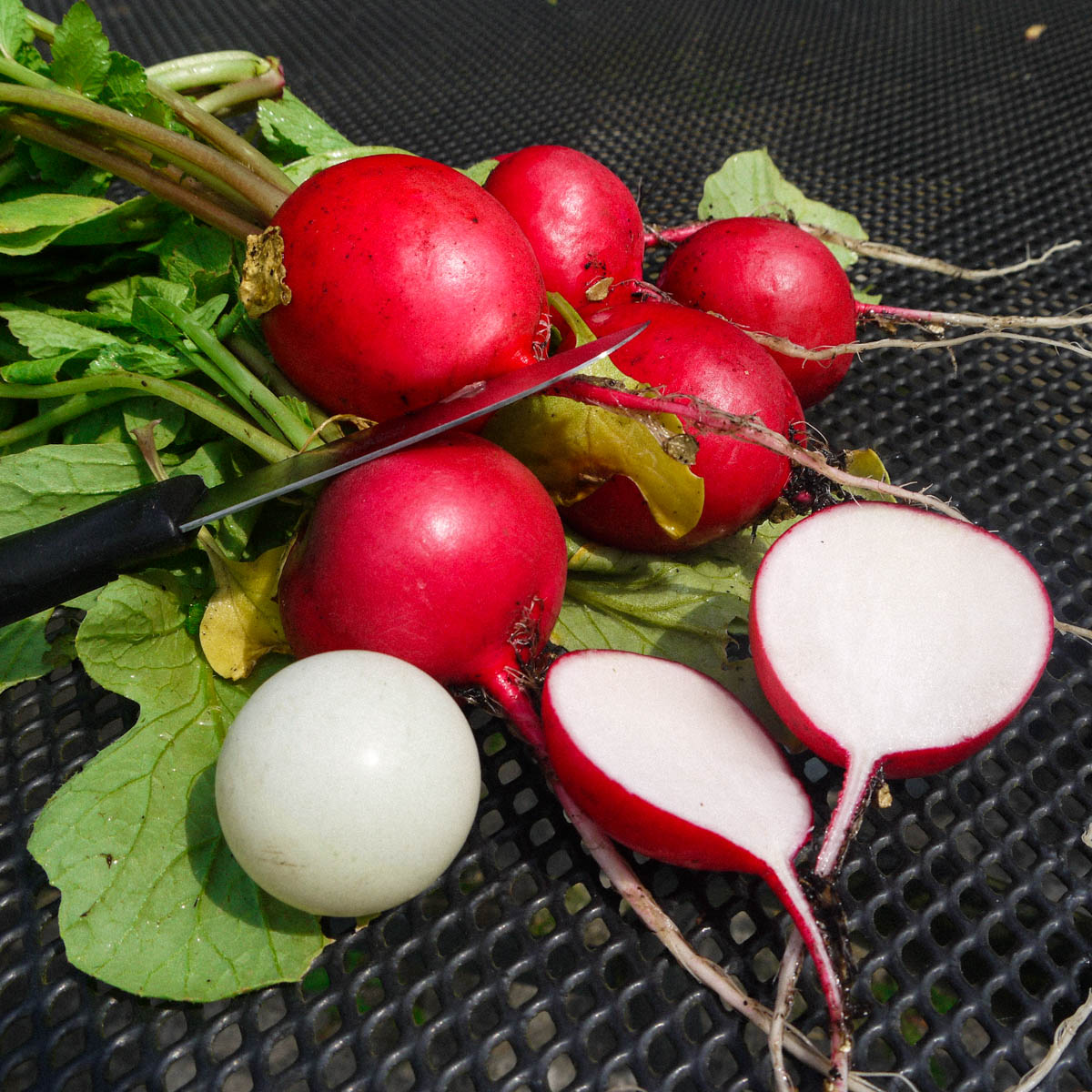
This variety produces super large radishes in 4-6 weeks: as big as a ping pong ball. They don't get woody or spongy and have a deliciously mild flavor.
This variety produces super large radishes in 4-6 weeks: as big as a ping pong ball. They don't get woody or spongy and have a deliciously mild flavor.
- Type: Giant Radish Riesenbutter
- Family: cruciferous
- Number per square: 16
- Height: 15 to 20 cm
- Sowing time: March to June and September to mid-October
- Sowing depth: 0.5 to 1 cm
- Germination time: between 10 and 25°C in 3 to 11 days
- Time to harvest: from 4 weeks
- Sunlight: can be in both sun and partial shade
- Packet contents: ± 240 seeds - for 5/7 patches
How to sow and grow radishes?
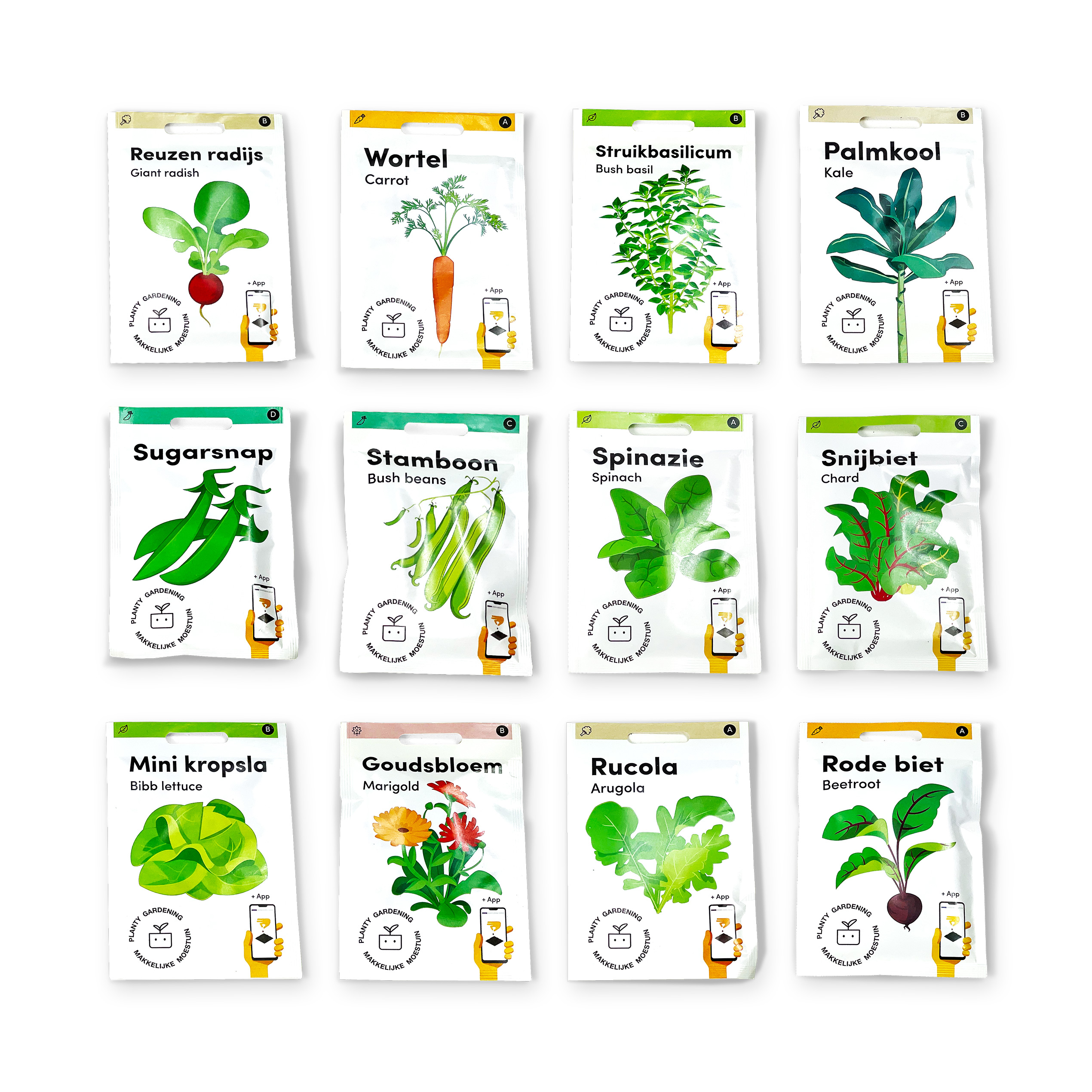
This radish variety is included in the free Makkelijke Moestuin app. Use it, and you'll get step-by-step guidance from seed to harvest.
Each vegetable goes through a number of stages - we call them levels. The app tells you exactly what to do at each level and checks in when your plants are ready for the next.
So you don't need to know how to grow radishes: the app takes you through every step.
But if you'd like to read more about those steps, here's what the process looks like:
Each vegetable goes through a number of stages - we call them levels. The app tells you exactly what to do at each level and checks in when your plants are ready for the next.
So you don't need to know how to grow radishes: the app takes you through every step.
But if you'd like to read more about those steps, here's what the process looks like:
What do you need to grow your own radishes?
Besides the seeds, you'll need:
- one 30 x 30 cm square
- MM-mix or HarvestKit Coco Mix
- a spot with at least 6 to 8 hours of sunlight a day
Level 1: Sowing radishes
Level 1: Sow radishes
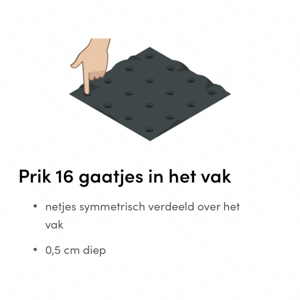
Loosen the MM-mix in a square at the front of the raised bed and sow as follows:
- make 16 holes in the square, no deeper than 1 cm
- place 2 to 3 seeds in each hole
- carefully close the holes
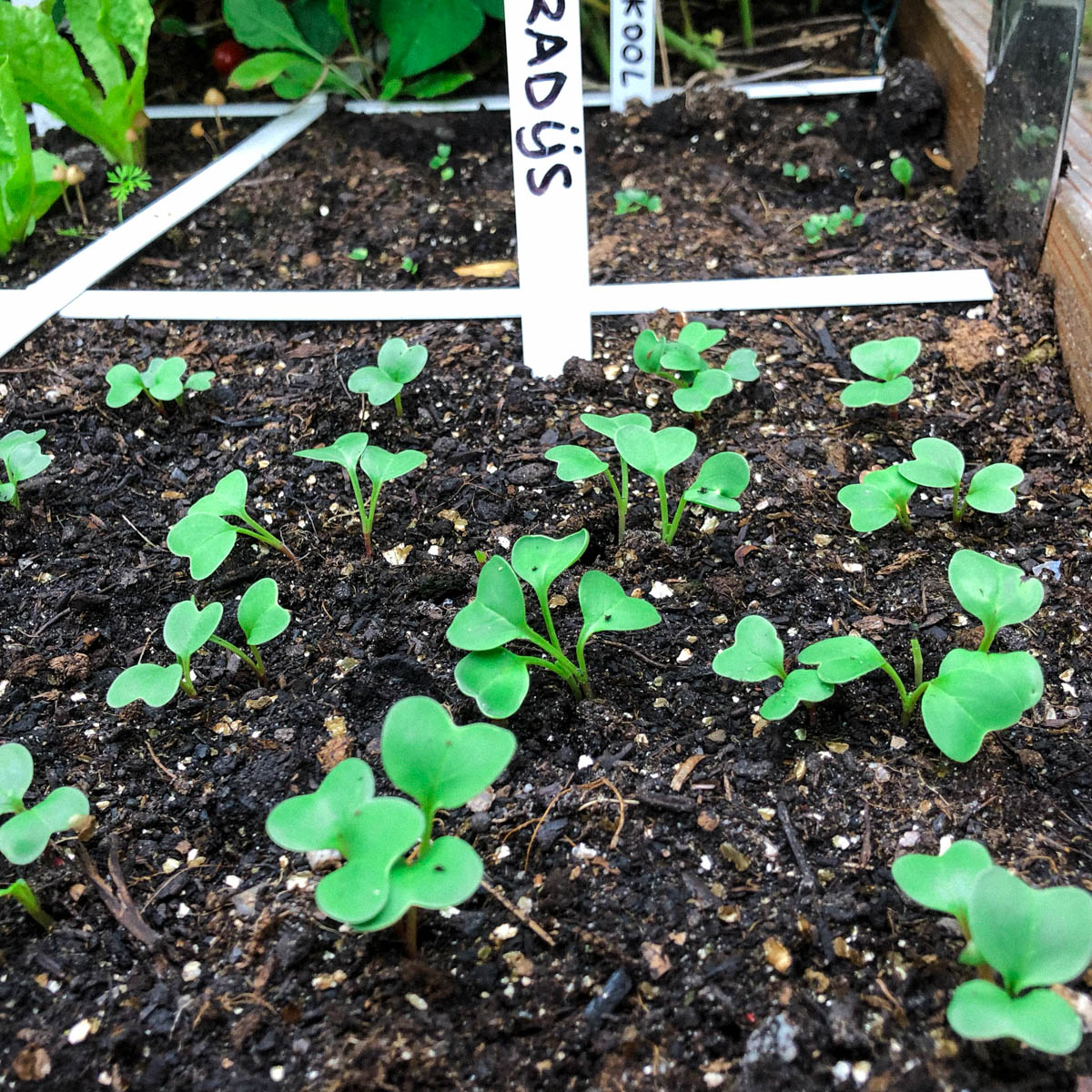
Depending on the weather and time of year, you'll see the first green shoots after about 3 to 11 days.
Level 2: Radish seedlings
Level 2: Radish seedlings
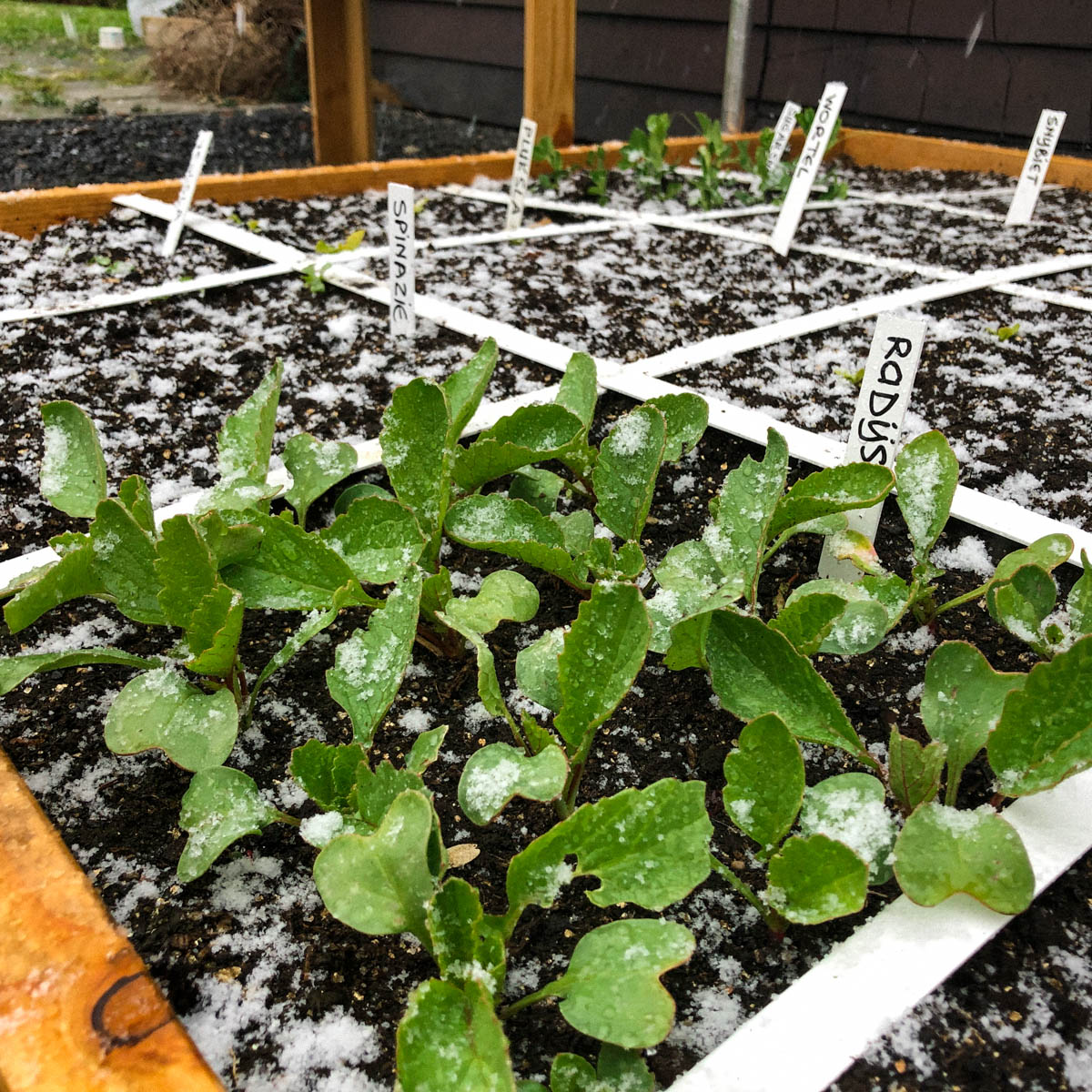
As soon as the first seedlings appear, you'll know things are going well. They probably won't all emerge at once, but most should be up after another week.
Then it's time for the next level.
Level 3: Thinning radishes
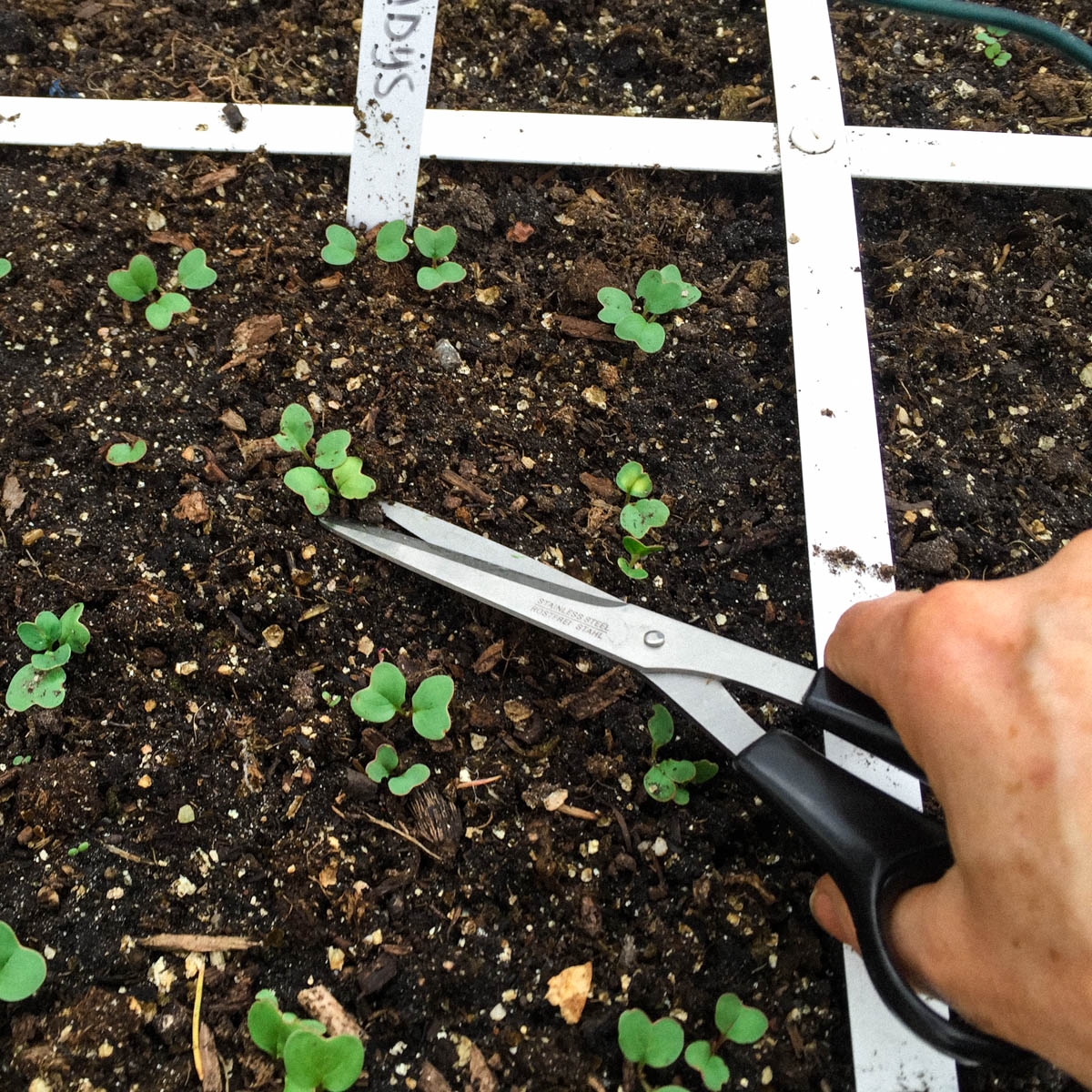
Level 3: Thin out your radishes
Now leave the strongest seedlings in place and ruthlessly snip off the rest. That's difficult to do, but it's necessary to keep your plants growing healthily.
It's especially important for radishes, because they need room to develop plump roots. If the plants remain too close together, only the leaves will grow and you won't get radishes.
Level 4: Care for your radish plants
Level 4: Care for your radish plants
After a week or 2, your seedlings will become small plants.
You hardly need to do anything: if the weather's dry, give them some water and remove the odd dead or yellow leaf. Easy 🙂
The little plants are cold-resistant.
You hardly need to do anything: if the weather's dry, give them some water and remove the odd dead or yellow leaf. Easy 🙂
The little plants are cold-resistant.
Level 5: Harvesting radishes
Level 5: Harvest radishes
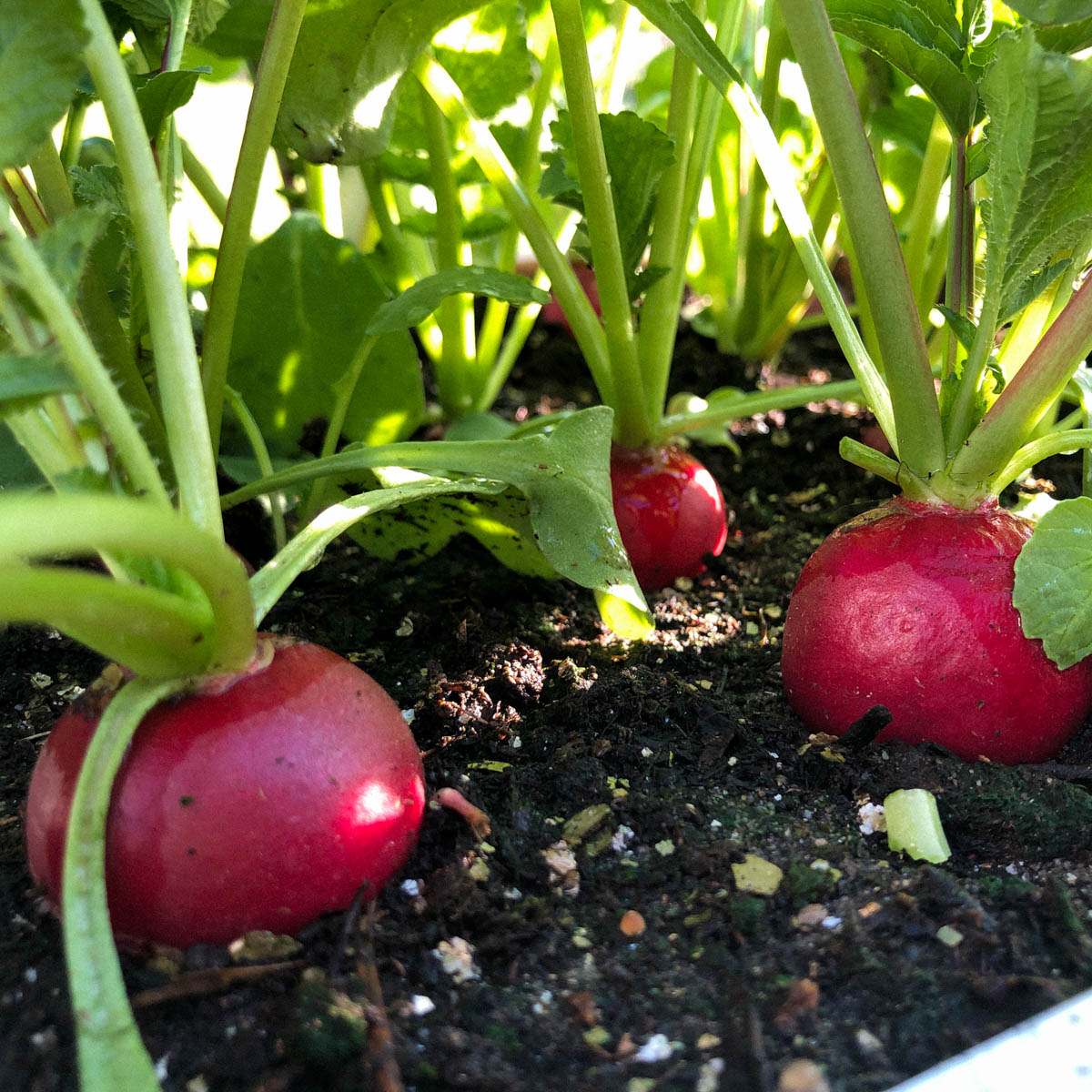
At this stage, no earlier than 4 to 5 weeks after sowing, the first radishes are ready to harvest.
To check, brush away a little MM-mix at the base of the leaves. The radish should be at least about 2 cm across, and preferably a little larger. Whether they're large enough depends on the weather. Sometimes they need a bit longer, in which case you can simply leave them in place.
Sometimes a few are already quite plump while the others are still small. Pull out the largest radishes and leave the rest to keep growing.
What do you use radishes for?
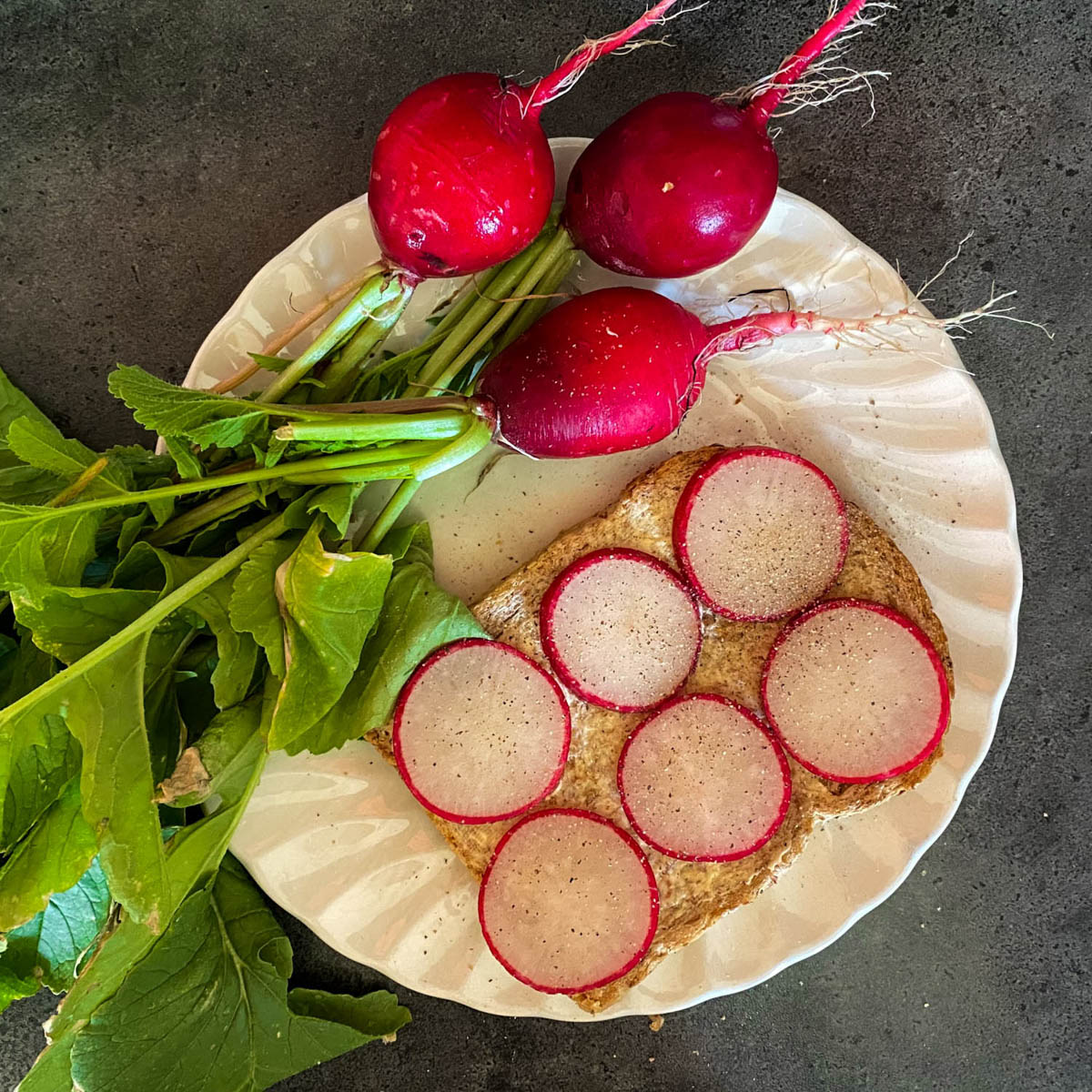
You can enjoy radishes by themselves. Eat them raw by the fistful or add them to your salads. In the Netherlands, we love slicing them and putting them on bread with butter. Try it 🙂
You can also stew, bake, or roast radishes. Cooking makes them juicier and evens out the flavor.
Raw radish leaves are nice too. Toss young leaves raw in your salad. Older leaves are best in stews, stir-fry dishes, or pasta.
The last levels
The final level
Harvest the final radishes this week. Once you've done that, tidy the MM-mix in the square or your MM-Mini, ready for the next vegetable.
So: what's stopping you from growing radishes yourself?
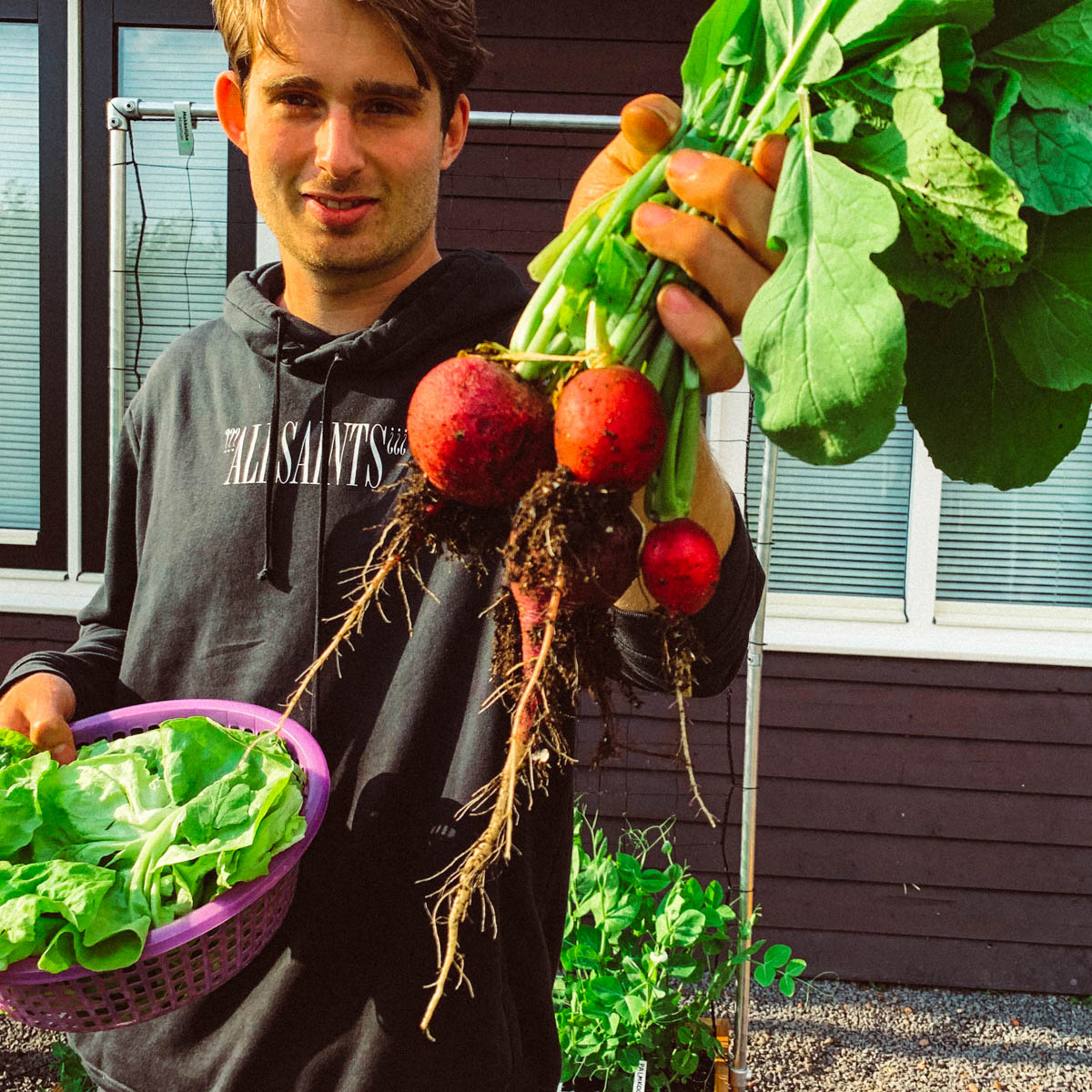
They're super easy to grow: big, beautiful, and tasty.
Plus: with our app and materials, it's pretty much impossible to fail 😀
Order your radish seeds here or get started with a complete starter kit:
Plus: with our app and materials, it's pretty much impossible to fail 😀
Order your radish seeds here or get started with a complete starter kit:
Enjoy!