
How to sow and grow stem lettuce
Stem lettuce is an oriental lettuce variety, also known as celtuce or Chinese lettuce.
You grow it mostly for its edible stalk, which has a delicious nutty flavor. Its green center looks a lot like a cucumber.The young leaves are nice in salads, the older ones are best in a stir fry.
You grow it mostly for its edible stalk, which has a delicious nutty flavor. Its green center looks a lot like a cucumber.The young leaves are nice in salads, the older ones are best in a stir fry.
What is stem lettuce?
Stem lettuce is a popular plant in Asia.
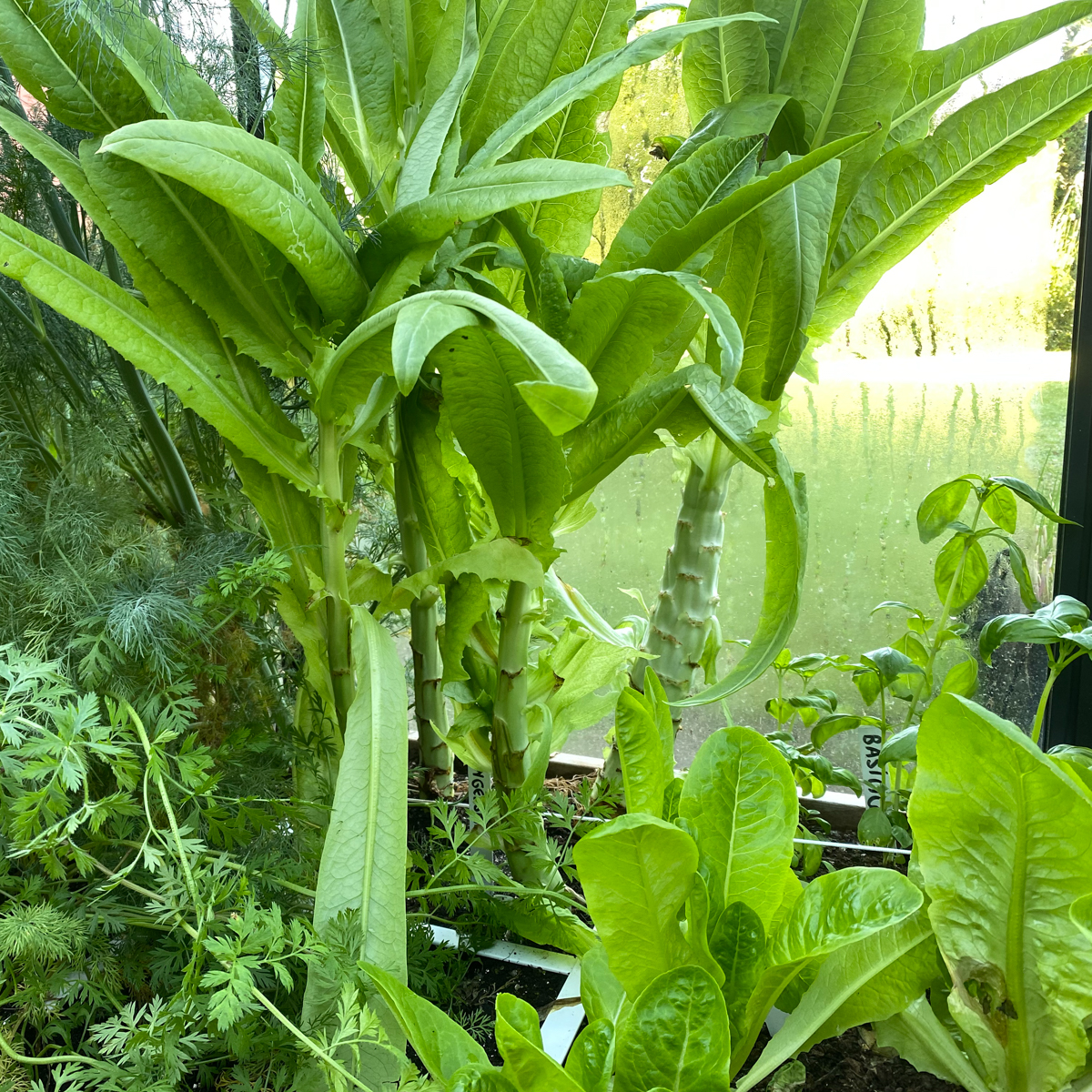
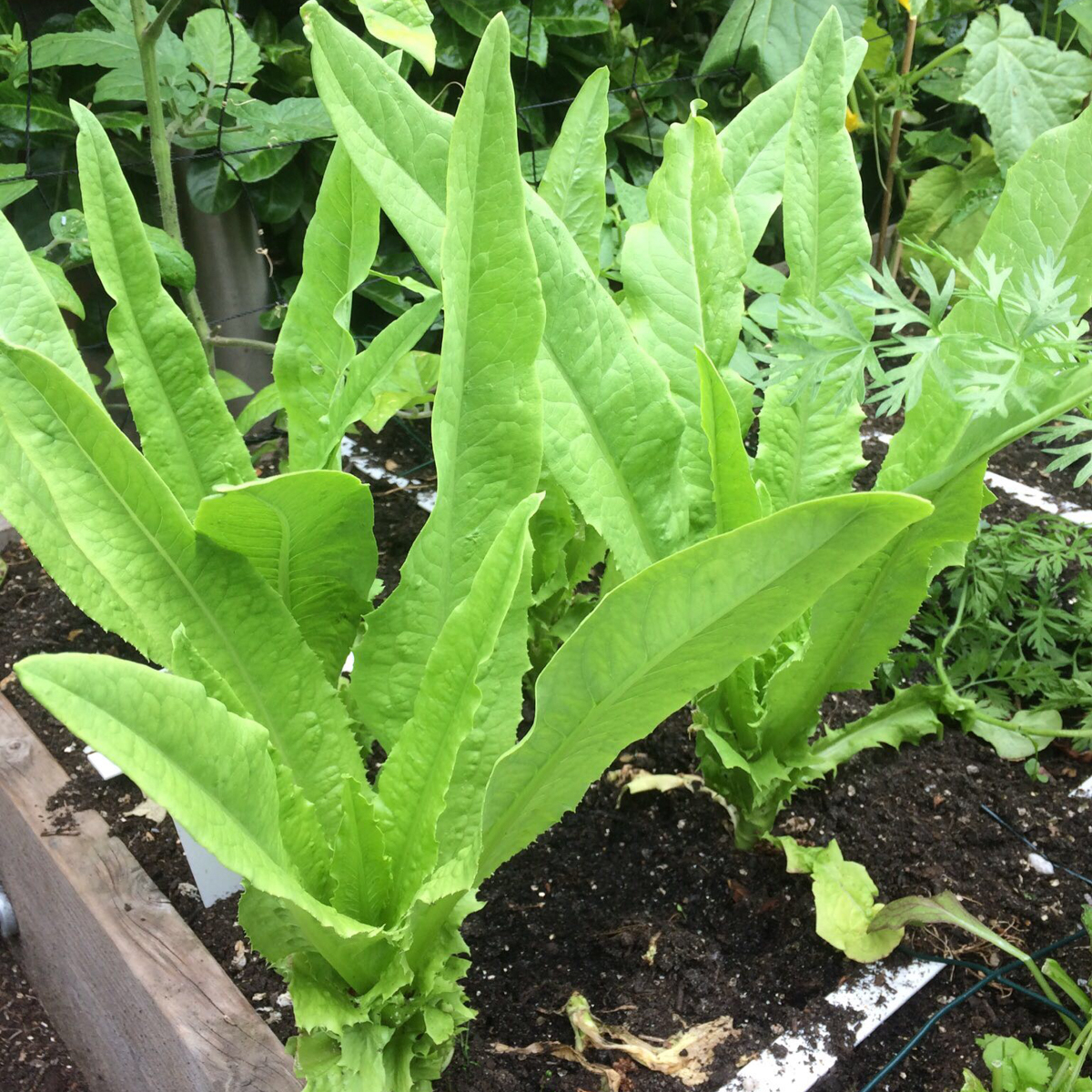
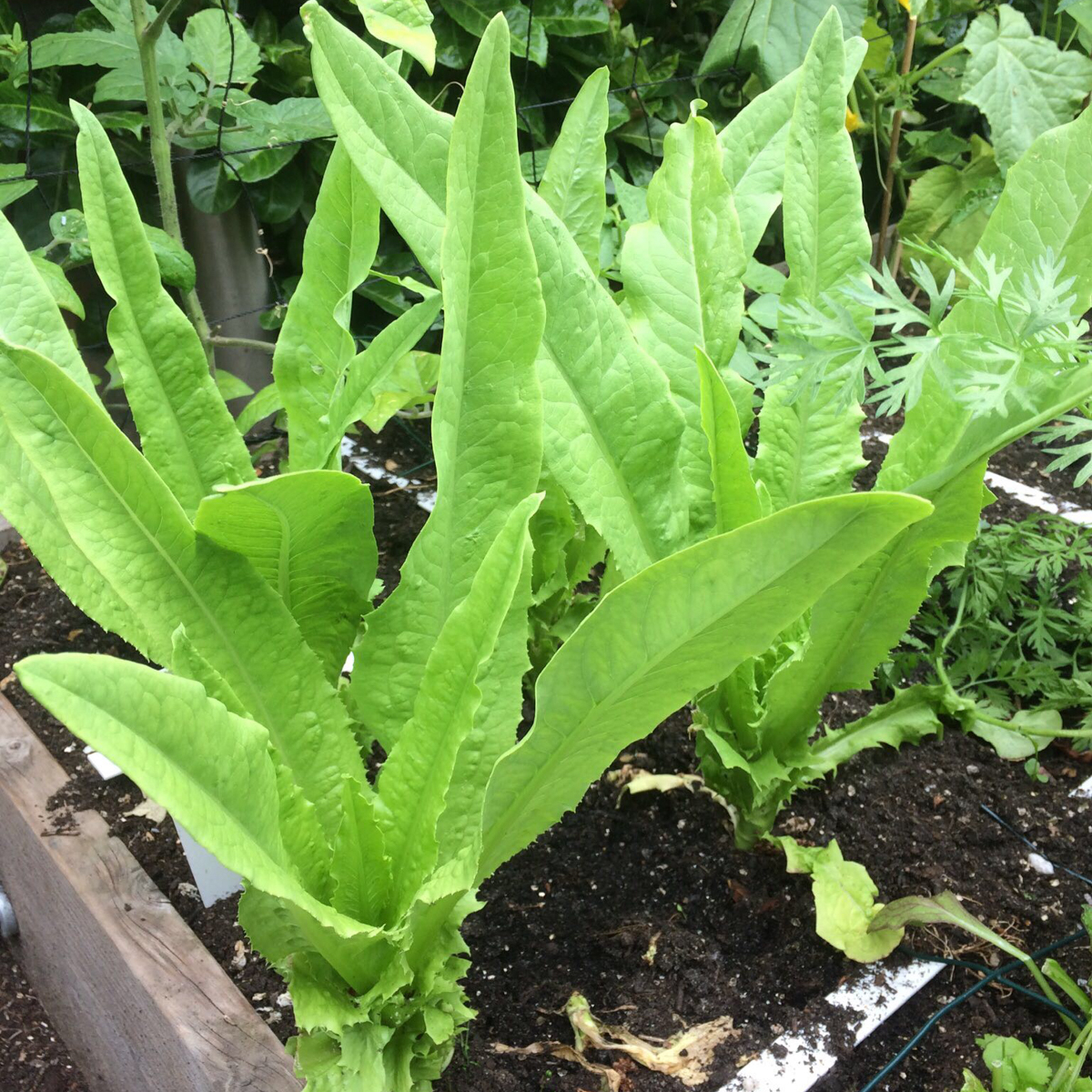
It looks like cos lettuce at first. But after harvesting the lower leaves the plant continues to grow a sturdy stem. As it grows, it looks more and more like a mini palm tree.
The leaves are thicker than head lettuce and more bitter. But that makes them great in a stew or stir fry.
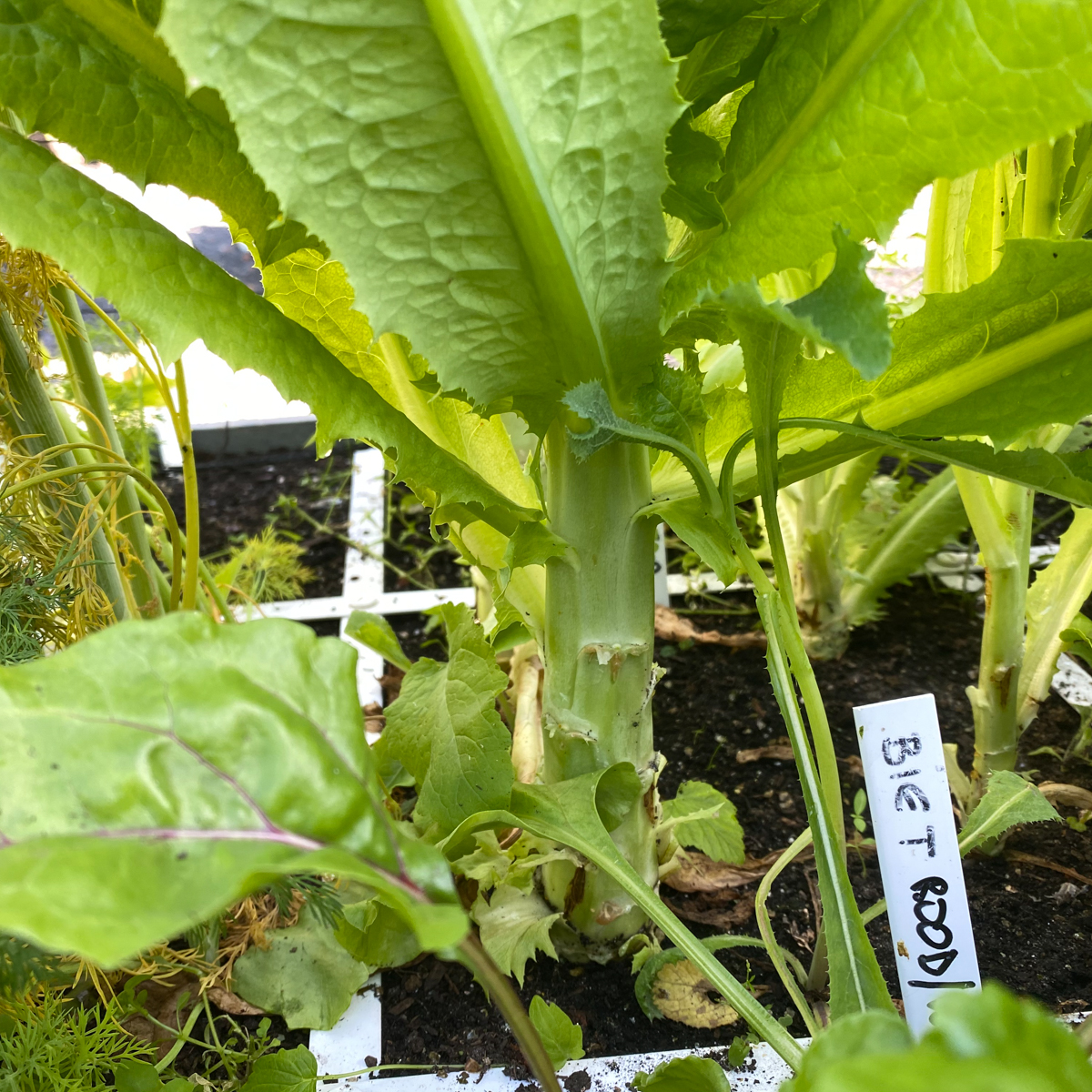
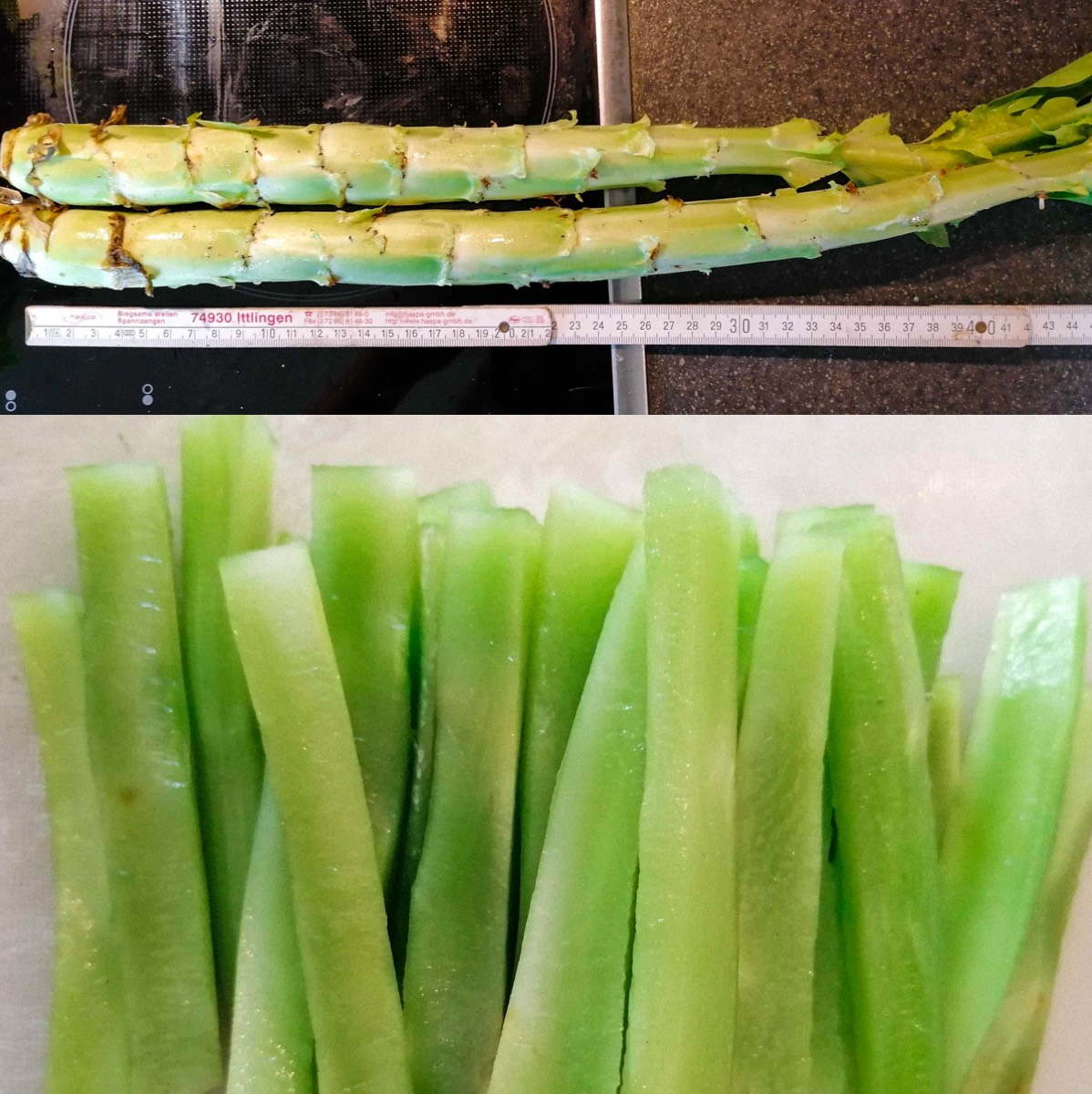
Harvest the tender stalks when they're 25 - 45 cm tall and 3 - 5 cm thick. Peel them and eat them raw. You can also stew and stir fry the stalks. They look - a bit - like asparagus when cooked. So, it's also known as asparagus lettuce.
Sow several times a year for fresh leaves and stems.
It looks like cos lettuce at first. But after harvesting the lower leaves the plant continues to grow a sturdy stem. As it grows, it looks more and more like a mini palm tree.
The leaves are thicker than head lettuce and more bitter. But that makes them great in a stew or stir fry.
Harvest the tender stalks when they're 25 - 45 cm tall and 3 - 5 cm thick. Peel them and eat them raw. You can also stew and stir fry the stalks. They look - a bit - like asparagus when cooked. So, it's also known as asparagus lettuce.
Sow several times a year for fresh leaves and stems.
Vitamins and minerals in stem lettuce
Stem lettuce is full of vitamins and minerals like iron, calcium, magnesium, phosphorus, potassium, vitamin C, and B vitamins.
It's also an excellent source of manganese, which helps your body convert food into energy, absorb calcium, and maintain healthy blood sugar levels.
It's also an excellent source of manganese, which helps your body convert food into energy, absorb calcium, and maintain healthy blood sugar levels.
More about Makkelijke Moestuin stem lettuce seeds
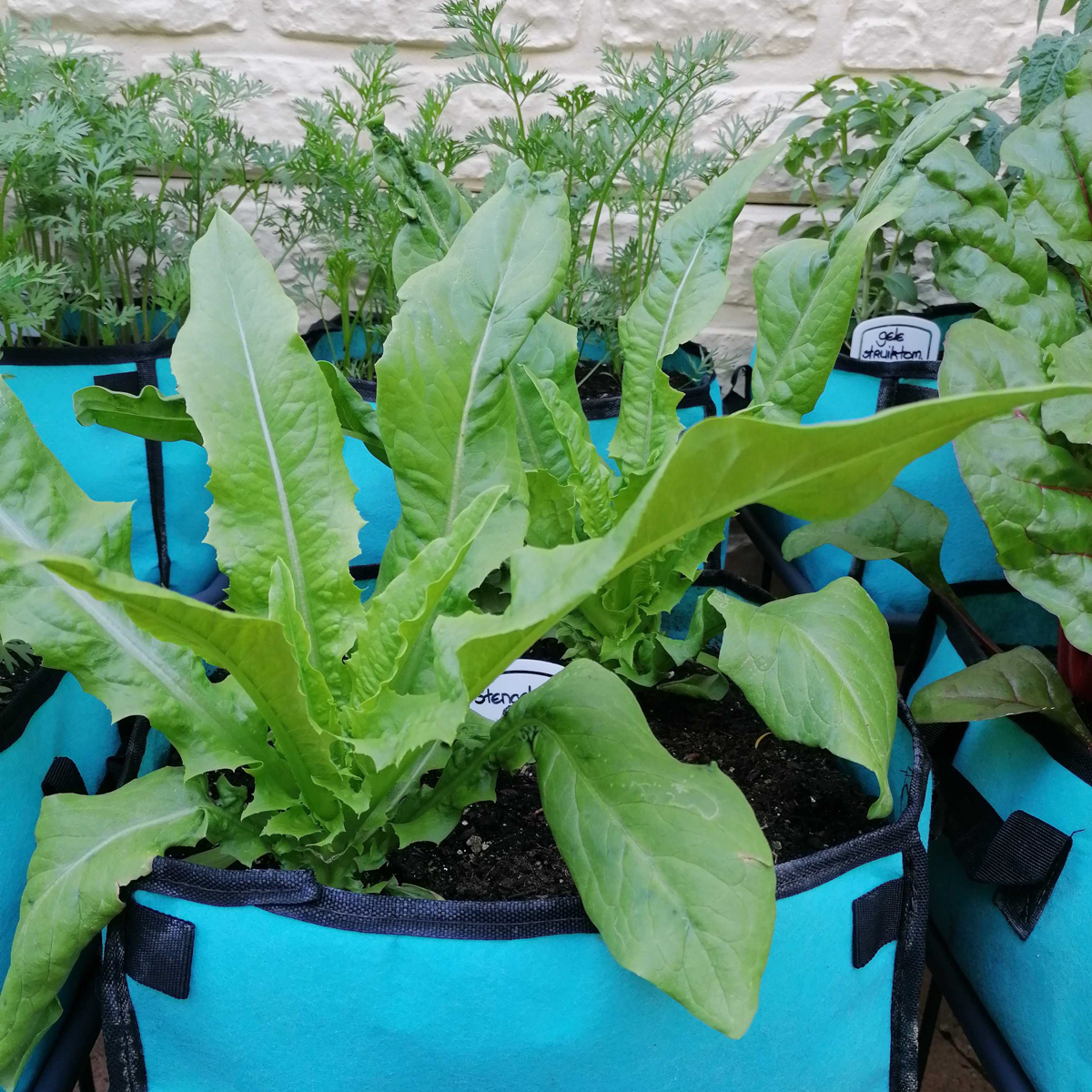
Stem lettuce germinates easily, grows fairly quickly, is not troubled by diseases and suffers little slug damage. The plants grow quite large and tall, so place them at the back of your raised bed or grow one separately in an MM-mini.
- Variety: Celtuce asparagus lettuce
- Family: leaf
- Plants per square: 2
- Height: 40 to 60 cm
- Sowing time: April to June
- Sowing depth: 1 cm
- Germination: 7 to 14 days at 6 to 18°C; germinates poorly above 20°C
- Time to harvest: leaves from 5 weeks, stem after around 8 to 10 weeks
- Sunlight: grows in sun or partial shade
It also grows well in an unheated greenhouse during autumn and early spring. In the app, however, we sow it directly outside from early April until late June.
What do you need to grow stem lettuce yourself?
Just this:
- a 30x30 cm patch with airy, nutrient-rich soil mix
- stem lettuce seeds
- a place with at least 6 hours of sunlight a day
In other words: an MM-Mini, or a square patch in 1 of our garden boxes, filled with MM-Mix.
Growing your own stem lettuce is super easy with the MM-Mix. If you grow in low-quality (potting) soil, disappointment is pretty much guaranteed. So don't skimp on soil mix: go for the best.
Growing your own stem lettuce is super easy with the MM-Mix. If you grow in low-quality (potting) soil, disappointment is pretty much guaranteed. So don't skimp on soil mix: go for the best.
How do you sow and grow stem lettuce?
Stem lettuce is included in the free Planty Gardening app. Use it, and you'll get step-by-step guidance from seed to harvest.
Each vegetable goes through a number of stages - we call them levels. The app tells you exactly what to do at each level and checks in when your plants are ready for the next.
So, you don't need to know how to grow stem lettuce: the app takes you through every step.
But if you'd like to read more about those steps, here's what the process looks like:
Each vegetable goes through a number of stages - we call them levels. The app tells you exactly what to do at each level and checks in when your plants are ready for the next.
So, you don't need to know how to grow stem lettuce: the app takes you through every step.
But if you'd like to read more about those steps, here's what the process looks like:
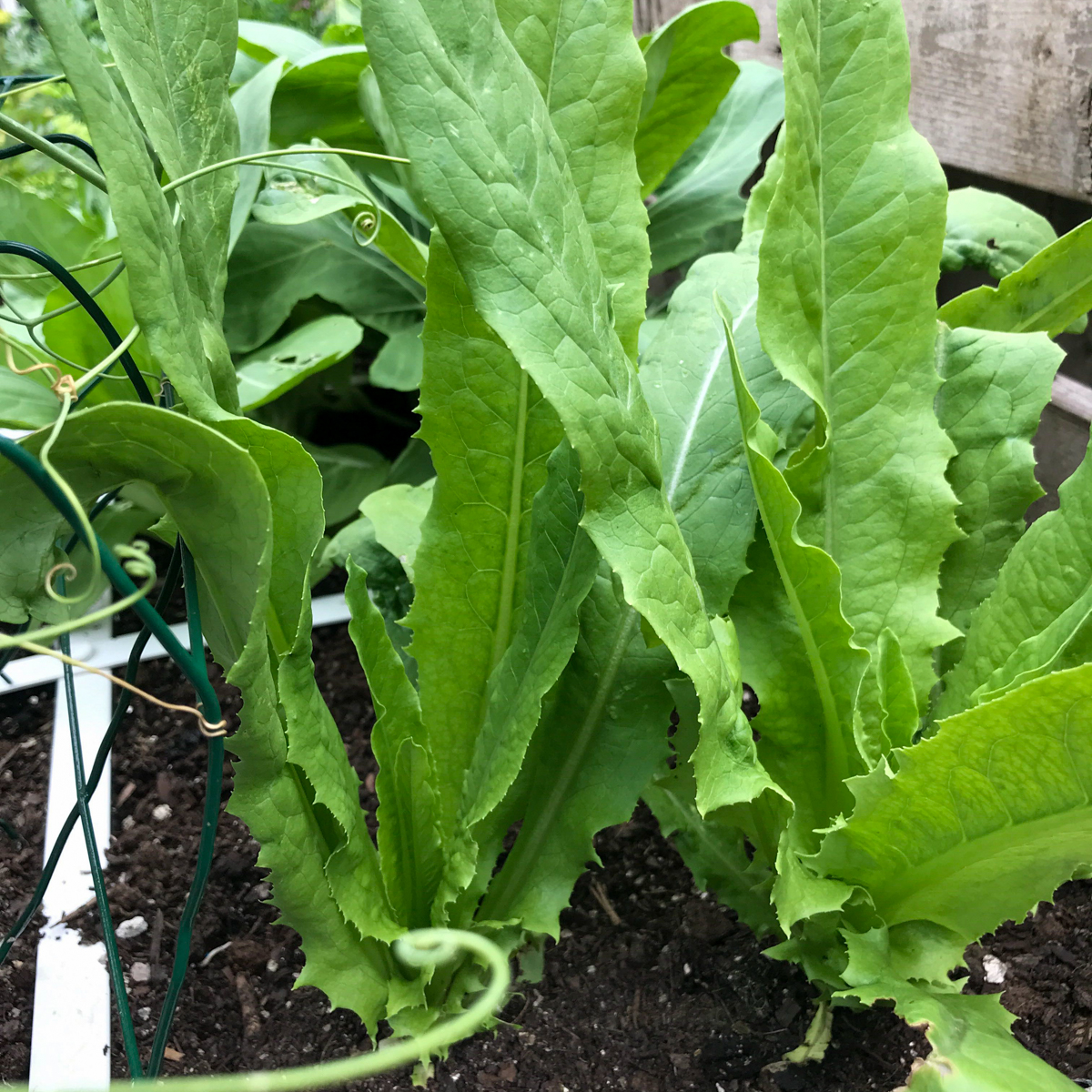
Level 1: Sowing stem lettuce
Choose a patch in the 2 back rows of your garden box. Make the soil mix loose and moist. Then sow the seeds like this:
- poke 2 holes in the patch (1 cm deep max)
- put 2 to 3 seeds in the holes
- carefully cover them up with soil mix
Depending on the weather and the time of year, you'll start to see something come up in the next 7 to 14 days.

Level 2: Stem lettuce seedlings
If you see the first seedlings, you know you're on track. They probably won't all come up at once, but give it a few more days.
Then it's time for the next level.
Then it's time for the next level.
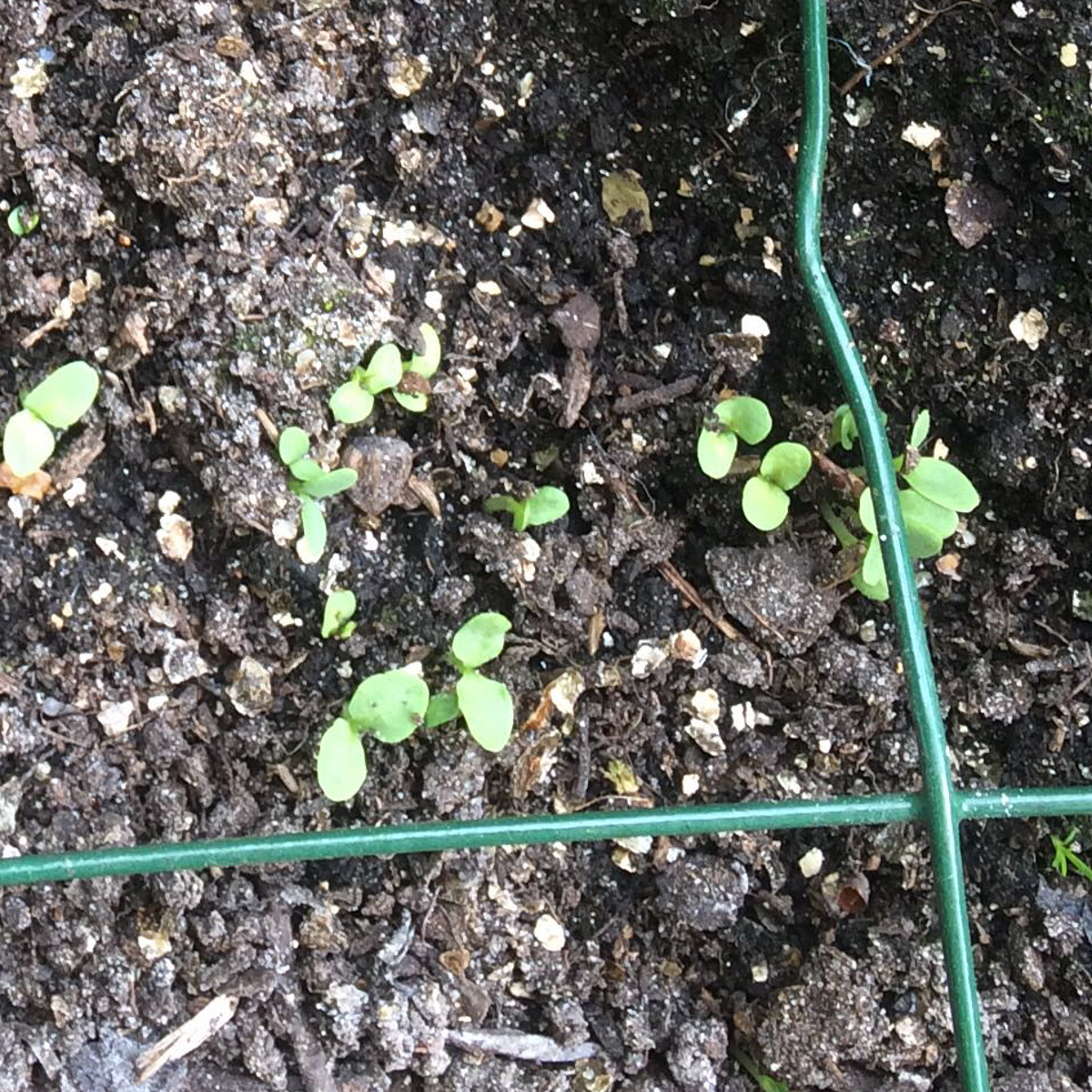
Level 3: Thinning stem lettuce
Choose the best 2 seedlings and cut away the rest: that's called thinning out. It might sound harsh, but it's necessary. The remaining plants will have the room they need to grow.
Sow a few seeds if nothing came up yet.
Sow a few seeds if nothing came up yet.
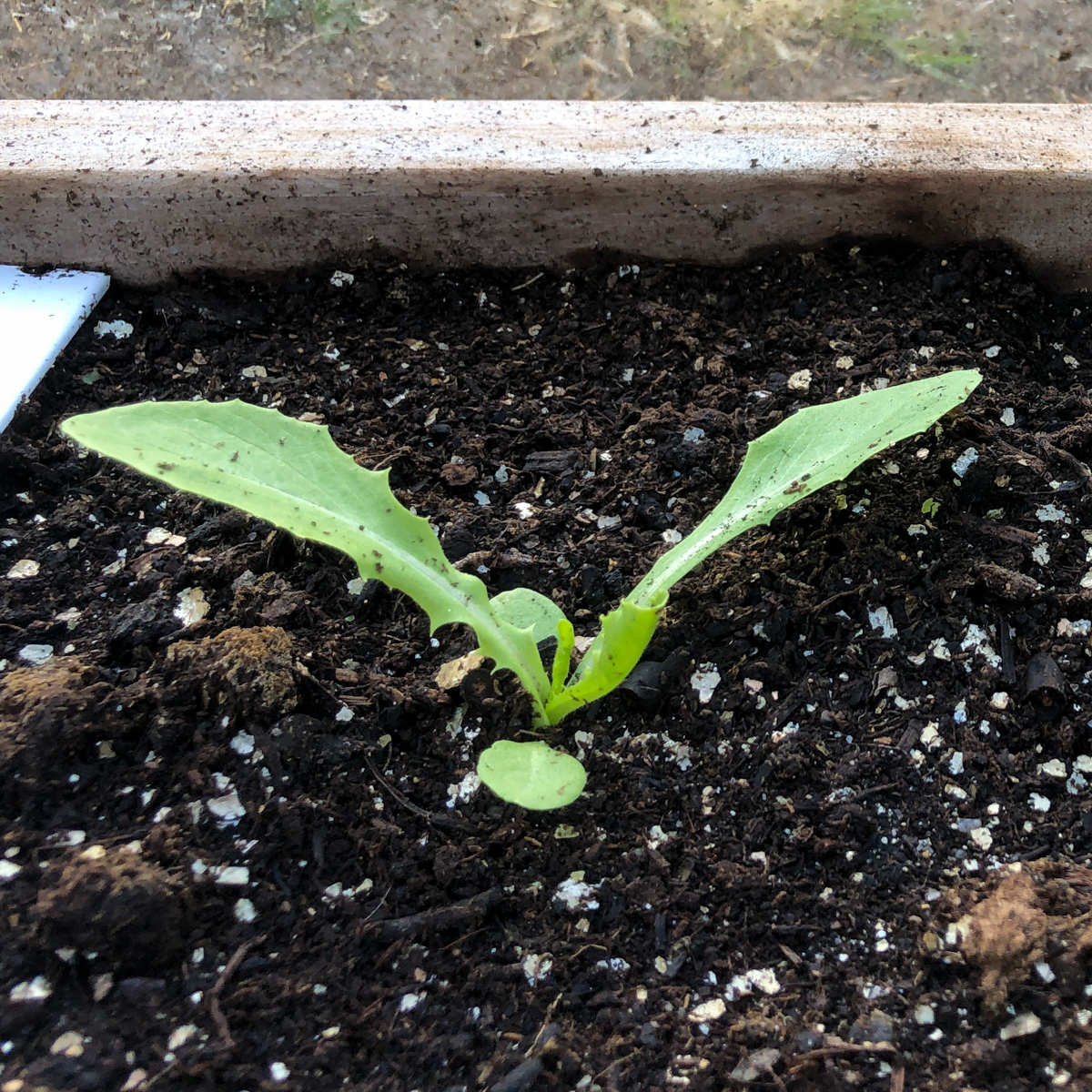
Level 4: Caring for your stem lettuce plants
After about 3 weeks your seedlings become small plants.
You don't have to do much now: give the plants some water if the weather is dry and remove the odd yellow or dead leaf. Easy 🙂
You don't have to do much now: give the plants some water if the weather is dry and remove the odd yellow or dead leaf. Easy 🙂
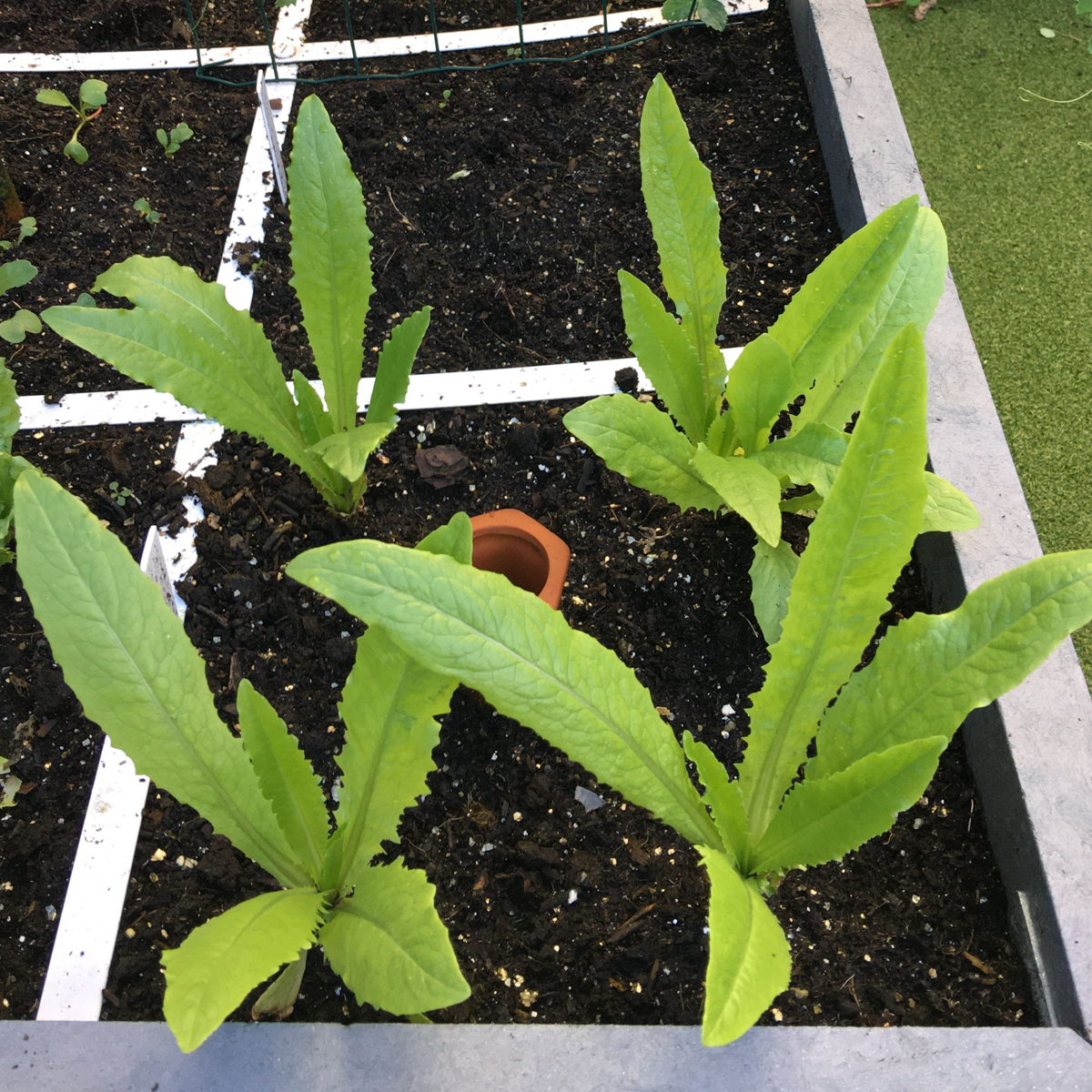
Level 5: Harvesting stem lettuce
About 5 to 8 weeks after sowing, you can start harvesting the leaves.
Cut or break off the bottom leaves. The plant will start to look more and more like a palm tree. As long as you leave the top and center of the plant, new leaves will continue to grow.
Continue harvesting leaves for the coming weeks until the stem is big enough to harvest too.
Cut or break off the bottom leaves. The plant will start to look more and more like a palm tree. As long as you leave the top and center of the plant, new leaves will continue to grow.
Continue harvesting leaves for the coming weeks until the stem is big enough to harvest too.
How do you harvest and use stem lettuce?
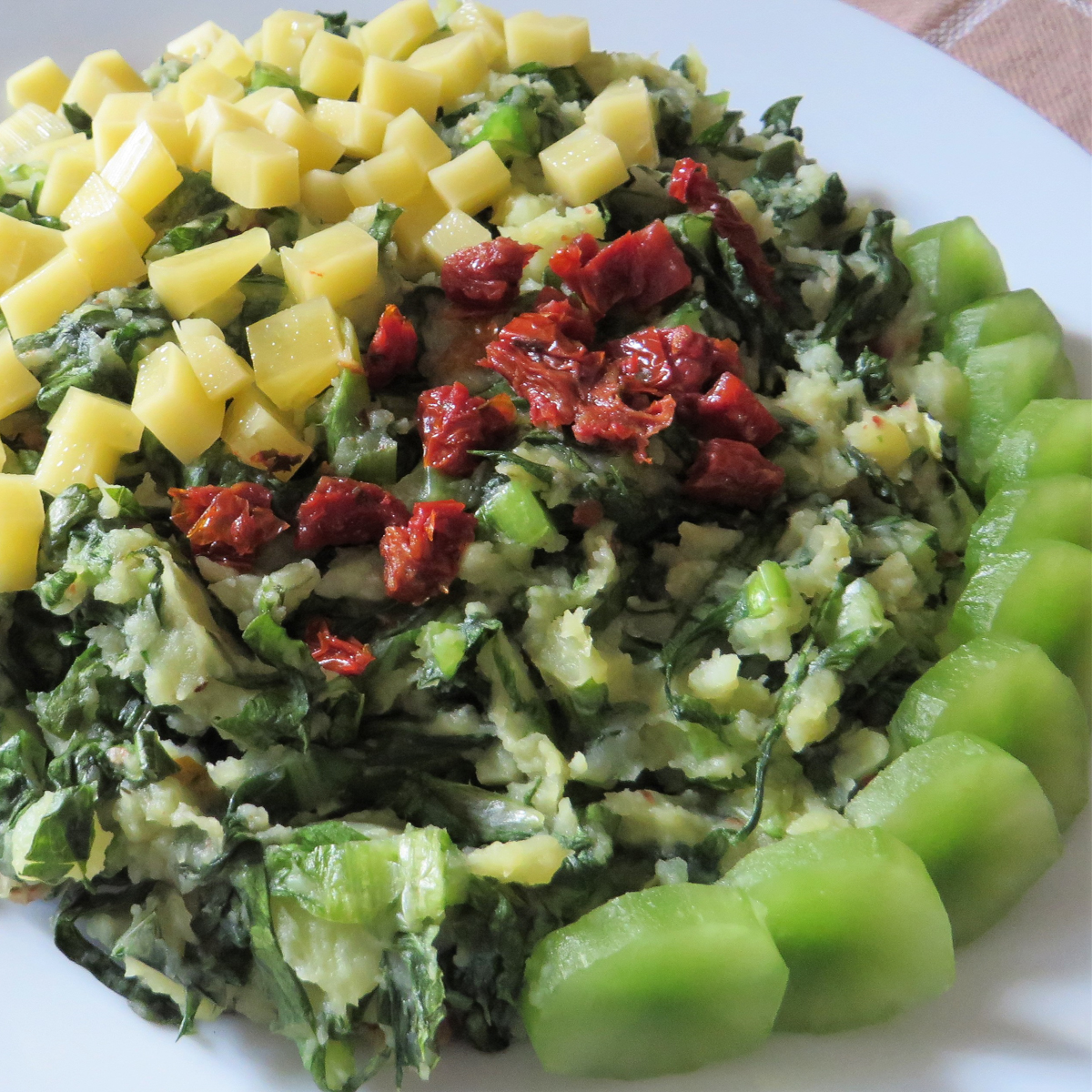
Young stem lettuce leaves are nice in salads. Slightly older leaves are best in soups, stews, or stir fries.
But: you grow this lettuce mainly for the stems of course. Harvest them when they're 25 - 45 cm tall and 3 - 5 cm thick. Peel first before eating.
Try the stem raw in a salad. Enjoy cooked stems in stews, stir fries, or on their own. The stems look kind of like asparagus when cooked. That's it's also known as asparagus lettuce.
But: you grow this lettuce mainly for the stems of course. Harvest them when they're 25 - 45 cm tall and 3 - 5 cm thick. Peel first before eating.
Try the stem raw in a salad. Enjoy cooked stems in stews, stir fries, or on their own. The stems look kind of like asparagus when cooked. That's it's also known as asparagus lettuce.
The last levels
After a few weeks of harvesting leaves, the stems are probably big enough to harvest: 3 - 5 cm thick.
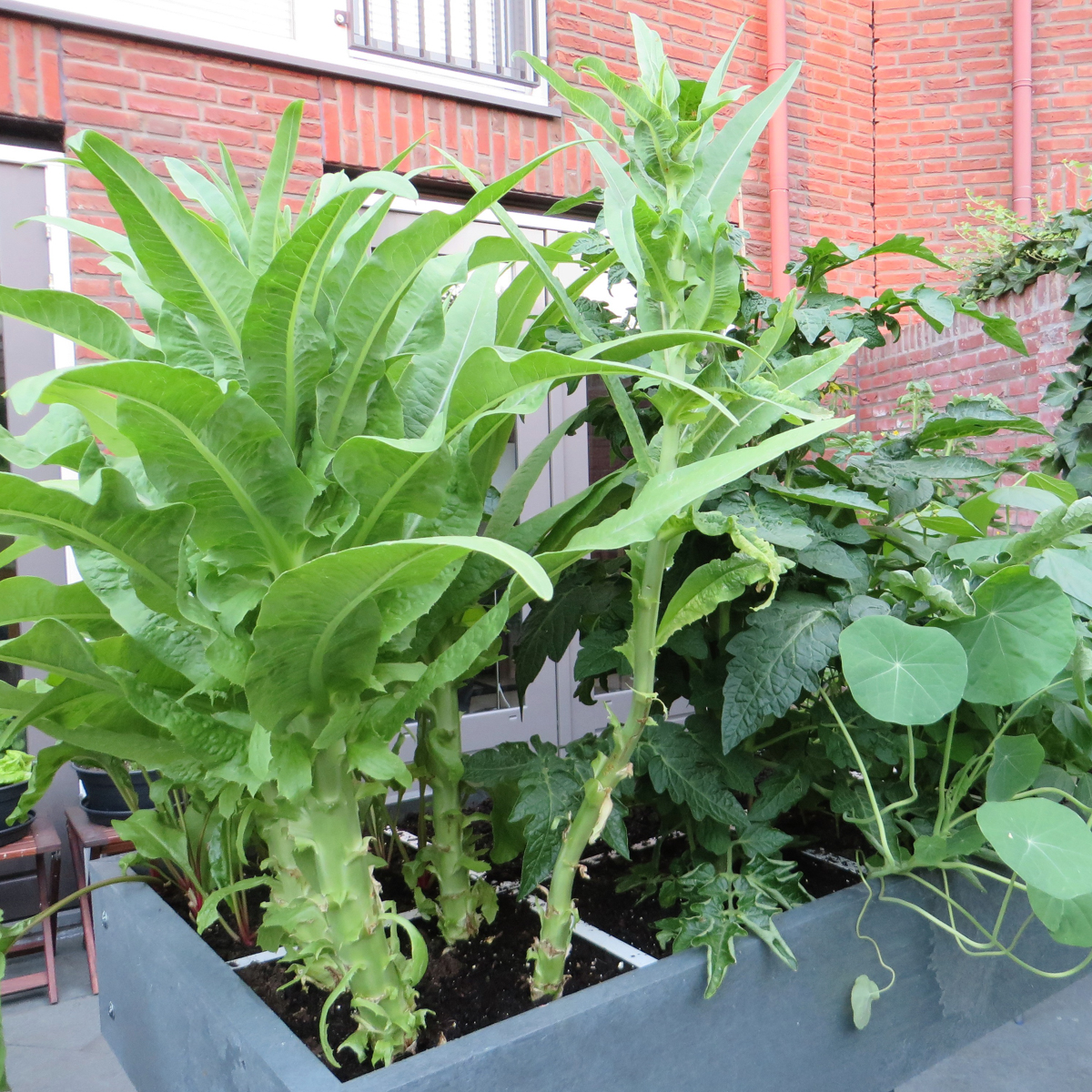
Be sure to harvest the stems when they're ready. Don't wait too long: they can get tough, dry, and eventually become hollow.
Once you've harvested your stem lettuce, remove the roots from your garden box or MM-Mini and get the patch ready for the next round of sowing.
Once you've harvested your stem lettuce, remove the roots from your garden box or MM-Mini and get the patch ready for the next round of sowing.
So: why not grow your own stem lettuce?
It's a tasty vegatable that's easy to grow yourself. And you get to enjoy the whole plant: leaves and stem.
Plus: with our materials and app, you can't really go wrong 😉
Order your stem lettuce seeds here or get started with a complete starter kit:
Plus: with our materials and app, you can't really go wrong 😉
Order your stem lettuce seeds here or get started with a complete starter kit:
Enjoy!

PS: Thanks to Atie1, TanjaB, Vitalientje and Groentje Kadee for the photographs and community posts.