
Koolfamilie
How to sow and grow bok choi
Bok choi comes in several different varieties. Ours can be sown in both spring and summer. It grows quickly, is delicious, and has a beautiful bright green color.
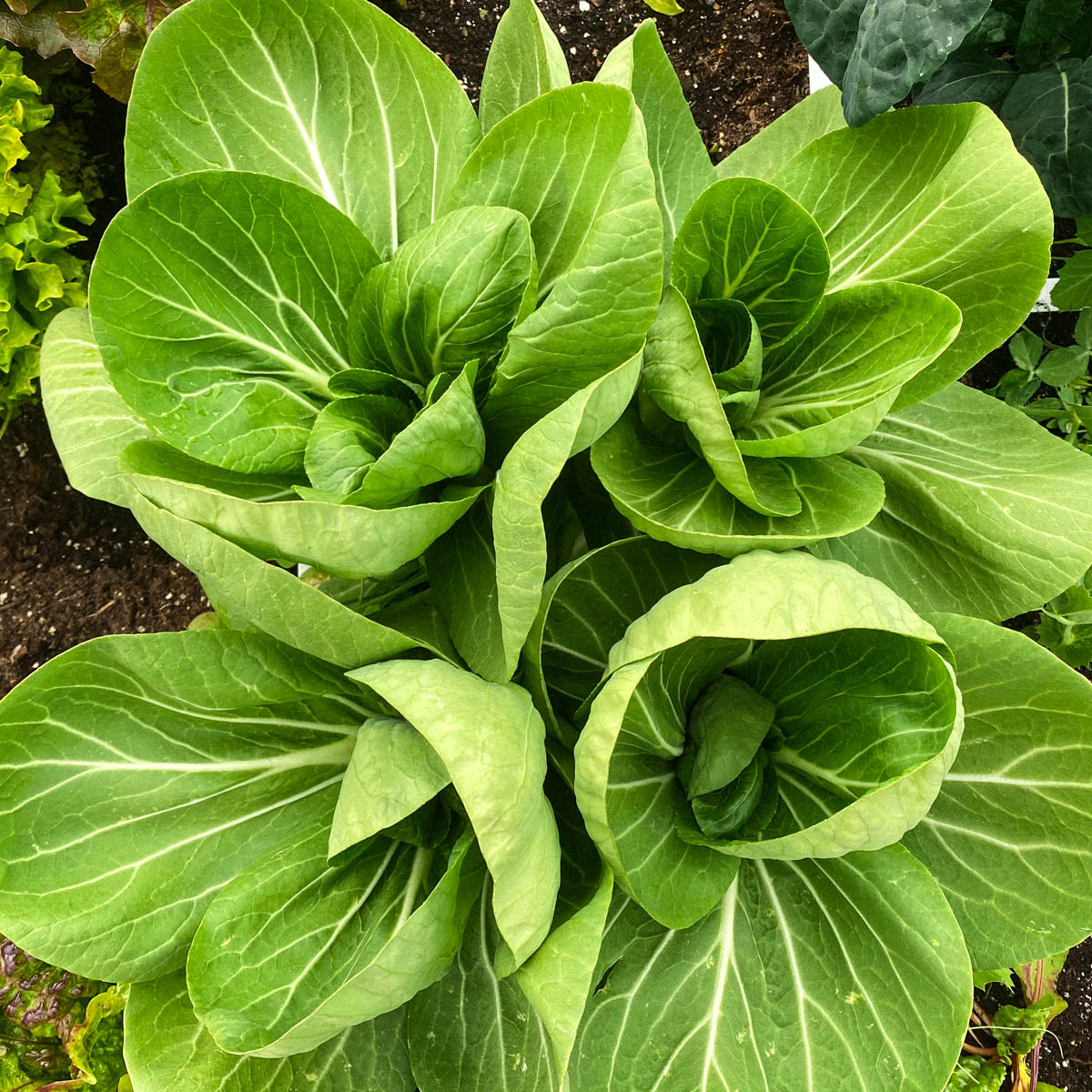
What is bok choi?
Bok choi, or pak choi, is a fast-growing Chinese cabbage in the cruciferous family. The mild flavor and the crunch of the stems are a real treat.
Bok choi is very popular in Eastern countries.
It's especially good cooked in a stir fry. The young leaves and stems are also delicious raw in salads.
We chose a bok choi variety that you can sow 2x in 1 season: spring and summer. Sometimes bok choi blooms in early summer.
Bok choi is very popular in Eastern countries.
It's especially good cooked in a stir fry. The young leaves and stems are also delicious raw in salads.
We chose a bok choi variety that you can sow 2x in 1 season: spring and summer. Sometimes bok choi blooms in early summer.
Vitamins and minerals in bok choi
Bok choi is packed with vitamins and minerals. For example, 100 grams contains more than 100 percent of the recommended daily amount of vitamin A. It is also rich in vitamin C and minerals including calcium, iron, manganese, phosphorus, potassium, and magnesium.
All of these are good for you. And because bok choi contains very few calories, it is a light choice too 😀
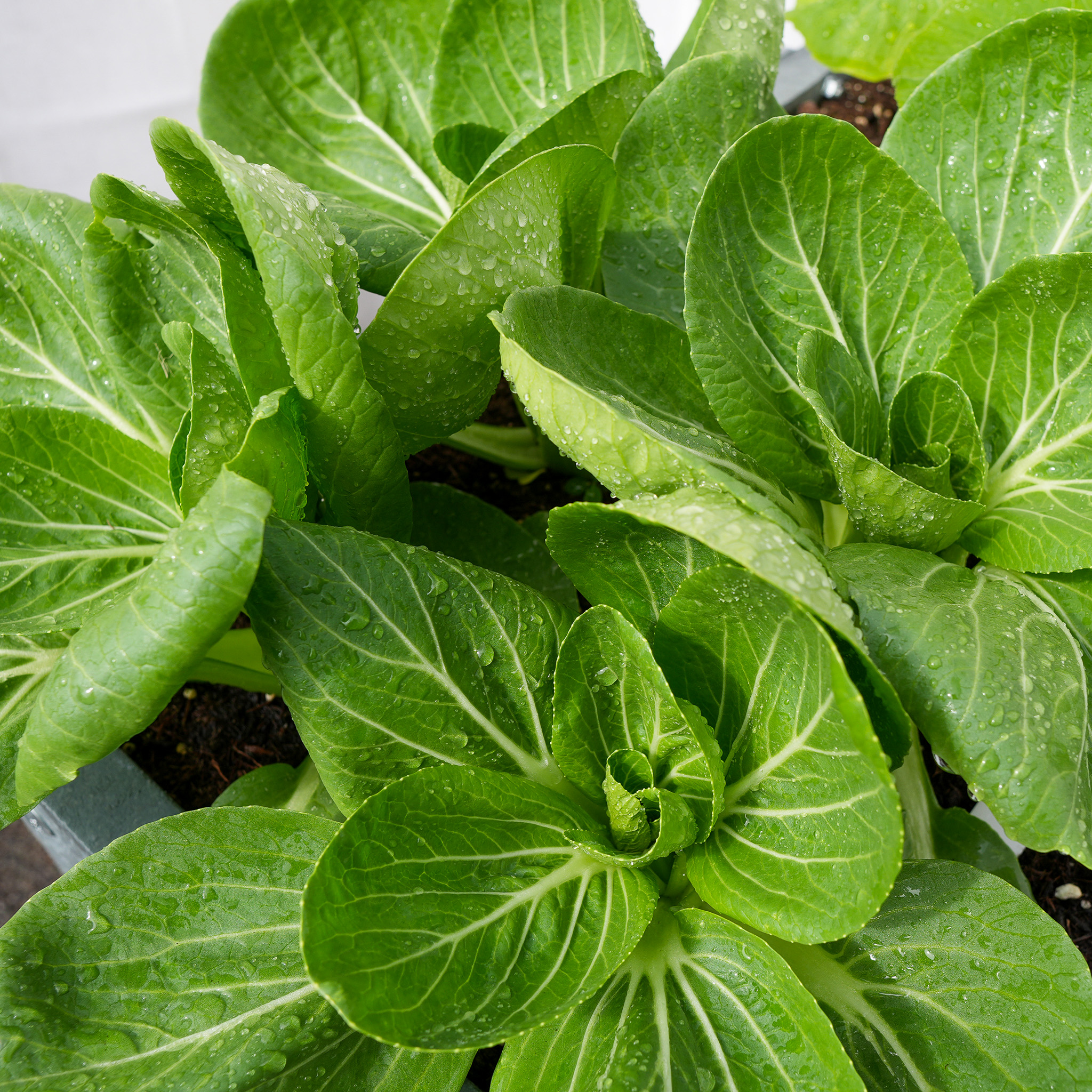
More about our bok choi
This bok choi grows quickly and easily. It has a mild flavour and is delicious in stir-fries. You can sow this variety in spring and again in late summer.
- Variety name: Bak choi green F1
- Family: brassicas
- Plants per square: 4
- Height: 15 to 25 cm
- Sowing time: mid-March to May and July to August
- Sowing depth: 0.5 to 1 cm
- Germination: 5 to 14 days at 12 to 25 degrees C
- Time to harvest: from about 6 weeks
- Position: sun or partial shade
- Packet contents: about 100 seeds, enough for more than 15 squares
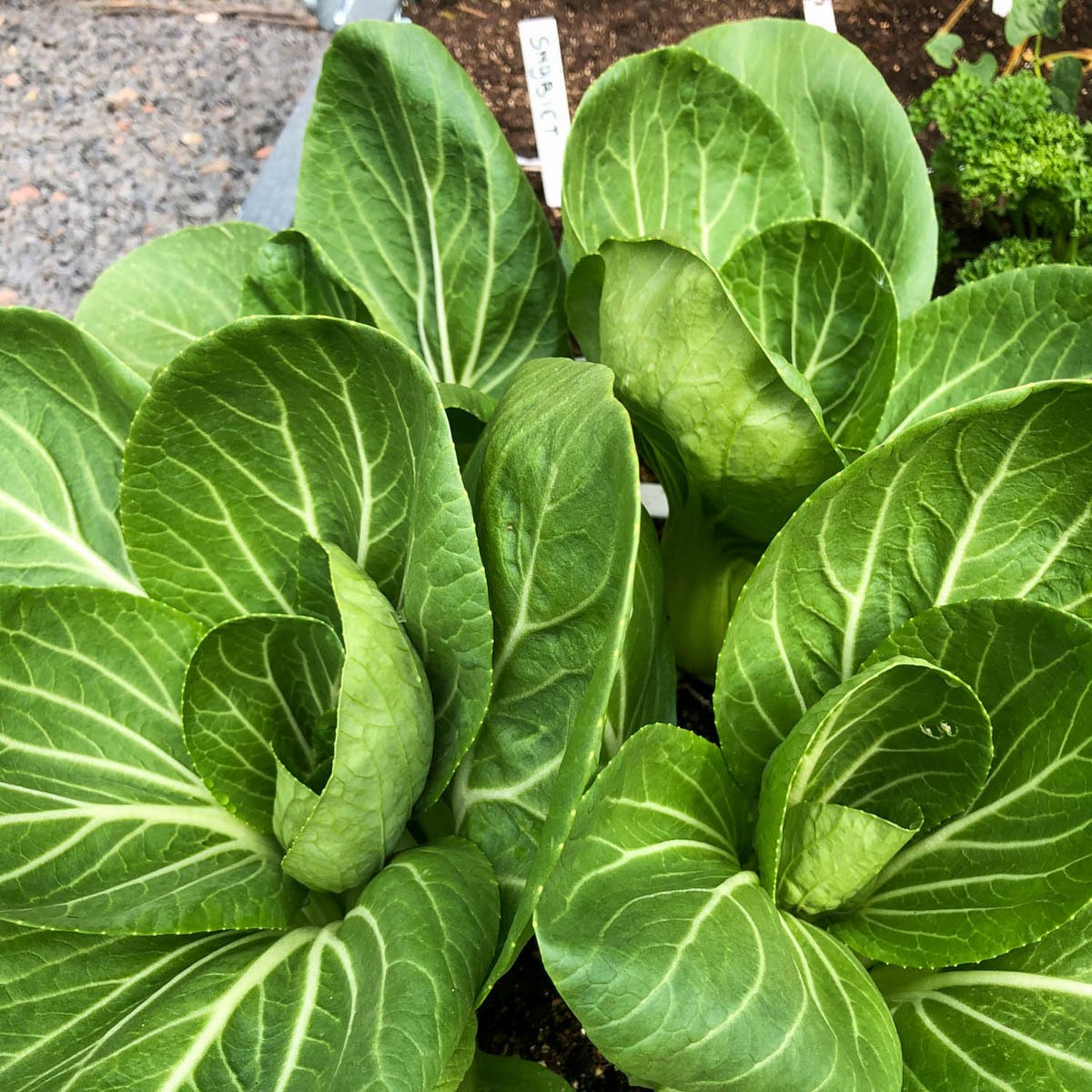
Some varieties include F1 in their name. This means they are hybrid seeds from a selectively bred plant variety.
Another word for this process is plant breeding. Seed producers use it to strengthen or reduce particular characteristics. These may include better performance in warmer, colder, drier, or wetter weather, a more uniform appearance, a larger yield per plant, or a better flavour.
By repeatedly crossing and selecting varieties, growers strengthen the characteristics they consider positive and reduce the negative ones as much as possible. This can also make varieties more resistant to certain diseases.
Selectively bred varieties are neither scary nor unnatural. Growers who work exclusively with organic methods develop them too.
Read more here: What does F1 mean on seed packets?
How to sow and grow bok choi?
This bok choi is included in the free Makkelijke Moestuin app. Use it and you will get guidance from seed to harvest.
Every vegetable goes through several stages, which we call levels.
The app tells you exactly what to do at each level and regularly asks you to check whether your plants are ready for the next one. So you do not need to know how to grow bok choi successfully before you start.
But if you would like to see and read ahead, here is what the process looks like.
What do you need to grow your own bok choi?
Besides the seeds, you need:
- a 30 by 30 cm square
- Makkelijke Moestuin Mix or MM coconut mix
- a spot with at least 6 to 8 hours of sunlight a day
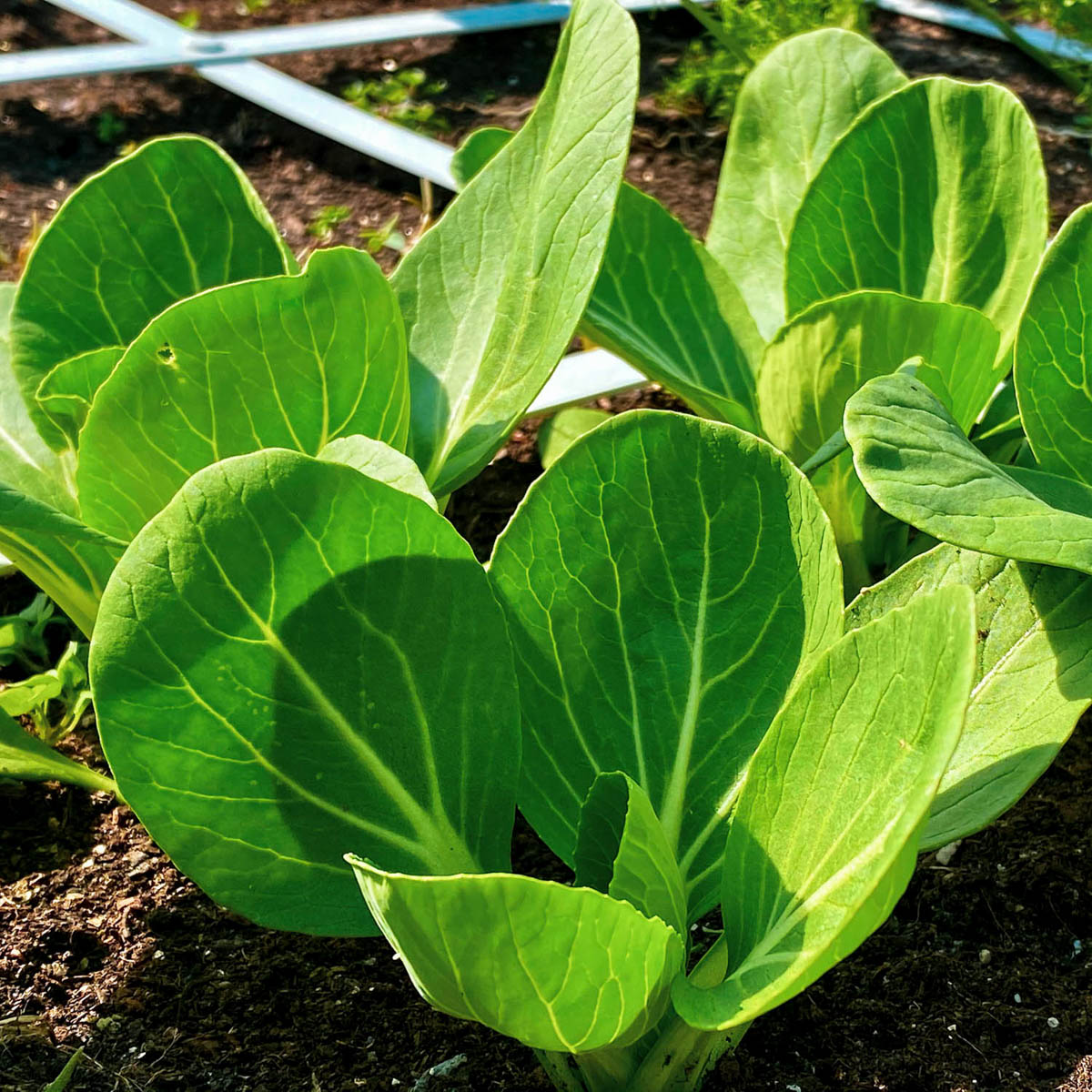
Level 1: Sowing bok choi
Level 1: Sow bok choi
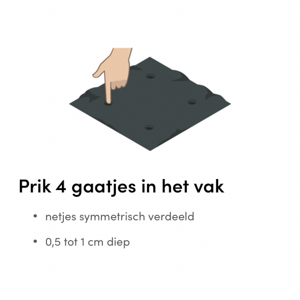
Loosen and moisten the mix in an MM-Mini or a square in the second or third row of your raised bed, then sow as follows:
make 4 holes in the square, no deeper than 1 cm
put 2 to 3 seeds in each hole
carefully close the holes
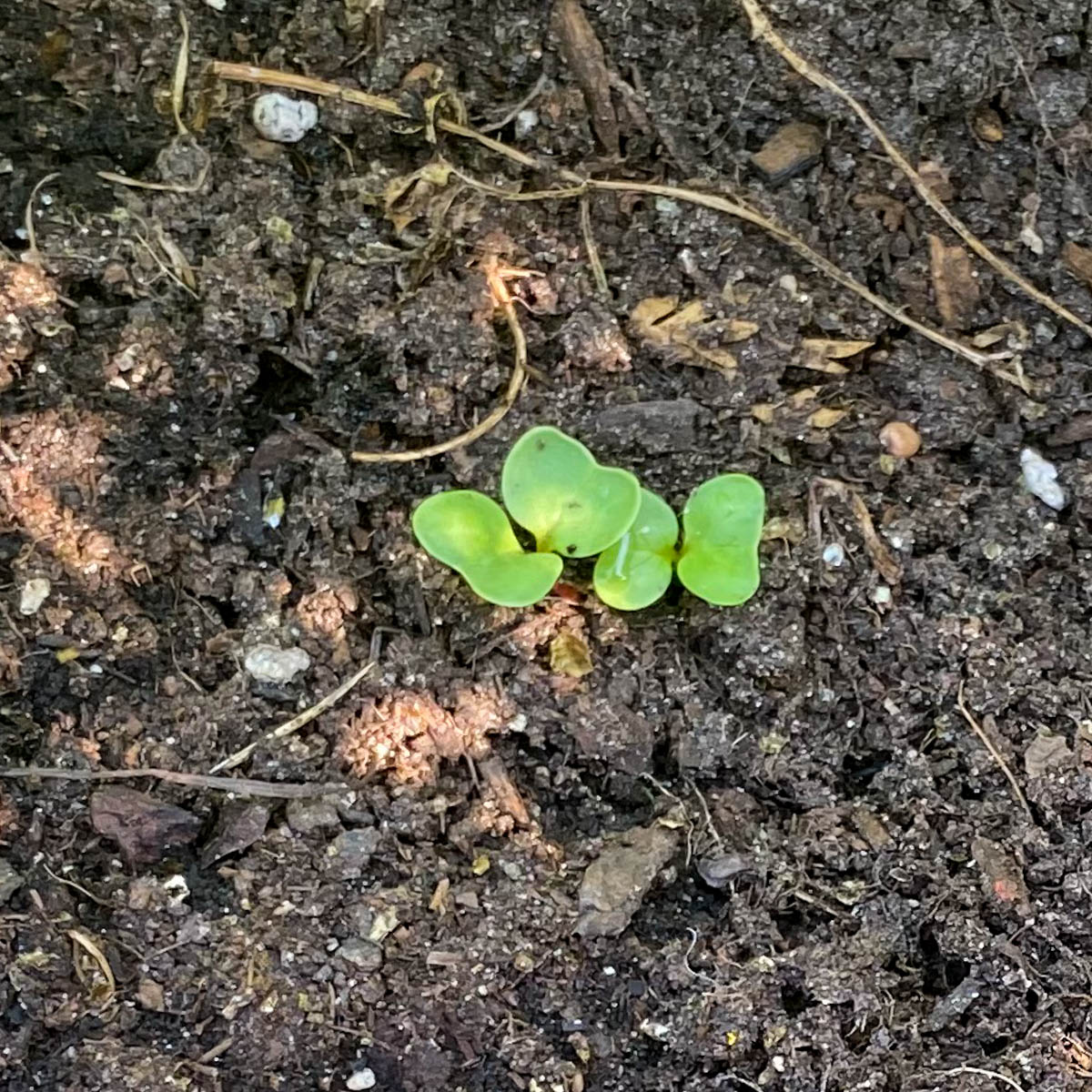
Depending on the weather and the time of year, you will see the first green shoots after about a week.
Level 2: Bok choi seedlings
Level 2: Bok choi seedlings
As soon as you see the first seedlings, you know things are going well. They probably won't all come up at once, but give it another week.
Then it's time for the next level.
Then it's time for the next level.
Level 3: Thinning bok choi seedlings
Level 3: Thin out bok choi seedlings
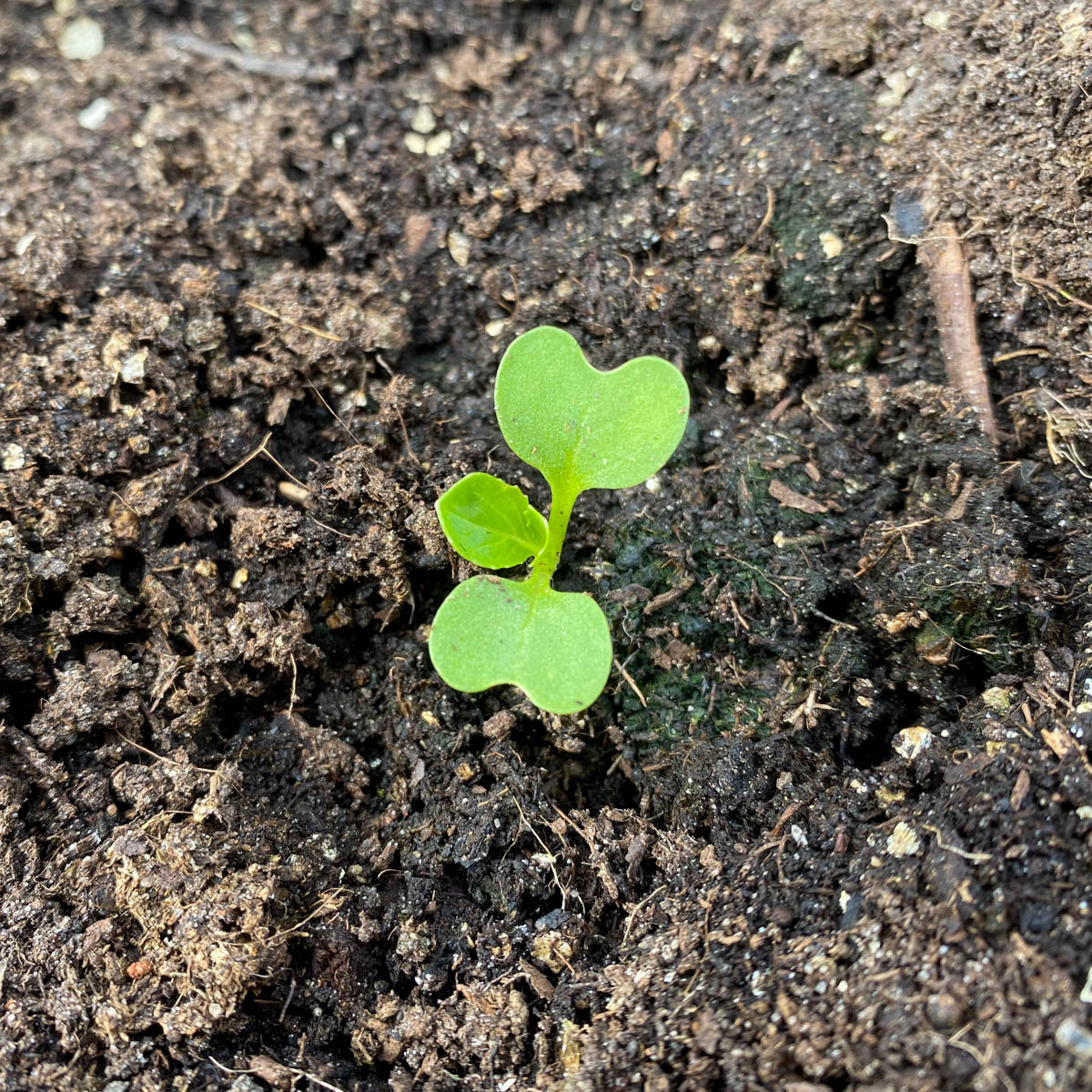
When several seedlings come up in each spot that you sowed, choose the best ones and remove the rest: that's called thinning out. It might sound harsh, but it's necessary. The remaining plants need enough room to grow. You'll be glad you did it.
Here's how: take a pair of scissors, leave the biggest and prettiest seedling per hole, and cut off the others along the soil mix. You'll end up with 4 bok choi plants.
If you see places where nothing came up, sow a few more seeds.
And keep an eye out for snails: they love these seedlings.
Here's how: take a pair of scissors, leave the biggest and prettiest seedling per hole, and cut off the others along the soil mix. You'll end up with 4 bok choi plants.
If you see places where nothing came up, sow a few more seeds.
And keep an eye out for snails: they love these seedlings.
Level 4: Caring for your bok choi plants
Level 4: Care for your bok choi plants
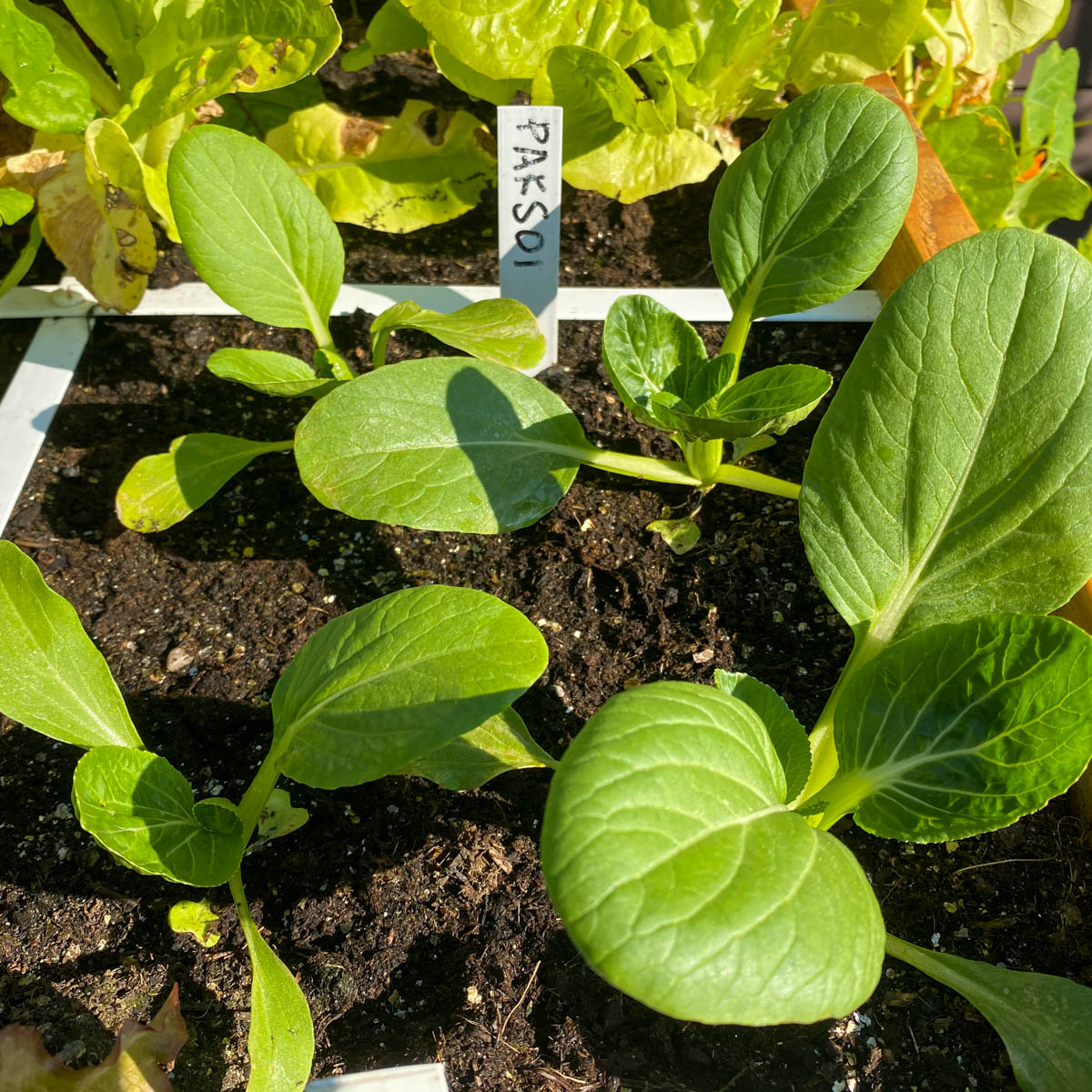
After a week or 2, your seedlings will become small plants.
You hardly need to do anything: if the weather's dry, give them some water and remove the odd dead or yellow leaf.
Did you sow in the summer? Then keep an eye out for caterpillars of butterflies. The cabbage white butterflies like to lay eggs on the leaves.
You hardly need to do anything: if the weather's dry, give them some water and remove the odd dead or yellow leaf.
Did you sow in the summer? Then keep an eye out for caterpillars of butterflies. The cabbage white butterflies like to lay eggs on the leaves.
Level 5: Harvesting bok choi
Level 5: Harvest bok choi
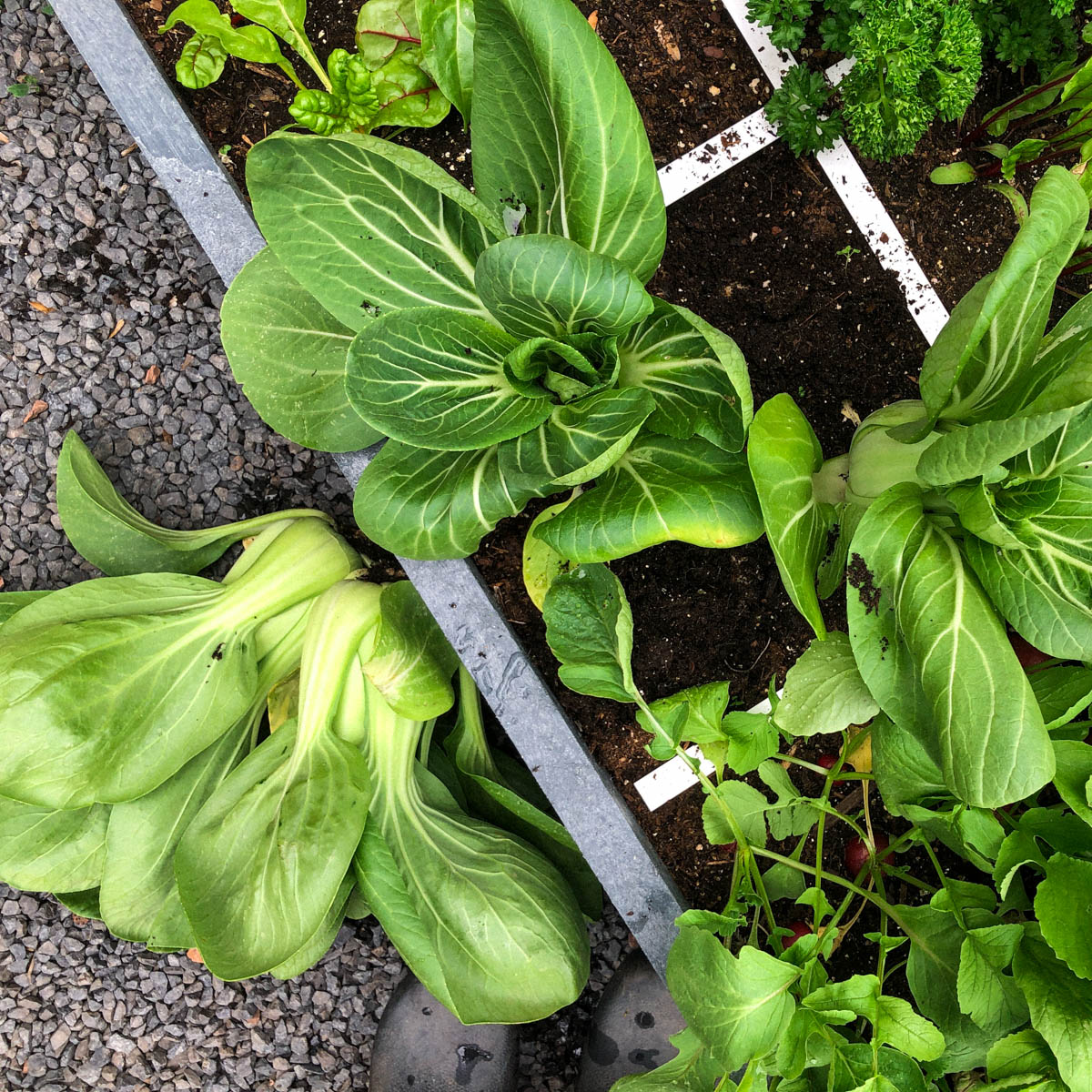
This level starts 7 to 8 weeks after sowing: the plants are ready for the first harvest.
You can harvest just the outer leaves of the bok choi, but it's more common to harvest the whole plant at once.
Harvest the first ones when they are still small and leave the others to grow. You can pick those in the coming weeks.
You can harvest just the outer leaves of the bok choi, but it's more common to harvest the whole plant at once.
Harvest the first ones when they are still small and leave the others to grow. You can pick those in the coming weeks.
How do you use bok choi?
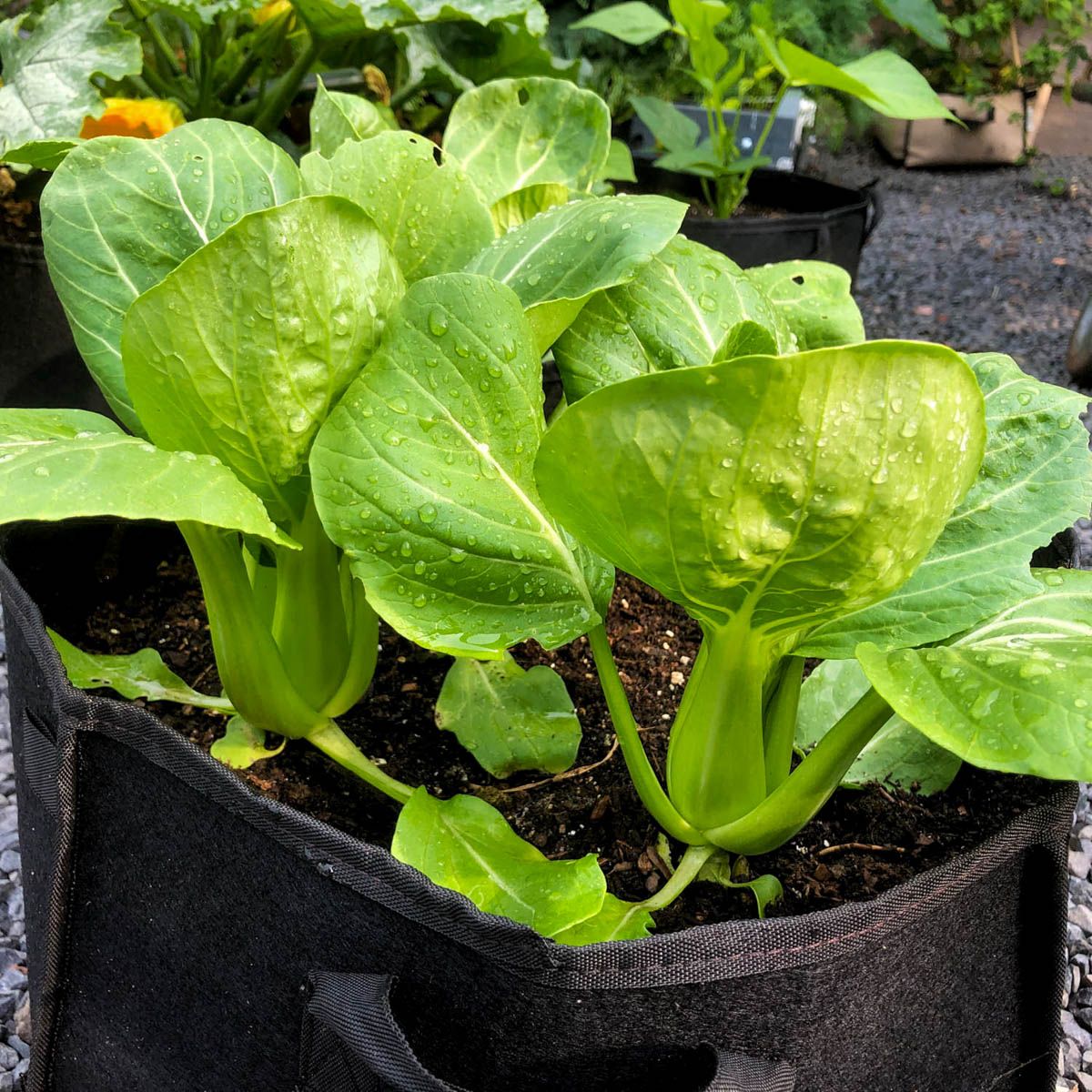
The leaves and stems are delicious. Young plants are great in salads, but bok choi is mostly used in stir fries. The taste goes well with curry and cumin.
But you can also make it the Dutch way in a potato mash: add raw bok choi to potatoes and cheese or bacon 😋
But you can also make it the Dutch way in a potato mash: add raw bok choi to potatoes and cheese or bacon 😋
The last levels
The final levels
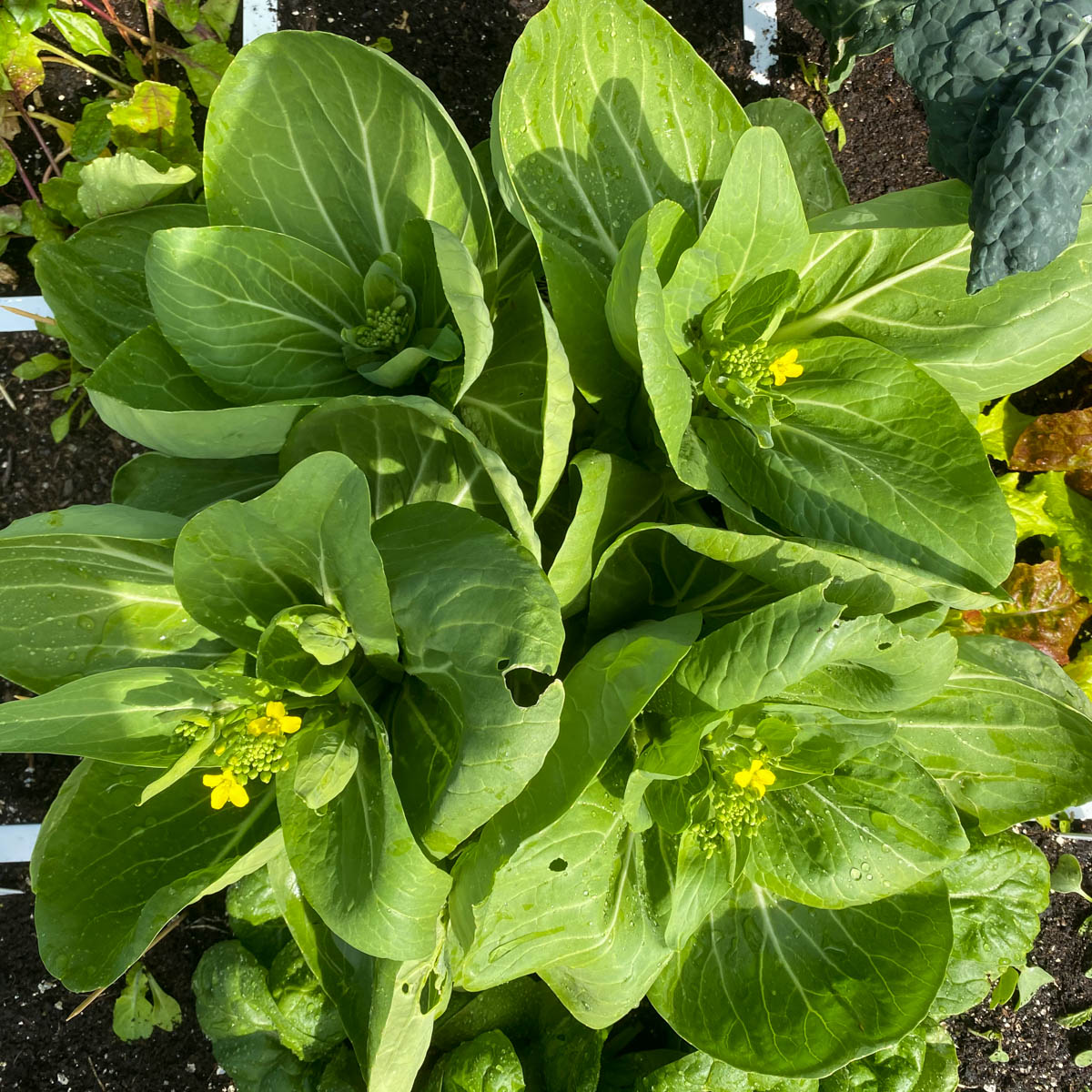
Harvest the last heads in the coming weeks. At the beginning of summer, the plants will start to flower. So be sure to pick them before the bolt.
So: what's stopping you from growing your own bok choi?
It's a tasty and easy vegetable to grow, and they look beautiful in your vegetable garden.
Plus: with our app and materials, it's almost impossible to fail 😉
Buy your bok choi seeds here or get started with a complete starter kit:
Plus: with our app and materials, it's almost impossible to fail 😉
Buy your bok choi seeds here or get started with a complete starter kit:
Enjoy!