
Kruiden
How to sow and grow bush basil
Bush basil has smaller leaves than the better known Genovese basil, but it's just as tasty.
This variety can handle hot and dry weather better and snails also don't like it as much. That's why bush basil is great for growing outside in a garden box, especially in summer.
This variety can handle hot and dry weather better and snails also don't like it as much. That's why bush basil is great for growing outside in a garden box, especially in summer.
More about our Bush basil
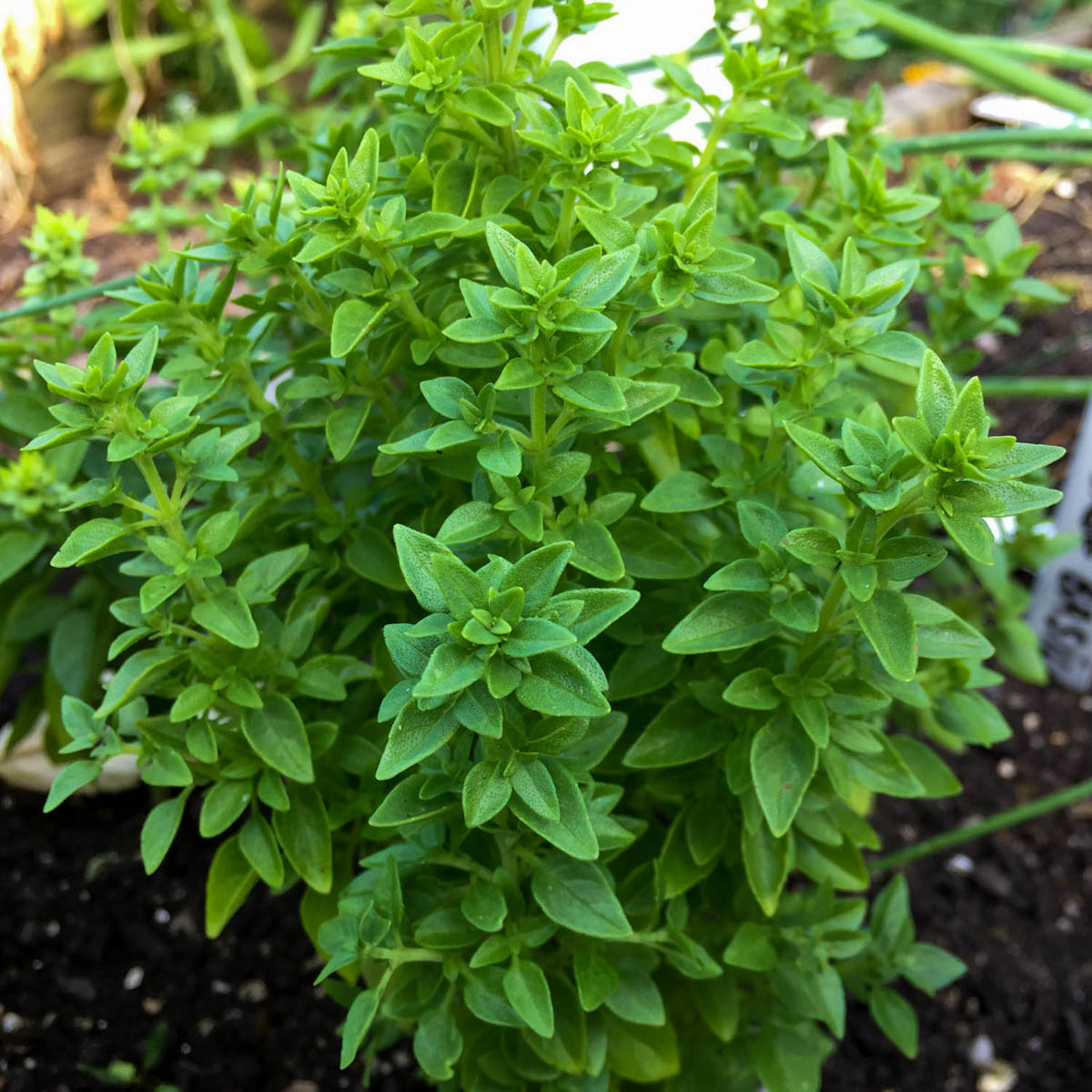
This Bush basil has smaller leaves than most other varieties and grows into a compact little bush.
The flavour is similar to the better-known Italian basil, but this variety has an advantage: the plants cope better with drought, heat and slugs. That makes them better suited to outdoor growing.
- Variety: Bush basil 'Bascuro Darkgreen'
- Family: leafy herbs
- Number per square: 4
- Height: 20 to 35 cm
- Pre-sowing: March to June
- Sowing depth: 1 cm
- Germination time: 5 to 7 days from 18°C
- Time to harvest: from 9 to 10 weeks
- Sunlight: grows in sun or shade
- Packet contents: approx. 150 seeds, enough for 10+ squares
What is bush basil?
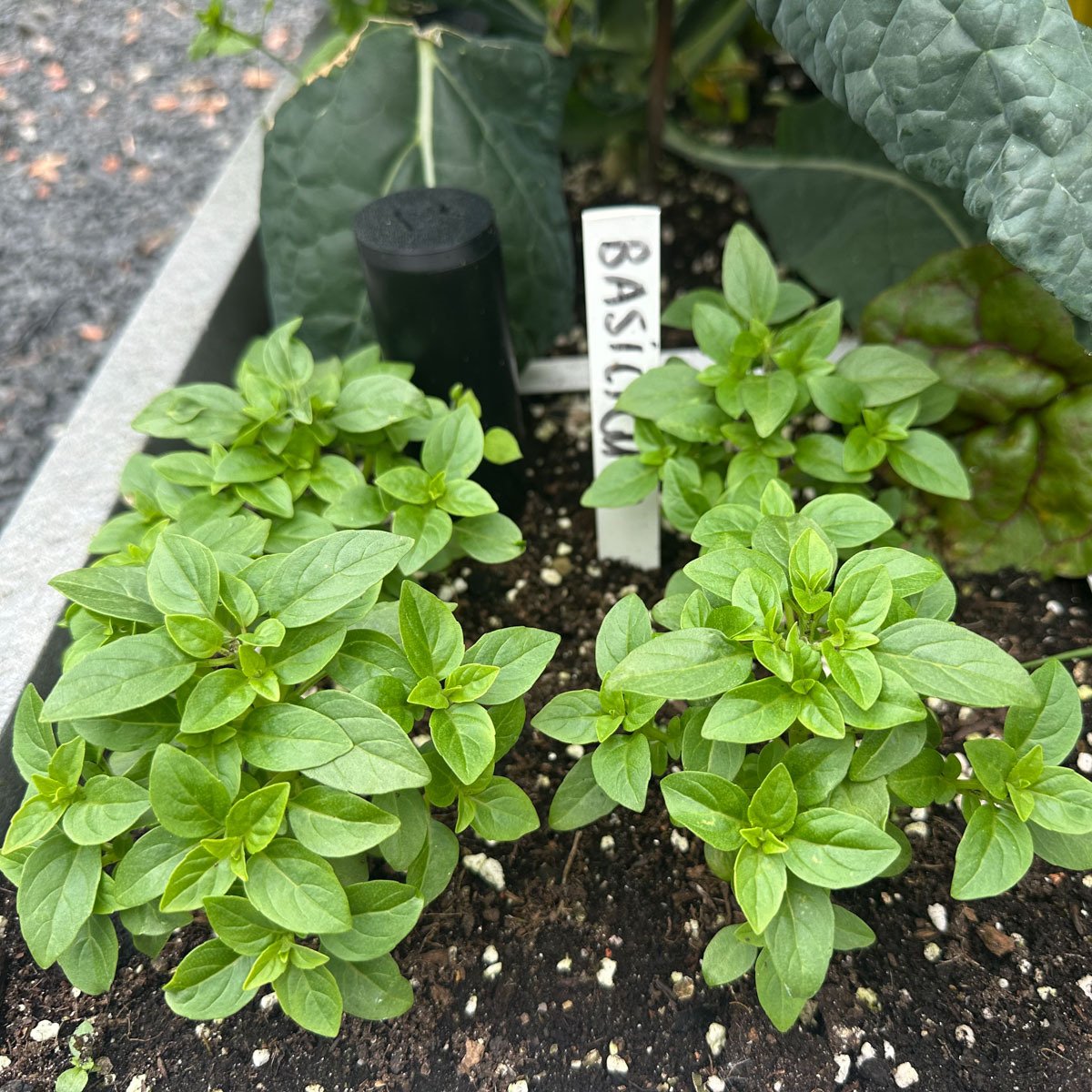
Bush basil - or Bascuro - is a Greek variety of common basil with small pointed leaves.
Basil is by far the best known - and tastiest - herb in Mediterranean cuisine. Most people only eat the leaves, but the flowers are edible too.
These annual plants can be grown on the windowsill all year long. Or, you can sow them outside in a garden box or MM-Mini. Outdoors they have enough room to get nice and bushy and the leaves will get more flavorful too.
This bush basil can withstand drought, wet weather, and cold better than the usual varieties and is more suitable for growing outdoors. In addition, they are less susceptible to snails.
Basil is by far the best known - and tastiest - herb in Mediterranean cuisine. Most people only eat the leaves, but the flowers are edible too.
These annual plants can be grown on the windowsill all year long. Or, you can sow them outside in a garden box or MM-Mini. Outdoors they have enough room to get nice and bushy and the leaves will get more flavorful too.
This bush basil can withstand drought, wet weather, and cold better than the usual varieties and is more suitable for growing outdoors. In addition, they are less susceptible to snails.
Bush basil is surprisingly healthy
Basil is probably the tastiest herb there is. But did you know that it's also super healthy? It is bursting with antioxidants, flavonoids, essential oils, and more.
This wonder herb strengthens the immune system, protects white blood cells, and fights off unwanted bacteria and other pathogens. Basil is anti-inflammatory, fights pain naturally, reduces fever and stress, contains antioxidants, and helps prevent diabetes. So: super good for you.
Basil is also the symbol of love in Italy. It stimulates blood circulation, so people are convinced it's a natural aphrodisiac 😉
This wonder herb strengthens the immune system, protects white blood cells, and fights off unwanted bacteria and other pathogens. Basil is anti-inflammatory, fights pain naturally, reduces fever and stress, contains antioxidants, and helps prevent diabetes. So: super good for you.
Basil is also the symbol of love in Italy. It stimulates blood circulation, so people are convinced it's a natural aphrodisiac 😉
What do you need to grow your own bush basil?
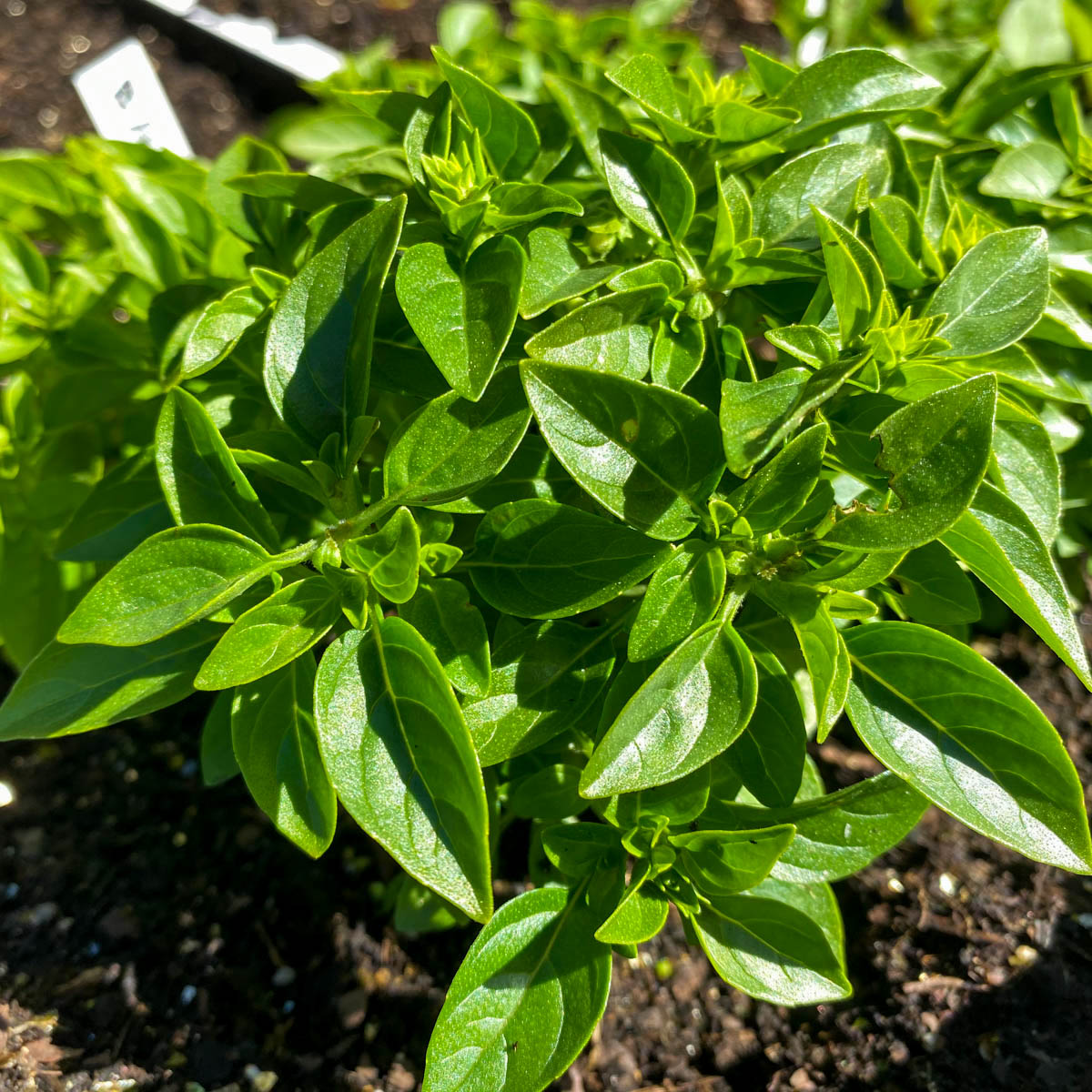
You only need a few things to grow bush basil:
- a 30x30 cm patch with airy, nutritious soil mix
- bush basil seeds
- a place with at least 6 hours of sunlight a day
In other words: an MM-Mini, or a square patch in one of our garden boxes, filled with MM-Mix.
Growing your own bush basil is super easy with the MM-Mix. If you grow in low-quality (potting) soil, disappointment is pretty much guaranteed. So don't skimp on soil mix: go for the best.
Growing your own bush basil is super easy with the MM-Mix. If you grow in low-quality (potting) soil, disappointment is pretty much guaranteed. So don't skimp on soil mix: go for the best.
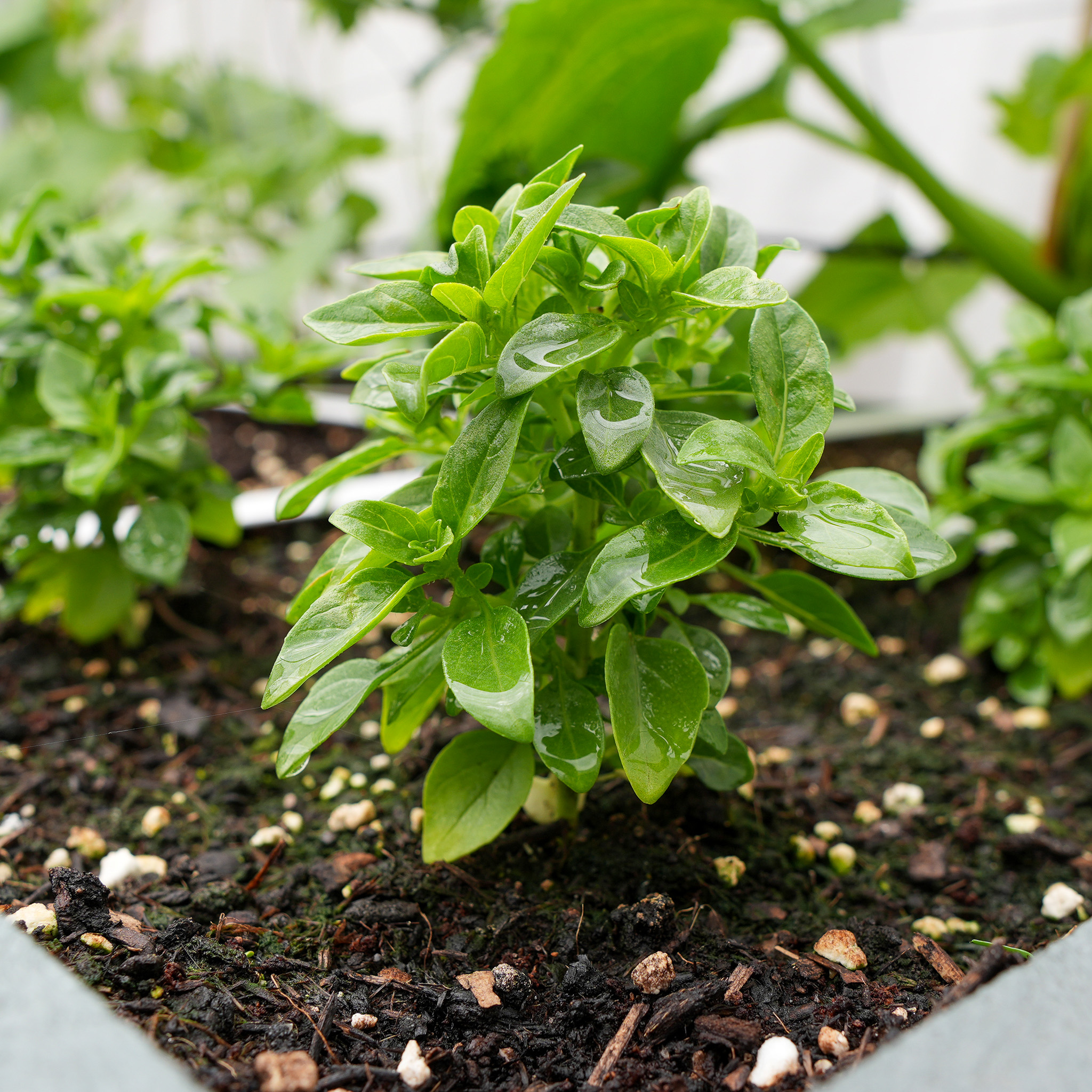
How do you sow and grow bush basil?
Our bush basil is included in the free Planty Gardening app. Use it, and you'll get step-by-step guidance from seed to harvest.
Each vegetable goes through a number of stages - we call them levels. The app tells you exactly what to do at each level and checks in when your plants are ready for the next.
So you don't need to know how to grow bush basil before you start: the app takes you through every step.
But if you'd like to read more about those steps, here's what the whole process looks like:
Each vegetable goes through a number of stages - we call them levels. The app tells you exactly what to do at each level and checks in when your plants are ready for the next.
So you don't need to know how to grow bush basil before you start: the app takes you through every step.
But if you'd like to read more about those steps, here's what the whole process looks like:
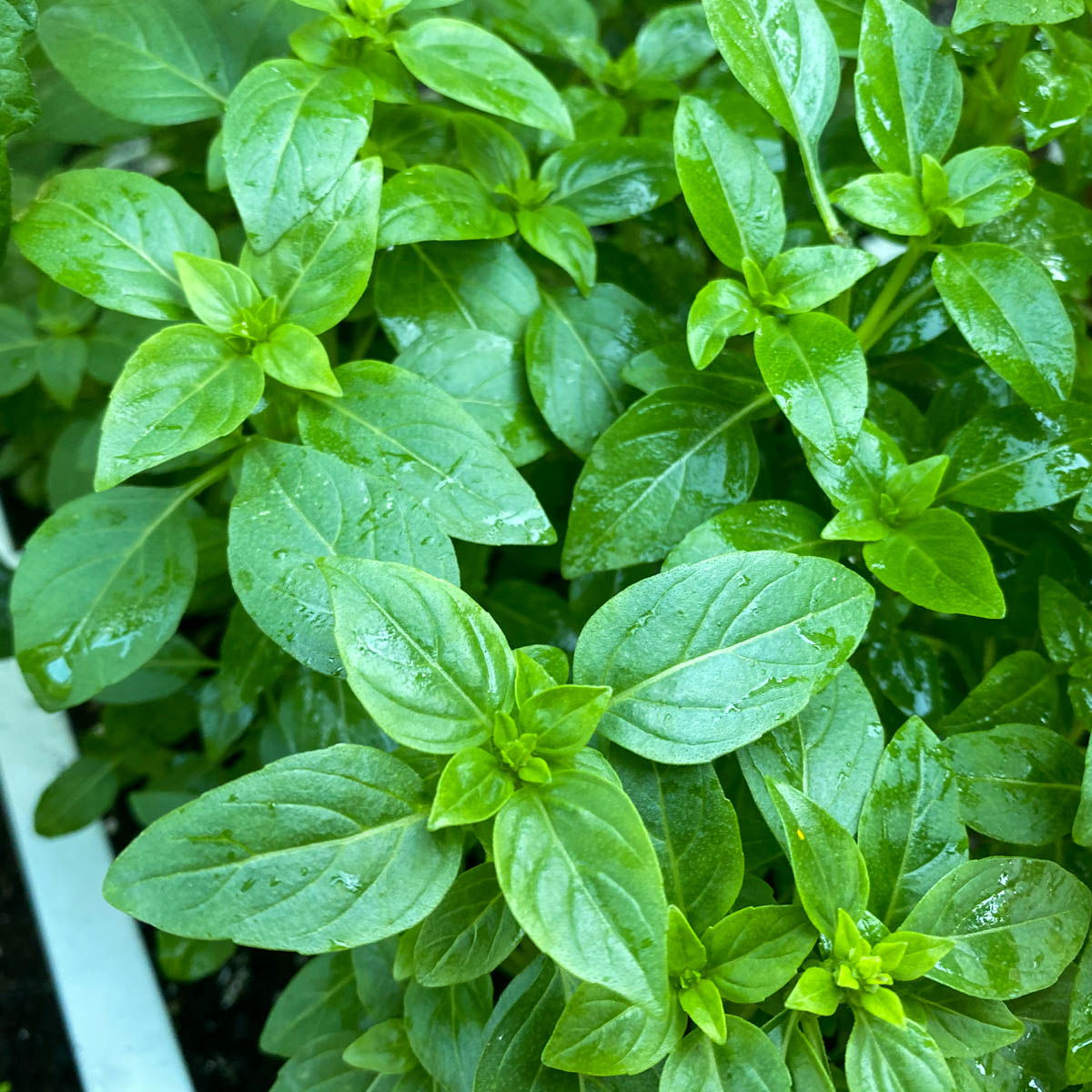
Level 1: Pre-sowing basil plants
Level 1: Start Bush basil indoors
Young basil seedlings rarely, if ever, survive outside - especially here in Northwestern Europe. They are immediately eaten by snails and other pests.
So, you start basil plants indoors first. The temperatures and conditions inside will help the seeds germinate. You move them into your garden box when the small plants are strong enough.
To pre-sow your basil indoors, use 4 pots of MM-Mix (or even better: a pre-sowing mixture). Put a few seeds in each pot and place them on the windowsill.
So, you start basil plants indoors first. The temperatures and conditions inside will help the seeds germinate. You move them into your garden box when the small plants are strong enough.
To pre-sow your basil indoors, use 4 pots of MM-Mix (or even better: a pre-sowing mixture). Put a few seeds in each pot and place them on the windowsill.
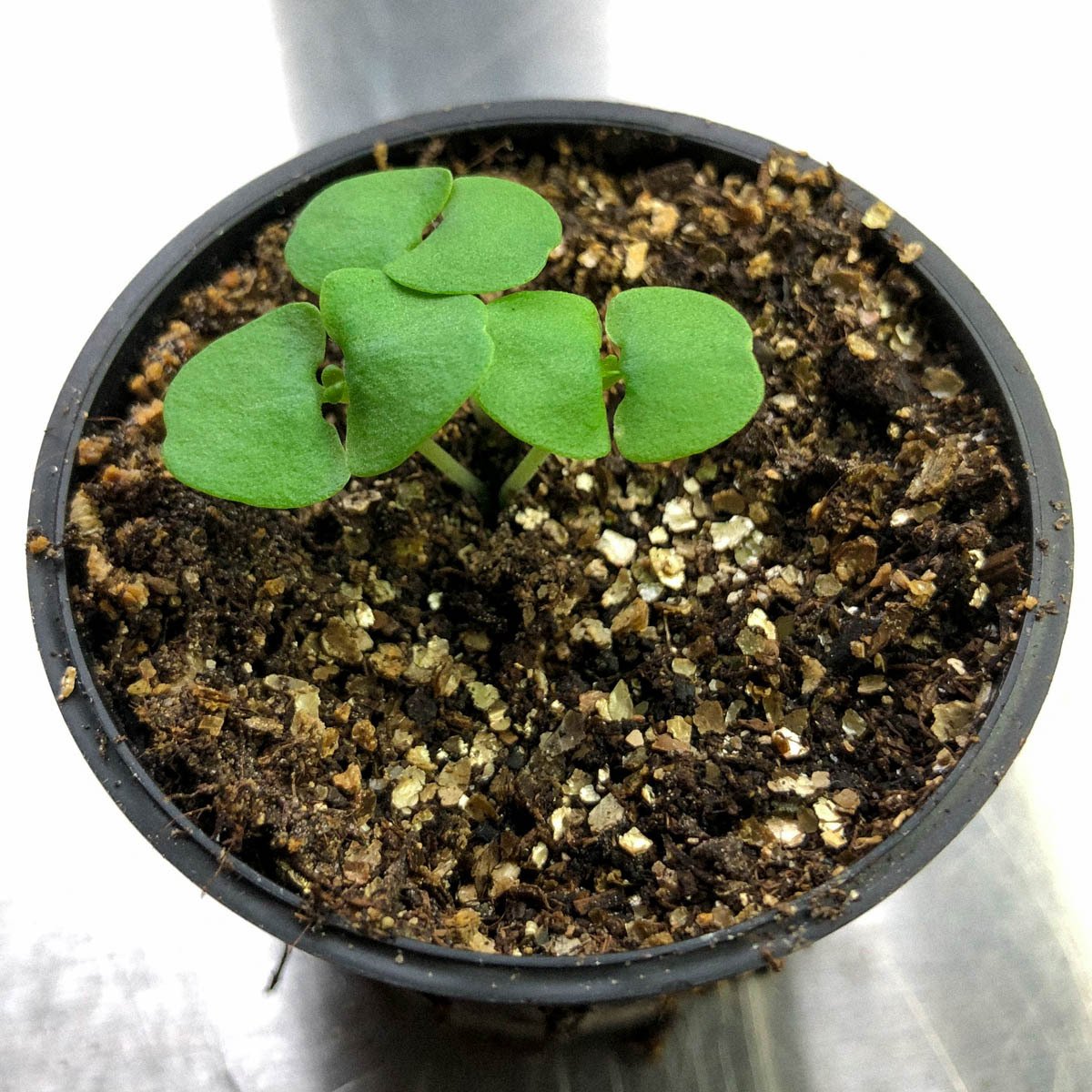
Level 2 and 3: Bush basil seedlings
Levels 2 and 3: Bush basil seedlings
As soon as you see the first seedlings, you know things are going well. They probably won't all come up at once, but just give it another week.
At the 3rd level, you thin out your seedlings. Leave the best seedling in each pot and ruthlessly cut away the rest. It might sound harsh, but it's necessary. The remaining plants get the room they need to grow.
In a week, you'll move on to the next level:
At the 3rd level, you thin out your seedlings. Leave the best seedling in each pot and ruthlessly cut away the rest. It might sound harsh, but it's necessary. The remaining plants get the room they need to grow.
In a week, you'll move on to the next level:
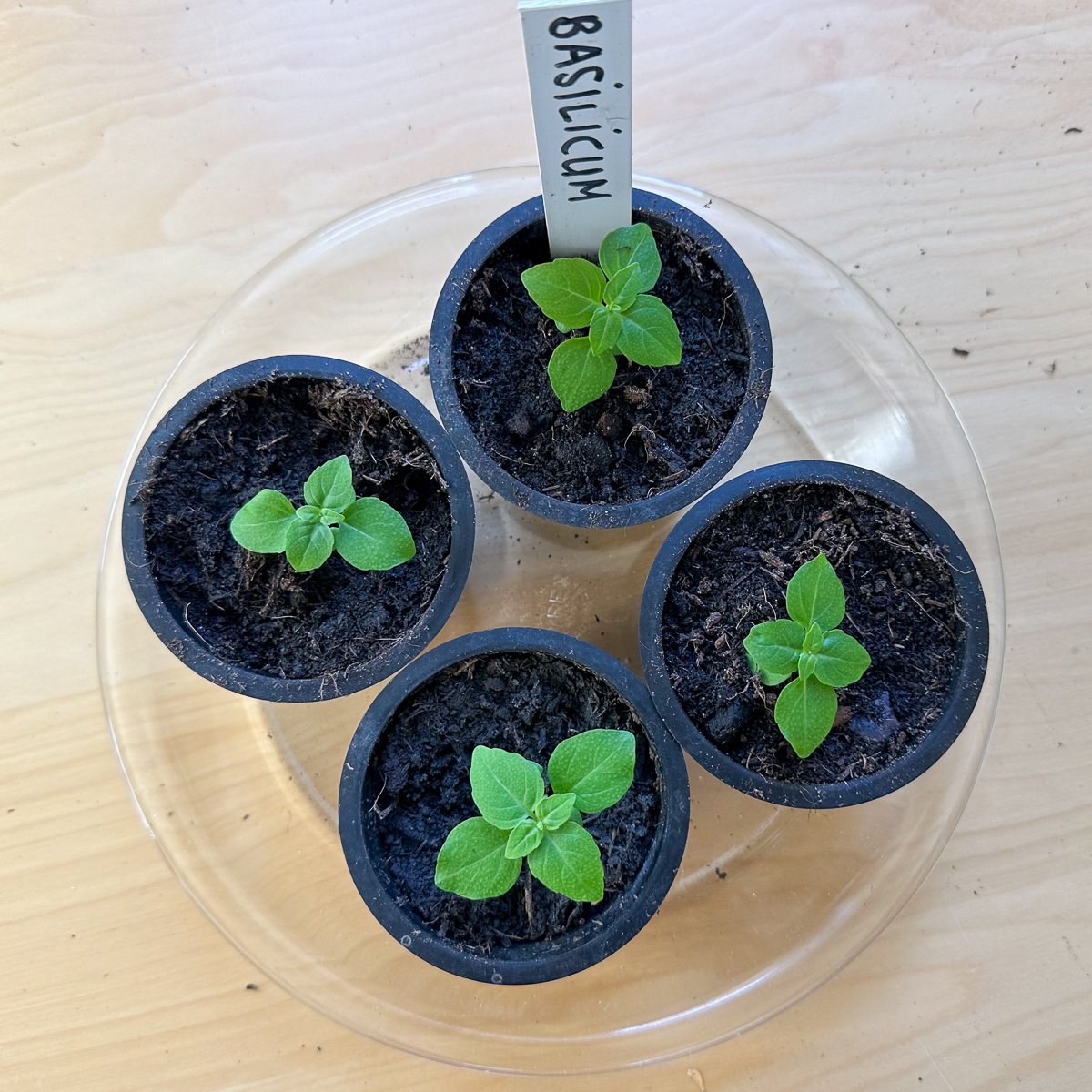
Level 4 and 5: Caring for your plants on the windowsill
Levels 4 and 5: Care for the plants on the windowsill
By now your seedlings have become small plants.
In these 5 weeks, you take care of them by making sure they
In these 5 weeks, you take care of them by making sure they
- get a lot of light
- are not too warm
- and get enough moisture
In the last weeks, cut off the tops of the main stems. This will allow the plants to grow side branches and get bushier.
Level 6-10: Getting used to the outdoors
Levels 6 to 10: Get the plants used to outdoor conditions
In the second half of May, let the plants get used to being outdoors. Take the pots outside for a little longer every day. By the last level, they've been outside the whole day and only come inside at night.
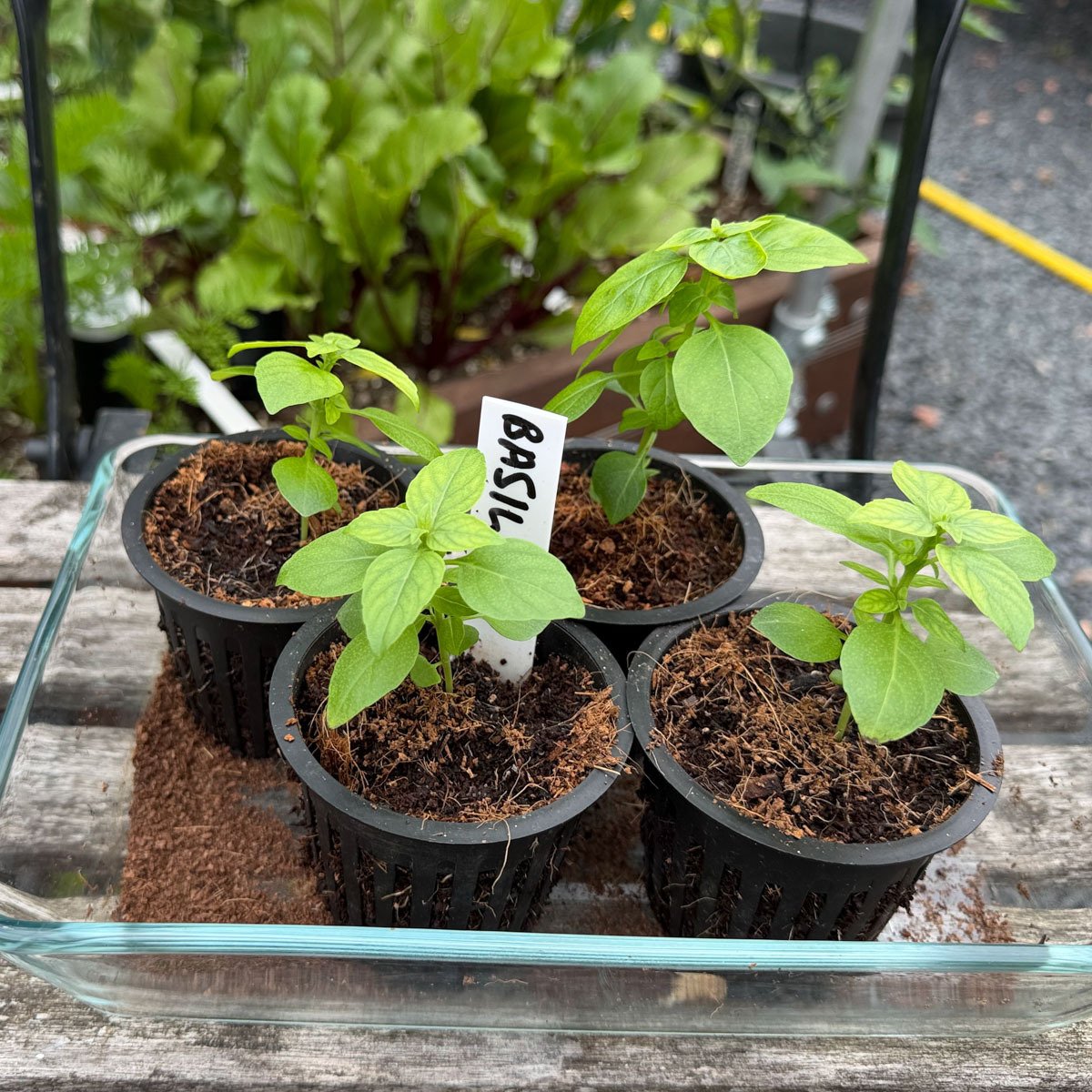
Level 11: Transfer your basil plants outdoors
Level 11: Plant into your raised bed or an MM-mini
When your plants have gotten used to being outside, you can transfer them to your garden box or MM-Mini.
After transplanting, there isn't much more to do: your plants pretty much grow on their own.
After transplanting, there isn't much more to do: your plants pretty much grow on their own.
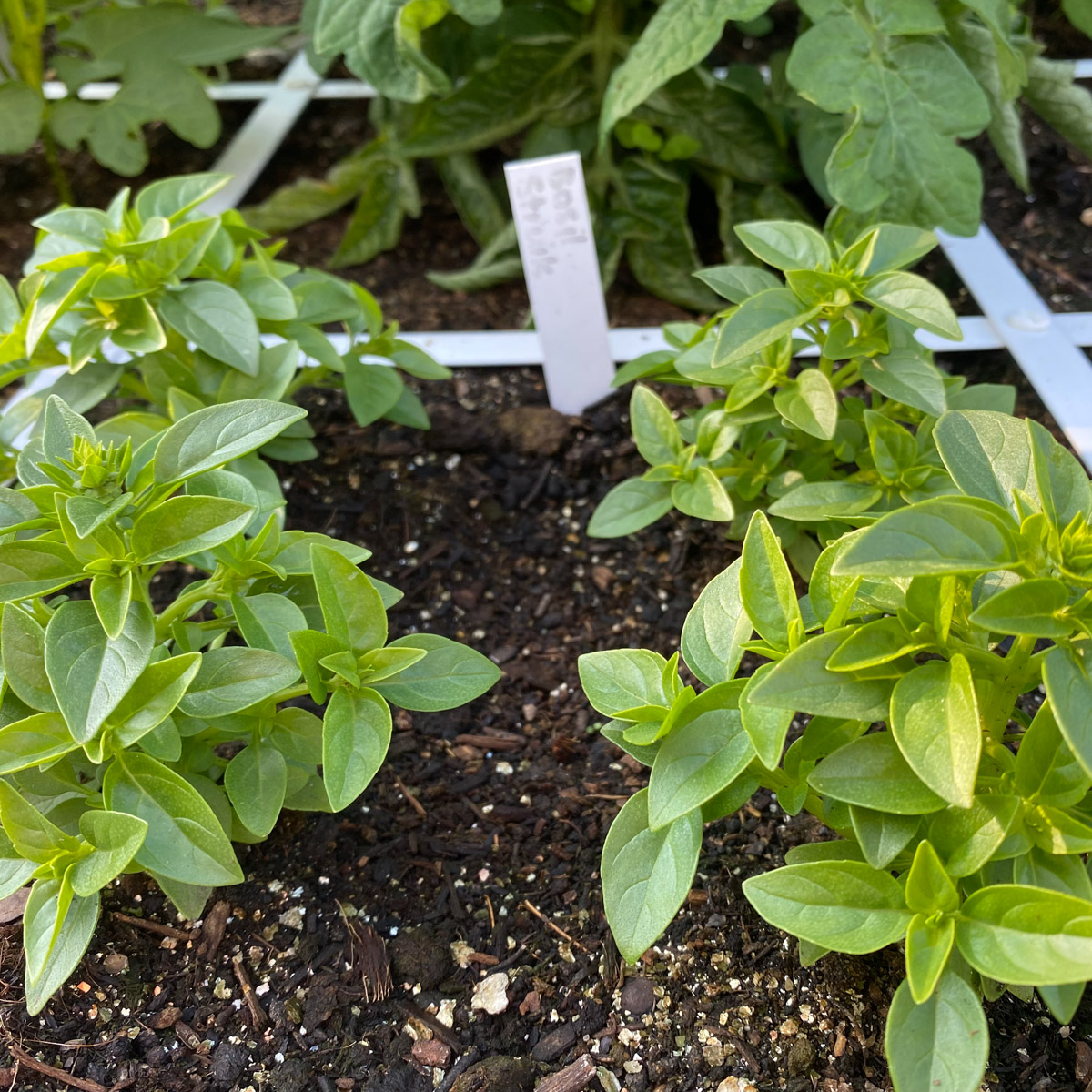
Level 12: Harvesting and blooming
Level 12: Harvesting and flowering
About 10 weeks after sowing, the plants are ready to harvest. Cut or pick a few of the leaves.
Soon the plants will start to flower. Remove the flower buds right away. That will encourage the plant to make more leaves and get bushier.
You can continue to harvest basil leaves until it gets cold, usually around October.
Soon the plants will start to flower. Remove the flower buds right away. That will encourage the plant to make more leaves and get bushier.
You can continue to harvest basil leaves until it gets cold, usually around October.
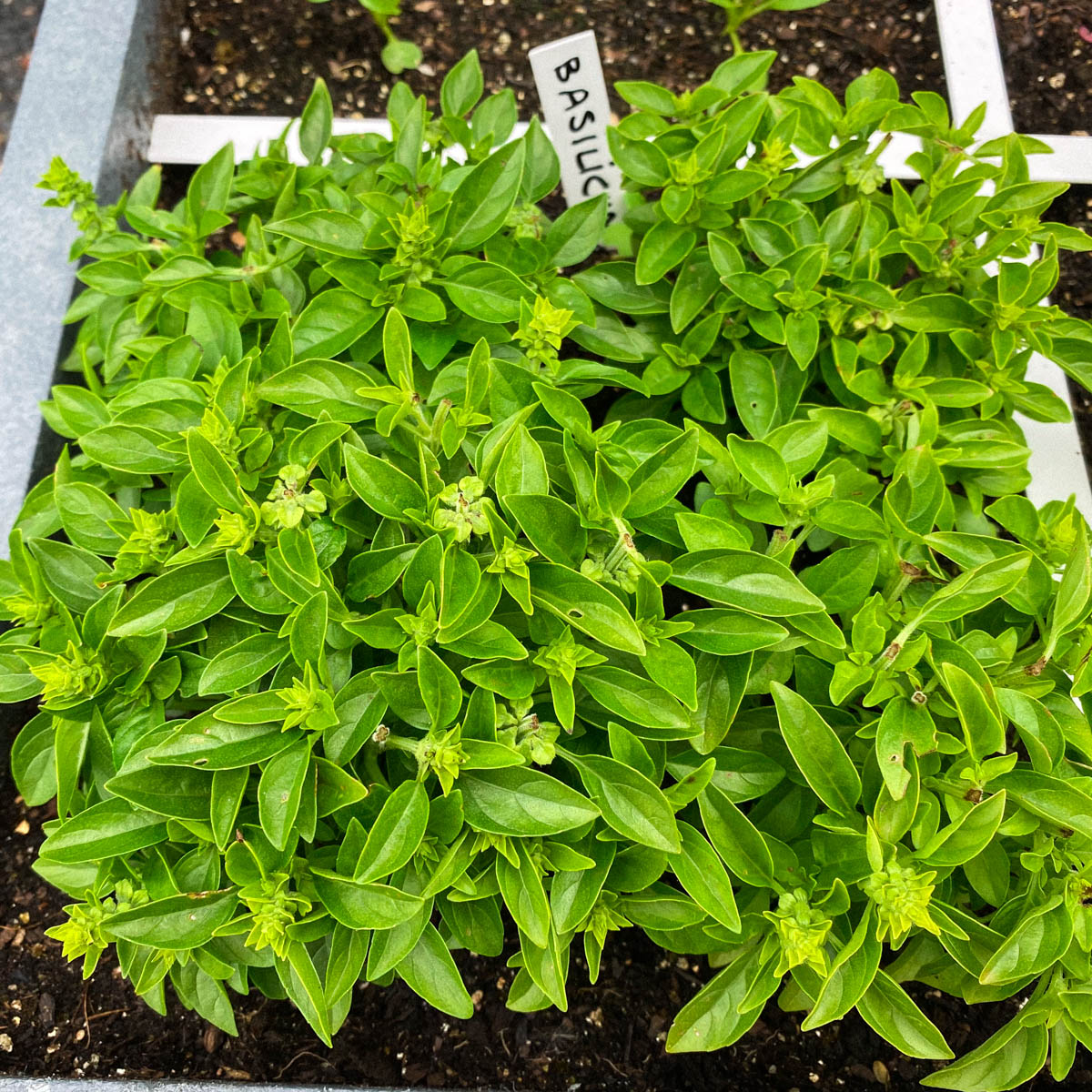
What do you use bush basil for?
The leaves are delicious in soup, salads, and pasta. Don't add it until the very last minute: basil quickly loses its flavor when cooked.
Basil and tomato are a match made in heaven: add mozzarella, oil, and balsamic you have a world-class salad.
If you have a lot of basil plants, make a pesto.
The flowers are also edible but have a stronger flavor. Ideal for making basil oil.
Basil and tomato are a match made in heaven: add mozzarella, oil, and balsamic you have a world-class salad.
If you have a lot of basil plants, make a pesto.
The flowers are also edible but have a stronger flavor. Ideal for making basil oil.
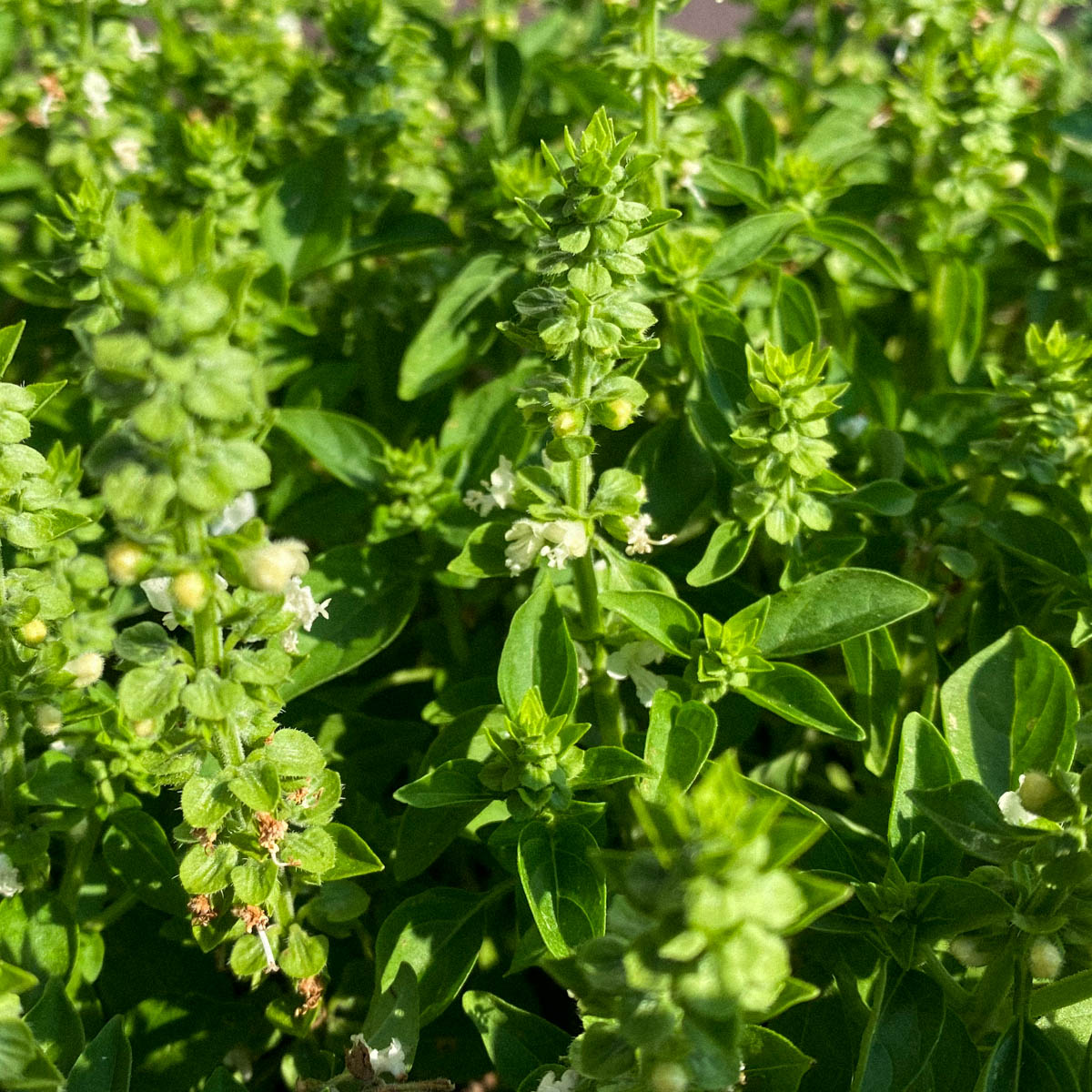
At the end of the season
The app gives you a final reminder: it's too cold now and time to remove your plants.
So, what is stopping you from growing Bush basil?
It is a delicious herb, fairly easy to grow, and the little bushes look beautiful. With our app and materials, it is almost impossible to fail.
Good luck!