
How to sow and grow liquorice mint
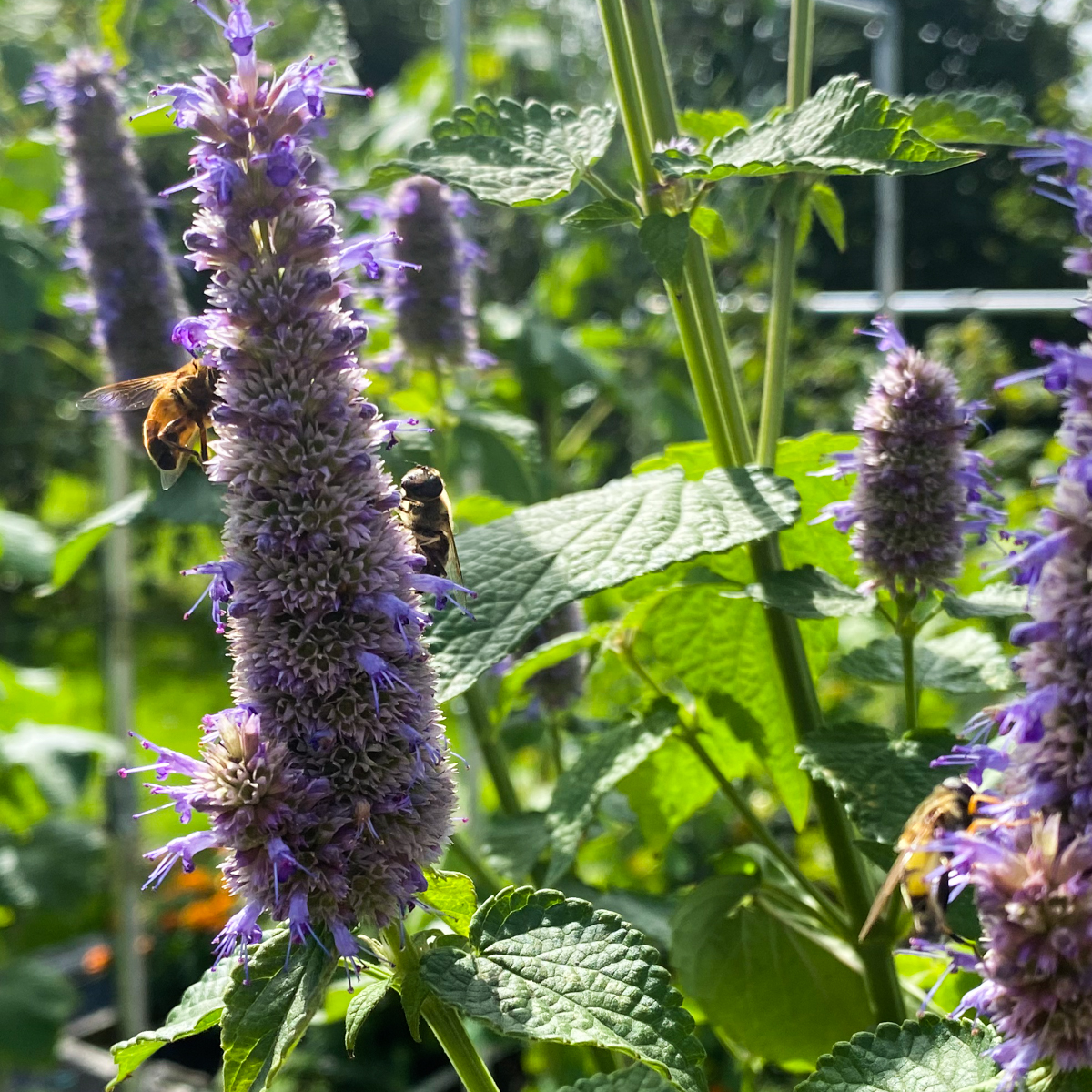
Liquorice mint is an annual herb here in the Netherlands, but it can survive mild winters too. The whole plant is edible and the beautiful flowers attract lots of bees, bumblebees, and butterflies from July on.
What is licorice mint?
In the Netherlands, licorice mint is also known as Korean mint.
The leaves and flowers taste like anise and licorice, and in the past, the plant was also used to make licorice candies.
Originally, the plant came from the central and western parts of North America, as well as China. Nowadays, it is cultivated everywhere.
In this context, dropplant is an annual herb, but it can survive well in mild winters.
Liquorice Mint
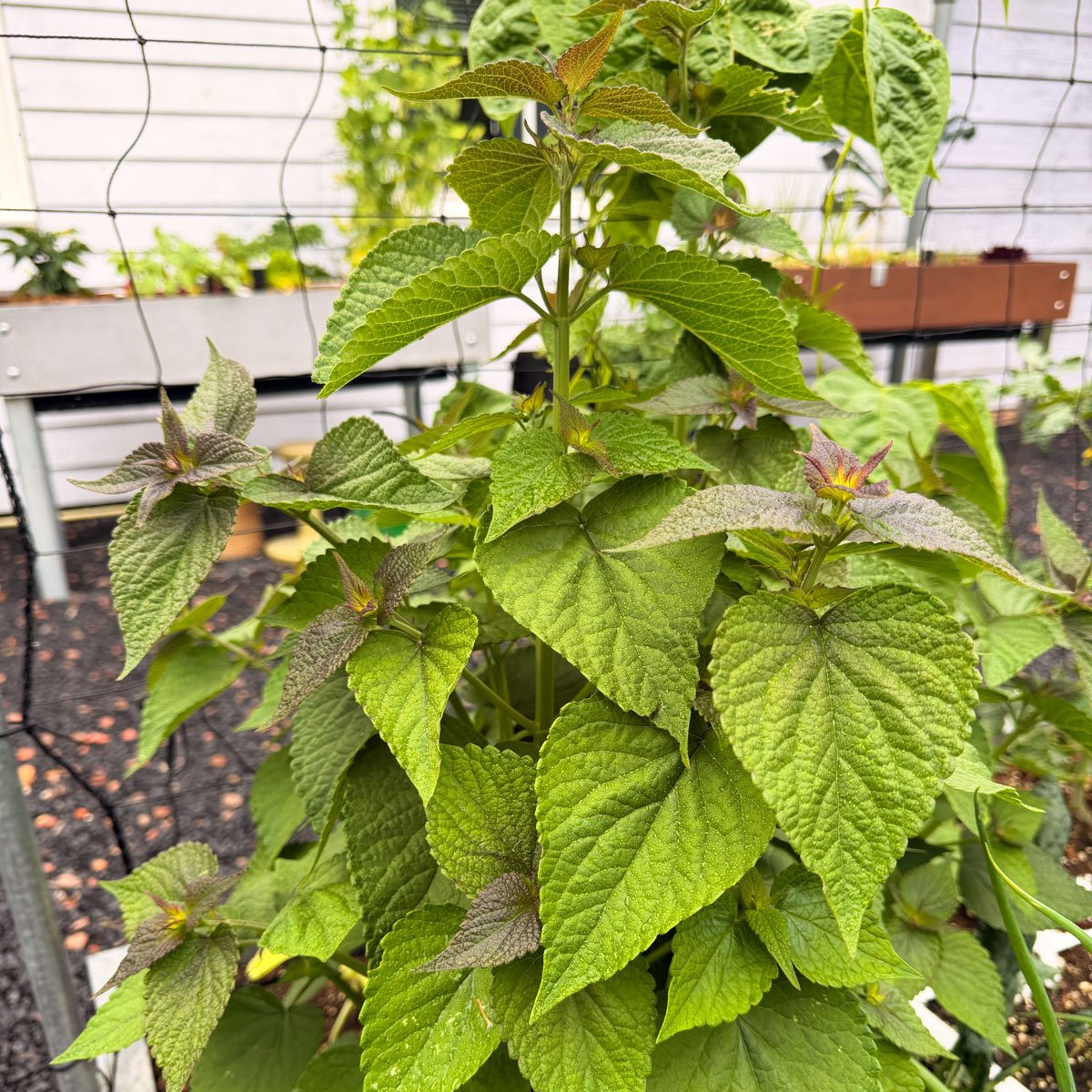
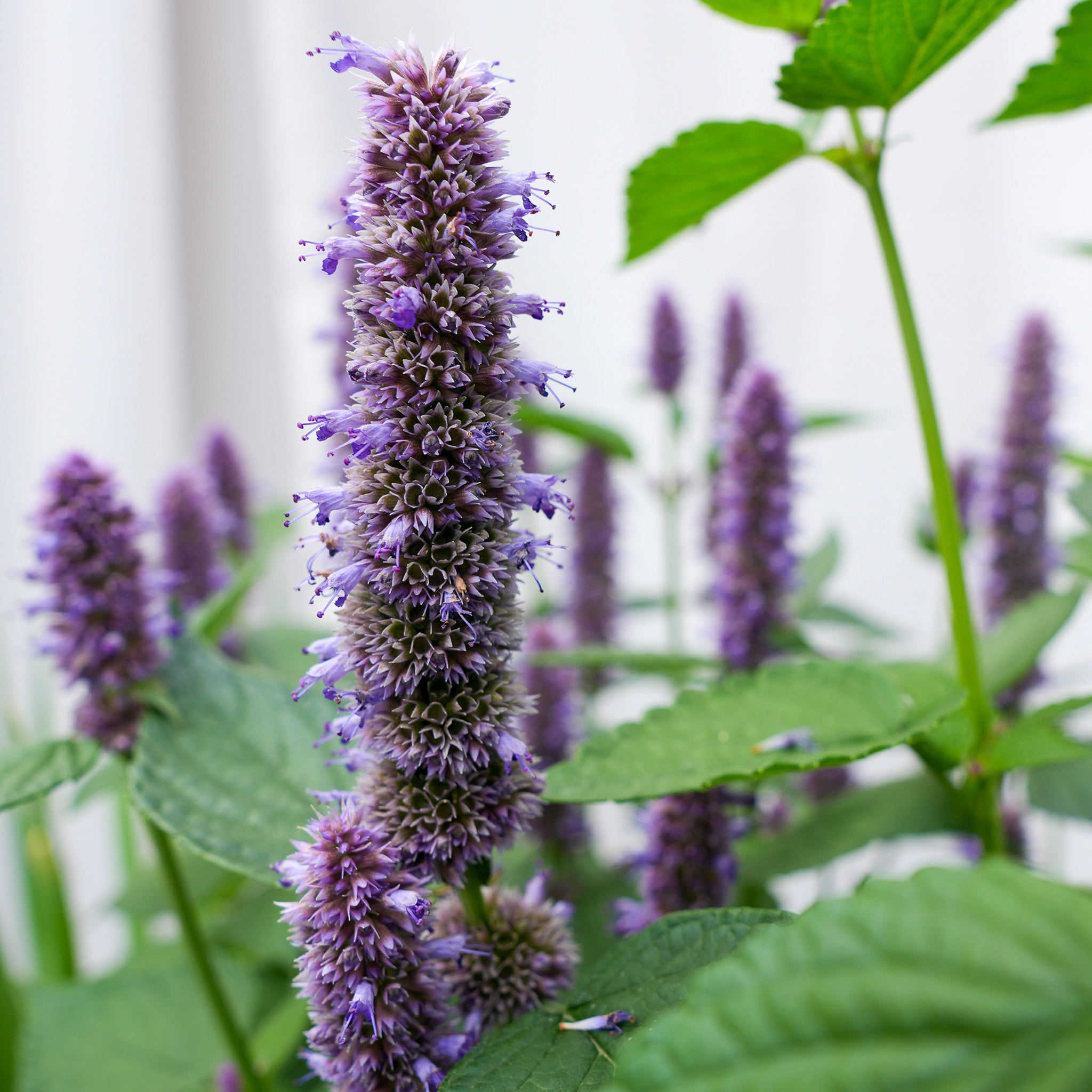
Our liquorice mint stays compact and produces beautiful, full clusters of lilac flowers.
It is officially an annual herb, but in practice our winters are usually mild enough for it to survive. The flowers, leaves, and seeds are all edible, and the leaves make delicious tea, much like mint.
You can sow outdoors from May, but because the seeds are difficult to germinate there and slugs love the seedlings, we prefer to start them indoors for a short period. The app provides instructions for starting them indoors from March through May.
It is officially an annual herb, but in practice our winters are usually mild enough for it to survive. The flowers, leaves, and seeds are all edible, and the leaves make delicious tea, much like mint.
You can sow outdoors from May, but because the seeds are difficult to germinate there and slugs love the seedlings, we prefer to start them indoors for a short period. The app provides instructions for starting them indoors from March through May.
- Variety: Agastache foeniculum
- Family: flowers
- Plants per square: 1
- Height: 60 to 100 cm
- Start indoors: March through May
- Sowing depth: 0.2 to no more than 0.5 cm
- Germination: 7 to 21 days from 18°C
- Time to flower: from 11 to 12 weeks
- Sunlight: preferably full sun, although some shade is fine
- Packet contents: about 100 seeds, enough for more than 30 squares
Note: these seeds have an expiry date in 2027. Their germination rate will gradually decrease after that, but they can still be sown successfully.
How to sow and grow liquorice mint?
This dropplant is featured in the free MM app. If you use it, it will guide you from seed to harvest.
Each plant goes through several stages - we call them levels. The app tells you exactly what to do in each level and regularly prompts you to check if your plants are ready to move on to the next level.
So, you don't need to know how to successfully grow dropplant in advance.
But if you're interested in reading some information beforehand, I'll now tell you what the whole process will look like.
What do you need to grow your own licorice mint?
Start liquorice mint indoors and only move it to your outdoor raised bed once it has become a small plant.
Besides the seeds, you need the following to start it indoors:
Besides the seeds, you need the following to start it indoors:
- small MM-Airpots
- MM seed-starting mix or MM coconut seed-starting mix
- kitchen film and elastic bands (only with traditional MM seed-starting mix, not the coconut version)
- one label for each pot
Once the plant is large enough to go outside, you need:
- a 30 by 30 cm square
- Makkelijke Moestuin Mix or MM coconut mix
- a spot with at least 6 to 8 hours of sunlight a day
Level 1: Sowing liquorice mint plants
Level 1: Start liquorice mint indoors briefly
Liquorice mint seedlings struggle to emerge outdoors and are usually eaten straight away by slugs and other pests.
Start the plants indoors, move them outside to a sheltered place, and only plant them in their own square once they are strong.
Use 2 small Airpots with MM seed-starting mix.
Put a few seeds in each pot, cover them with a piece of kitchen film (only with traditional MM seed-starting mix, not the coconut version), and place them on the windowsill.
Start the plants indoors, move them outside to a sheltered place, and only plant them in their own square once they are strong.
Use 2 small Airpots with MM seed-starting mix.
Put a few seeds in each pot, cover them with a piece of kitchen film (only with traditional MM seed-starting mix, not the coconut version), and place them on the windowsill.
Level 2 and 3: Liquorice mint seedlings
Levels 2 and 3: Move outdoors
As soon as you see the first seedlings, you know things are going well. They probably won't all come up at once, but just give it another week or 2. Sometimes it may take a little longer.
Then put the pots in a light but unheated place: they won't do nearly as well if it's too warm.
At level 3, you thin out your seedlings. Leave the best seedling in each pot and ruthlessly cut away the rest. It might sound harsh, but it's necessary. You're giving the remaining plants enough room to grow.
Then put the pots in a light but unheated place: they won't do nearly as well if it's too warm.
At level 3, you thin out your seedlings. Leave the best seedling in each pot and ruthlessly cut away the rest. It might sound harsh, but it's necessary. You're giving the remaining plants enough room to grow.
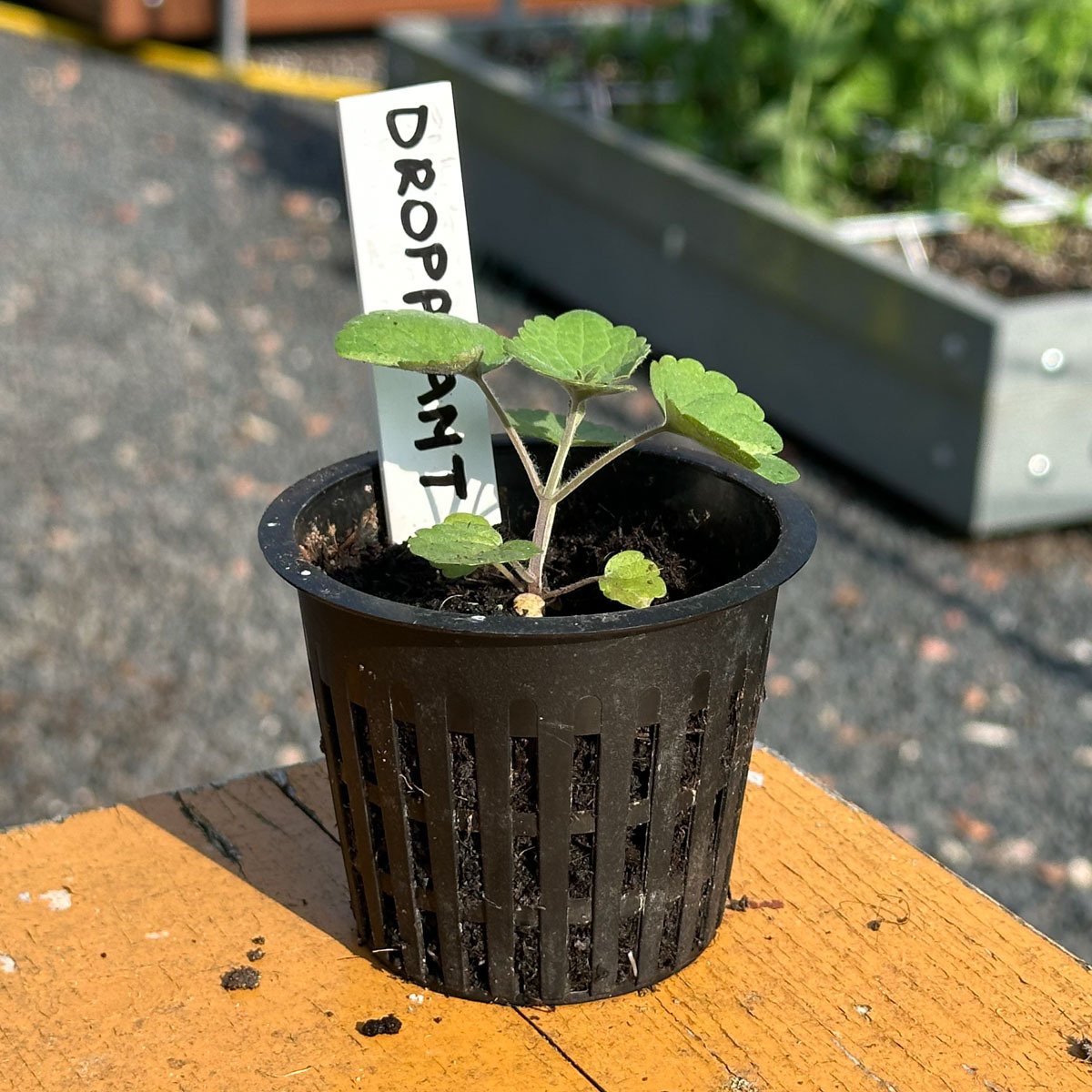
Level 11: Transfer the most succesful plant
Level 4: Plant it in its own square
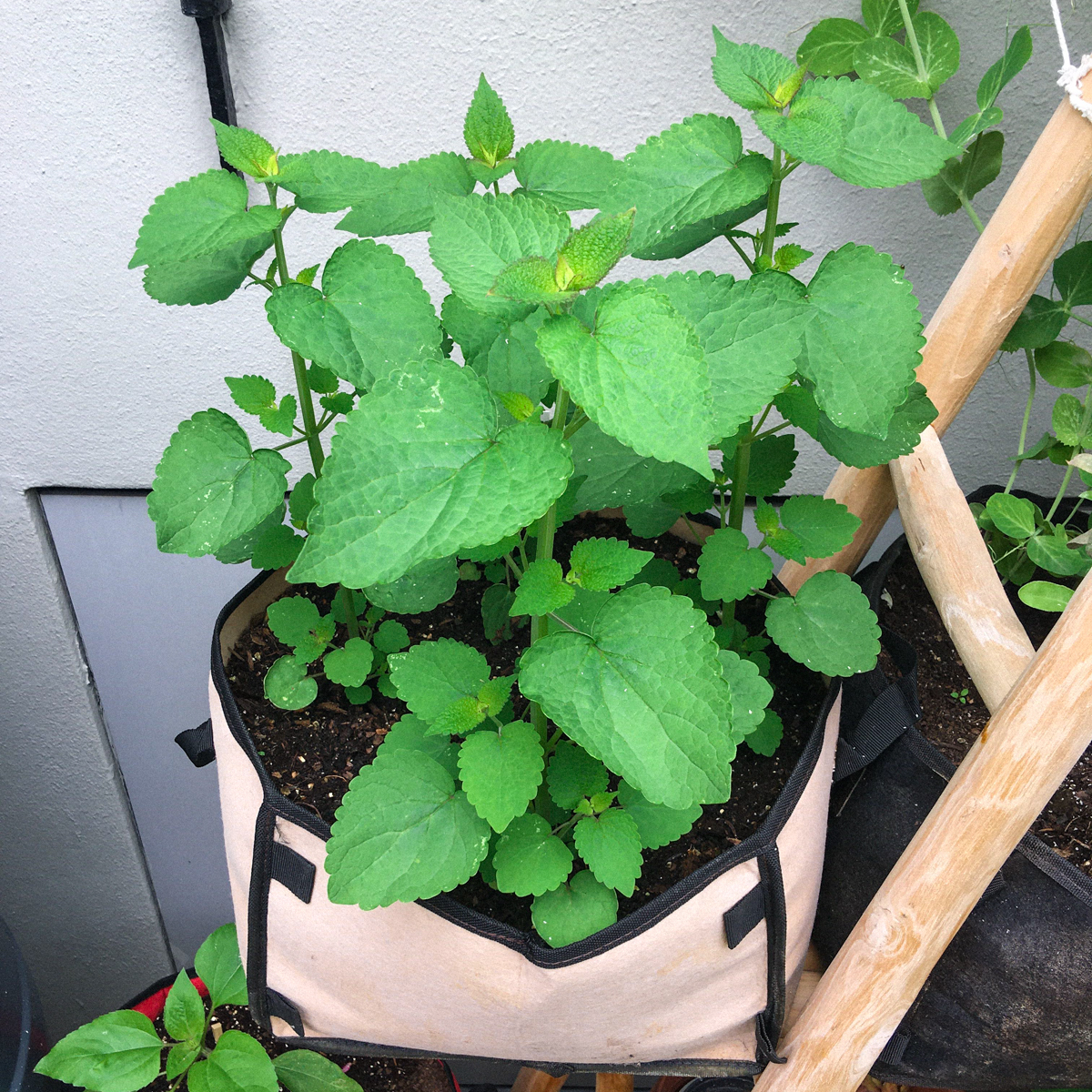
About 6 weeks after sowing, the plants are large enough to go into their own square.
Pinch out the tips of the main stems at the same time. This encourages the plants to grow side shoots and become bushier.
Pinch out the tips of the main stems at the same time. This encourages the plants to grow side shoots and become bushier.
From then on, there is very little to do. The plant grows by itself: slowly at first, then it shoots upwards.
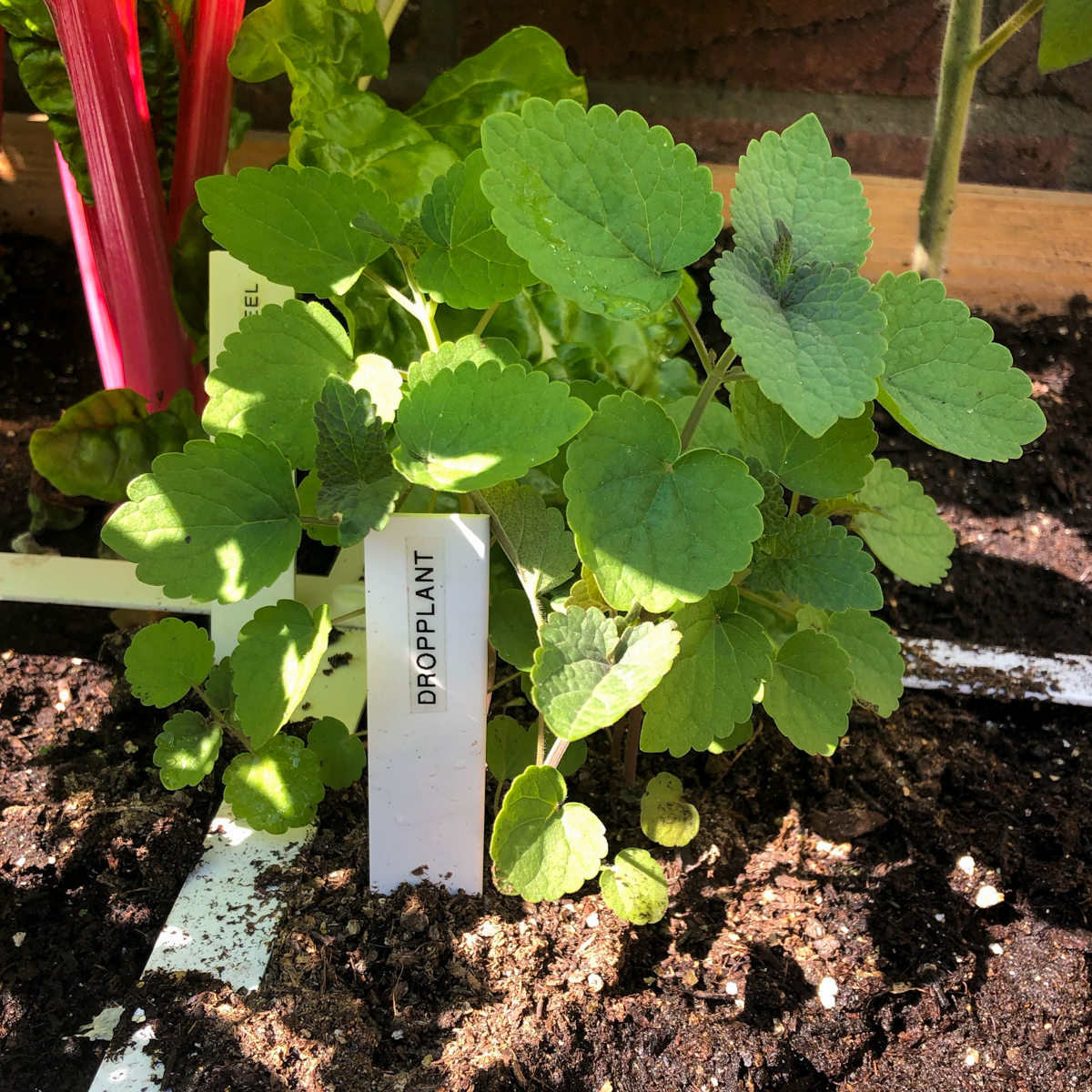
Level 12. Harvesting liquorice mint
Level 5: Harvesting and flowering liquorice mint
About 10 weeks after sowing, the plant is ready to harvest. Cut or pick a few of the leaves.
The liquorice mint will soon start to bloom. The purple flowers will attract masses of bees, bumblebees and butterflies. It's amazing, they won't leave your plant alone 🙂
Prune the plant now and then, and new side shoots will grow. It'll get beautifully bushy and stay that way through fall. You can continue to harvest leaves (and flowers) until it gets cold, usually around October.
The liquorice mint will soon start to bloom. The purple flowers will attract masses of bees, bumblebees and butterflies. It's amazing, they won't leave your plant alone 🙂
Prune the plant now and then, and new side shoots will grow. It'll get beautifully bushy and stay that way through fall. You can continue to harvest leaves (and flowers) until it gets cold, usually around October.
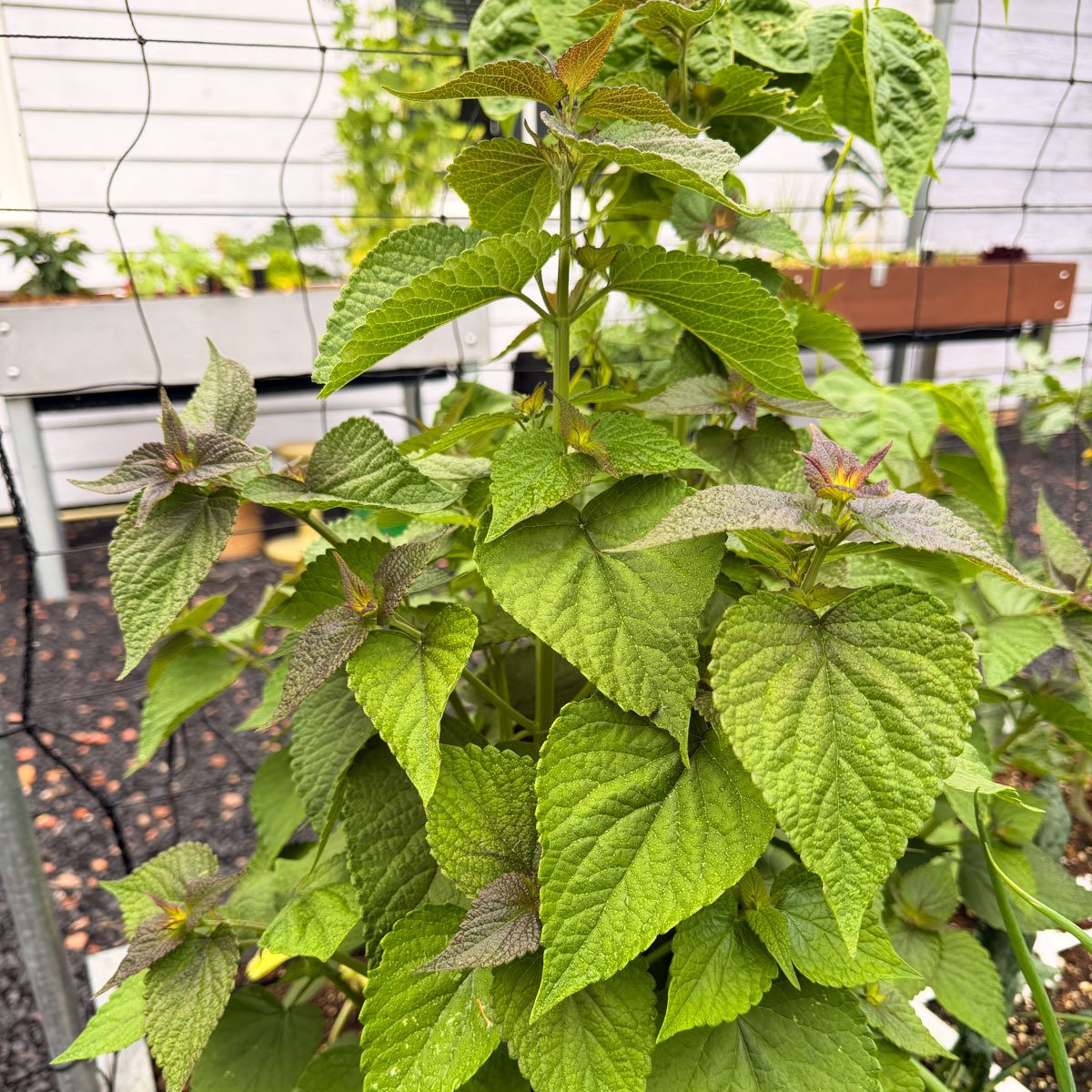
What do you use liquorice mint for?
The leaves and flowers are edible. The small flowers look nice tossed in a salad.
Liquorice mint leaves are delicious to chew on and can be used to make tea. Or add the leaves to spicy stews, pancakes, bread, and desserts.
Liquorice mint leaves are delicious to chew on and can be used to make tea. Or add the leaves to spicy stews, pancakes, bread, and desserts.

At the end of the season
At the end of the season, you will receive the final notification. By then, the plant will probably look untidy and the flowers will have dried out. Leave them standing for a while, because birds love the tiny seeds.
Finally, remove the plant and clear the square for the next season.
You can also leave it in place: it will grow again the following spring. It will become much larger, though, and soon outgrow a single square.
You can also leave it in place: it will grow again the following spring. It will become much larger, though, and soon outgrow a single square.
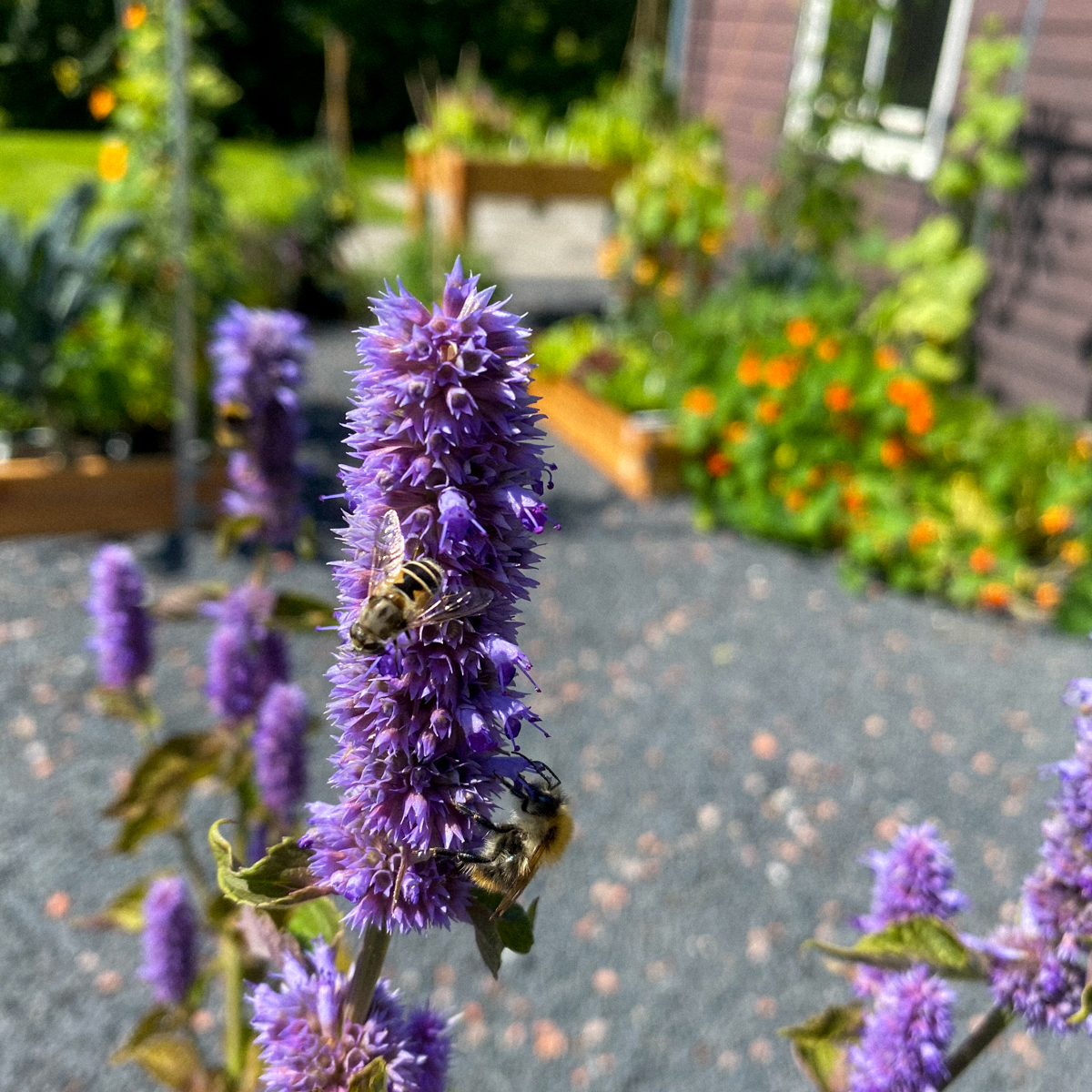
So: what's keeping you from growing your own liquorice mint?
It's a tasty herb, easy to grow, and is one of the best plants for attracting tons of bees and bumblebees to your garden.
Plus: with our app and materials, it's practically impossible to fail 😉
Order your liquorice mint seeds here or get started with a complete starter kit:
Plus: with our app and materials, it's practically impossible to fail 😉
Order your liquorice mint seeds here or get started with a complete starter kit:
Enjoy!