
Techniques
Repotting tomato seedlings
If you start tomatoes indoors, move them into a larger pot after about a month. This encourages extra roots and helps the plants grow larger and stronger.
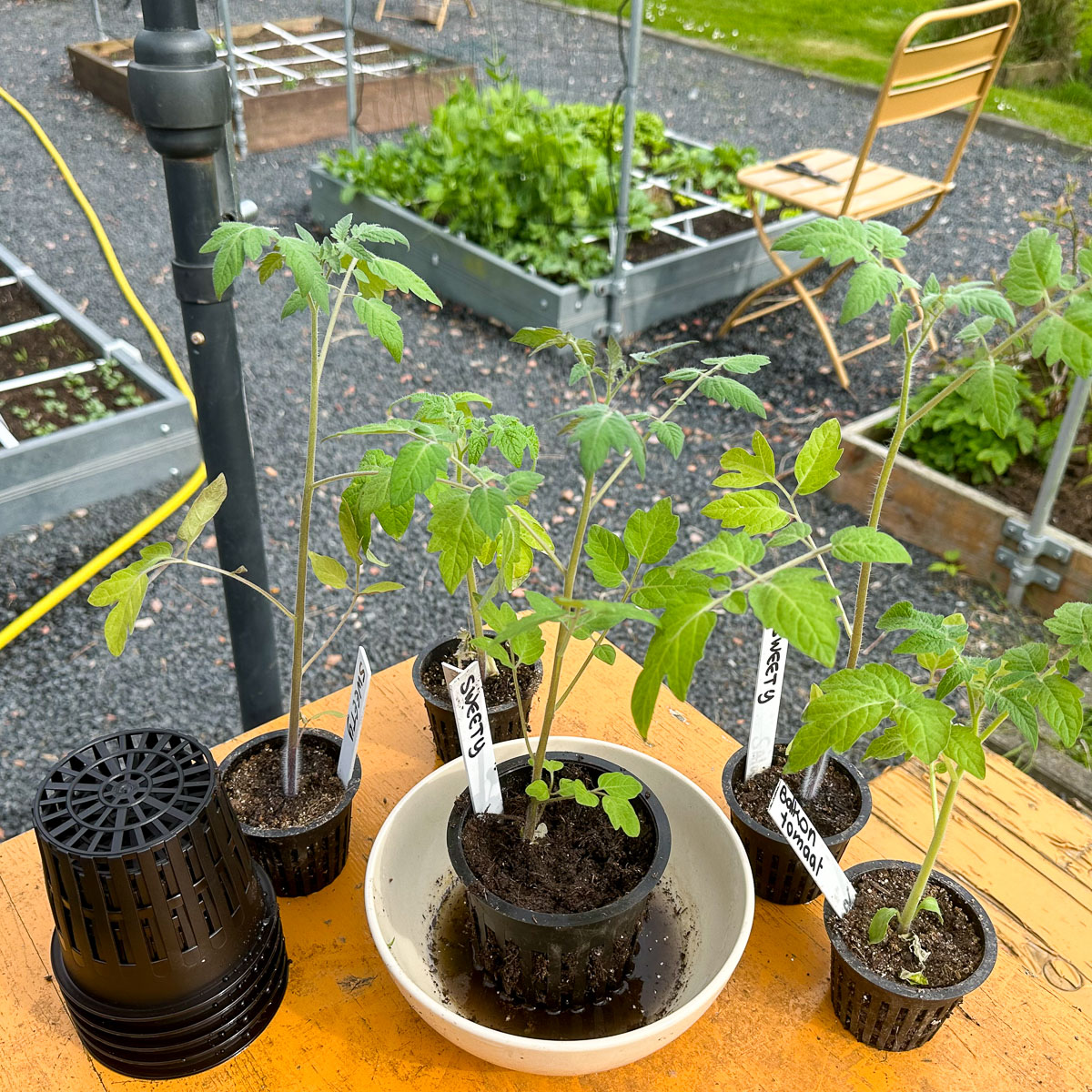
Since 2023, we have used large MM-Airpots for repotting tomatoes and raising large summer vegetables. The plants grow just as well as they did in the larger conventional pots we used before, but need less MM-Mix and less space. Some older photographs still show ordinary pots.
About tomatoes
We start tomatoes indoors from late March to late April, using small Airpots and ready-made MM coconut seed-starting mix.
Keep the plants in a bright place and the mix moist, and they will grow quickly. By late April or early May, they will look something like this:
Keep the plants in a bright place and the mix moist, and they will grow quickly. By late April or early May, they will look something like this:
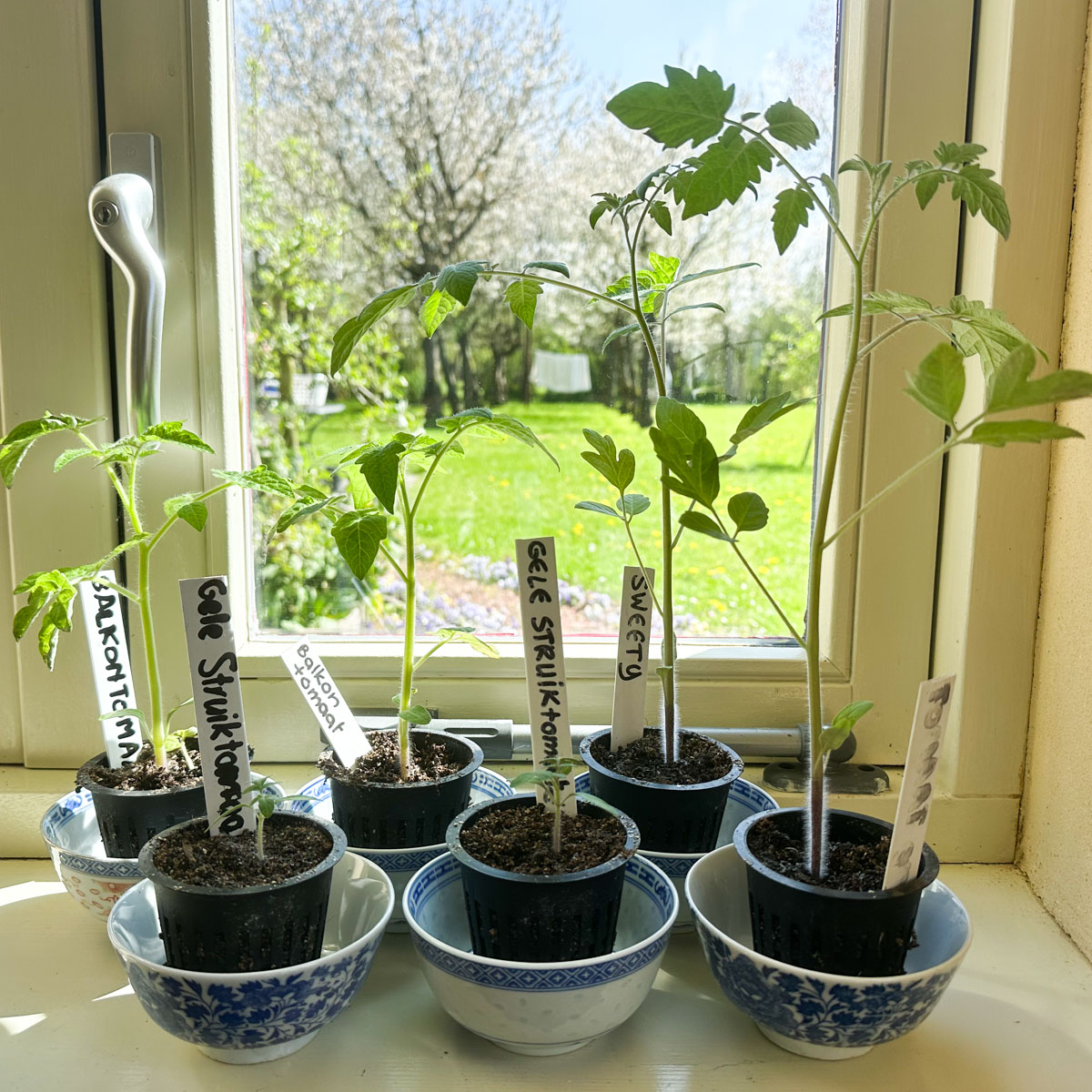
Repotting helps tomatoes grow faster and stronger
After four or five weeks, the plants become too large for the small Airpots and have used up most of the nutrients in the growing medium. Without enough food, the leaves lose their deep green colour and the plants never become properly sturdy.
Move them into large Airpots filled with classic MM-Mix or Makkelijke Moestuingrond*. This gives them fresh nutrients and more room to grow.
You will need:
Move them into large Airpots filled with classic MM-Mix or Makkelijke Moestuingrond*. This gives them fresh nutrients and more room to grow.
You will need:
- fresh classic MM-Mix or Makkelijke Moestuingrond
- a bowl for the Airpots
- water
- large Airpots
(If you do not have large Airpots, ordinary pots will work too. They should be at least 18 cm deep and have a drainage hole in the bottom.)
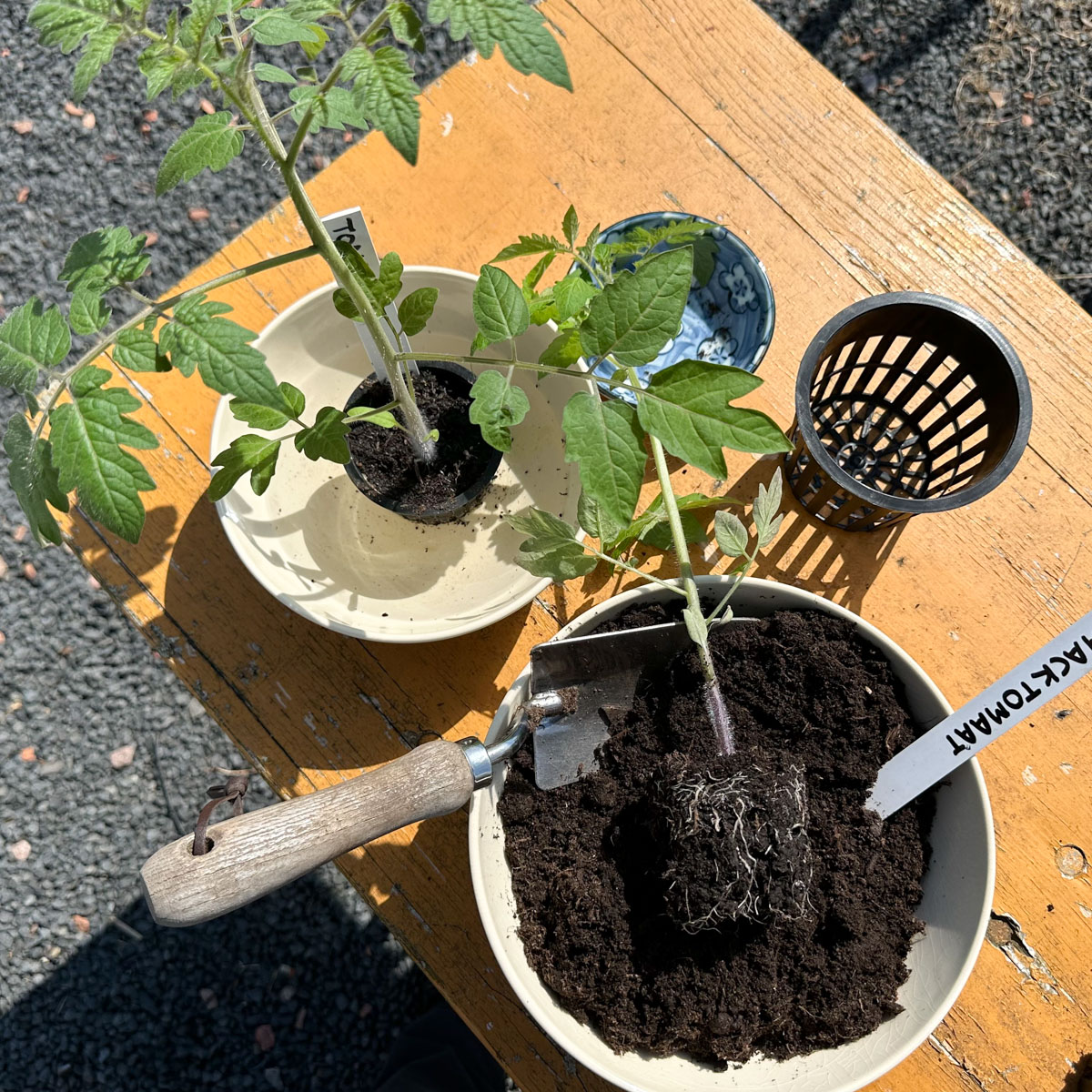
Classic MM-Mix contains compost, peat fibres, coconut coir, wood fibres and plant food. The nutrients are already included, so you can use it straight away when repotting tomato seedlings. Moisten it thoroughly first and keep it moist afterwards. Once classic MM-Mix dries out completely, it absorbs water less easily.
Makkelijke Moestuingrond comes as three components: compressed cocopeat blocks, Makkelijke Moestuin plant food and worm compost. Expand the cocopeat with water, then mix in the plant food and worm compost thoroughly. This gives you a complete, airy growing medium that you can also use for repotting tomato seedlings. After drying out, Makkelijke Moestuingrond absorbs water more easily than classic MM-Mix.
Preparing and repotting
Stand the small Airpot containing your tomato plant in a bowl of water for a moment. A moist root ball is easier to remove from the pot than a dry one.
Place the plant at the bottom of the larger Airpot:
Place the plant at the bottom of the larger Airpot:
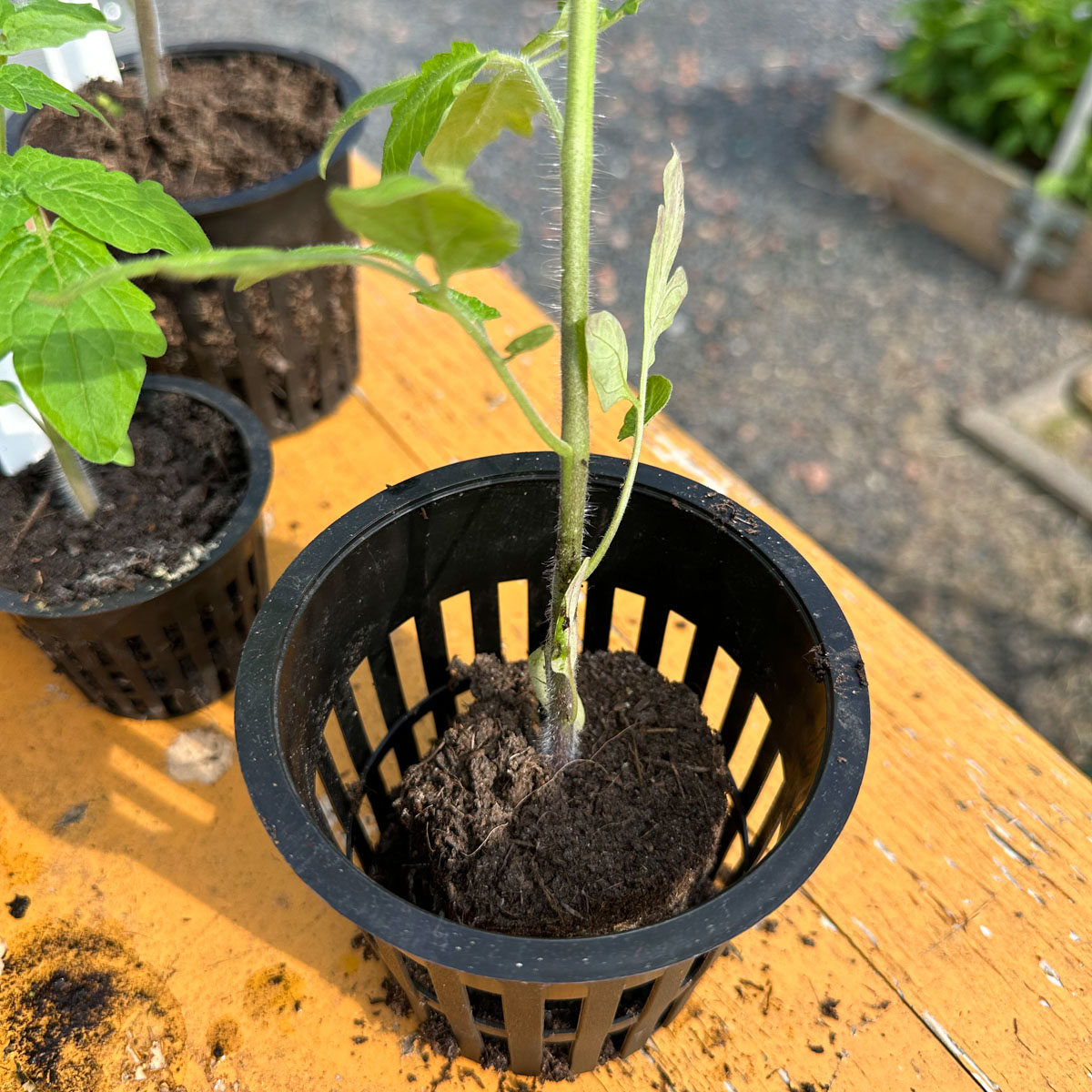
Fill the pot right to the top with mix.
Part of the stem and the lowest leaves are now below the surface. Most plants cannot cope with that, but tomatoes form new roots along their buried stems. These extra roots help the plant grow larger and stronger.
Stand the pot in a bowl of water so the mix can slowly absorb it.
Part of the stem and the lowest leaves are now below the surface. Most plants cannot cope with that, but tomatoes form new roots along their buried stems. These extra roots help the plant grow larger and stronger.
Stand the pot in a bowl of water so the mix can slowly absorb it.
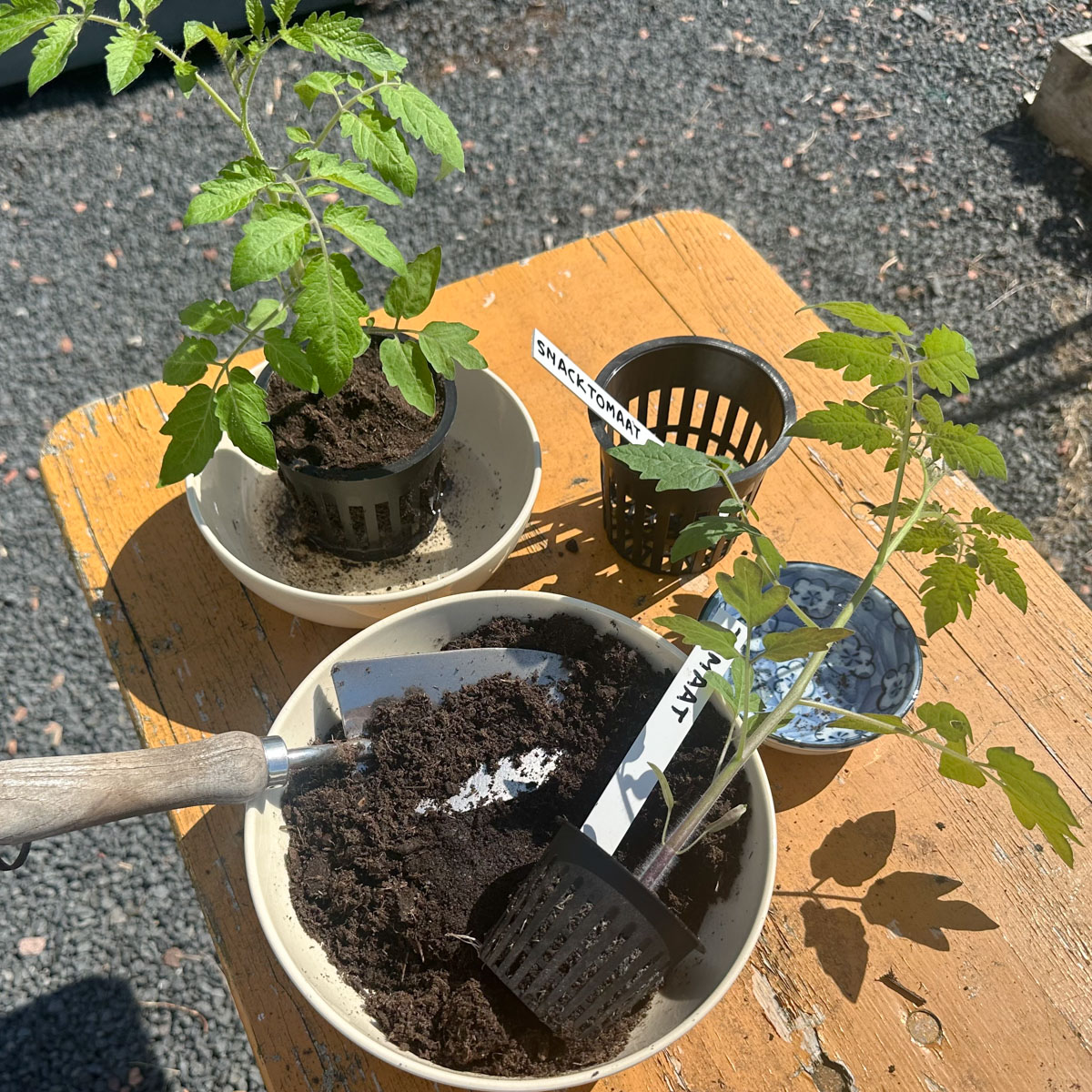
Put the pots back in a bright place. If the tomato plants become top-heavy and fall over as they grow, support them with a small cane.
Repotting into an MM-mini
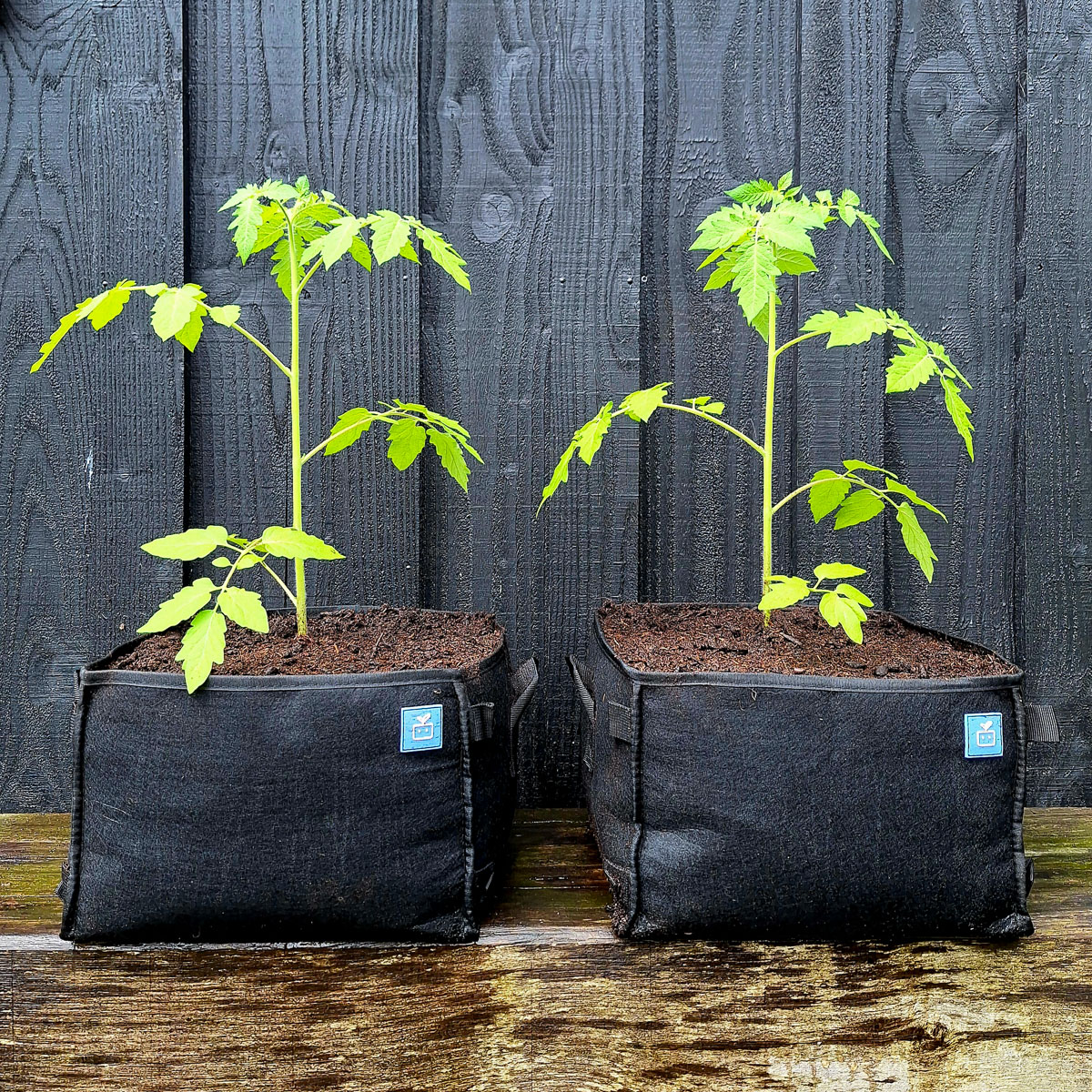
You can also move a tomato plant into an MM-mini. This is ideal if you have a greenhouse or conservatory. The grow bag is not watertight, so it is less suitable for a windowsill.
Plant the tomato as deeply as possible here too. It will form extra roots along its stem and grow better than it would in an ordinary pot.
This is because the sides of an MM-mini let air through. As soon as roots approach the fabric, the plant responds by making new roots.
Plant the tomato as deeply as possible here too. It will form extra roots along its stem and grow better than it would in an ordinary pot.
This is because the sides of an MM-mini let air through. As soon as roots approach the fabric, the plant responds by making new roots.
Watch the temperature, even in a greenhouse
By now, the plants take up quite a lot of room. During the first half of May, however, it is often still far too cold to put them outside.
If you have an unheated greenhouse, you can move the plants there. Keep an eye on the weather and bring them indoors overnight when very cold nights are forecast.
If you have an unheated greenhouse, you can move the plants there. Keep an eye on the weather and bring them indoors overnight when very cold nights are forecast.
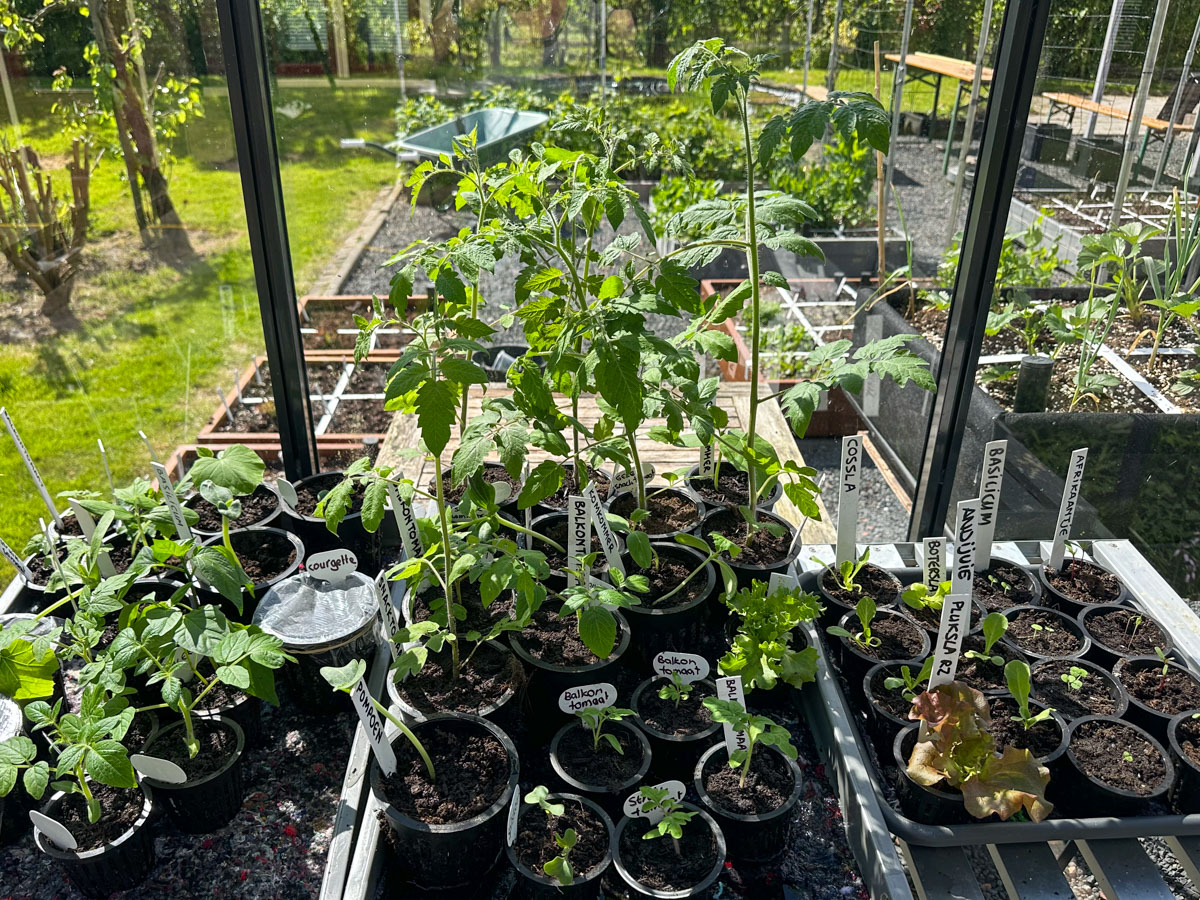
Tomatoes need at least 18°C to grow well and stop growing below 15°C.
If the temperature falls well below 10°C, they may even die.
That is why tomatoes should not go into your raised bed until late May. The same applies to other summer vegetables such as courgettes, cucumbers and pumpkins. First, however, they need to get used to outdoor conditions. This is called hardening off.
If the temperature falls well below 10°C, they may even die.
That is why tomatoes should not go into your raised bed until late May. The same applies to other summer vegetables such as courgettes, cucumbers and pumpkins. First, however, they need to get used to outdoor conditions. This is called hardening off.
Is starting seeds indoors a lot of trouble?
Quite a bit, but delicious home-grown tomatoes are worth it.
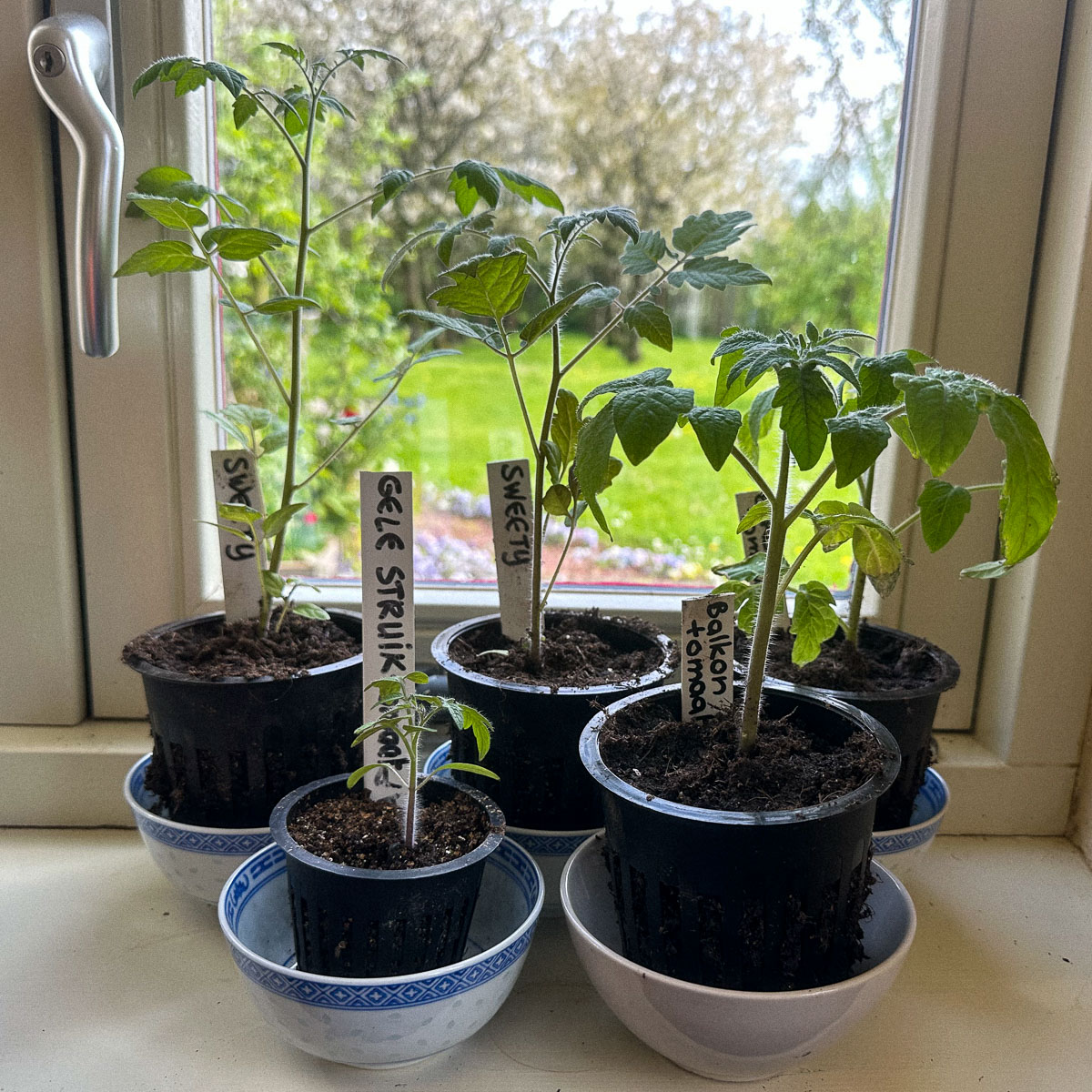
Maar juist omdat je tomatenplanten dus al snel een maand of twee binnenshuis moet verzorgen, beginnen wij daar het liefst zo laat mogelijk mee: tegen half maart.
Komkommers, courgettes en pompoenen zijn iets makkelijker. Die zaai je pas begin mei binnen voor en hoeven maar een paar weekjes binnen te staan vóór ze naar buiten mogen. Dat is beter te doen.
En als je dan tóch al die moeite doet: kies dan in ieder geval voor de beste én de lekkerste soorten.
Mijn favorieten vind je hier:
Mijn favorieten vind je hier:
Good luck!