
Techniques
Sowing and starting indoors
The Ice Saints and hardening off seedlings
Hardening off seedlings: what does that mean?
It is a slightly odd term for gradually getting plants raised indoors used to outdoor conditions before placing them permanently in your raised bed.
You need to do this with every plant you start indoors, but it is especially important for summer vegetables.
It is a slightly odd term for gradually getting plants raised indoors used to outdoor conditions before placing them permanently in your raised bed.
You need to do this with every plant you start indoors, but it is especially important for summer vegetables.
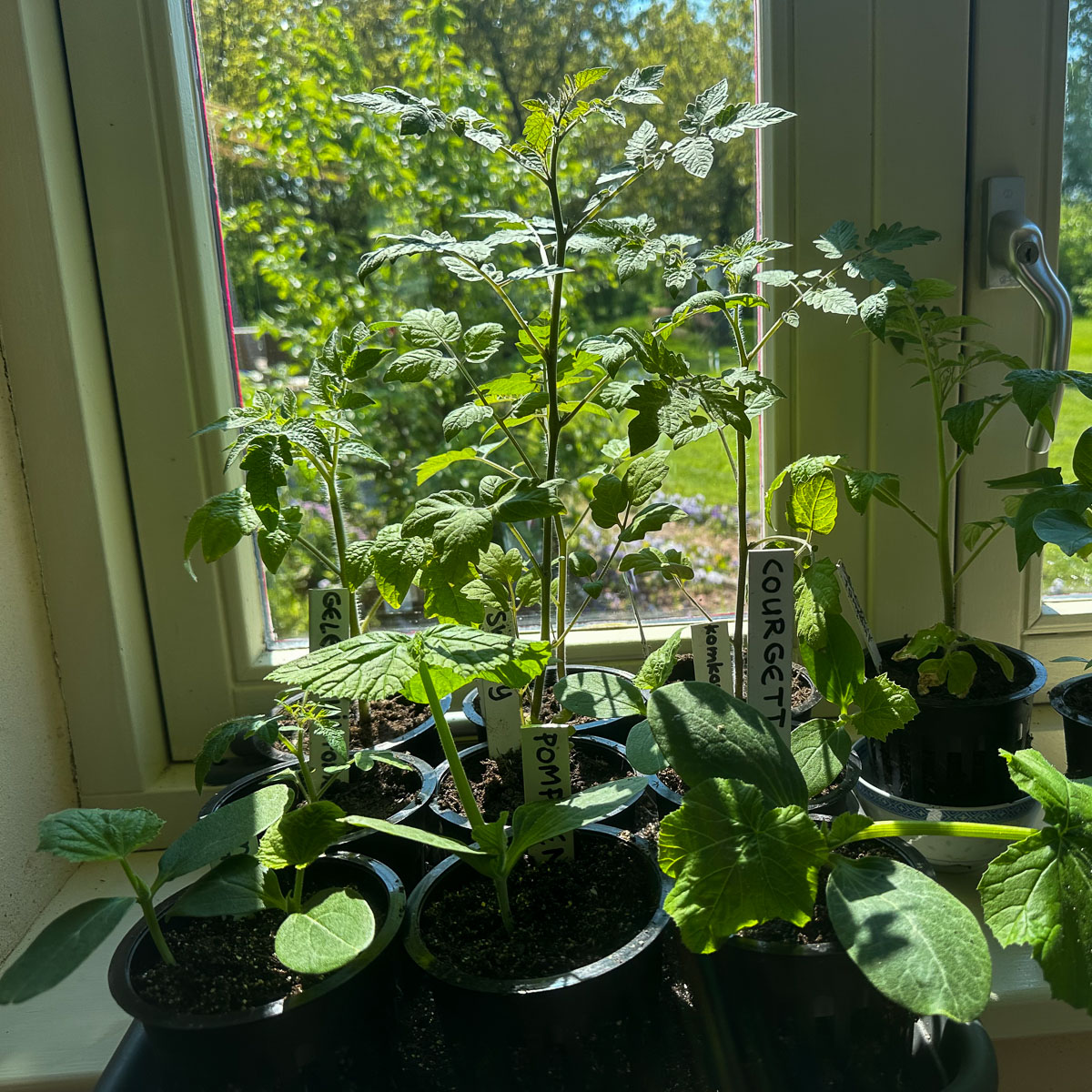
Tomatoes, cucumbers and courgettes cannot tolerate cold weather. A single night of ground frost can kill them.
It does not even have to freeze. They can die below 5°C and stop growing below 10°C.
That is why you should only move these plants outside once the weather improves.
It does not even have to freeze. They can die below 5°C and stop growing below 10°C.
That is why you should only move these plants outside once the weather improves.
What do the Ice Saints have to do with it?
The Ice Saints are three Catholic saints: Saint Pancras, Saint Servatius and Saint Boniface. Their feast days fall on 12, 13 and 14 May.
According to traditional weather lore, these are the last days on which night frost may occur.
Afterwards, the risk is very small and temperatures below freezing are exceptional. Exceptional, but not impossible, so keep a close eye on the weather forecast around this time.
According to traditional weather lore, these are the last days on which night frost may occur.
Afterwards, the risk is very small and temperatures below freezing are exceptional. Exceptional, but not impossible, so keep a close eye on the weather forecast around this time.
Cold Sophie

The Catholic Church has no shortage of saints. 15 May is the feast day of Saint Sophia of Rome, who died a terrible martyr's death in 305.
Sophia is the patron saint invoked against night frost and for thriving crops. Hence the saying:
“No summer before Boniface, no frost after Sophie.”
That last part is never guaranteed. On the night of 15 to 16 May 2020, ground temperatures in parts of the Netherlands fell to -7°C. That is rare, but it does happen.
Sophia is the patron saint invoked against night frost and for thriving crops. Hence the saying:
“No summer before Boniface, no frost after Sophie.”
That last part is never guaranteed. On the night of 15 to 16 May 2020, ground temperatures in parts of the Netherlands fell to -7°C. That is rare, but it does happen.
Hardening off seedlings
You cannot move plants raised on a windowsill or in a greenhouse straight into your outdoor raised bed.
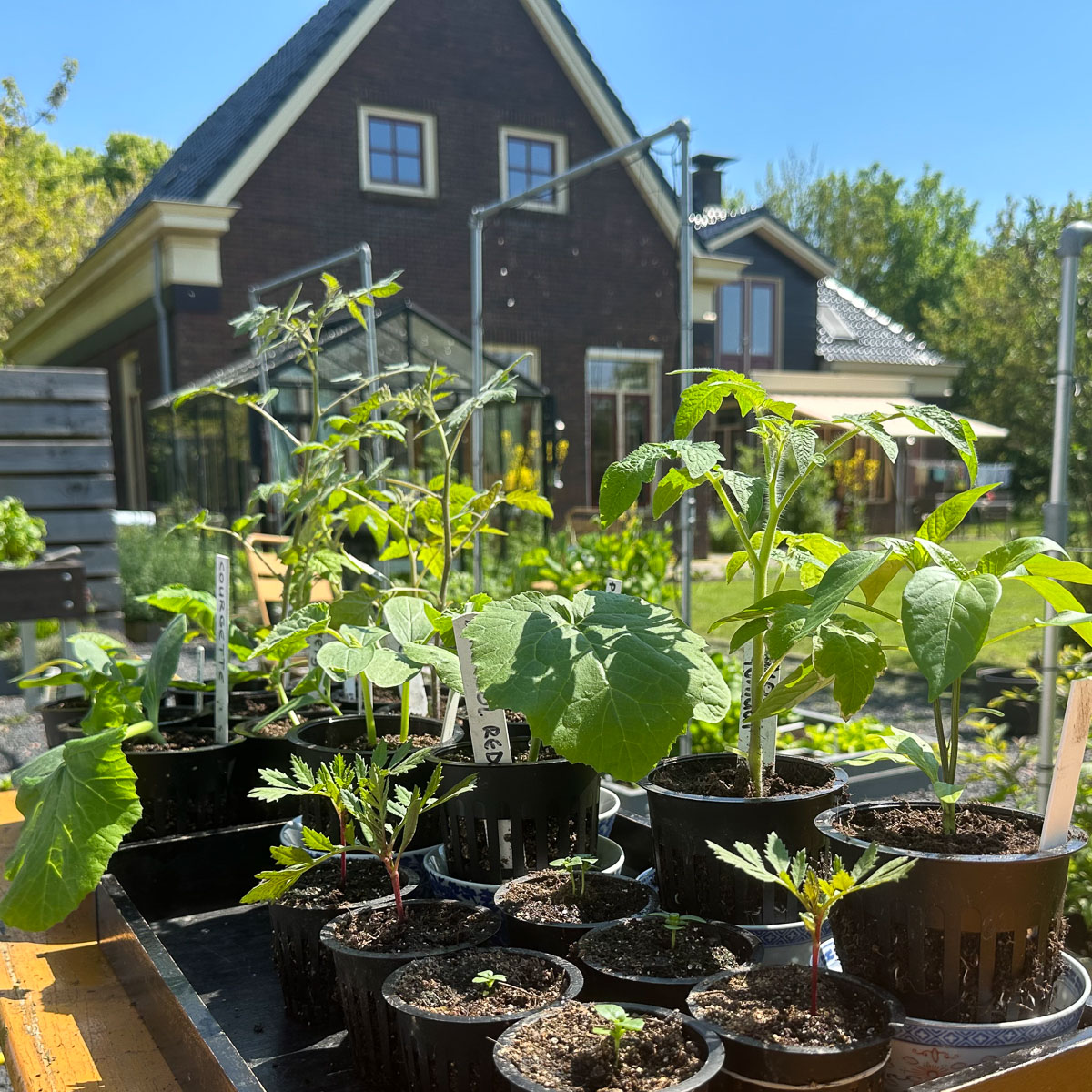
You need to get them used to being outdoors: to wind, changing temperatures and direct sunlight. This is called hardening off.
Wind is easy to forget, but plants need to build strength to withstand it. That is why plants grown outside become much sturdier than plants kept indoors.
Think of it like training. You would not try to lift 100 kg without building up to it; you could injure your muscles, back and knees.
Increase the challenge slowly, step by step. The same applies to seedlings started indoors.
Wind is easy to forget, but plants need to build strength to withstand it. That is why plants grown outside become much sturdier than plants kept indoors.
Think of it like training. You would not try to lift 100 kg without building up to it; you could injure your muscles, back and knees.
Increase the challenge slowly, step by step. The same applies to seedlings started indoors.
How do you get plants used to being outside?
Most plants can take a little rough treatment. But move frost-sensitive plants raised indoors outside cold turkey and they may stop growing or even die.
From around 15 May, put them outside for a few hours each day, a little longer every day.
From around 15 May, put them outside for a few hours each day, a little longer every day.
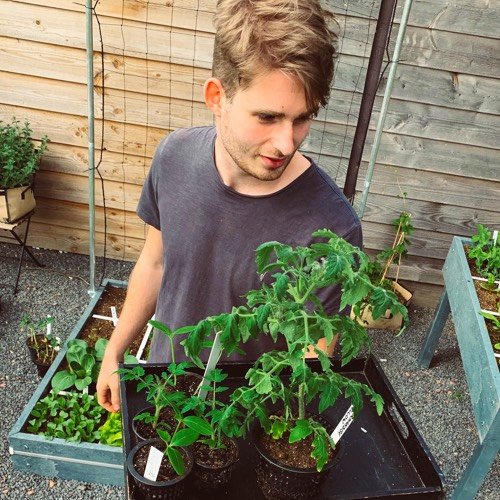
Hardening off with the Makkelijke Moestuin app
The app guides you step by step.
It uses 15 May as a starting point, but the weather matters too. If conditions have been pleasant for a while and the forecast looks good, you can start a little earlier and move through the process more quickly.
If it is still cold, wait a few more days and acclimatise the plants more gradually.
It uses 15 May as a starting point, but the weather matters too. If conditions have been pleasant for a while and the forecast looks good, you can start a little earlier and move through the process more quickly.
If it is still cold, wait a few more days and acclimatise the plants more gradually.
If you have a greenhouse, or a bright, unheated conservatory, you can move your young plants there from early May.
If they will continue growing there, you naturally do not need to harden them off. But if they are destined for outdoors, you still need to get them used to the outdoor air first, just like the plants on your windowsill 🙂
If they will continue growing there, you naturally do not need to harden them off. But if they are destined for outdoors, you still need to get them used to the outdoor air first, just like the plants on your windowsill 🙂
The right place
Choose a sheltered place for hardening off seedlings. Pick a sunny spot, but keep them out of scorching sun because they need time to adjust to direct sunlight too.
Move them into bright sun too suddenly and their leaves can bleach, like this:
Move them into bright sun too suddenly and their leaves can bleach, like this:
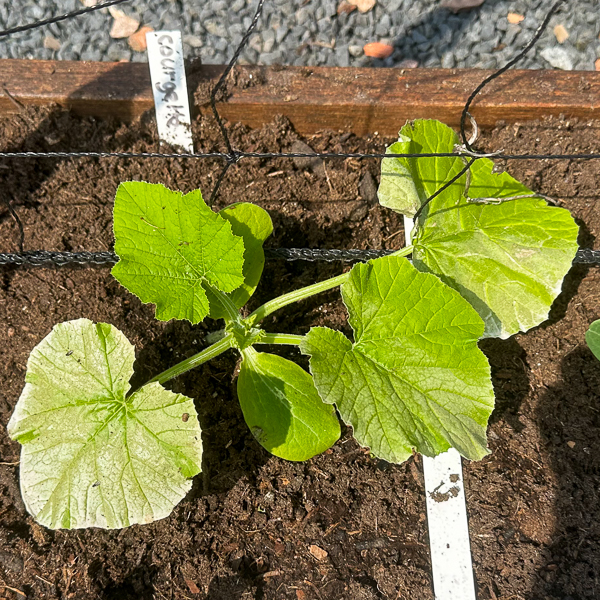
This is not immediately disastrous: the plants will recover. But the more healthy leaves they have, the better, so prevent the damage by putting them in shade or partial shade.
After about five days, the plants will be reasonably well acclimatised and can stay outside, including at night, provided the night-time temperature does not fall below 10°C. If it does, bring the plants back inside in the evening and put them somewhere unheated.
After about five days, the plants will be reasonably well acclimatised and can stay outside, including at night, provided the night-time temperature does not fall below 10°C. If it does, bring the plants back inside in the evening and put them somewhere unheated.
Moving plants into your raised bed
Once the plants are used to outdoor life, around late May or early June, give them a good place in your raised bed:
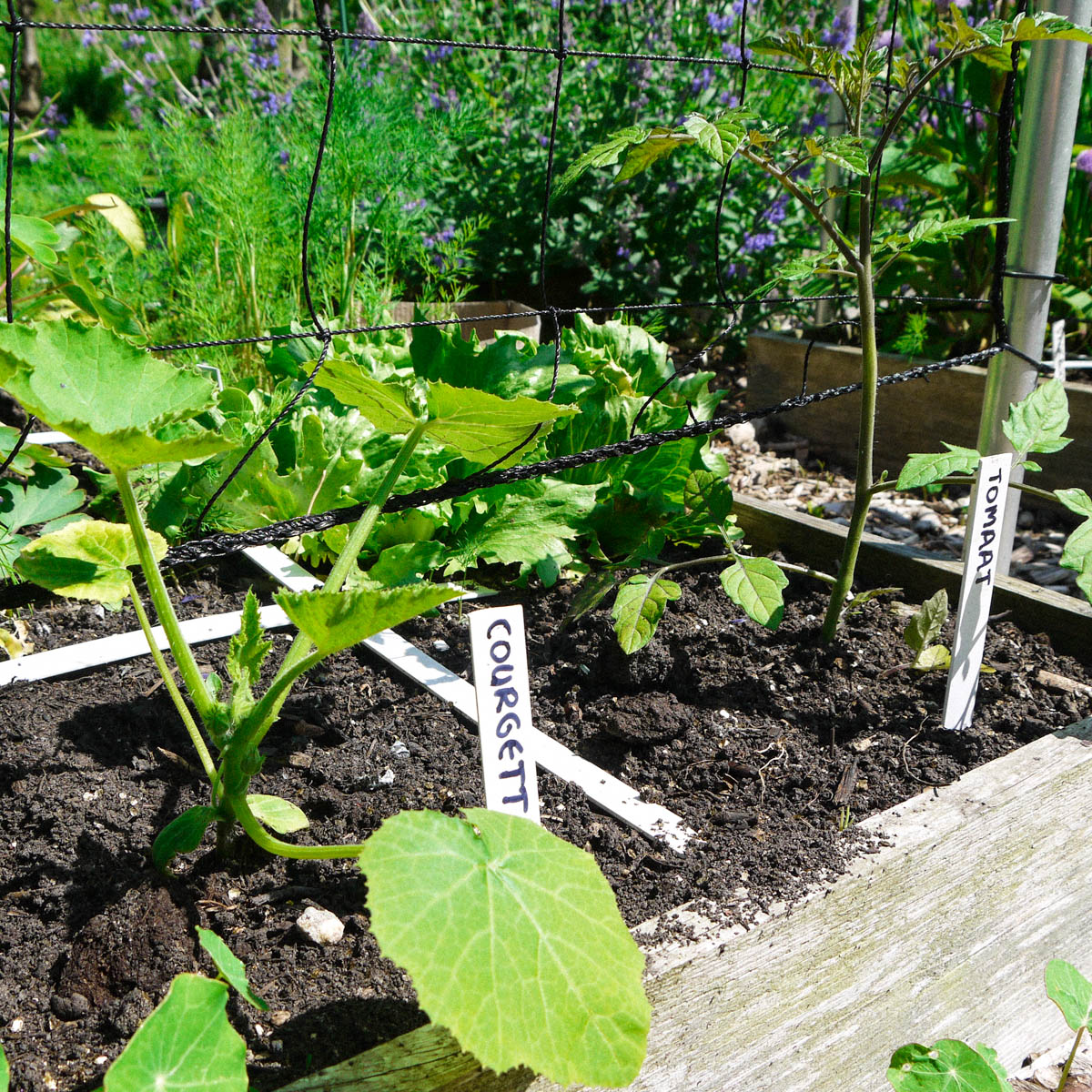
The app will guide you through planting each variety step by step too.
Good luck!
Good luck!

PS: Looking for the tastiest tomatoes, the best Snack cucumber and a courgette you can train up a trellis?
We have selected them for you, and you will find them in the shop.
We have selected them for you, and you will find them in the shop.