
Never transplant root vegetables
Why you should never start root vegetables such as beetroot, carrots and radishes in pots or transplant them, and what happens if you do.
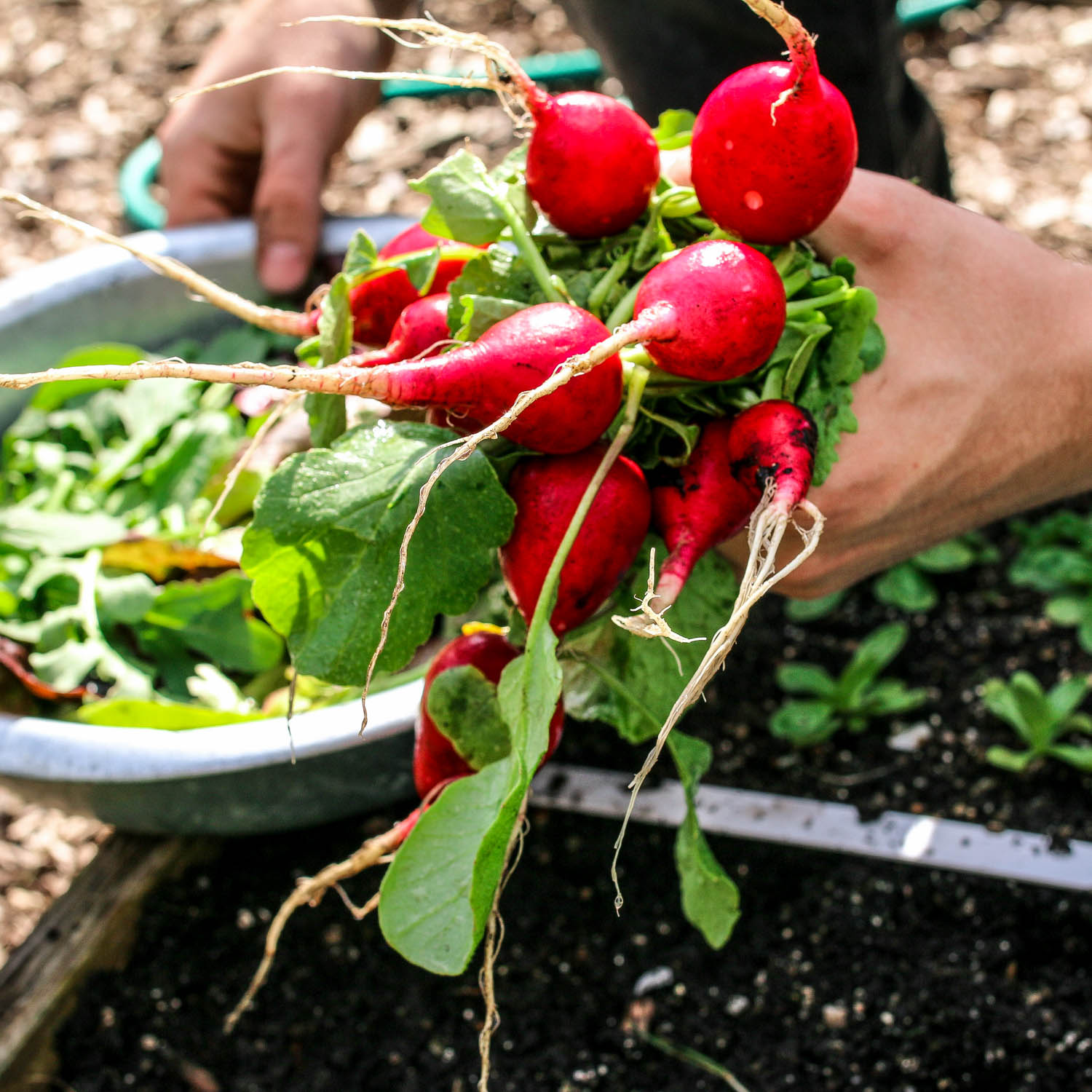
As soon as spring is in sight, many new gardeners cannot wait to begin. If it is still too cold outside, they start indoors and fill their windowsills with pots of seeds.
That is not a good idea for most vegetables anyway. Read more about that here.
With root vegetables, however, you should never do it. They do not tolerate transplanting.
That is not a good idea for most vegetables anyway. Read more about that here.
With root vegetables, however, you should never do it. They do not tolerate transplanting.
Always sow radishes, carrots and beetroot directly in your raised bed
In mild weather, you can sow radishes from 1 March, directly in their final places. Sow carrots from mid-March and beetroot from mid-April.
If it is colder than usual or the soil is still frozen, wait a little longer. I sometimes see new gardeners sow them in pots instead, but that really is a waste of seed.
If it is colder than usual or the soil is still frozen, wait a little longer. I sometimes see new gardeners sow them in pots instead, but that really is a waste of seed.
Root vegetables do not tolerate transplanting
That is because you grow them for the root itself, not the leaves. The name says it all.
If you transplant one of these seedlings, you disturb the root that should develop into the part you want to harvest: the beetroot, carrot or radish. It may barely grow afterwards or develop at an odd angle.
The result can be misshapen carrots, poor radishes, or plenty of leaves without a thick beetroot.
If you transplant one of these seedlings, you disturb the root that should develop into the part you want to harvest: the beetroot, carrot or radish. It may barely grow afterwards or develop at an odd angle.
The result can be misshapen carrots, poor radishes, or plenty of leaves without a thick beetroot.
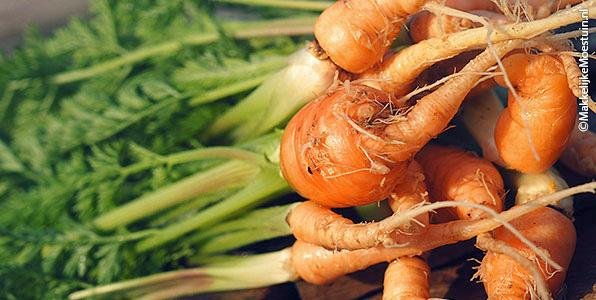
Here is another fine example. It belongs to Saskians, who more or less deliberately transplanted her carrot seedlings:
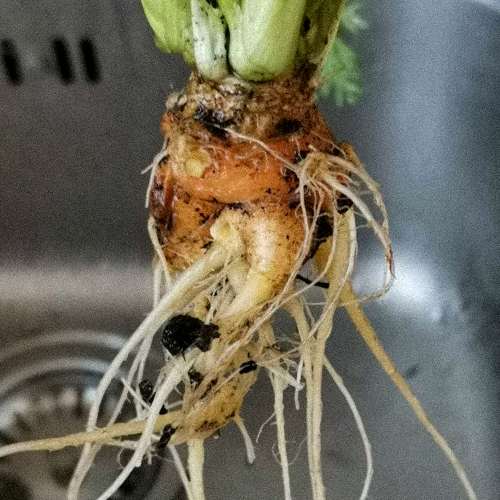
Always sow root vegetables in their final places, with enough room to develop.
Follow the recommended spacing: grow 16 carrots or radishes in one square, and nine beetroot plants.
Follow the recommended spacing: grow 16 carrots or radishes in one square, and nine beetroot plants.
Thinning seeds and seedlings
For carrots and radishes, put two or three seeds in each hole so at least one is likely to germinate.
If several seedlings emerge in one hole, keep the strongest and cut away the others. This is called thinning and gives the remaining plants enough room to grow well.
Thinning is especially important for root vegetables. If their seedlings grow too close together, the roots you want to harvest cannot develop properly.
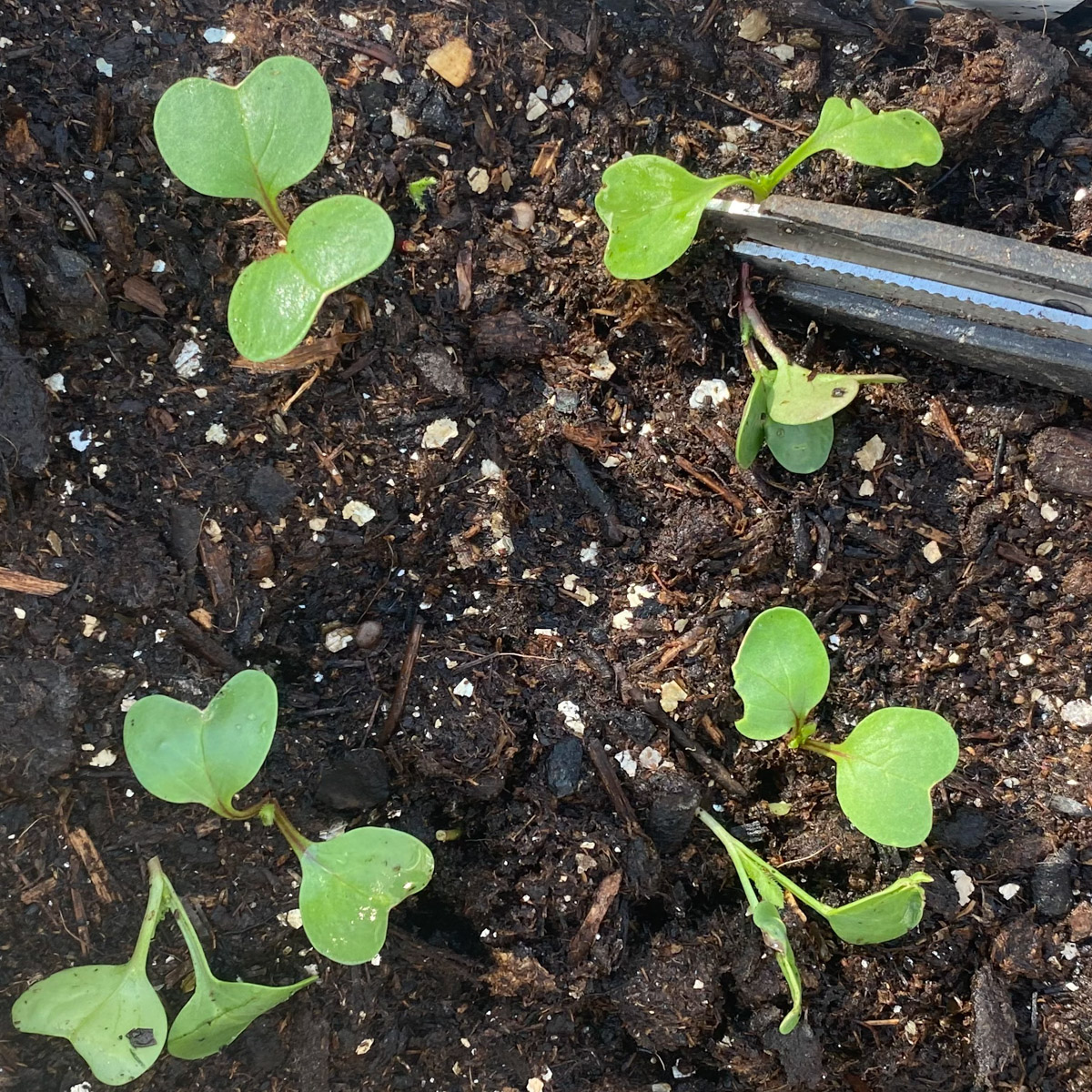
These are my radish seedlings. You can see more than one seedling in some holes.
If several seedlings emerge in one hole, keep the strongest and cut away the others. This is called thinning and gives the remaining plants enough room to grow well.
Thinning is especially important for root vegetables. If their seedlings grow too close together, the roots you want to harvest cannot develop properly.
These are my radish seedlings. You can see more than one seedling in some holes.
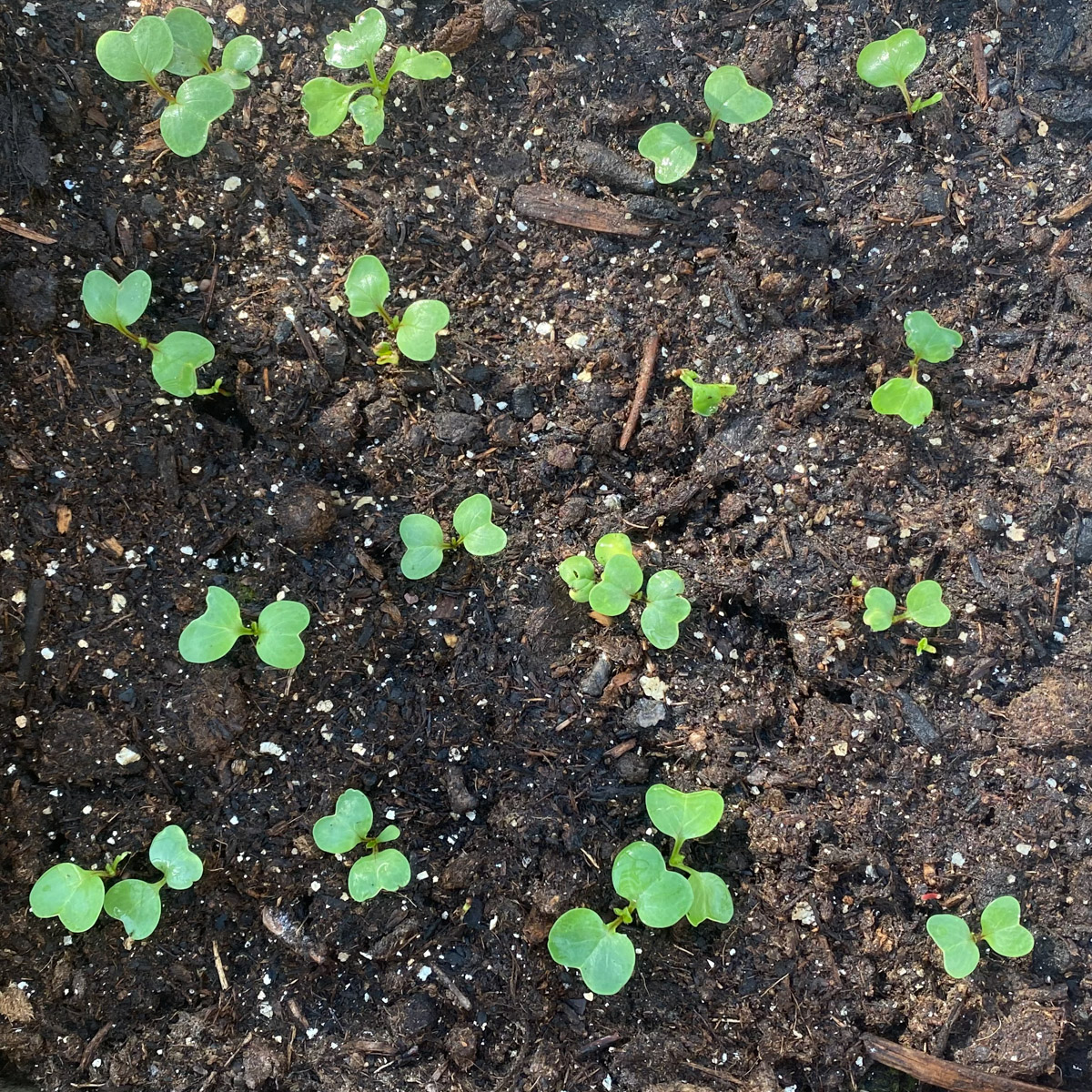
They are now large enough to thin. Use scissors rather than pulling seedlings out of the mix, as pulling can disturb the roots of the plants you want to keep.
Beetroot
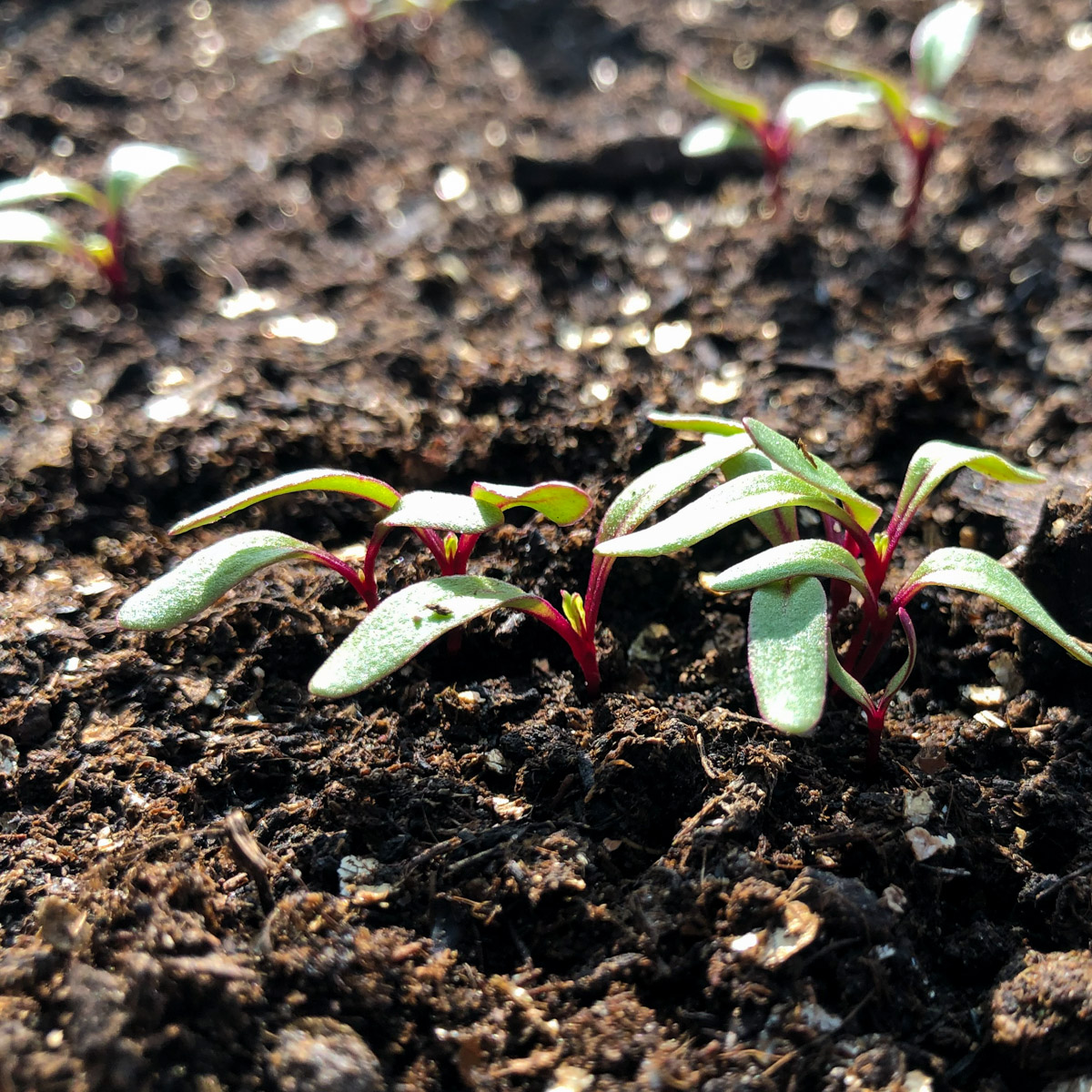
Beetroot seeds are actually little clusters containing several seeds. One cluster will therefore usually produce two or more plants.
Keep the largest seedling and cut the others away. If you pull them out, you will probably pull the remaining plant out too.
Keep the largest seedling and cut the others away. If you pull them out, you will probably pull the remaining plant out too.
Garden centres sometimes sell young beetroot plants in blocks of compressed soil.
It may look as though one plant has several stems, but these are actually several individual plants.
It may look as though one plant has several stems, but these are actually several individual plants.
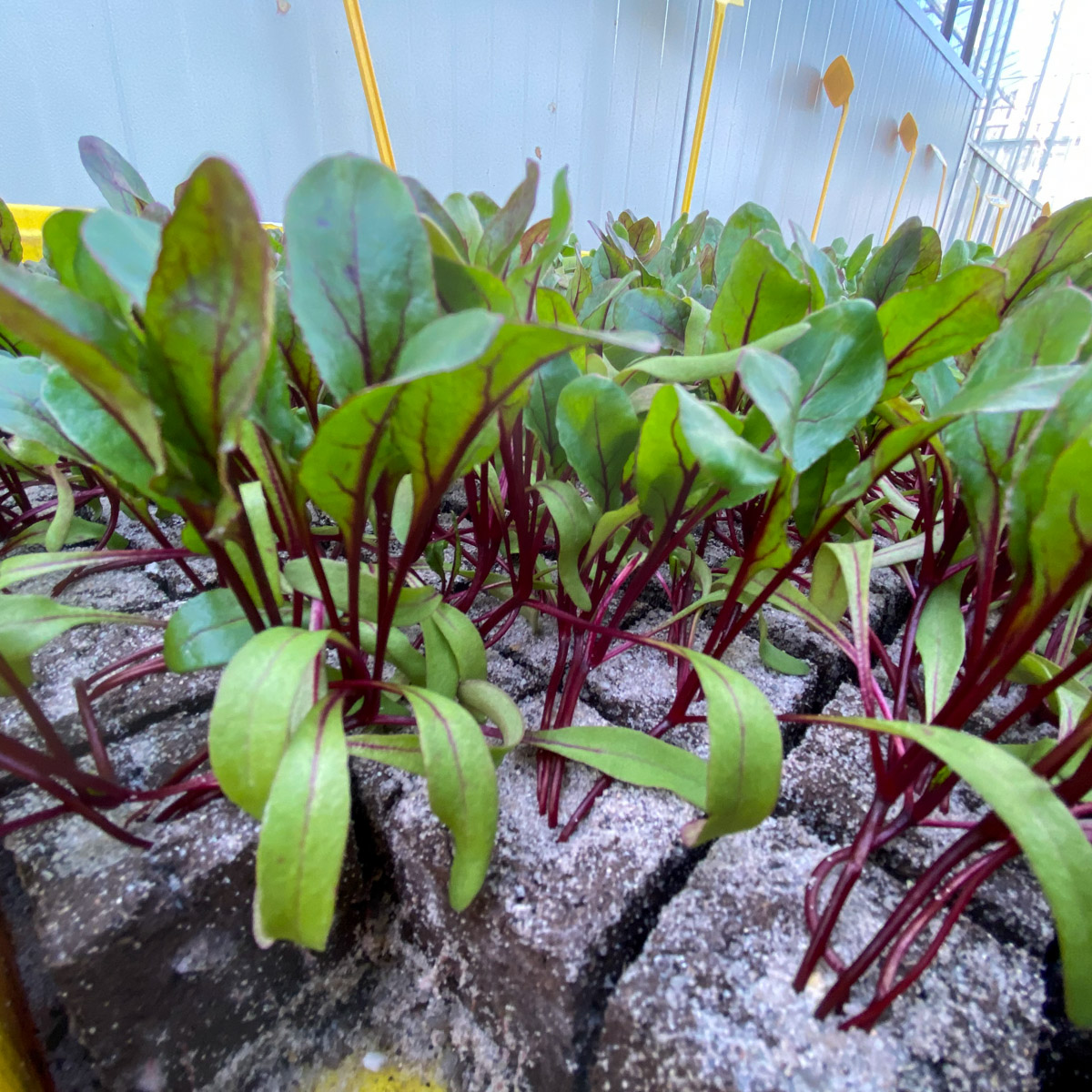
If you buy these, place each complete soil block in your raised bed. Keep the thickest seedling in each block and cut the others away. The sooner you do this, the better.
Sowing is always better
You can also choose exactly which variety you want to grow.
We have several delicious ones: amusing French radishes that grow half above the mix, juicy Giant Radishes, deep red Beet, and red-and-white striped Chioggia beet.
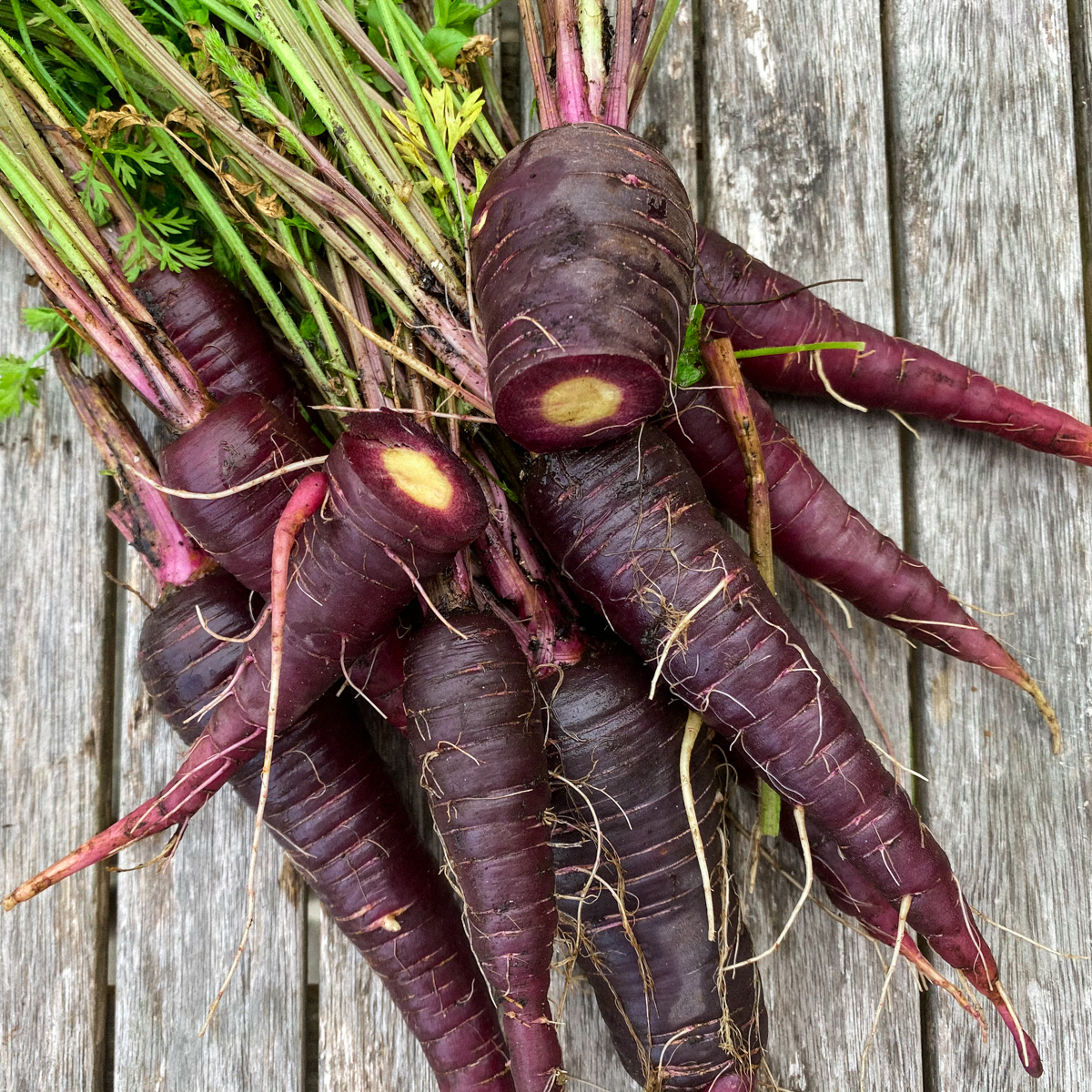
And, of course, the tastiest carrots: orange with a rounded tip or deep purple with a white centre:
We have several delicious ones: amusing French radishes that grow half above the mix, juicy Giant Radishes, deep red Beet, and red-and-white striped Chioggia beet.
And, of course, the tastiest carrots: orange with a rounded tip or deep purple with a white centre:
Our app then guides you through growing them step by step.
So you will never make the mistake of transplanting radishes, carrots or beetroot, let alone starting them in pots.
Good luck!
So you will never make the mistake of transplanting radishes, carrots or beetroot, let alone starting them in pots.
Good luck!