
Techniques
Sowing and starting indoors
How do you keep your pre-sown plants healthy?
Pre-sown plants need 4 things: lots of sunlight, the right temperature, moisture, and enough nutrients - but not too much. How to care for your windowsill plants.
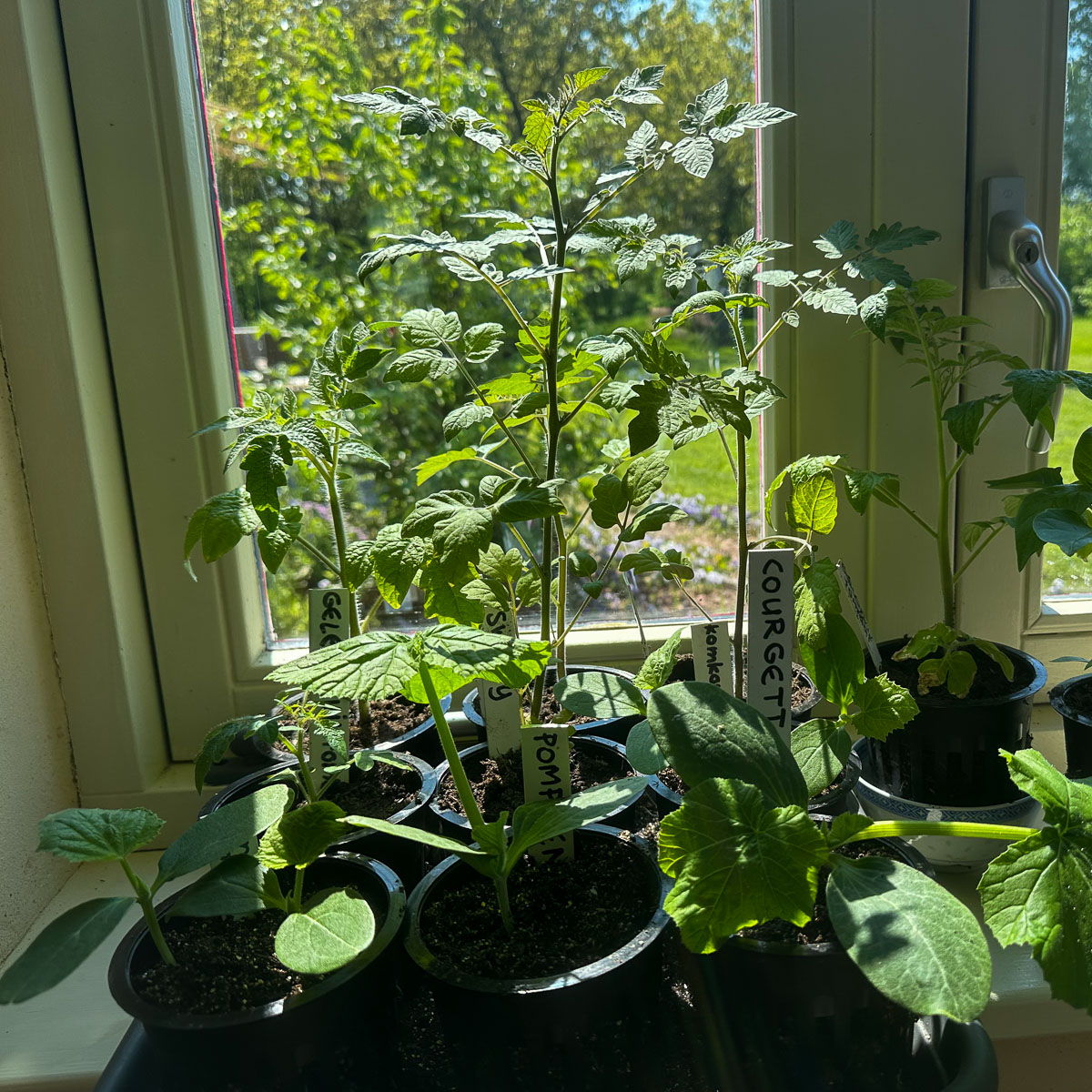
Update: Some of the photos on this page are a little older. We now use Makkelijke Voorzaaigrond for pre-sowing. For repotting tomatoes and raising large summer vegetables, we usually use large MM-Airpots.
Summer vegetables on the windowsill
You sow summer vegetables long before they are allowed outside. For tomatoes, that is easily seven weeks.
To help these pre-sown plants grow well indoors, they need four things:
To help these pre-sown plants grow well indoors, they need four things:
- lots of light – preferably sunlight from above
- the right temperature – around 15°C
- enough nutrients – but not too much
- regular watering
So, how do you provide all that?
Why do you raise summer vegetables indoors?
For tomatoes, you have to: they take about four months to grow from a seed into a plant bearing ripe tomatoes. Throughout that time, they need plenty of warmth and sunlight.
If you only start sowing once it is warm enough outside – around the end of May – you are too late. By September, the days are shorter and it cools down quickly. You will not harvest much.
But if you pre-sow indoors at the end of March – or better still, in mid-April – you will have a beautiful tomato plant ready for your garden box by the end of May. You can then harvest masses of tomatoes from late July until mid-October.
Other summer vegetables, such as cucumbers, courgettes and pumpkins, also need plenty of warmth. It is therefore better to germinate them indoors.
But because these seedlings grow quickly, you only need to pre-sow them indoors in late April or early May. They can go outside into your garden box by the end of May.
This also prevents birds from stealing the seeds or slugs from immediately eating the vulnerable seedlings.
If you only start sowing once it is warm enough outside – around the end of May – you are too late. By September, the days are shorter and it cools down quickly. You will not harvest much.
But if you pre-sow indoors at the end of March – or better still, in mid-April – you will have a beautiful tomato plant ready for your garden box by the end of May. You can then harvest masses of tomatoes from late July until mid-October.
Other summer vegetables, such as cucumbers, courgettes and pumpkins, also need plenty of warmth. It is therefore better to germinate them indoors.
But because these seedlings grow quickly, you only need to pre-sow them indoors in late April or early May. They can go outside into your garden box by the end of May.
This also prevents birds from stealing the seeds or slugs from immediately eating the vulnerable seedlings.
1. Seedlings want as much light as possible
Your plants need lots of sunlight. They even create their own nutrients from it.
If they don't get enough light, they'll go looking for it. Then their stems grow long and get floppy.
If they don't get enough light, they'll go looking for it. Then their stems grow long and get floppy.
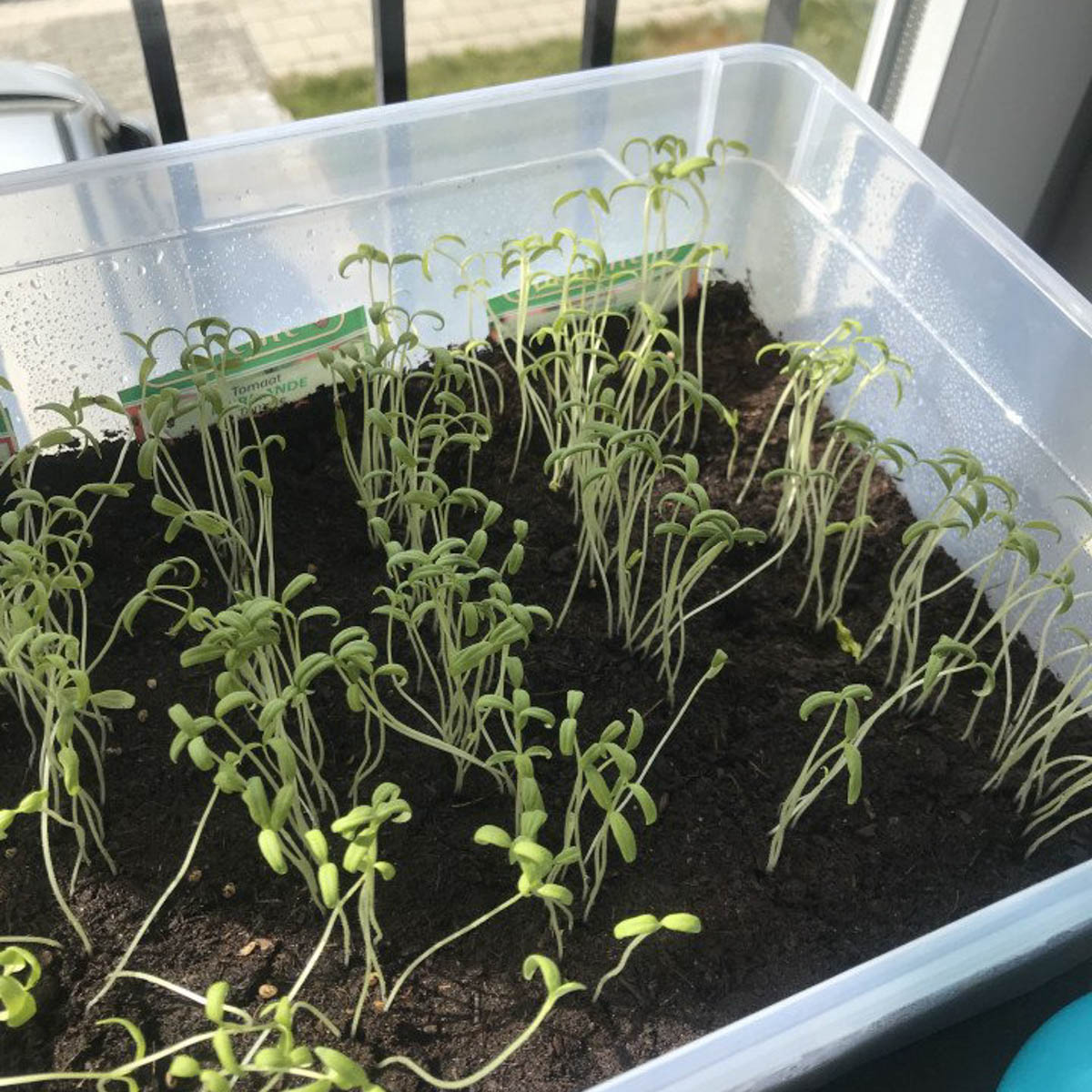
Choose the brightest spot you have.
Place your plants as close to the window as possible to prevent them growing at an angle.
Turn the pots regularly too, so they receive light from every side.
Place your plants as close to the window as possible to prevent them growing at an angle.
Turn the pots regularly too, so they receive light from every side.
LauraMM puts hers on a table that is easy to move. This lets her keep the plants in as much light as possible throughout the day.
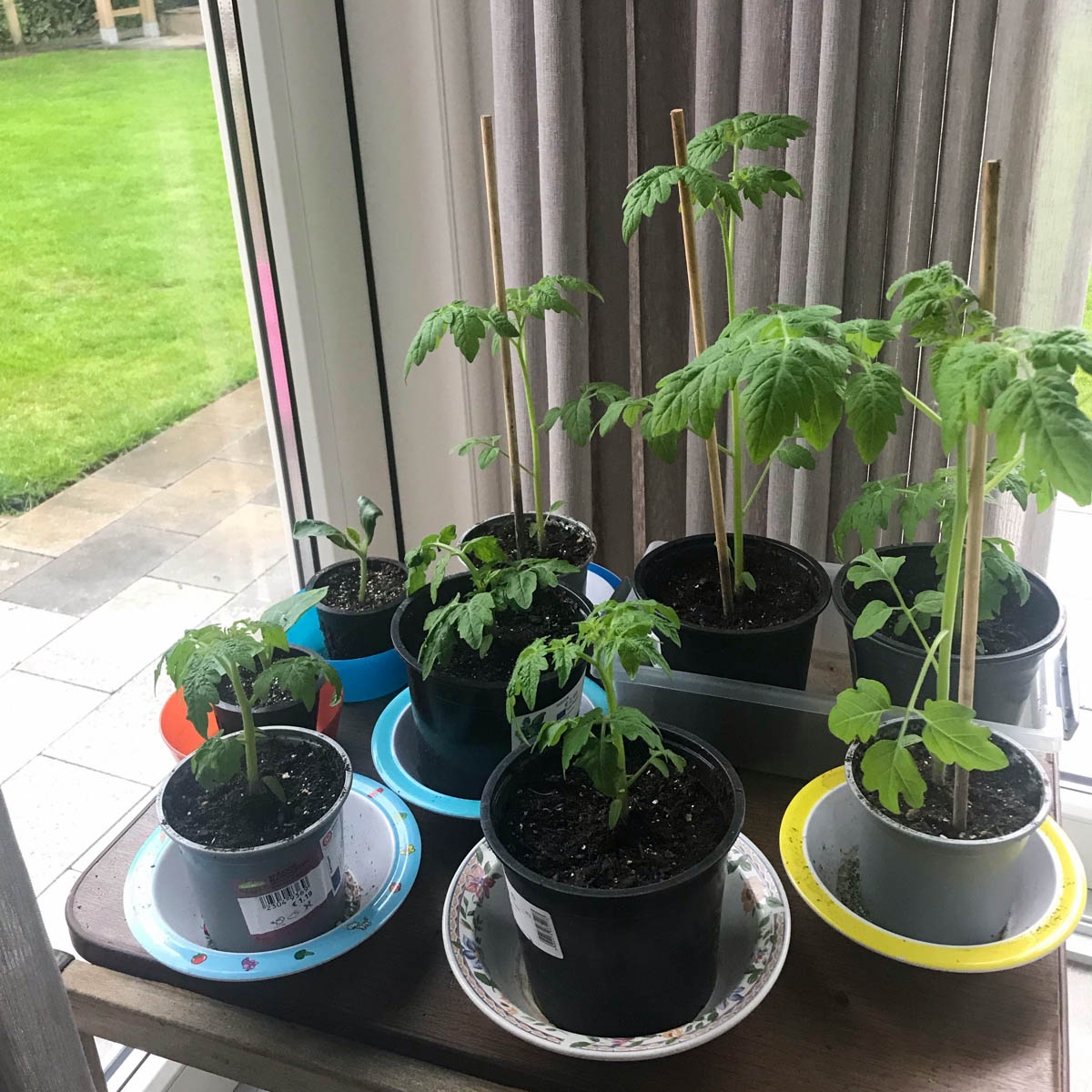
A south-facing windowsill is therefore perfect for sunlight.
But – and here is the catch – temperature is important too. And that is often a problem on a windowsill like this.
But – and here is the catch – temperature is important too. And that is often a problem on a windowsill like this.
2. Not too warm – around 15°C
Summer vegetables need plenty of warmth to germinate: around 20 to 25°C.
But once they have become seedlings, that soon becomes too warm.
Not because they cannot cope with it, but because at lower temperatures they grow more slowly and become sturdier. And that is exactly what you want.
But once they have become seedlings, that soon becomes too warm.
Not because they cannot cope with it, but because at lower temperatures they grow more slowly and become sturdier. And that is exactly what you want.
The best place for your plants is therefore somewhere bright but not too warm.
Experienced gardeners move their seedlings to a bright, unheated bedroom or a cold greenhouse once they have emerged.
Experienced gardeners move their seedlings to a bright, unheated bedroom or a cold greenhouse once they have emerged.
Mochi puts hers beneath a skylight in the spare room:
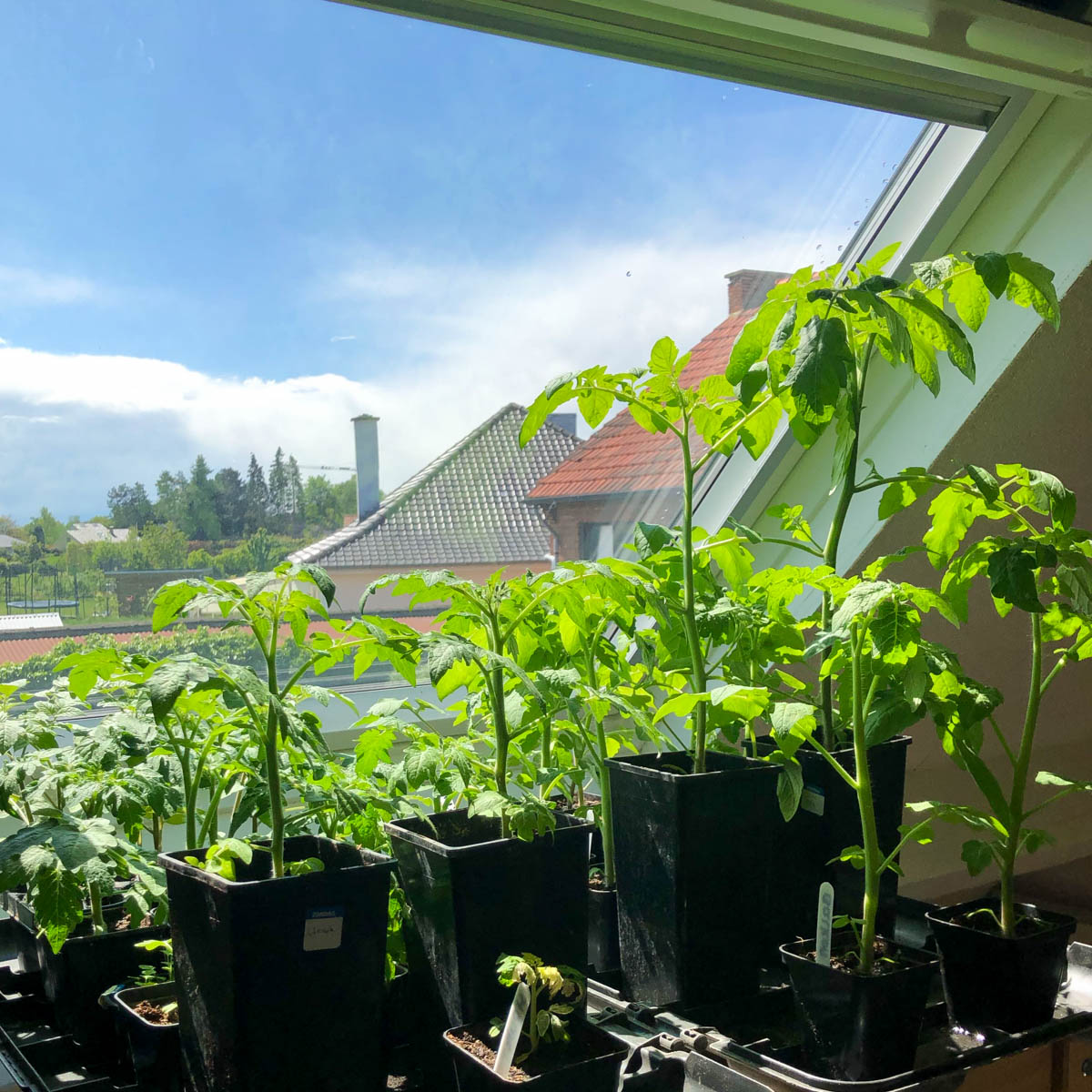
Xanadu keeps seedlings in the stairwell under a skylight. When it gets too hot, they open the door to the roof terrace for a cross breeze:
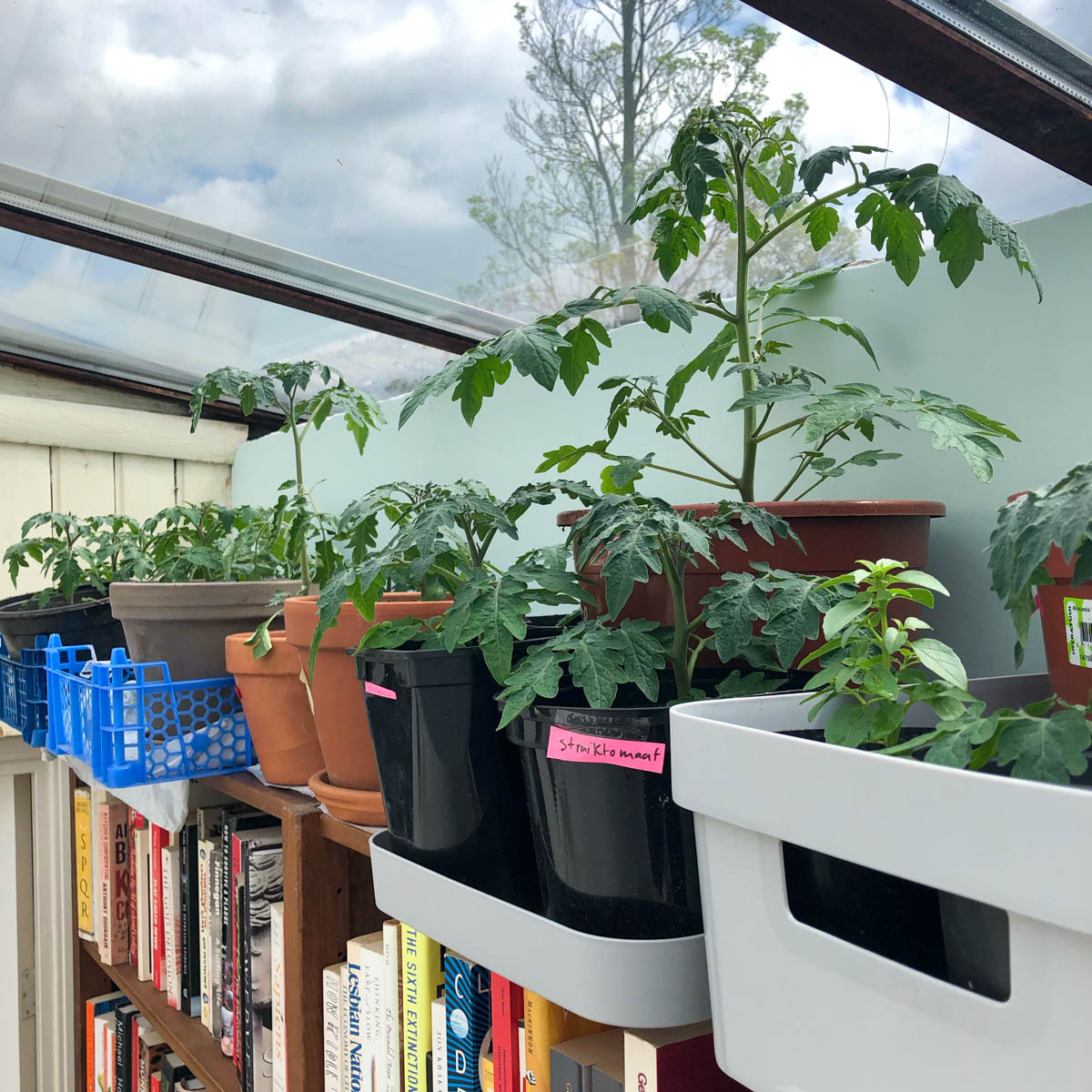
If you don't have an ideal spot, or if it's endlessly sunny, there are a couple options.
Take your plants out of the window during the hottest part of the day. Or put something in between like a sheet of white paper or some netting for example.
Tinus uses gauzy curtains:
Take your plants out of the window during the hottest part of the day. Or put something in between like a sheet of white paper or some netting for example.
Tinus uses gauzy curtains:
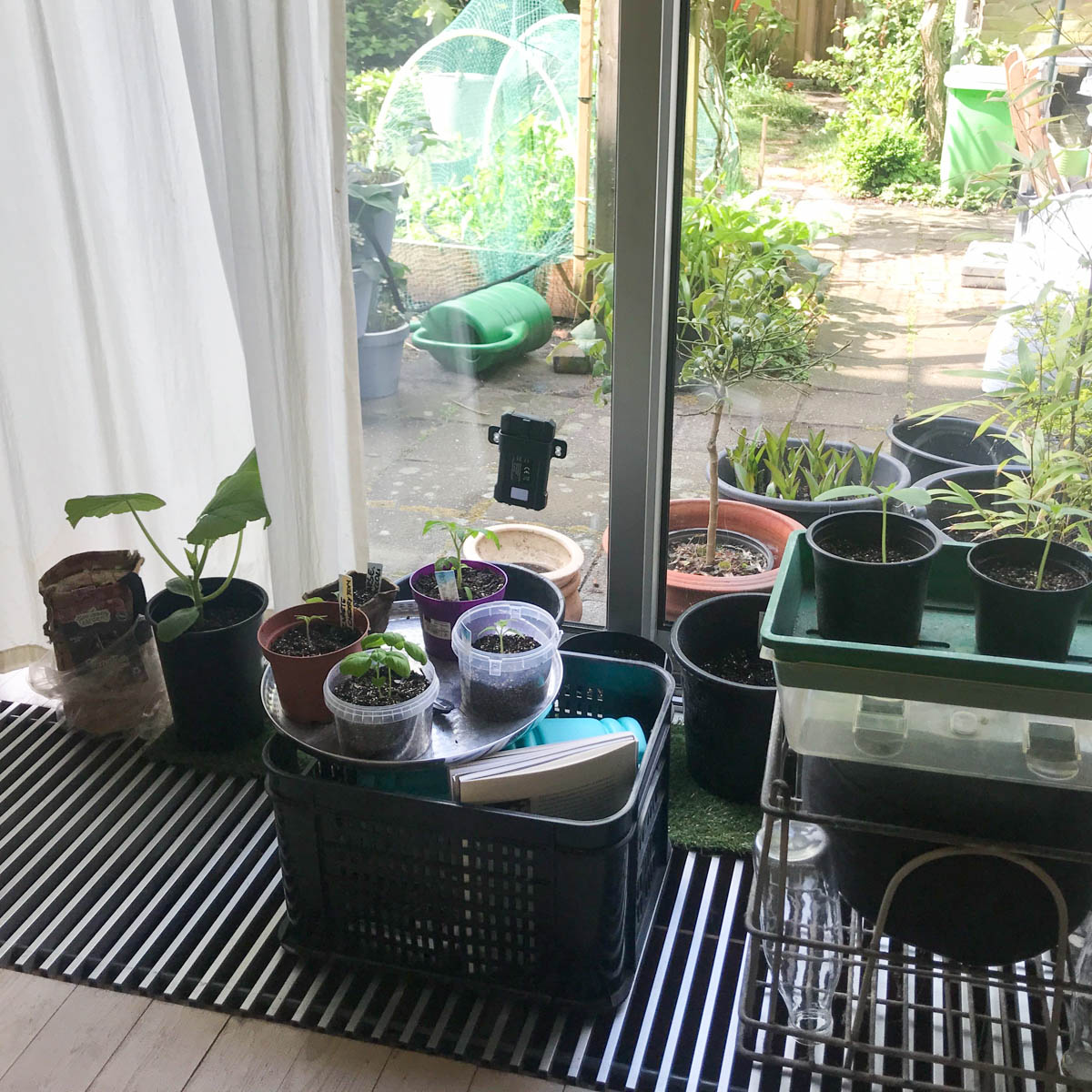
For Silvia, it's very simple: she just places them in front of her sliding glass door.
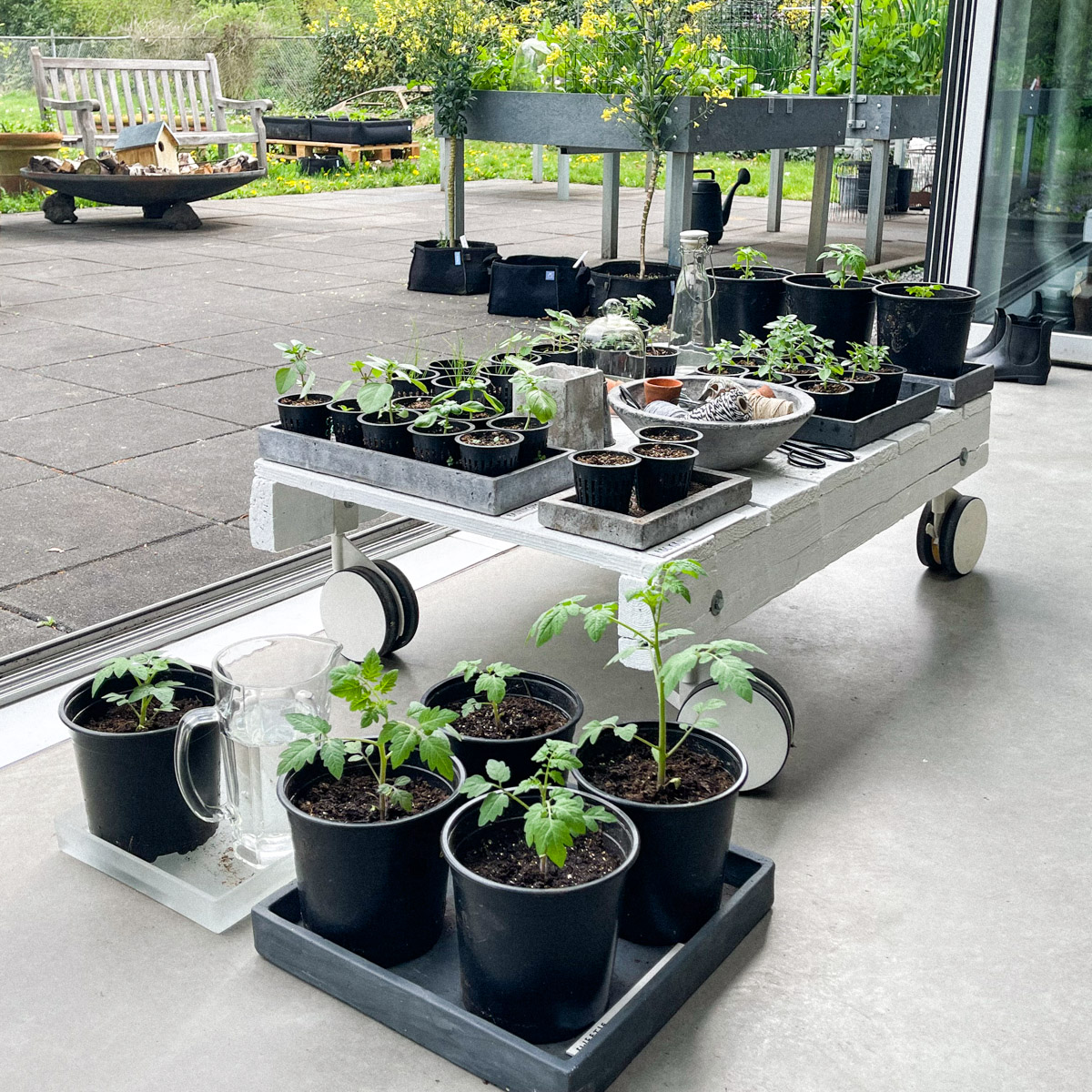
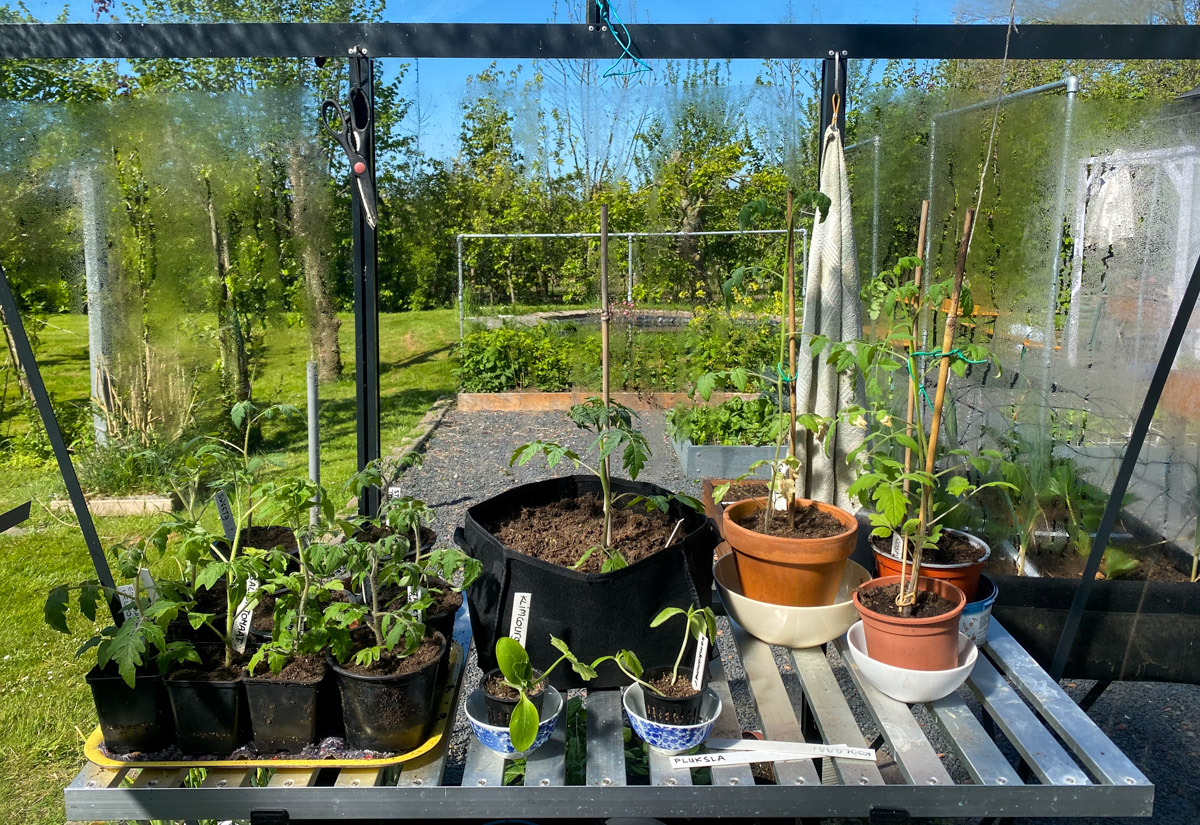
Do you have a greenhouse or unheated conservatory?
You're lucky 😄
Because starting from early May, you can move your plants there. Just make sure to regularly check if the potting mix is still moist, as it can dry out quickly in sunny weather.
If it's going to freeze at night, bring the plants inside in the evening, just to be safe. 🙂
If it's going to freeze at night, bring the plants inside in the evening, just to be safe. 🙂
3. Enough nutrients, but not too much
While seedlings are small, they do not need many nutrients.
Regular potting soil often contains too much. This makes seedlings grow quickly, but they are also more likely to become long and weak.
It is better to use Makkelijke Voorzaaigrond. It is airy and specially formulated for the first few weeks.
Regular potting soil often contains too much. This makes seedlings grow quickly, but they are also more likely to become long and weak.
It is better to use Makkelijke Voorzaaigrond. It is airy and specially formulated for the first few weeks.
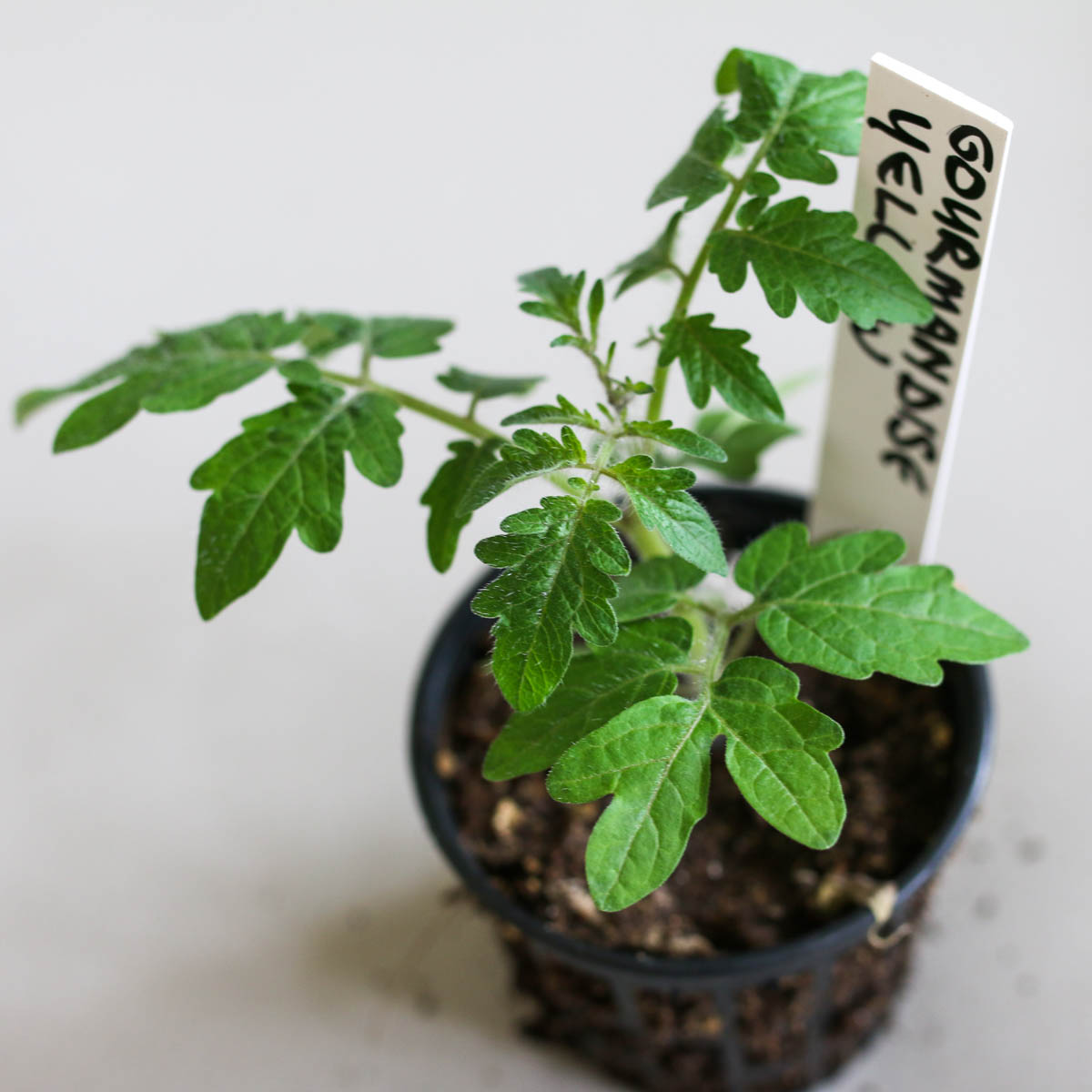
As the plants get bigger, they need more.
Around the end of April, move tomato seedlings into a larger MM-Airpot filled with classic MM-Mix or Makkelijke Moestuingrond.
This gives the plants enough nutrients and encourages them to grow additional roots.
Around the end of April, move tomato seedlings into a larger MM-Airpot filled with classic MM-Mix or Makkelijke Moestuingrond.
This gives the plants enough nutrients and encourages them to grow additional roots.
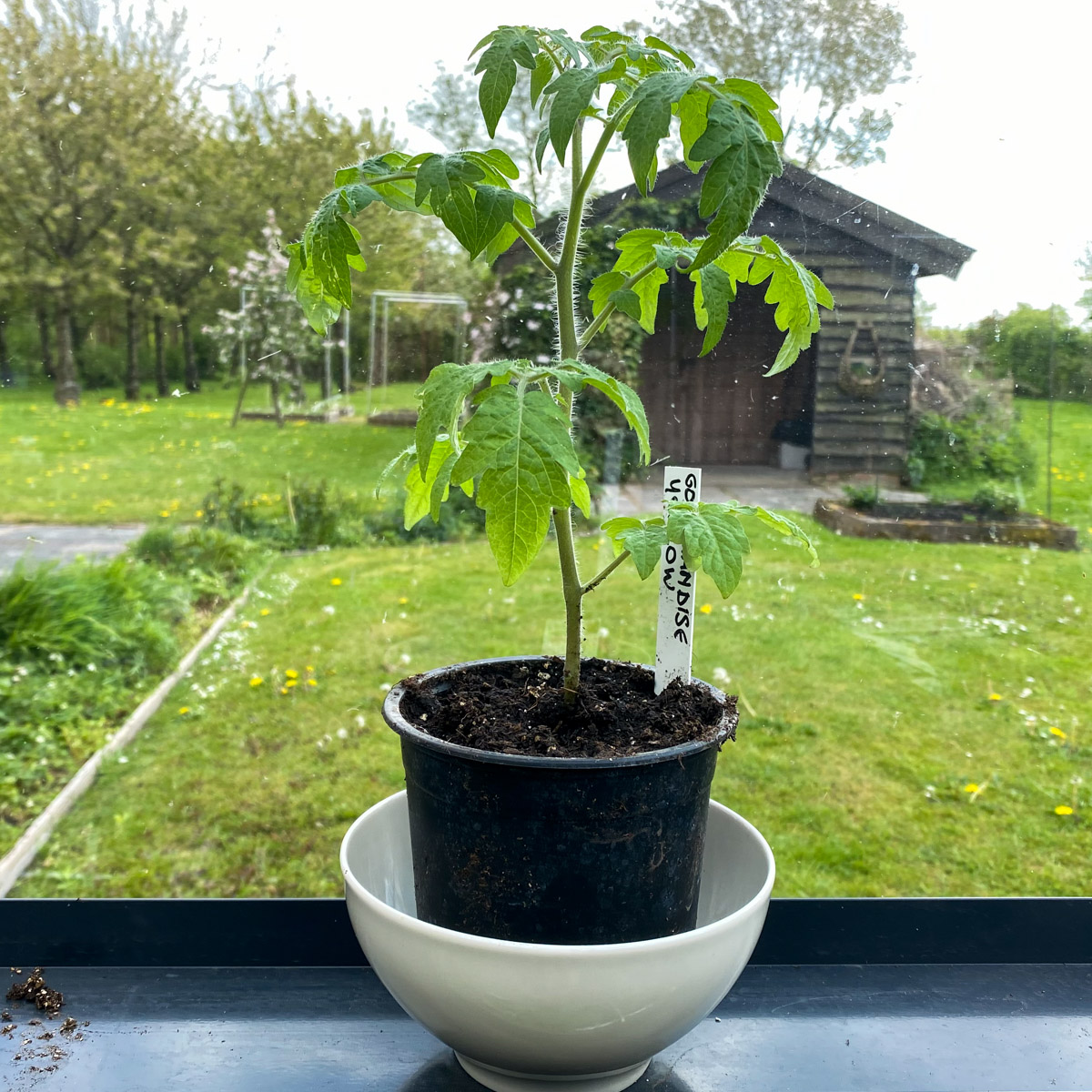
Classic MM-Mix contains compost, peat fibres, coconut coir, wood fibres and plant food. The nutrients are already included, so you can use it straight away when moving tomatoes into a larger pot. Moisten it thoroughly first and keep it moist afterwards. Once classic MM-Mix dries out completely, it absorbs water less easily.
Makkelijke Moestuingrond comes as three components: compressed cocopeat blocks, Makkelijke Moestuin plant food and worm compost.
Expand the cocopeat with water, then mix in the plant food and worm compost thoroughly.
This gives you a complete, airy growing medium that you can also use when moving tomatoes into a larger pot. After drying out, Makkelijke Moestuingrond absorbs water more easily than classic MM-Mix.
Expand the cocopeat with water, then mix in the plant food and worm compost thoroughly.
This gives you a complete, airy growing medium that you can also use when moving tomatoes into a larger pot. After drying out, Makkelijke Moestuingrond absorbs water more easily than classic MM-Mix.
Pumpkins, cucumbers and courgettes have much larger seeds and are pre-sown later: from late April until the end of May. It is best to sow them straight into a larger MM-Airpot filled with Makkelijke Voorzaaigrond.
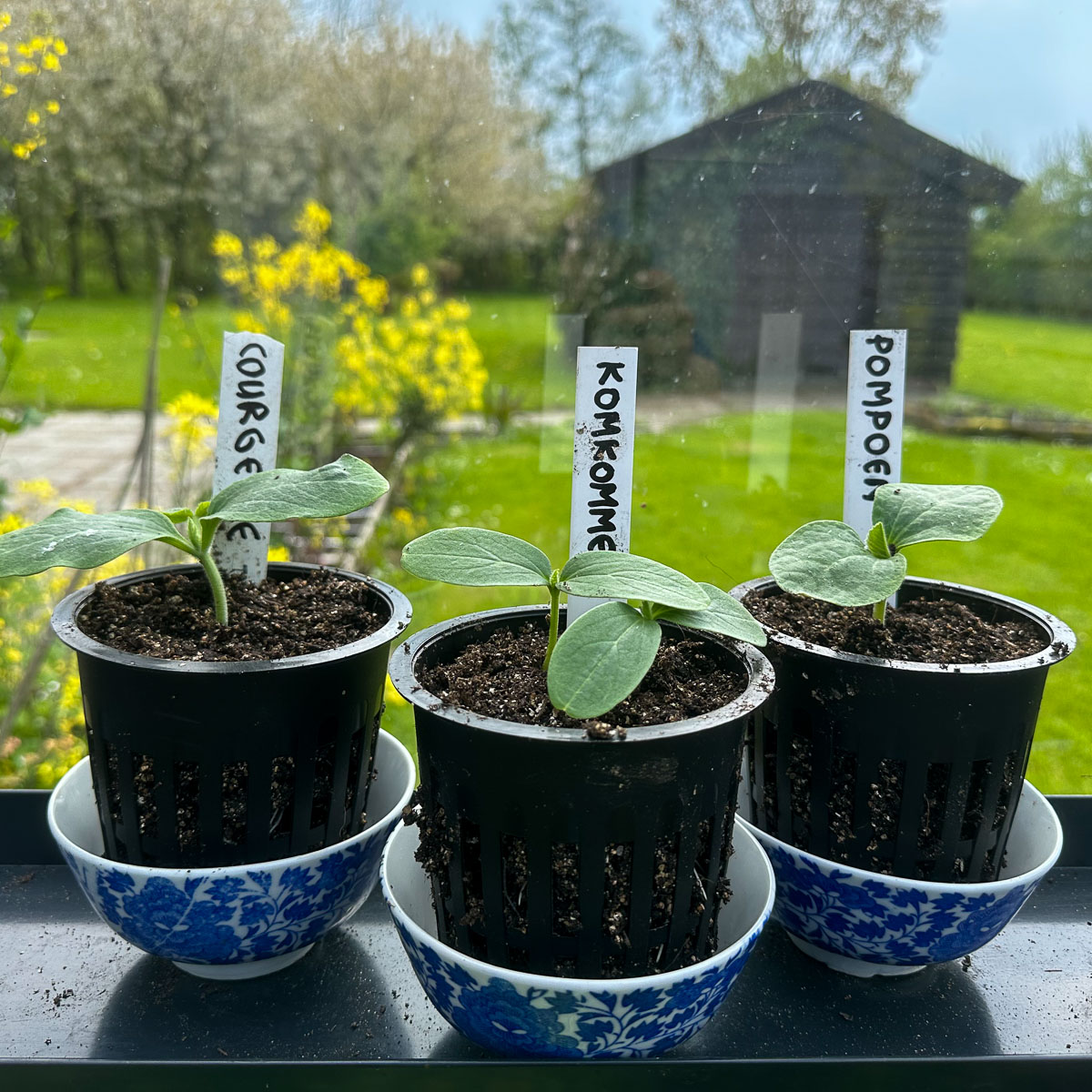
Since these plants are inside for a much shorter time, you don't have to move them into a larger pot.
No, roots can poke out of the MM-Airpots. It doesn't matter, you can leave them be. The plant will produce new roots inside the pot and form a solid root system.
Since the pot is not very big, cucumber, zucchini, and pumpkin plants need to be moved to their final home outside within a month.
So, let's say you started too early and it's not time to transplant them outside. After 4 weeks or so, transfer your plants to a larger pot with just MM-Mix.
To skip all that, I start as late as possible: the end of April works best 😉
Since the pot is not very big, cucumber, zucchini, and pumpkin plants need to be moved to their final home outside within a month.
So, let's say you started too early and it's not time to transplant them outside. After 4 weeks or so, transfer your plants to a larger pot with just MM-Mix.
To skip all that, I start as late as possible: the end of April works best 😉
4. Water regularly
Keep the mix moist, from the very beginning until the moment they can go outside. The bigger the plants, the more water they need.
If they are in an MM air pot, it's best to water them from below. So, in the saucer or tray that the pots are placed in.
If they are in an MM air pot, it's best to water them from below. So, in the saucer or tray that the pots are placed in.
Getting them used to the outdoors
If you've done all this - and everything went well - by the second half of May, you'll have beautiful plants ready for the outdoors. There's little chance of a hard frost after that.
But before you can leave them outside day and night, you have to get them used to the fresh air first.
But before you can leave them outside day and night, you have to get them used to the fresh air first.
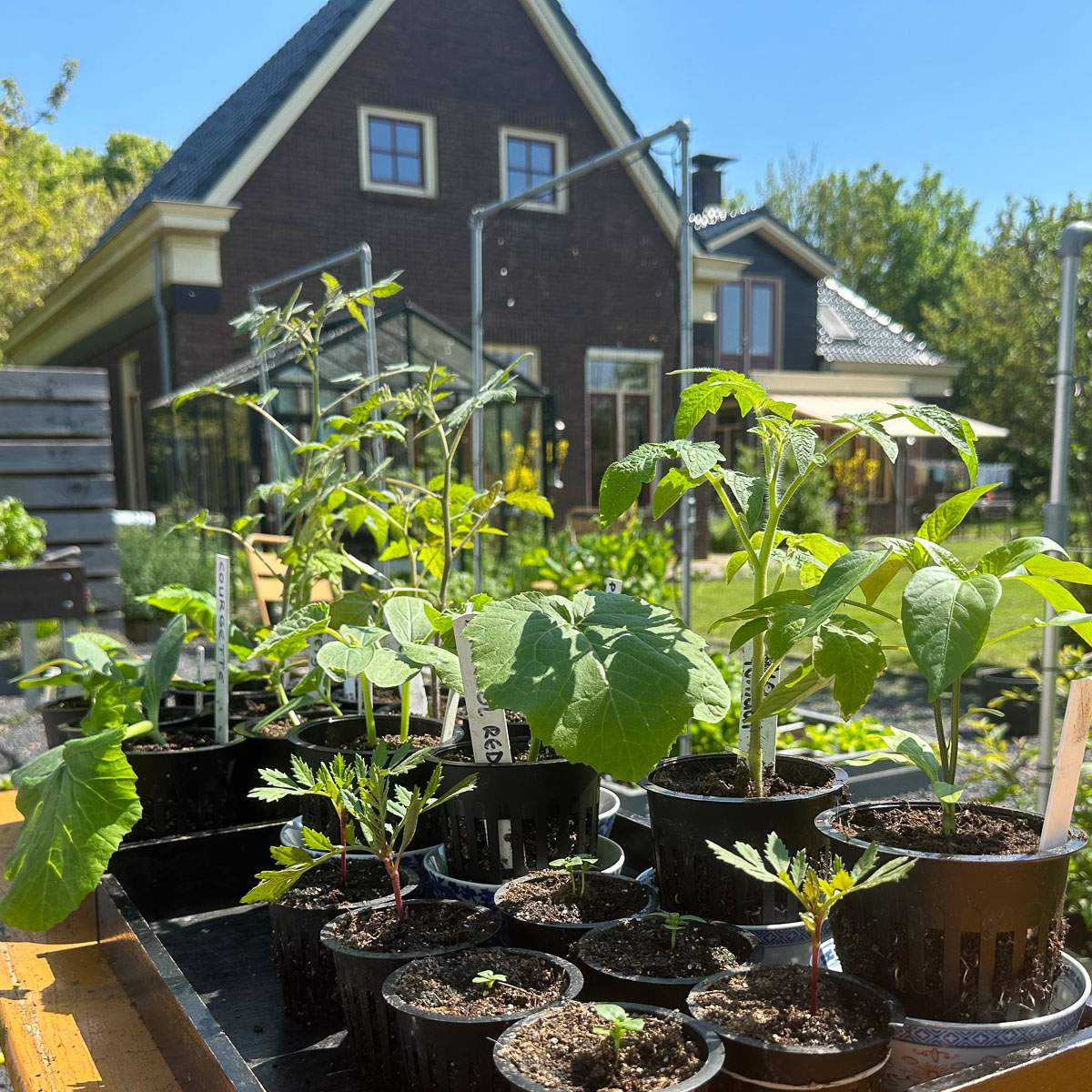
This is called hardening off. You do it by putting the plants outside for a little longer each day.
After about five days, you can also leave them outside at night. If the temperature remains above 10°C over the following days, move them into your garden box.
After about five days, you can also leave them outside at night. If the temperature remains above 10°C over the following days, move them into your garden box.
They will need a little time to adjust there too, but after a week they will start growing again.
The rest is a piece of cake
Keeping the plants in good shape in the windowsill is the trickiest part of growing summer vegetables.
But once they're outside, nature takes over and you don't have to do too much. Just some extra attention once in a while. But more on that next time.
Happy pre-sowing!
But once they're outside, nature takes over and you don't have to do too much. Just some extra attention once in a while. But more on that next time.
Happy pre-sowing!

PS: Tips from experienced Makkelijke Moestuin gardeners
I once asked the community how Makkelijke Moestuin gardeners keep their indoor-raised plants healthy. Many of the photographs on this page came from their replies.
The best tip? Start as late as possible, so you shorten the time these plants need all this indoor care. Start tomatoes in the days before 15 April, and the other summer vegetables from early May.
The best tip? Start as late as possible, so you shorten the time these plants need all this indoor care. Start tomatoes in the days before 15 April, and the other summer vegetables from early May.