
How do our garden beds work?
A well-designed Makkelijke Moestuin garden bed - also known as a raised garden bed - gives your plants almost everything they need, with little work and a generous harvest. That's because the garden bed has several smart features. Let me walk you through them.
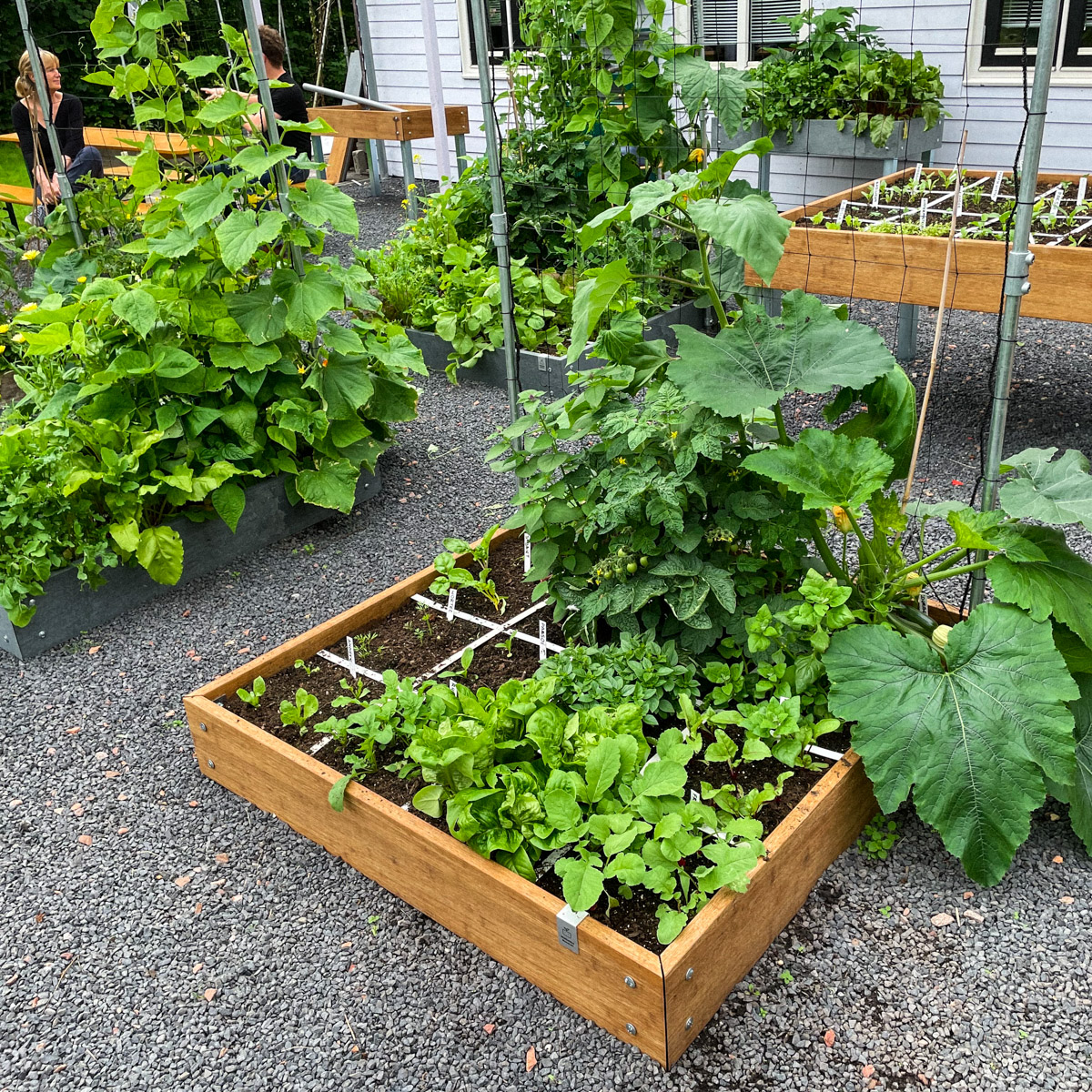
On the first page of this series, I explained what plants need to grow really well: sunlight, air, water, nutrients and space. Plus a little love and attention from you. You can read that page here.
When you garden in a Makkelijke Moestuin, your plants get almost all of that automatically. At least the first five.
That's because we don't grow in open soil, but in raised beds. And those garden beds are at the heart of our system.
When you garden in a Makkelijke Moestuin, your plants get almost all of that automatically. At least the first five.
That's because we don't grow in open soil, but in raised beds. And those garden beds are at the heart of our system.
What is a Makkelijke Moestuin garden bed?
To grow really well, your plants need sunlight, water, air, space and nutrients. Plus some love and attention from you.
We designed our raised garden bed so your plants get those first five things almost automatically. You don't have to spend much time on it or do anything complicated.
Let me explain.
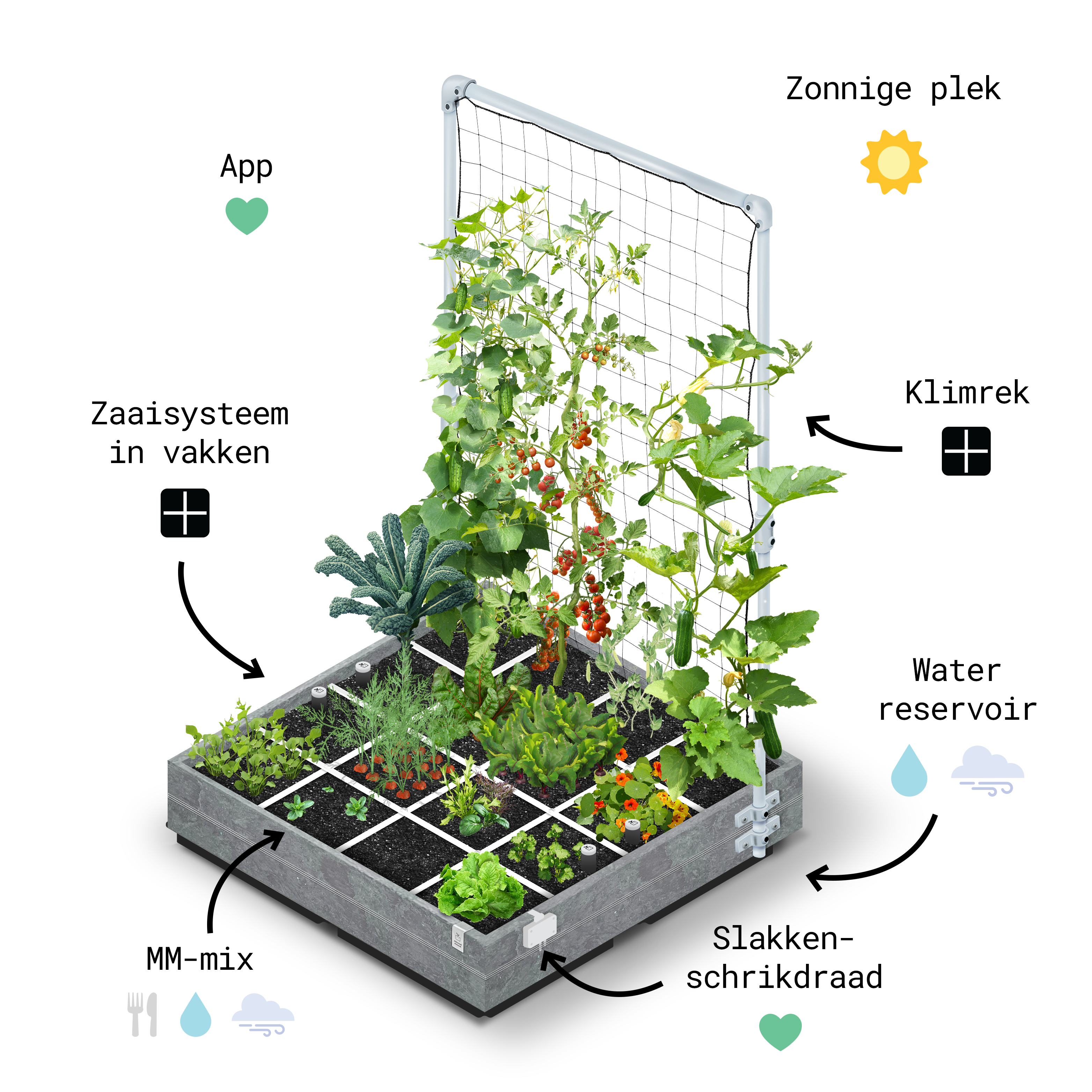
Below you can see our largest Hero garden bed: 16 squares, with an outside size of 126 by 126 centimetres. It's large, but still small enough to reach every part from the outside, so you never need to stand in it to care for your plants.
The side planks are 20 centimetres high, the base of the garden bed is a sturdy water reservoir, there's a 180 cm high trellis, and the planks carry our electric slug fence.
We designed our raised garden bed so your plants get those first five things almost automatically. You don't have to spend much time on it or do anything complicated.
Let me explain.
Below you can see our largest Hero garden bed: 16 squares, with an outside size of 126 by 126 centimetres. It's large, but still small enough to reach every part from the outside, so you never need to stand in it to care for your plants.
The side planks are 20 centimetres high, the base of the garden bed is a sturdy water reservoir, there's a 180 cm high trellis, and the planks carry our electric slug fence.
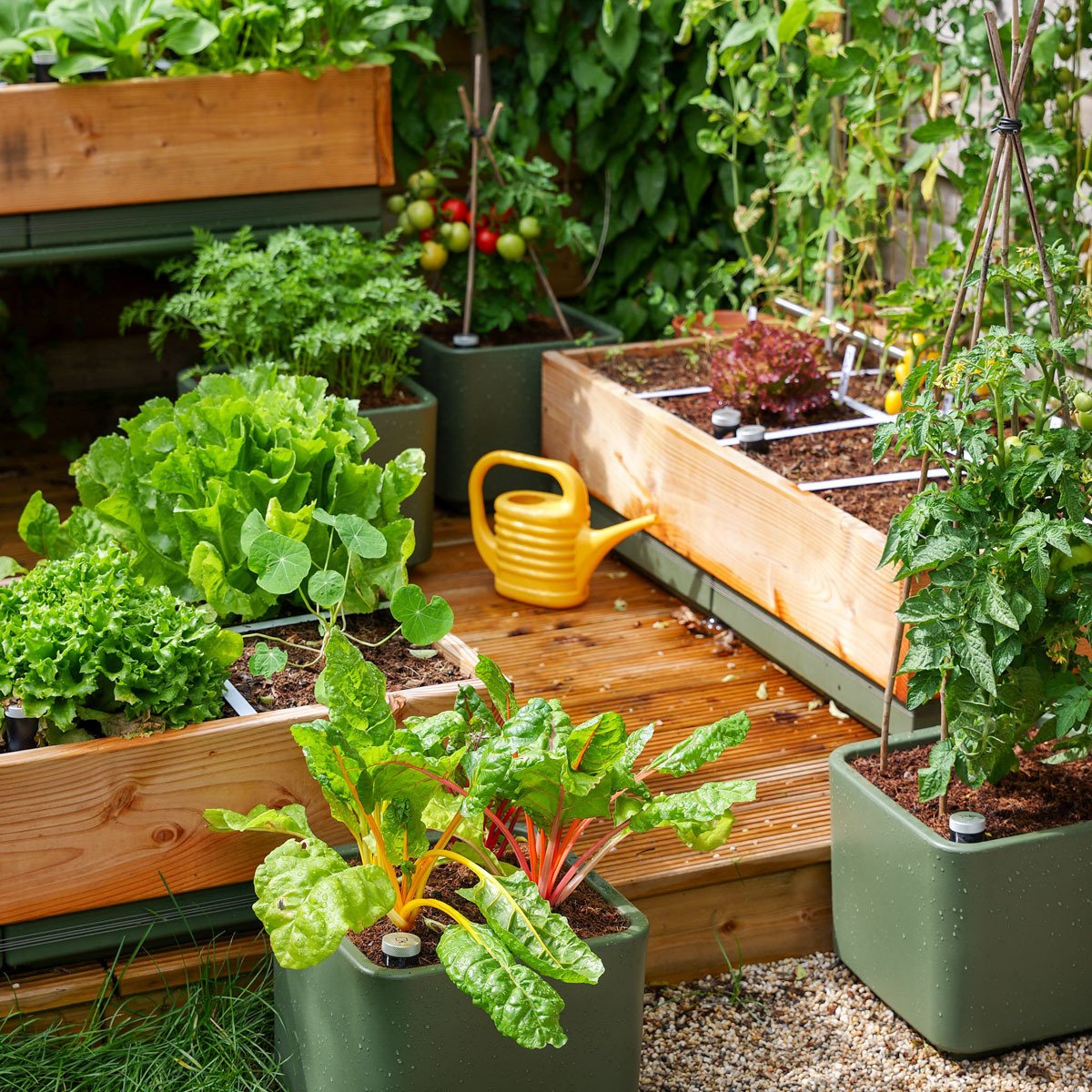
We hebben nu verschillende moestuinbakken die aan deze voorwaarden voldoen.
De MM Hero is onze duurste moestuinbak. Die is gemaakt met zware planken van gerecycled plastic die heel lang meegaan.
De planken van onze nieuwste moestuinbakken zijn gemaakt van dik en stevig Douglas-hout. Hout gaat minder lang mee, is daarom ook goedkoper, maar kun je ook makkelijk vervangen.
Momenteel zijn die er in 2 maten: met 4 vakken en met 8 vakken.
A sunny spot
Put your garden bed somewhere that gets at least six hours of sunlight, and preferably eight.
The front of the garden bed faces south: that's where the low plants go. Taller plants go further back. That way every plant gets enough sunlight without shading the others.
The front of the garden bed faces south: that's where the low plants go. Taller plants go further back. That way every plant gets enough sunlight without shading the others.
Makkelijke Moestuinmix
Fill the raised garden bed with a light, nutrient-rich mix that holds both moisture and nutrients well. When your garden bed is filled to the top, you have a layer of 20 cm. That's deep enough for everything you'll grow in it, even if the mix settles a little later.
Because the garden bed sits on top of the ground rather than in it, the mix warms up earlier in spring and you have less trouble from the first night frosts. It also means nobody accidentally steps on your vegetables, and your children's ball doesn't roll straight through them.
Because the garden bed sits on top of the ground rather than in it, the mix warms up earlier in spring and you have less trouble from the first night frosts. It also means nobody accidentally steps on your vegetables, and your children's ball doesn't roll straight through them.
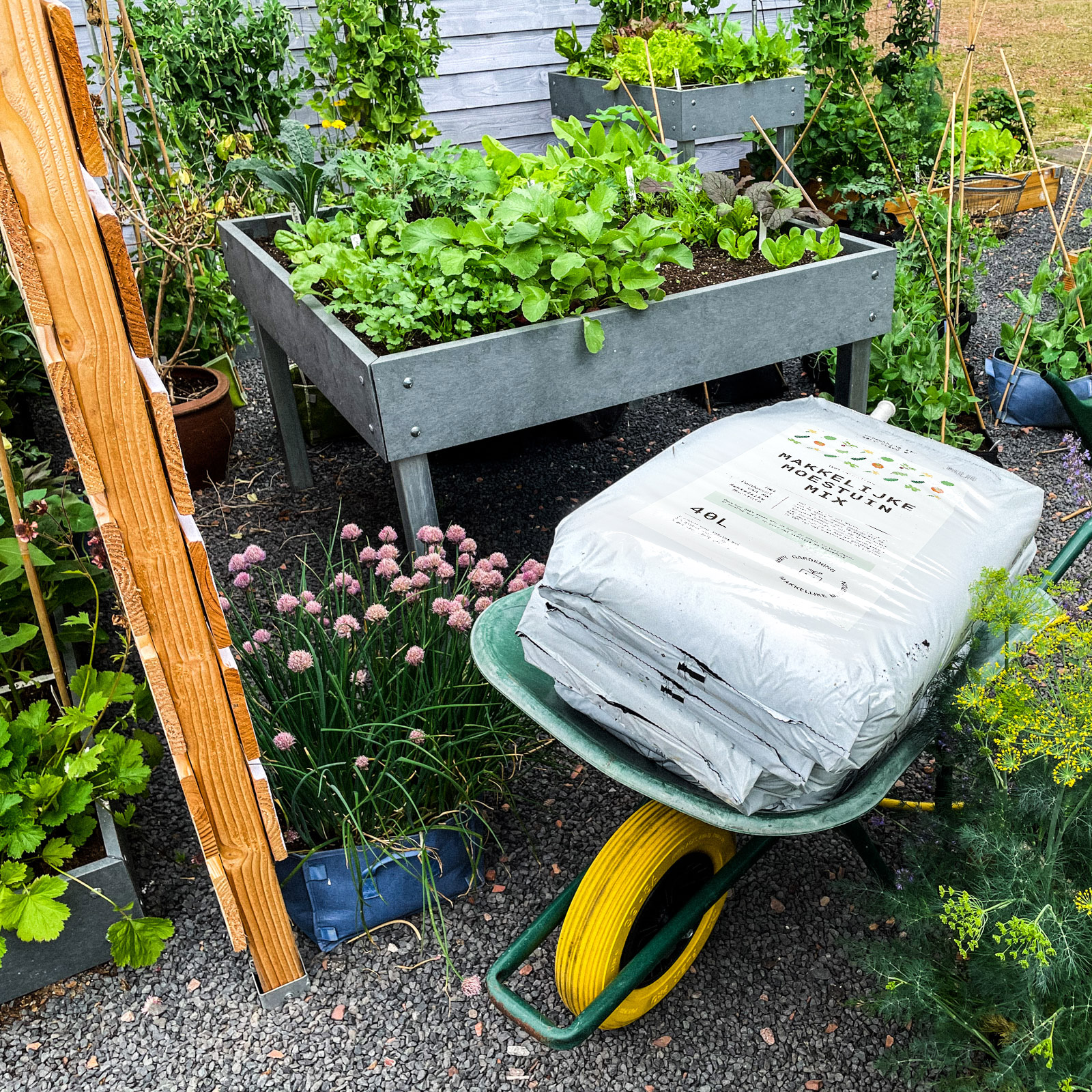
Loosen the mix until it is light and crumbly before you sow, top it up with plant food regularly, and keep it moist. That gives your plants nutrients, air and water all at once.
Sowing in squares
We sow in squares, not in rows. That's why there's a loose white grid on top of the mix, dividing the garden bed into 30 x 30 cm squares. That size is just right for giving each plant enough space to grow well.
For example, one square can hold:
For example, one square can hold:
- 16 small plants, such as French breakfast radishes
- 9 medium plants, such as Chioggia beetroot
- 4 large plants, such as pak choi
- or 1 XL plant, such as dino kale
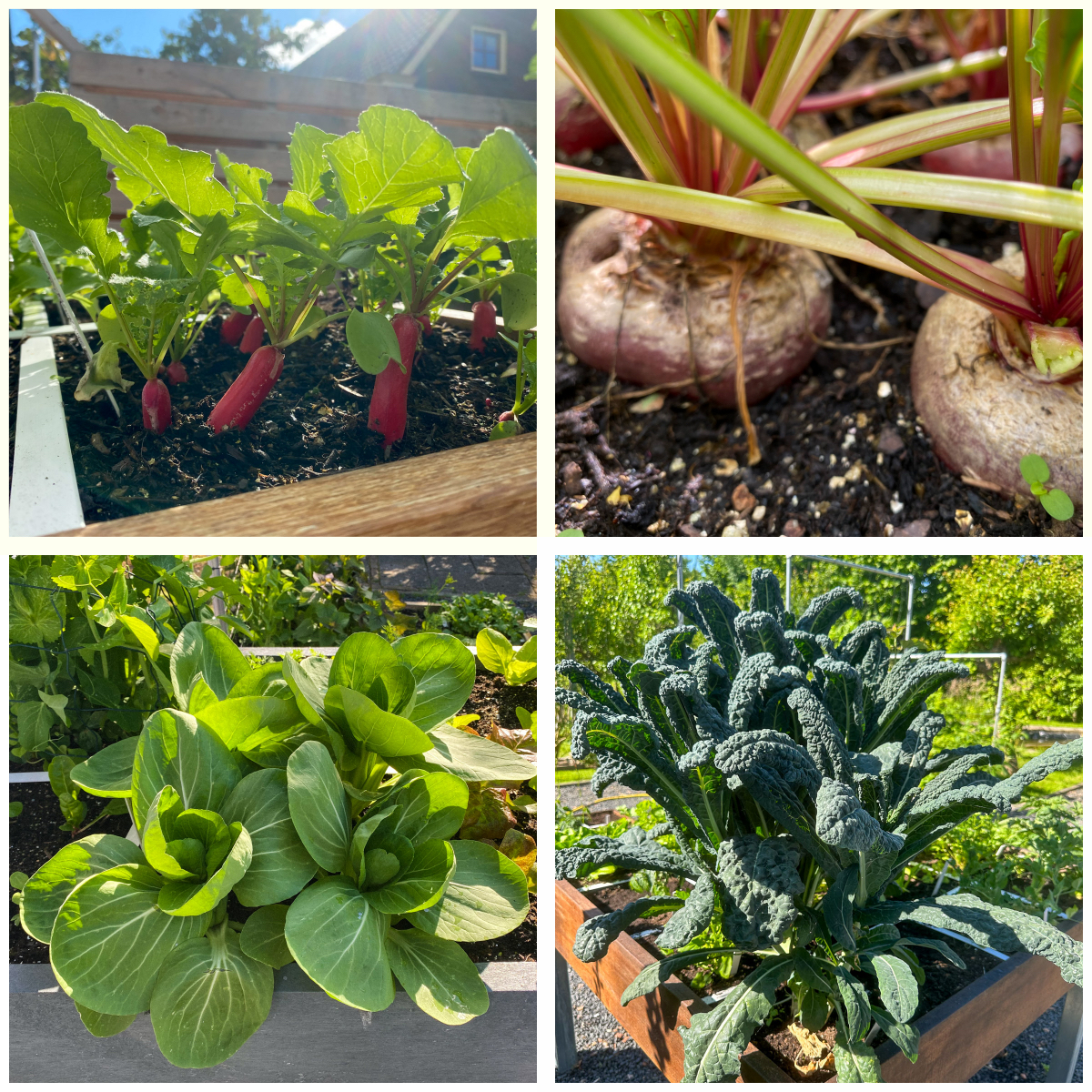
Plant a different vegetable in each square and you get lots of variety, while also helping to prevent diseases and pests.
Water reservoir
The garden bed in the picture sits on water reservoirs. That's optional, of course, but it means you don't have to water as often.
Seeds germinate more easily, and your plants grow faster too. The reservoir keeps the mix steadily moist instead of soaking wet one moment and bone dry the next. And because there's also a layer of air inside it, the roots get oxygen as well as water.
Without a reservoir, you water by hand. That works fine too, but it takes more work and attention.
Seeds germinate more easily, and your plants grow faster too. The reservoir keeps the mix steadily moist instead of soaking wet one moment and bone dry the next. And because there's also a layer of air inside it, the roots get oxygen as well as water.
Without a reservoir, you water by hand. That works fine too, but it takes more work and attention.
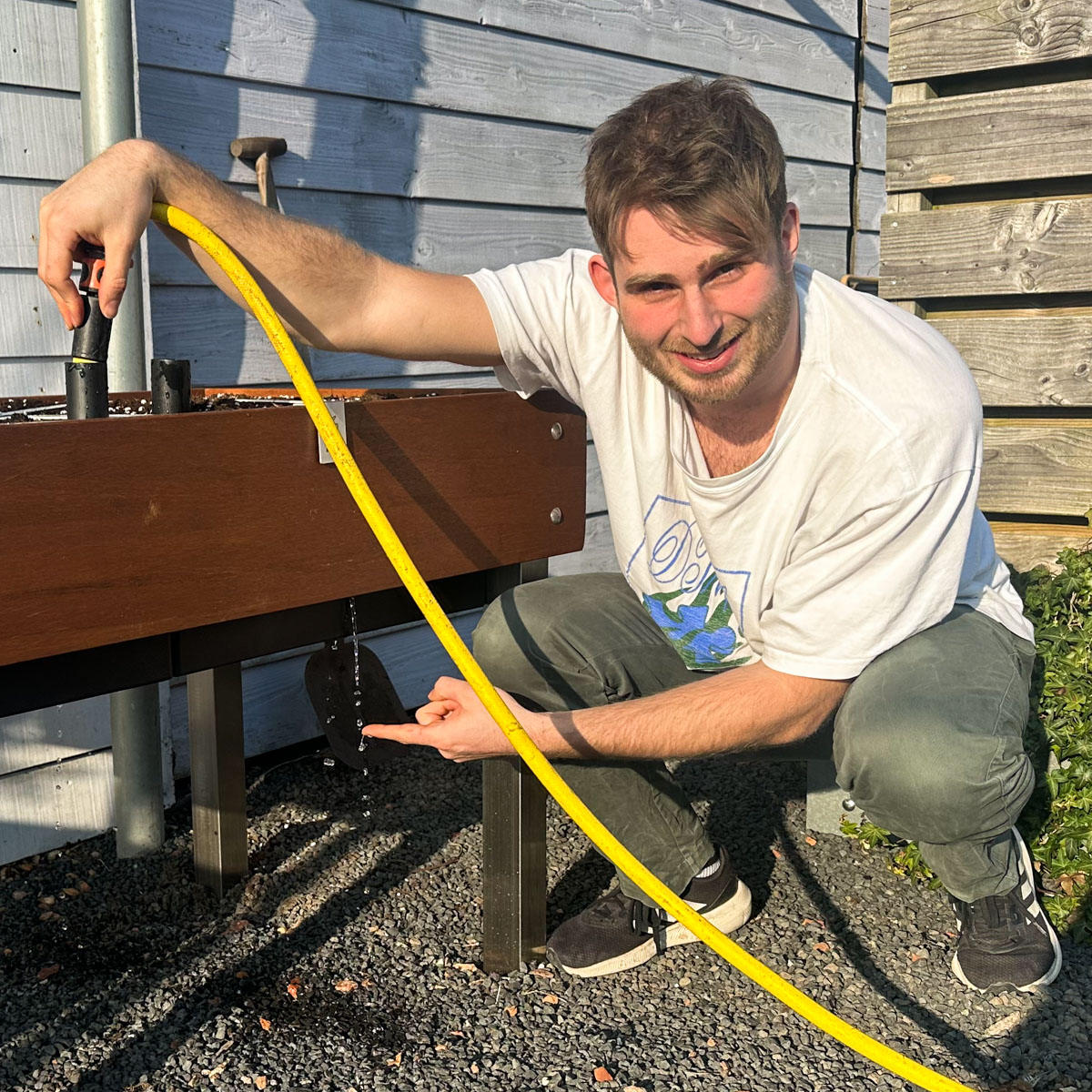
Zonder waterreservoir kan natuurlijk ook: dan geef je zelf water van bovenaf. Dat kost je aanzienlijk meer werk en tijd - zeker in de zomer - en je planten groeien dan altijd iets minder goed.
Vandaar dat wij nooit meer bakken zonder willen 🙂
Trellis
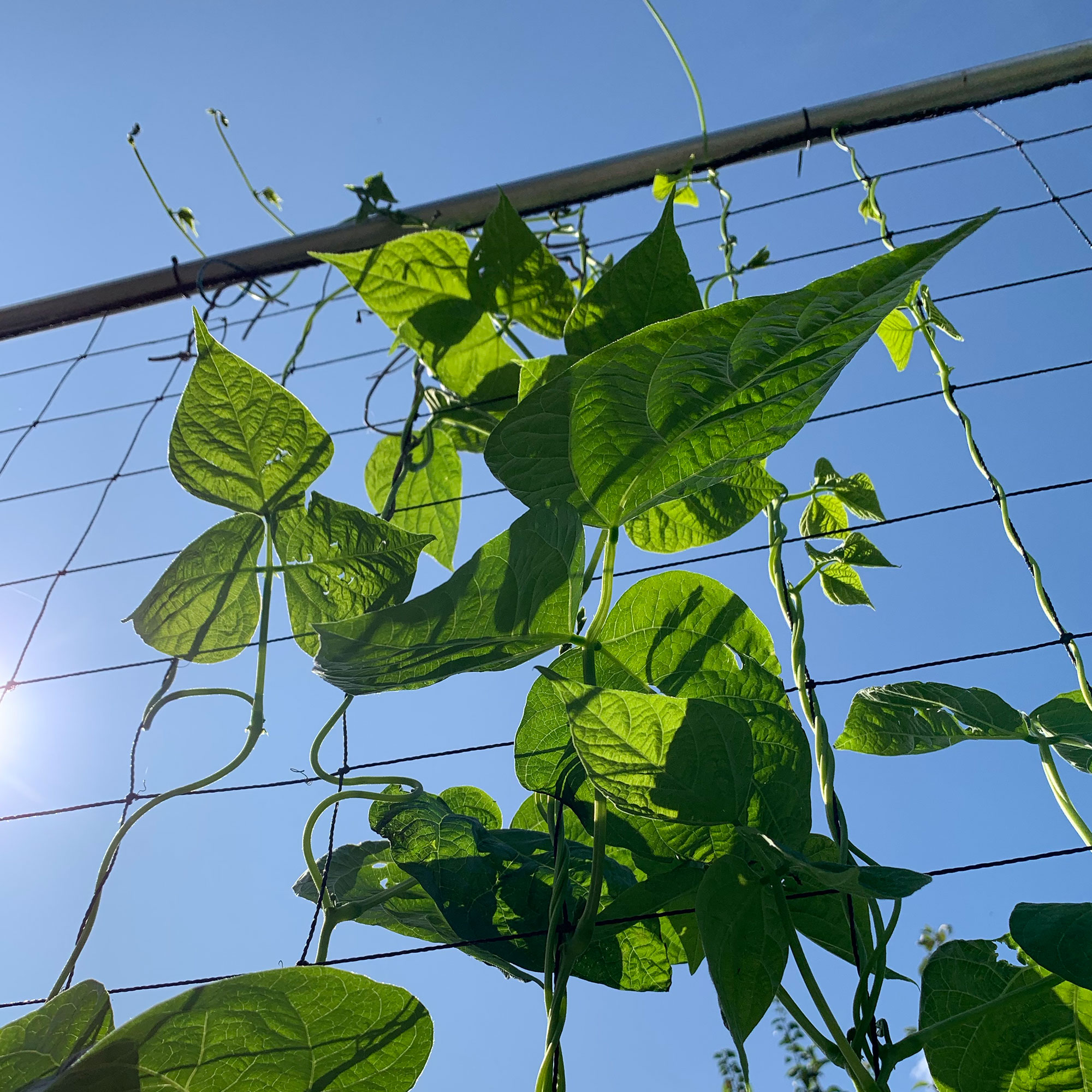
If you also want to grow climbing and tall vegetables, such as tomatoes, climbing zucchini, baby pumpkins, Romano pole beans and snow peas, your garden bed needs a sturdy trellis. The trellis stands at the back of the garden bed, on the north side.
Those tall plants then take up only one square while still getting enough space. They also get plenty of sunlight without getting in the way of the other plants.
Those tall plants then take up only one square while still getting enough space. They also get plenty of sunlight without getting in the way of the other plants.
Electric slug fence
You can garden without the MM electric slug fence, of course. But if, like us, you live in a real slug paradise, it saves you a lot of frustration. And a lot of harvest 😐
It also lets you focus your attention somewhere else.
It also lets you focus your attention somewhere else.
App
The heavy, annoying work of a vegetable garden is gone.
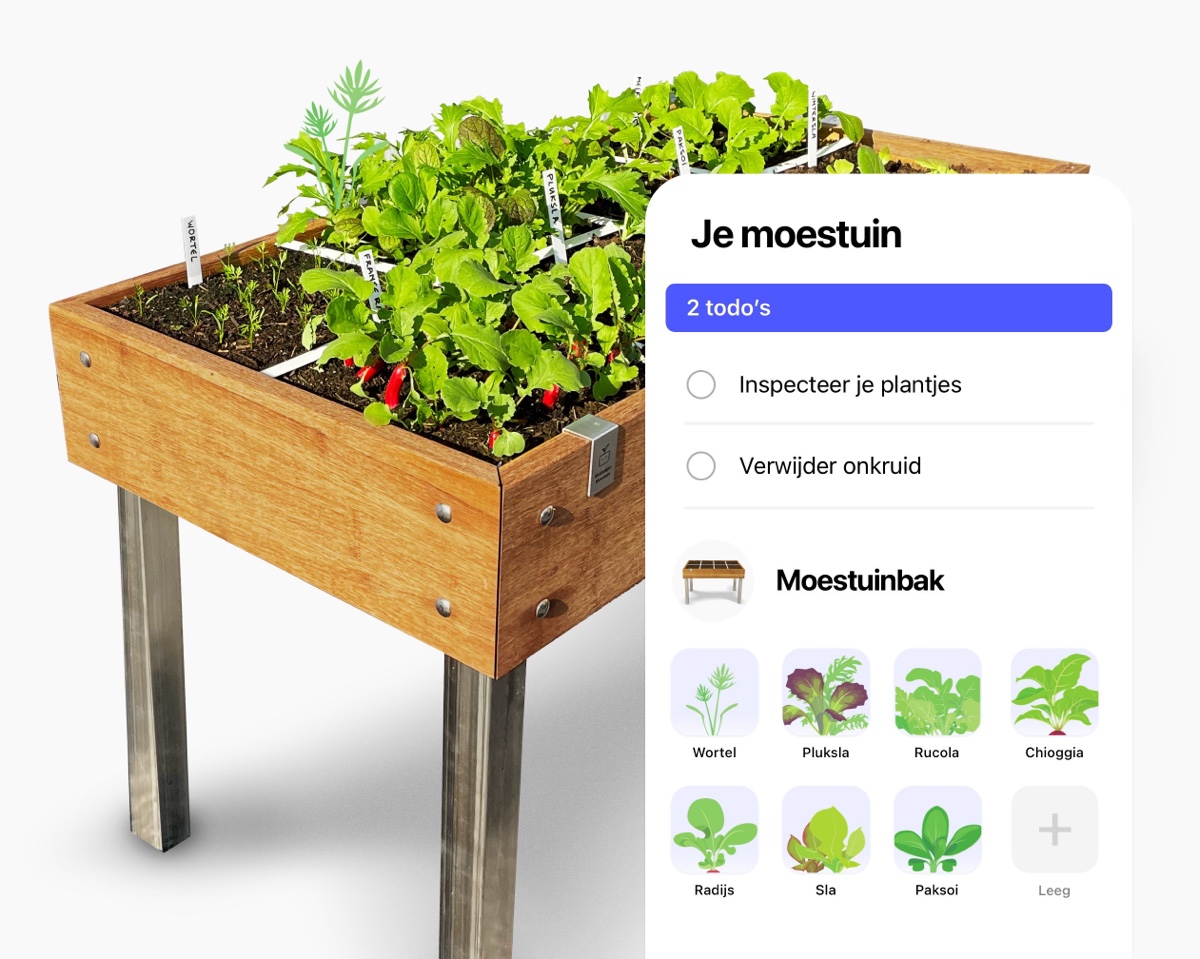
You can see your plants from every side. At a glance you can tell whether they are growing well, need water, or are ready to harvest. That overview makes it much easier, and much more fun.
What remains is giving your plants some love and attention: sowing in the right square at the right time, watering them, caring for them now and then, and harvesting on time.
Those are the enjoyable jobs. And even with those, you get help from the app.
You can see your plants from every side. At a glance you can tell whether they are growing well, need water, or are ready to harvest. That overview makes it much easier, and much more fun.
What remains is giving your plants some love and attention: sowing in the right square at the right time, watering them, caring for them now and then, and harvesting on time.
Those are the enjoyable jobs. And even with those, you get help from the app.
Sturdy materials
Okay, this isn't shown in the picture of the garden bed, but I still want to mention it. If you want to harvest from your Makkelijke Moestuin year after year, your garden beds need to be made from sturdy materials that can handle wind and weather.
And that includes a thick layer of snow and 8 degrees below zero:
And that includes a thick layer of snow and 8 degrees below zero:
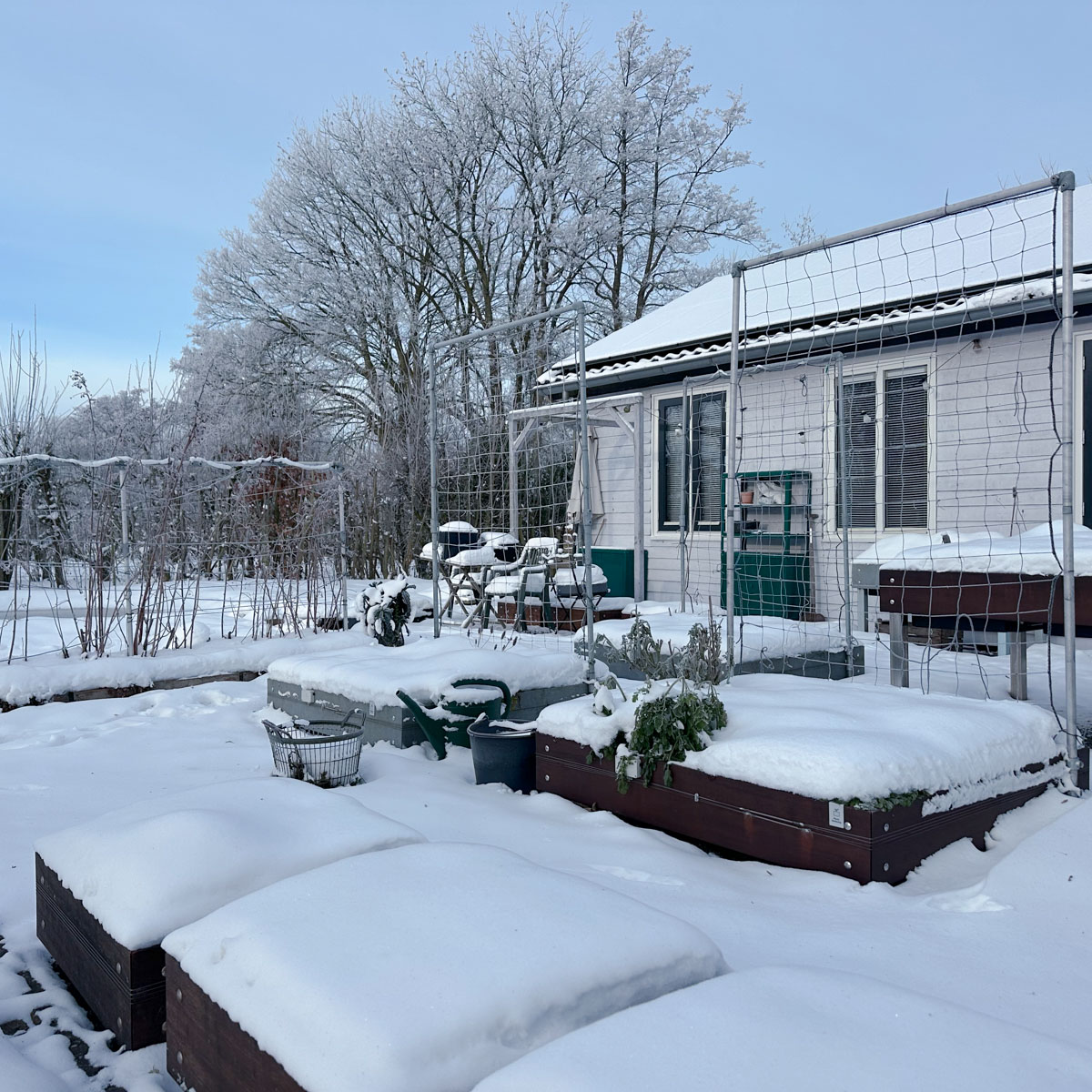
If you have one of our garden beds in your garden, you don't need to worry about whether it can handle those conditions. All the materials, including the water reservoirs, can withstand both heat and cold.
So now you know what a garden bed needs in order to work with our system.
Next, let me tell you more about Makkelijke Moestuinmix:
So now you know what a garden bed needs in order to work with our system.
Next, let me tell you more about Makkelijke Moestuinmix: