Makkelijke Moestuingrond
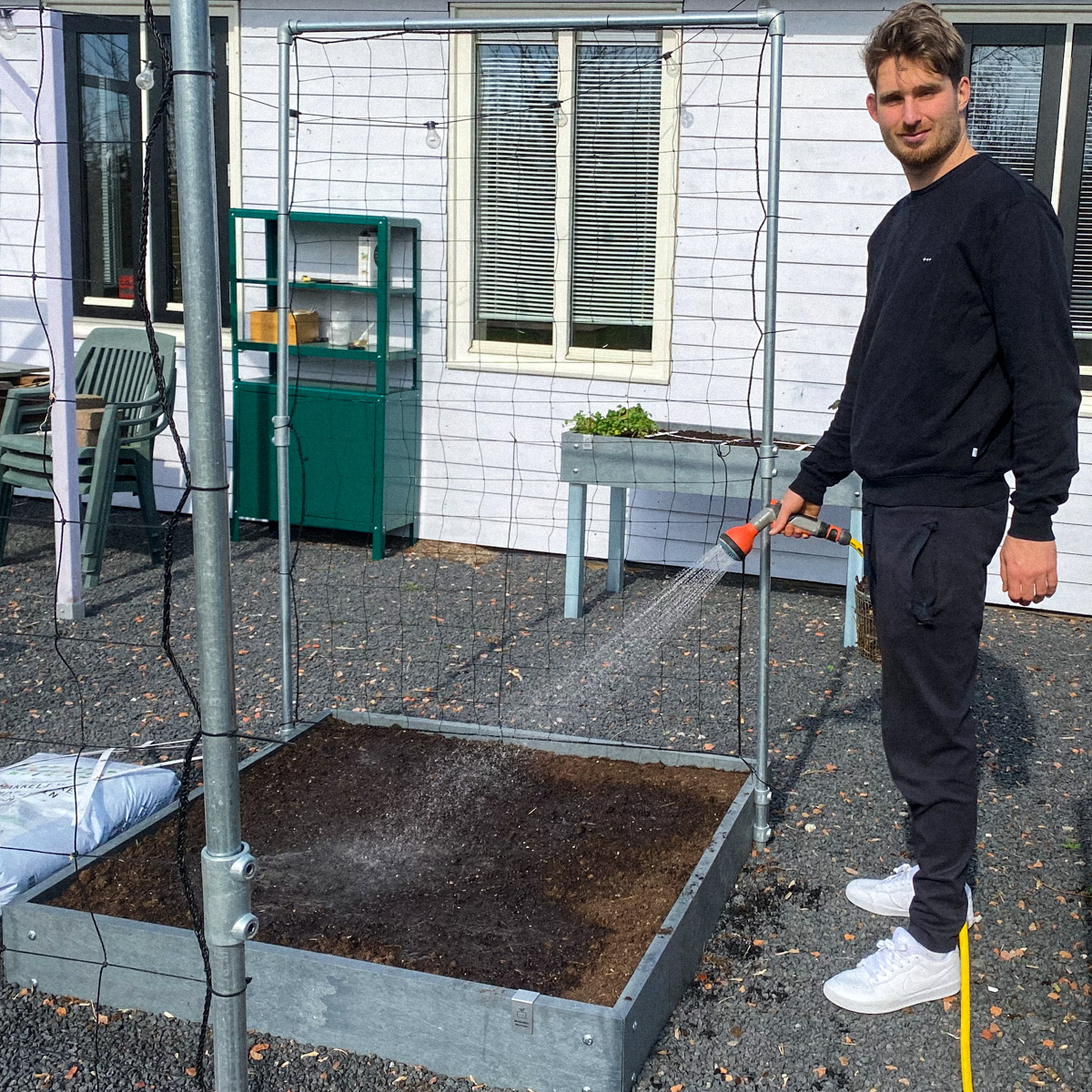
In a Makkelijke Moestuin, you grow in raised beds filled with a special soil mix, rather than in your garden's existing soil.
My explanation of the Makkelijke Moestuin system (in Dutch) shows why we use a special soil mix, and why it's an essential part of what makes a Makkelijke Moestuin work.
Unlike ordinary potting compost or garden soil, our soil mix is suitable for all your plants.
We currently sell two types:
Makkelijke Moestuingrond: this peat-free soil mix is mainly made from coconut, with added plant food and worm castings. It's specially developed for our raised beds with water reservoirs.
The classic Makkelijke Moestuinmix: a blend of compost, fibres (such as brown peat, cocopeat and wood fibres) and added nutrients. Suitable for all raised beds and pots, although less suited to water reservoirs.
Let's start with the first:
Makkelijke Moestuingrond
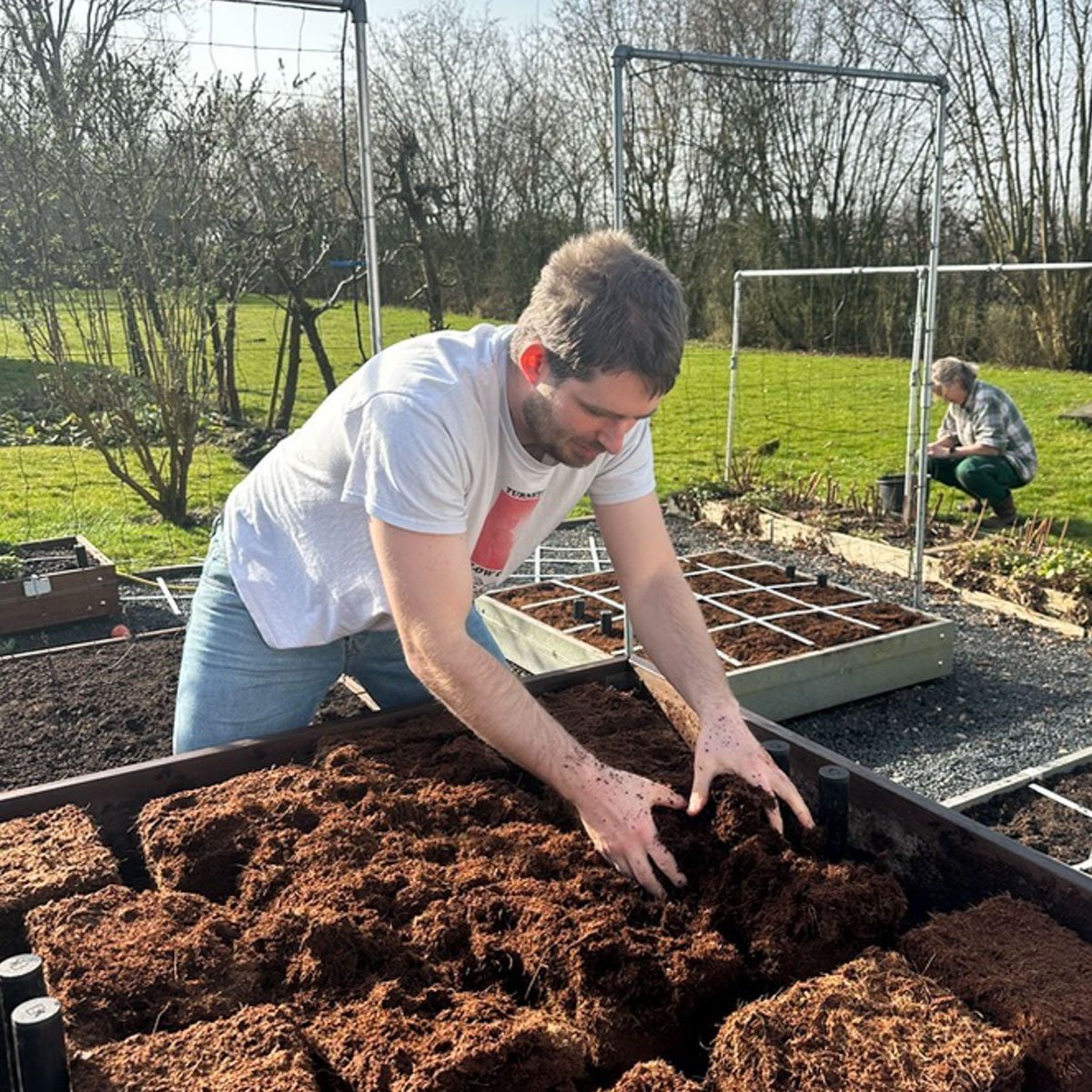
Makkelijke Moestuingrond is specially made for raised beds with water reservoirs: it contains coconut, plant food and worm castings.
Coconut fibres draw up water better than the peat fibres in the classic MM-mix.
That's why the classic mix can sometimes dry out at the top in hot, dry weather, even when there's still enough water in the reservoir.
Peat holds moisture well, but once it dries out, it doesn't absorb water as readily.
So if you use raised beds with water reservoirs, we recommend the coconut-based Makkelijke Moestuingrond.
It contains not just fibres, but also small pieces of coconut husk. These keep the soil mix nice and airy.
Plants need air around their roots too, so that's exactly what they need.
The classic Makkelijke Moestuinmix
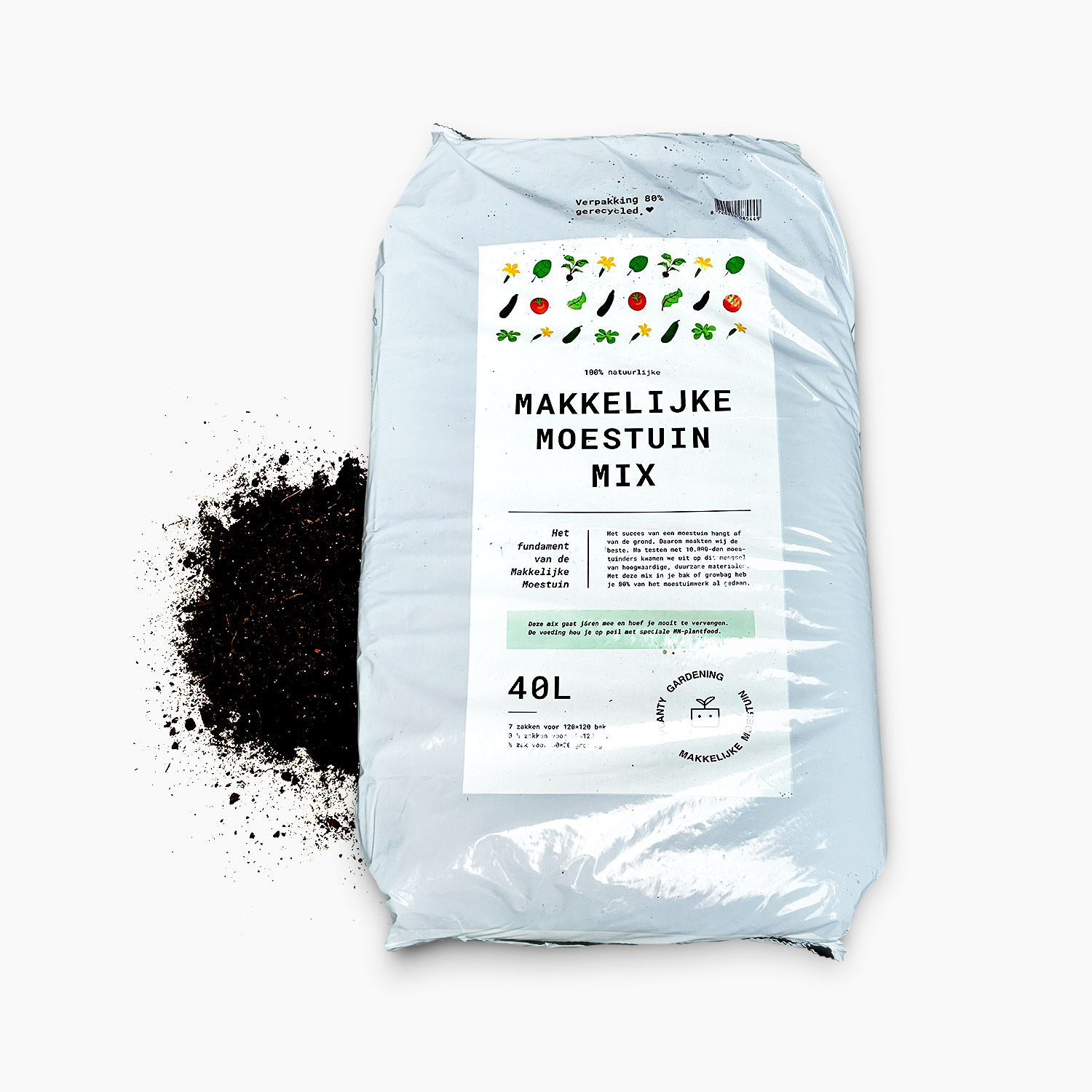
If you don't use water reservoirs, our classic Makkelijke Moestuinmix is still an excellent choice.
It's a blend of nutritious compost, fibres (such as brown peat, cocopeat and wood fibres) and organic nutrients.
The benefits of our soil mixes
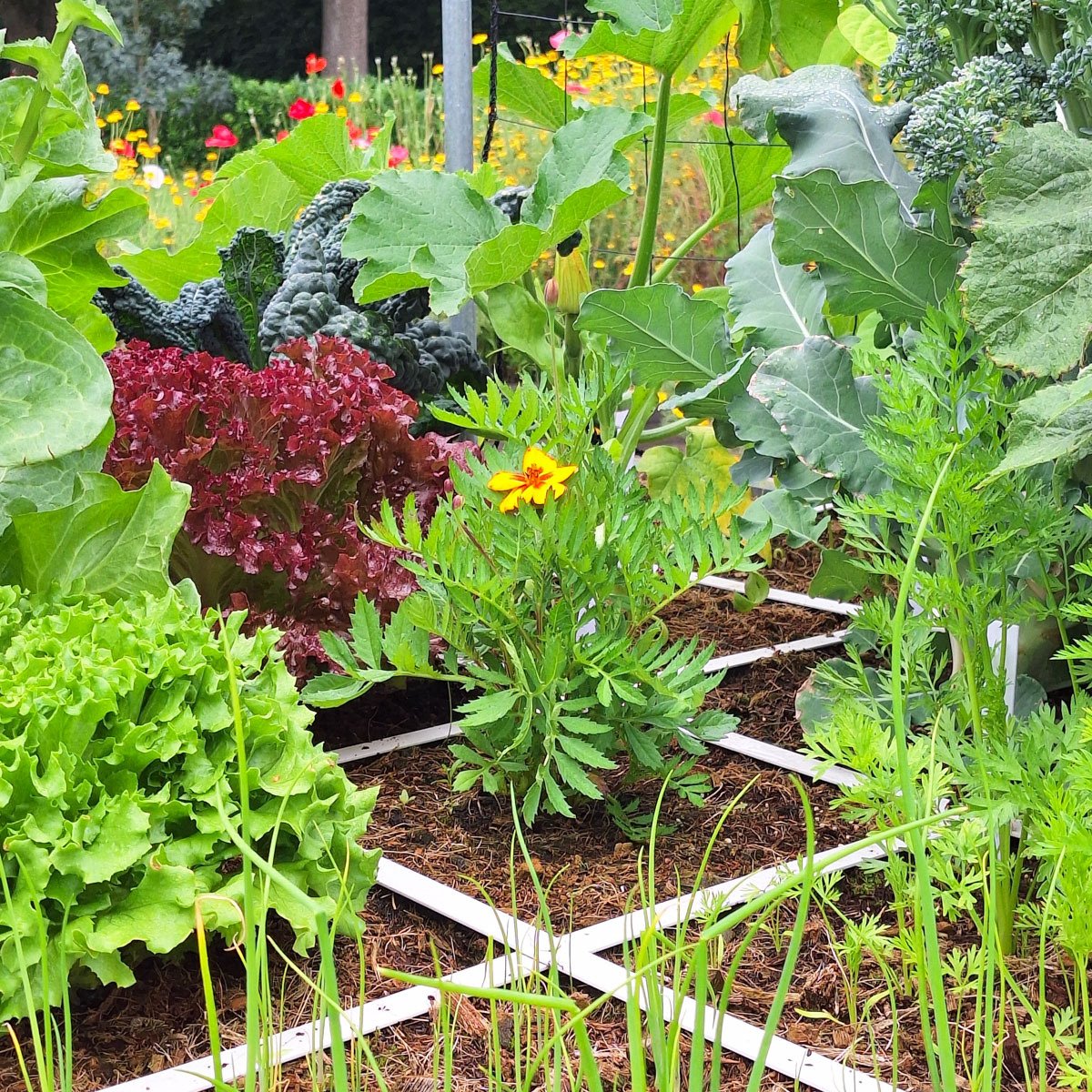
Both Makkelijke Moestuingrond and the classic MM-mix are easy to work with, give your plants everything they need and hold moisture well without becoming waterlogged.
You can leave them in your raised beds for years and never need to replace them, unlike ordinary potting compost.
Simply top up the nutrients with a little MM plant food from time to time. No need to juggle lots of different fertilisers. How sustainable is that?
Where can you buy our soil mixes?
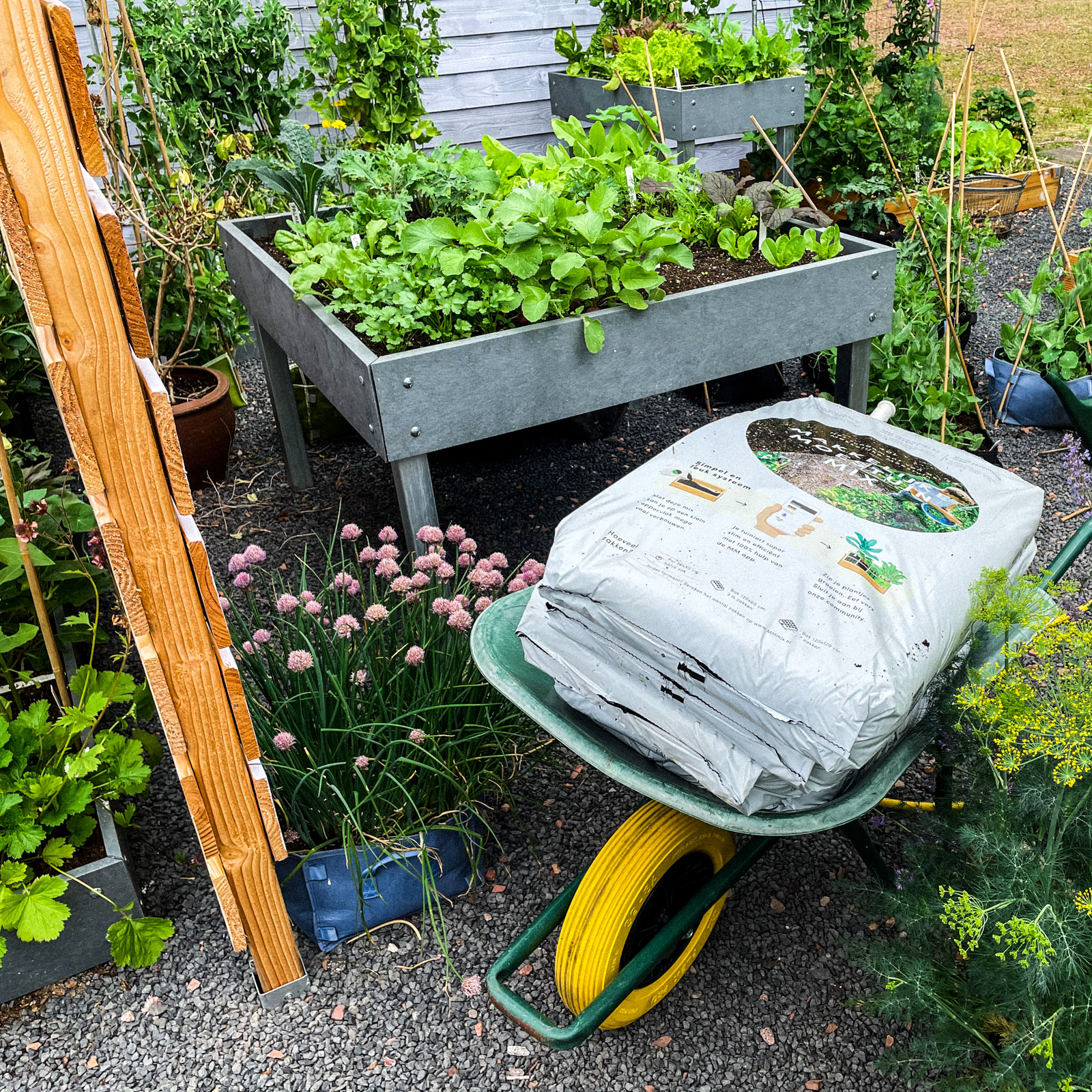
You can collect bags of MM-mix from our stockists, which you'll find throughout the Netherlands.
Many are keen Makkelijke Moestuin growers themselves, and are happy to share their experiences. More and more shops are joining them too.
An increasing number of stockists also sell the new coconut-based Makkelijke Moestuingrond.
In the shop
Of course, we can also deliver bags of Makkelijke Moestuinmix to your home. We send up to 10 bags in special shipping bags made from thicker plastic film. Larger orders are delivered on pallets.
Other growers' experiences
Makkelijke Moestuinmix lasts for years, just like the new Makkelijke Moestuingrond.
Once the mix is in your raised bed, you never need to replace it. All you'll need throughout your gardening life is MM plant food and the occasional new bag of mix.
You can look forward to great results, without constantly improving your soil or replacing potting compost.
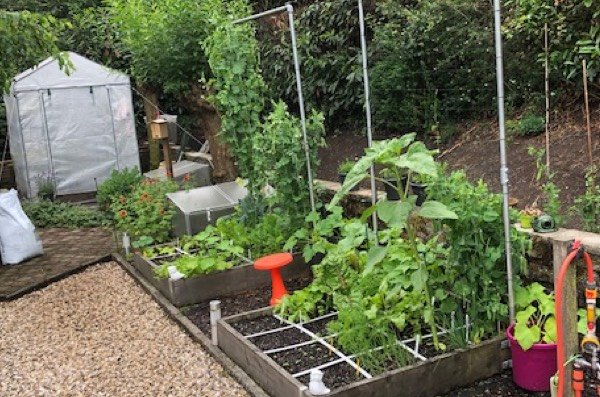
These are Ria's raised beds:
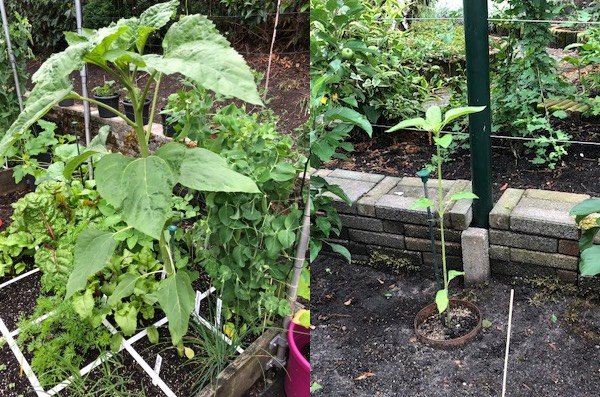
Take a look at the sunflower. Ria writes:
"In the first photo, you can see it in the raised bed. It has a thick stem and is already quite tall.
Below, you can see the difference between that one and the sunflower I planted directly in the garden at the same time. It has a thin stem and still has some catching up to do."
Other vegetable garden soil mixes aren't the same
Other companies have been selling vegetable garden soil mixes for several years now. At first glance, Pokon's mix even looks remarkably similar to Makkelijke Moestuinmix. But don't be fooled: they really are different.
Pokon's mix contains lower-quality ingredients. They add lots of fertilisers, wood chips and coarse pieces of bark instead of compost and natural nutrients.
Read other growers' experiences here (in Dutch).
Dagmar puts it like this:
"I really recommend the MM-mix: much better than ordinary potting compost or, for example, Pokon. The vegetable garden soil mix from @makkelijkemoestuin is the best, in my own experience."
What's next?
Already have your Makkelijke Moestuingrond or classic MM-mix? Then let's move on to the next step: placing and filling your raised bed.