Worm castings: ideal with cocopeat
Worm castings are packed with beneficial microorganisms. Add them to cocopeat fibres and they immediately create active soil life.
This makes nutrients available to your plants faster, helping them grow more quickly and strongly.
This makes nutrients available to your plants faster, helping them grow more quickly and strongly.
What are worm castings?
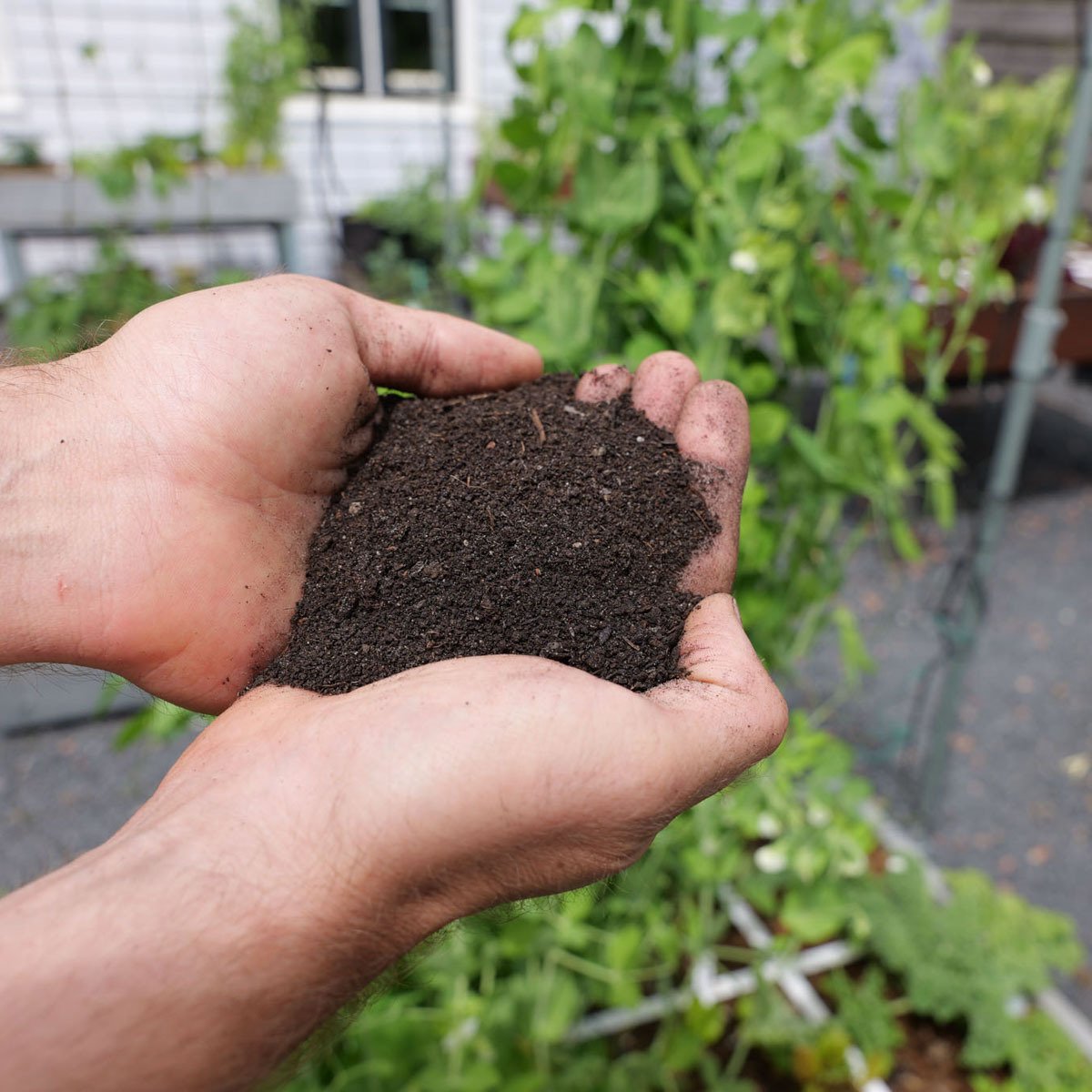
Worm castings are made by special compost worms. They turn organic material into fine, crumbly compost rich in beneficial microorganisms. Ordinary earthworms from your garden cannot do this.
Despite the name, worm castings are not manure, although they do contain some nutrients, just like ordinary compost. Their greatest strength is the active soil life: they immediately introduce billions of beneficial microorganisms into the cocopeat mix.
Ours also contain two very special fungi: Trichoderma and mycorrhiza. Before you think, “Yuck, fungi – I don’t want those”: these are exactly the fungi you do want in your mix.
Trichoderma and mycorrhizal fungi work extremely well with plants. They help release nutrients and strengthen the roots so they can absorb water and nutrients more effectively. In return, the fungi receive sugars from the plant. Biologists call this kind of partnership symbiosis.
How did we discover worm castings?
When we started developing Makkelijke Moestuin Soil, we wanted a mix that performed at least as well as our classic Makkelijke Moestuin Mix, but worked better with our water reservoirs.
Cocopeat is ideal for that. Cocopeat fibres absorb and retain moisture extremely well, while small pieces of cocopeat husk keep the mix airy year after year so roots can grow freely.
Add our plant food and you already have an excellent growing mix whose quality is much more consistent than ordinary compost or garden soil.
Still, during this cold spring, we noticed that some plants grew more slowly in the cocopeat than in our original MM mix.
Further research revealed the reason:
Our MM plant food is made from organic ingredients containing all the nutrients plants need: nitrogen, phosphorus and potassium, in the right proportions.
Before roots can use them, however, some of these nutrients first need to be processed by bacteria, fungi and other soil organisms. The more active the soil life, the sooner plants can benefit.
Our classic MM mix contains a large amount of compost, so it already includes plenty of soil life.
Add our plant food and you already have an excellent growing mix whose quality is much more consistent than ordinary compost or garden soil.
Still, during this cold spring, we noticed that some plants grew more slowly in the cocopeat than in our original MM mix.
Further research revealed the reason:
Our MM plant food is made from organic ingredients containing all the nutrients plants need: nitrogen, phosphorus and potassium, in the right proportions.
Before roots can use them, however, some of these nutrients first need to be processed by bacteria, fungi and other soil organisms. The more active the soil life, the sooner plants can benefit.
Our classic MM mix contains a large amount of compost, so it already includes plenty of soil life.
Our cocopeat mix naturally contains almost no active soil life.
That makes sense: cocopeat fibres are washed, buffered and processed before use, creating a clean and stable base for plants.
That makes sense: cocopeat fibres are washed, buffered and processed before use, creating a clean and stable base for plants.
But that process also removes some of the soil life found in compost.
In the long term this is not a problem. Once you start gardening, bacteria and fungi naturally enter the mix through the air, rain, insects, birds and the plants themselves.
That takes time, though, especially while temperatures remain low. And that was exactly why some plants were slower to get started.
That takes time, though, especially while temperatures remain low. And that was exactly why some plants were slower to get started.
The solution? Worm castings plus two extra fungi
We needed a way to establish that soil life from the very beginning. The best solution was to use worm castings.
During our tests, we discovered that even a relatively small amount made a big difference. When we also added Trichoderma and mycorrhizal fungi, we became even more enthusiastic.
In test boxes containing worm castings and both fungi, some seedlings emerged more easily and quickly and also grew noticeably faster.
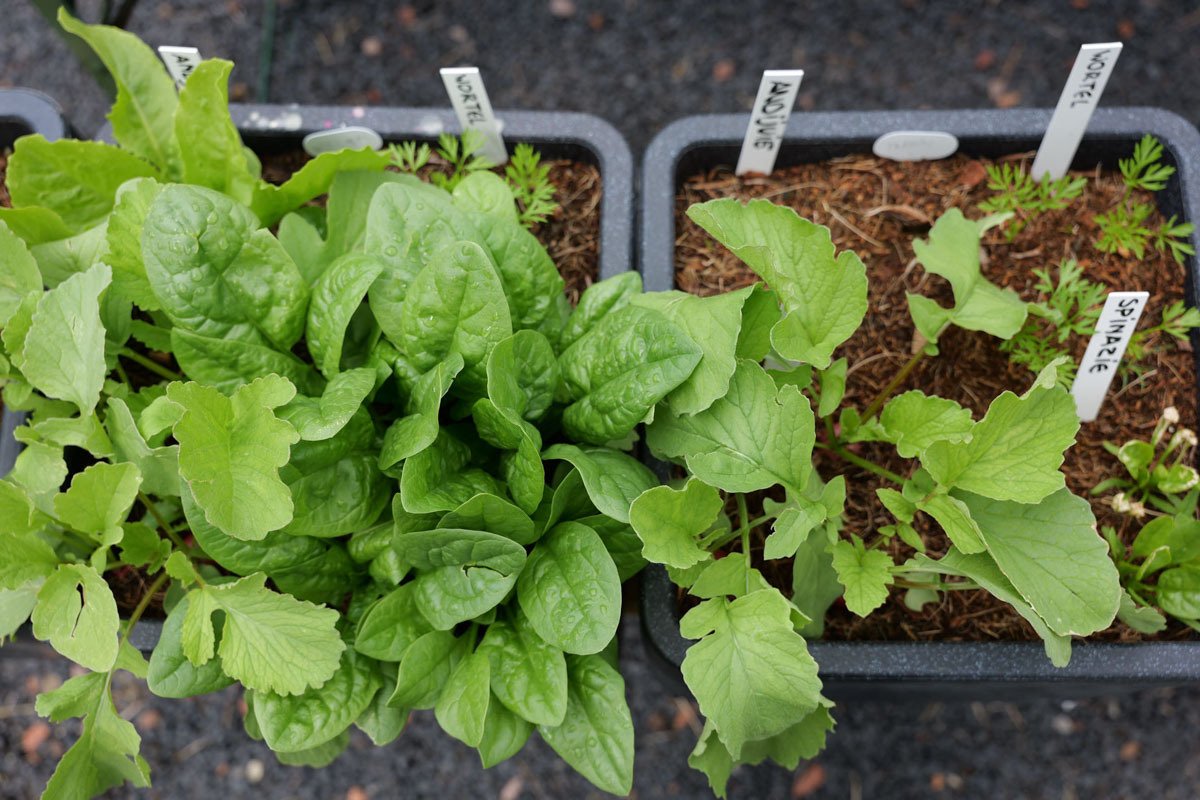
Look at the photo below. In the left-hand pot with worm castings, the endive (top left) and spinach (bottom right) grew much better than in the pot on the right. The carrots (top right) and radishes (bottom left), however, grew about equally well.
The weather during this period was extremely changeable: sometimes warm during the day, often cold at night, with occasional heavy rain.
During our tests, we discovered that even a relatively small amount made a big difference. When we also added Trichoderma and mycorrhizal fungi, we became even more enthusiastic.
In test boxes containing worm castings and both fungi, some seedlings emerged more easily and quickly and also grew noticeably faster.
Look at the photo below. In the left-hand pot with worm castings, the endive (top left) and spinach (bottom right) grew much better than in the pot on the right. The carrots (top right) and radishes (bottom left), however, grew about equally well.
The weather during this period was extremely changeable: sometimes warm during the day, often cold at night, with occasional heavy rain.
Why does this work? Because the three additions work extremely well together.
- Worm castings contain huge numbers of beneficial bacteria, fungi and other microorganisms. These become active as soon as they come into contact with moisture and nutrients, immediately bringing the cocopeat mix to life.
- Trichoderma helps break down organic matter and supports the soil life around the roots, making nutrients available to plants even faster.
- Mycorrhiza works together with plant roots. Fine fungal threads grow from the roots through the mix, creating a network much larger than the root system alone – almost as if the plant suddenly has many more roots with which to absorb nutrients.
Trichoderma protects the roots
This fungus lives around plant roots and helps break down organic matter, making its nutrients available more quickly.
Trichoderma also forms a kind of natural protective layer around the roots, giving harmful fungi less opportunity to become established.
Research also shows that plants living with Trichoderma often grow more vigorously, develop larger root systems and cope better with stress, disease and certain pests.
Mycorrhiza extends the reach of the roots
The plant gives sugars to the fungus. In return, the fungus creates an enormous network of fine threads throughout the mix.
This network acts as an extension of the root system, allowing the plant to absorb water, nutrients and trace elements much more easily. As a result, the plant usually grows stronger and copes better with drought, heat and other stressful conditions.
Trichoderma and mycorrhiza complement each other perfectly: the first helps release nutrients, while the second delivers them to the plant very efficiently.
Some studies even suggest that plants working with Trichoderma and mycorrhiza may be more resistant to pests such as aphids and spider mites. The fungi do not attack these pests directly; instead, they strengthen the plant’s natural defences.
There are also indications that such plants are better able to attract the pests’ natural enemies.
Fascinating, isn’t it? That is why we add these fungi to our worm castings: they make an already useful product even better.
This network acts as an extension of the root system, allowing the plant to absorb water, nutrients and trace elements much more easily. As a result, the plant usually grows stronger and copes better with drought, heat and other stressful conditions.
Trichoderma and mycorrhiza complement each other perfectly: the first helps release nutrients, while the second delivers them to the plant very efficiently.
Some studies even suggest that plants working with Trichoderma and mycorrhiza may be more resistant to pests such as aphids and spider mites. The fungi do not attack these pests directly; instead, they strengthen the plant’s natural defences.
There are also indications that such plants are better able to attract the pests’ natural enemies.
Fascinating, isn’t it? That is why we add these fungi to our worm castings: they make an already useful product even better.
Another example
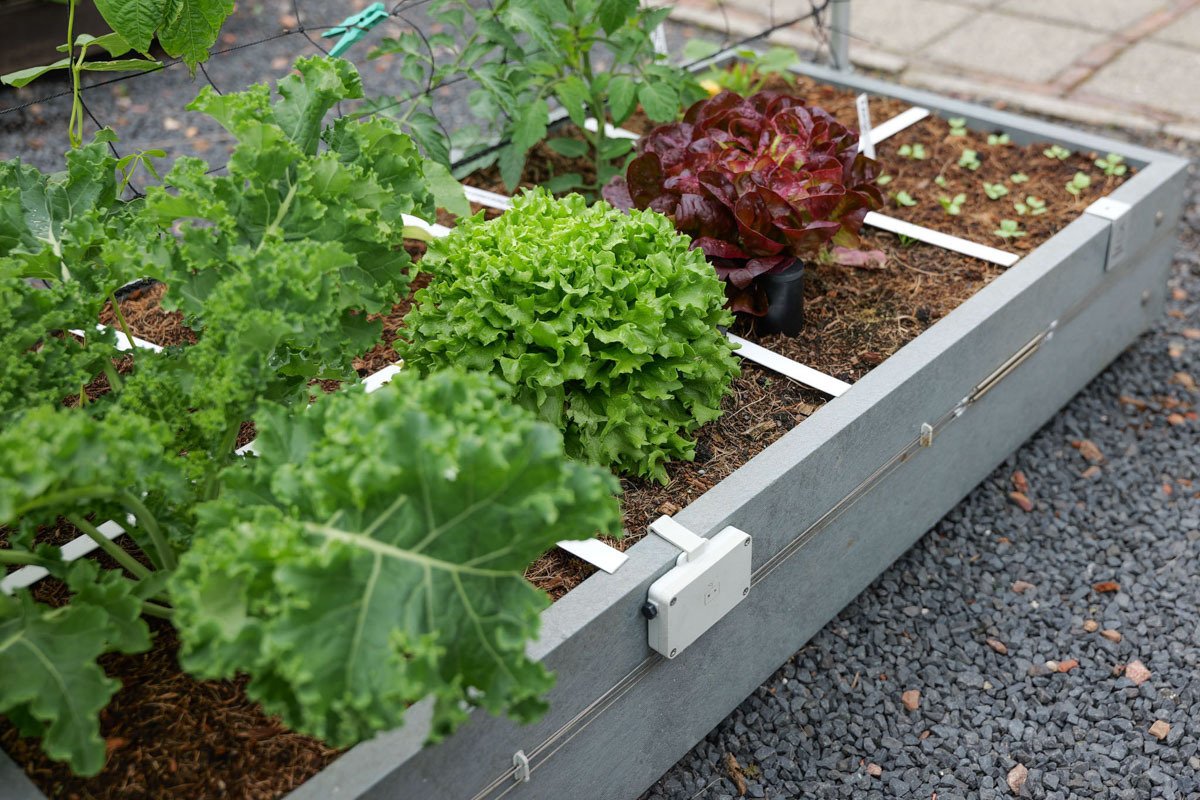
We filled this garden box in mid-May with cocopeat mix, MM plant food and two bags of worm castings with fungi.
We sowed runner beans and planted pre-sown mowing kale, green Batavia lettuce and red butterhead lettuce. At the end of May, we added a snack cucumber, cherry tomato and one very sorry-looking courgette plant.
Everything is growing very well now, although the courgette could still do a little better 🙂. We sowed the radishes in the back square five days ago. They all emerged nicely and are now ready to be thinned.
Looks good, doesn’t it?
We sowed runner beans and planted pre-sown mowing kale, green Batavia lettuce and red butterhead lettuce. At the end of May, we added a snack cucumber, cherry tomato and one very sorry-looking courgette plant.
Everything is growing very well now, although the courgette could still do a little better 🙂. We sowed the radishes in the back square five days ago. They all emerged nicely and are now ready to be thinned.
Looks good, doesn’t it?
The result? Makkelijke Moestuin Soil 🎉
By adding worm castings, we got exactly what we wanted:
- all the benefits of cocopeat: sustainable, airy, stable and ideal for use with our water reservoirs
- plants that grow well from the start, even when the weather is still rather cold
Our new Makkelijke Moestuin Soil therefore contains worm castings in addition to cocopeat and plant food. The three components are supplied separately.
(Worm castings and plant food are also available separately in the shop.)
(Worm castings and plant food are also available separately in the shop.)
How many worm castings come with the garden soil?
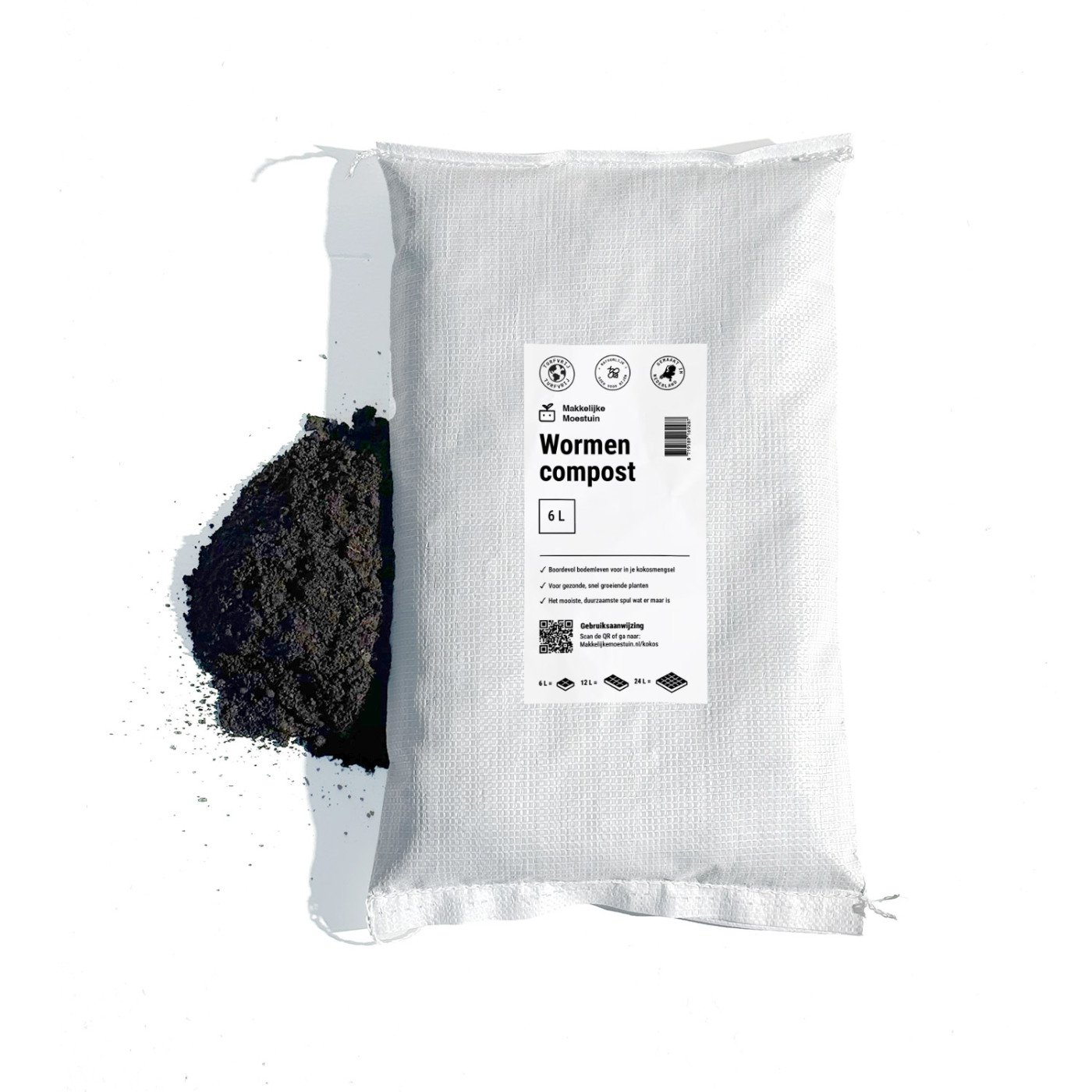
With 80 litres of Makkelijke Moestuin Soil, you receive 6 litres of worm castings.
Each square holds 20 litres of garden soil, so one pack fills four squares.
For an eight-square box you receive a 12-litre bag, and for a sixteen-square box you receive two of those bags.
Each square holds 20 litres of garden soil, so one pack fills four squares.
For an eight-square box you receive a 12-litre bag, and for a sixteen-square box you receive two of those bags.
When and how do you add the worm castings?
Add them when filling your garden box with fresh Makkelijke Moestuin Soil.
After expanding the cocopeat blocks, sprinkle the worm castings over the mix together with the MM plant food, then mix everything thoroughly.
Place the grid on top and you can start sowing straight away.
Here you can watch a video showing how it works.
Already have plants growing in cocopeat without worm castings? You can still add them later:
After expanding the cocopeat blocks, sprinkle the worm castings over the mix together with the MM plant food, then mix everything thoroughly.
Place the grid on top and you can start sowing straight away.
Here you can watch a video showing how it works.
Already have plants growing in cocopeat without worm castings? You can still add them later:
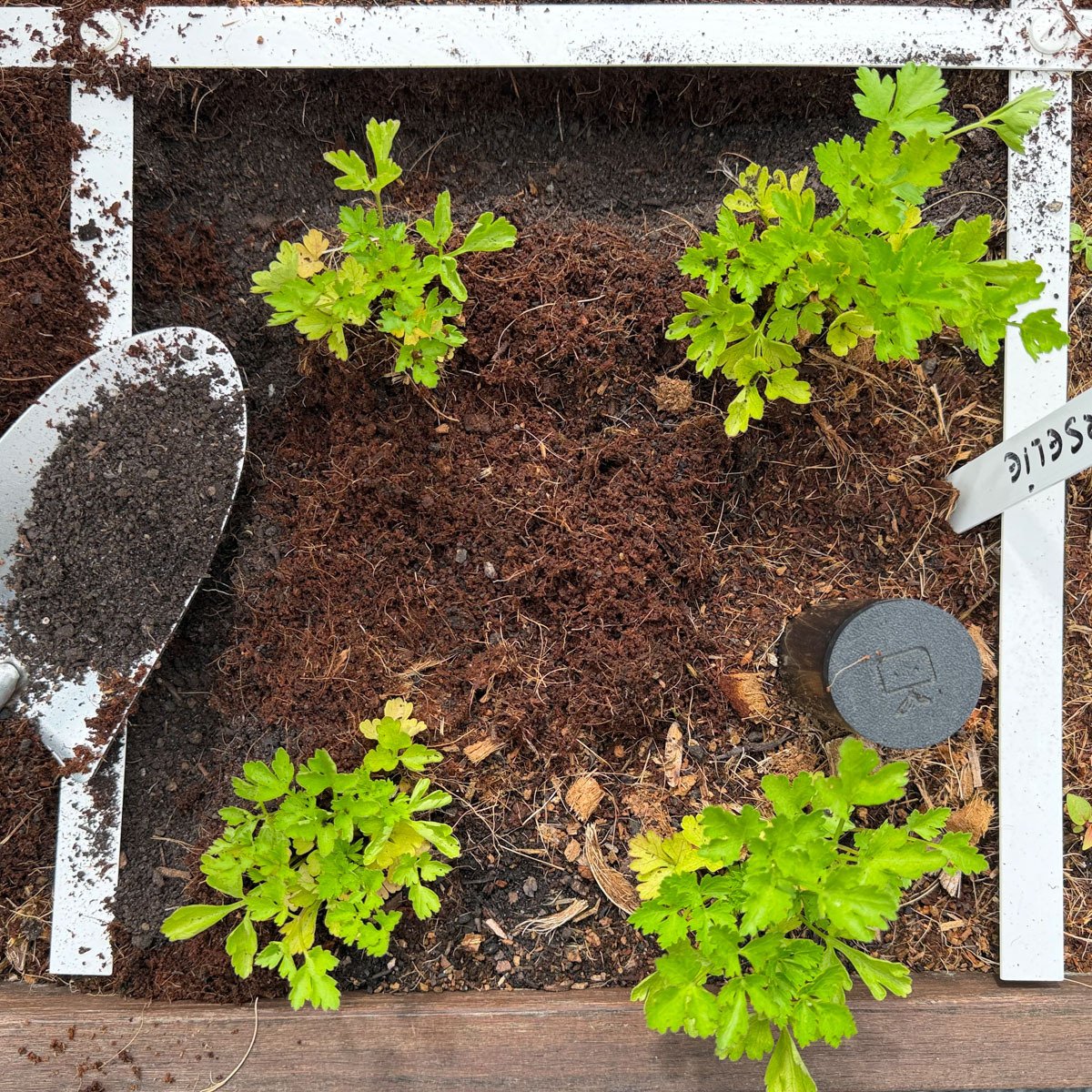
Our worm expert advised making fairly deep furrows in the cocopeat, sprinkling a generous amount of worm castings into them and covering them again with a layer of cocopeat.
Because soil life spreads very quickly, you can also do this along the edge of a square. This reduces the risk of damaging the plants’ roots.
Because soil life spreads very quickly, you can also do this along the edge of a square. This reduces the risk of damaging the plants’ roots.
Frequently asked questions
Do you need to add these worm castings again every year?
No. Soil life reproduces naturally, so the mix improves the longer you use it.
No. Soil life reproduces naturally, so the mix improves the longer you use it.
However, it can be useful to add a little more when topping up older mix. For example, do this at the start of a new gardening year when you turn over all the mix and add fresh MM plant food. This wakes up the existing soil life, which is especially helpful in spring.
You can reduce the amount of worm castings by 75% in this situation. That works out to one bag for a large box with 16 squares.
How do you add the castings when plants are already growing in the mix?
Make fairly deep furrows in the square where the plants are growing. Sprinkle a generous amount of worm castings into them, then cover them with a layer of cocopeat.
Because soil life spreads very quickly, you can also do this along the edge of a square. This reduces the risk of damaging the plants’ roots.
Can these worm castings replace MM plant food?
No. They are not intended for that and do not contain enough nutrients. Their strength is that they immediately bring the mix to life, making the nutrients in MM plant food available to plants more quickly.
Can you also use these worm castings with the classic MM mix?
Yes, but only as a small addition. The classic mix already works extremely well and contains plenty of soil life.
Worm castings can still give that soil life an extra boost, release nutrients more quickly, support growth during a cold spring and improve the structure of older mix.
Think of them as an optional extra boost, not a necessity.
Where do these worm castings come from?
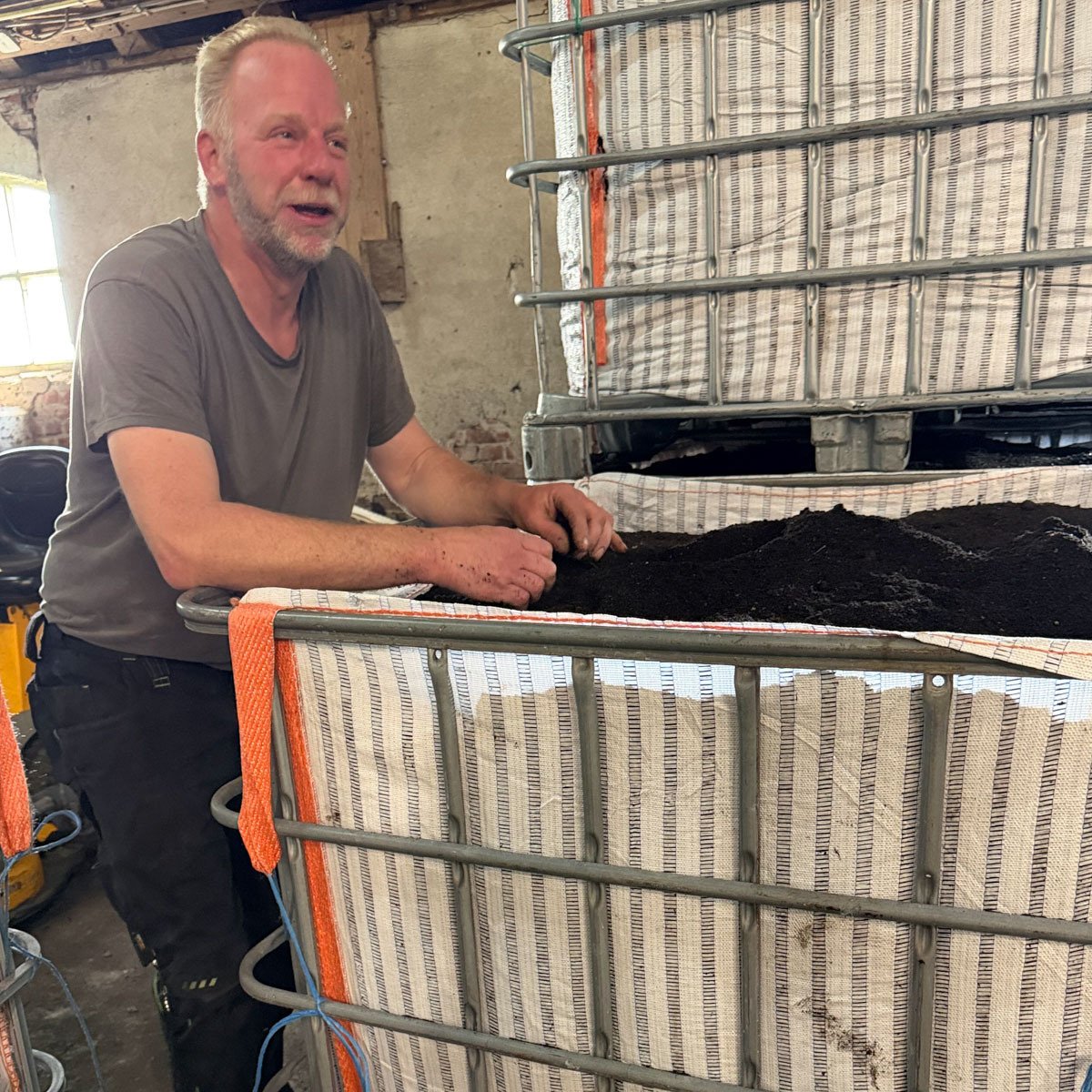
They are produced and supplied by WormsSystems in Oostwold, Groningen. Its owner, Bernard Mekelenkamp, has been a leading worm expert in the Netherlands for more than 20 years. Among other things, he advises Wageningen University & Research and large companies involved in ecological cultivation.
You can reduce the amount of worm castings by 75% in this situation. That works out to one bag for a large box with 16 squares.
How do you add the castings when plants are already growing in the mix?
Make fairly deep furrows in the square where the plants are growing. Sprinkle a generous amount of worm castings into them, then cover them with a layer of cocopeat.
Because soil life spreads very quickly, you can also do this along the edge of a square. This reduces the risk of damaging the plants’ roots.
Can these worm castings replace MM plant food?
No. They are not intended for that and do not contain enough nutrients. Their strength is that they immediately bring the mix to life, making the nutrients in MM plant food available to plants more quickly.
Can you also use these worm castings with the classic MM mix?
Yes, but only as a small addition. The classic mix already works extremely well and contains plenty of soil life.
Worm castings can still give that soil life an extra boost, release nutrients more quickly, support growth during a cold spring and improve the structure of older mix.
Think of them as an optional extra boost, not a necessity.
Where do these worm castings come from?
They are produced and supplied by WormsSystems in Oostwold, Groningen. Its owner, Bernard Mekelenkamp, has been a leading worm expert in the Netherlands for more than 20 years. Among other things, he advises Wageningen University & Research and large companies involved in ecological cultivation.