
Why choose an MM instead of a traditional vegetable garden?
The benefits of a Makkelijke Moestuin are so obvious to me that I would never want a traditional vegetable garden. Here they are at a glance.
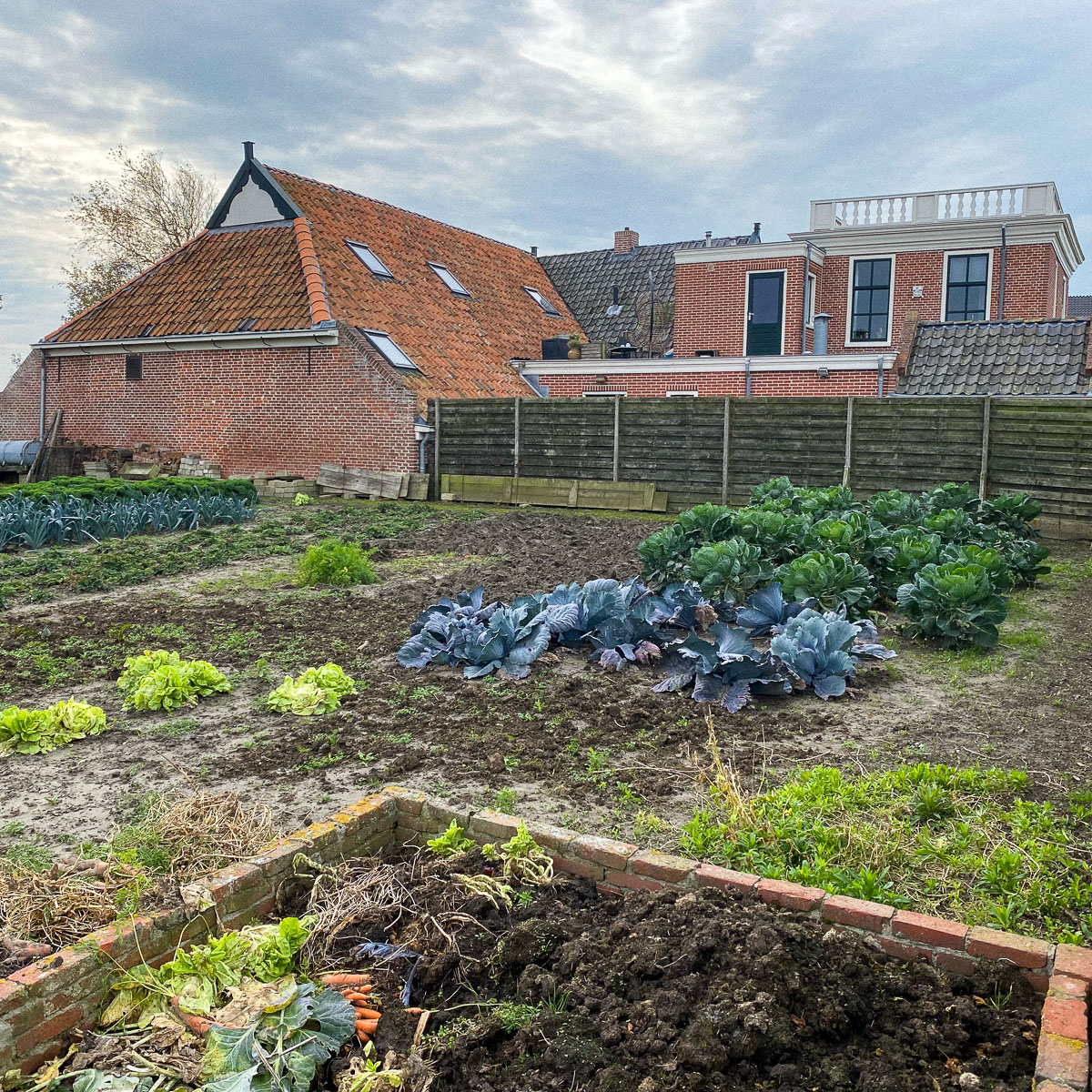
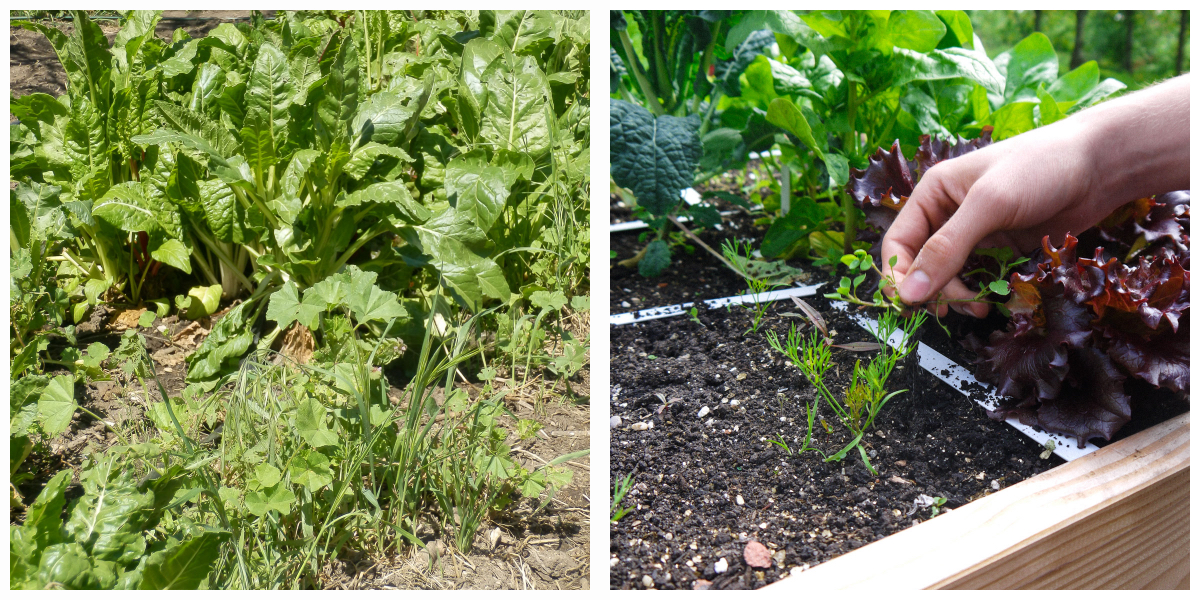
If you want to grow your own organic vegetables, you would usually grow them directly in the ground. Like in the photo above, taken in Noordpolderzijl.
But you can also grow them in a Makkelijke Moestuin. You garden in special garden boxes and use Makkelijke Moestuingrond, which gives all your plants exactly what they need to grow well.
But you can also grow them in a Makkelijke Moestuin. You garden in special garden boxes and use Makkelijke Moestuingrond, which gives all your plants exactly what they need to grow well.
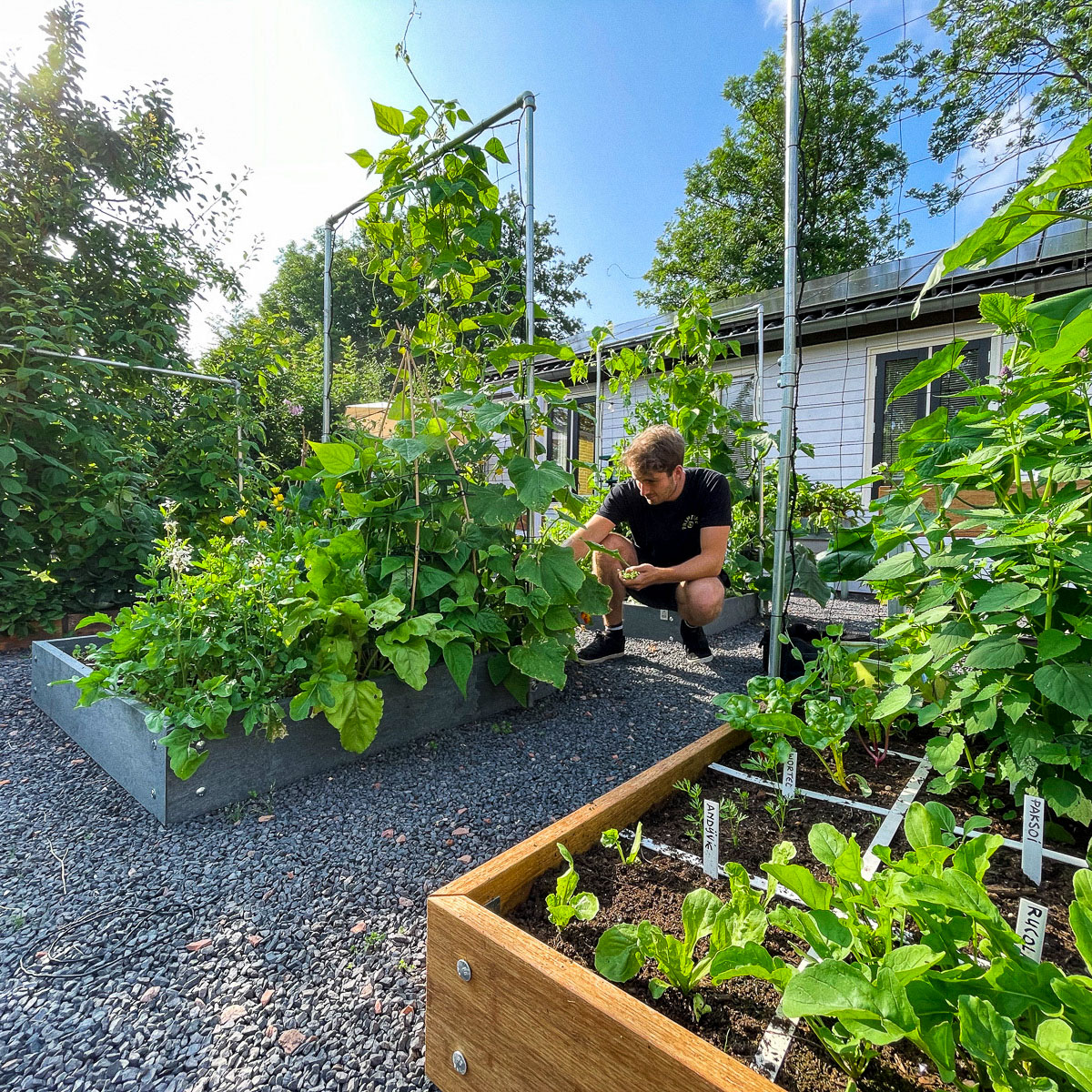
For me, the choice was simple. I honestly couldn’t understand why anyone would choose a traditional vegetable garden. Unless you enjoy lots of hard work, think weeding is the best thing ever and also want to spend loads of money 😉
But then again, I didn’t have green fingers, knew next to nothing about gardening and wanted to do other things in my free time besides digging around in the soil.
But then again, I didn’t have green fingers, knew next to nothing about gardening and wanted to do other things in my free time besides digging around in the soil.
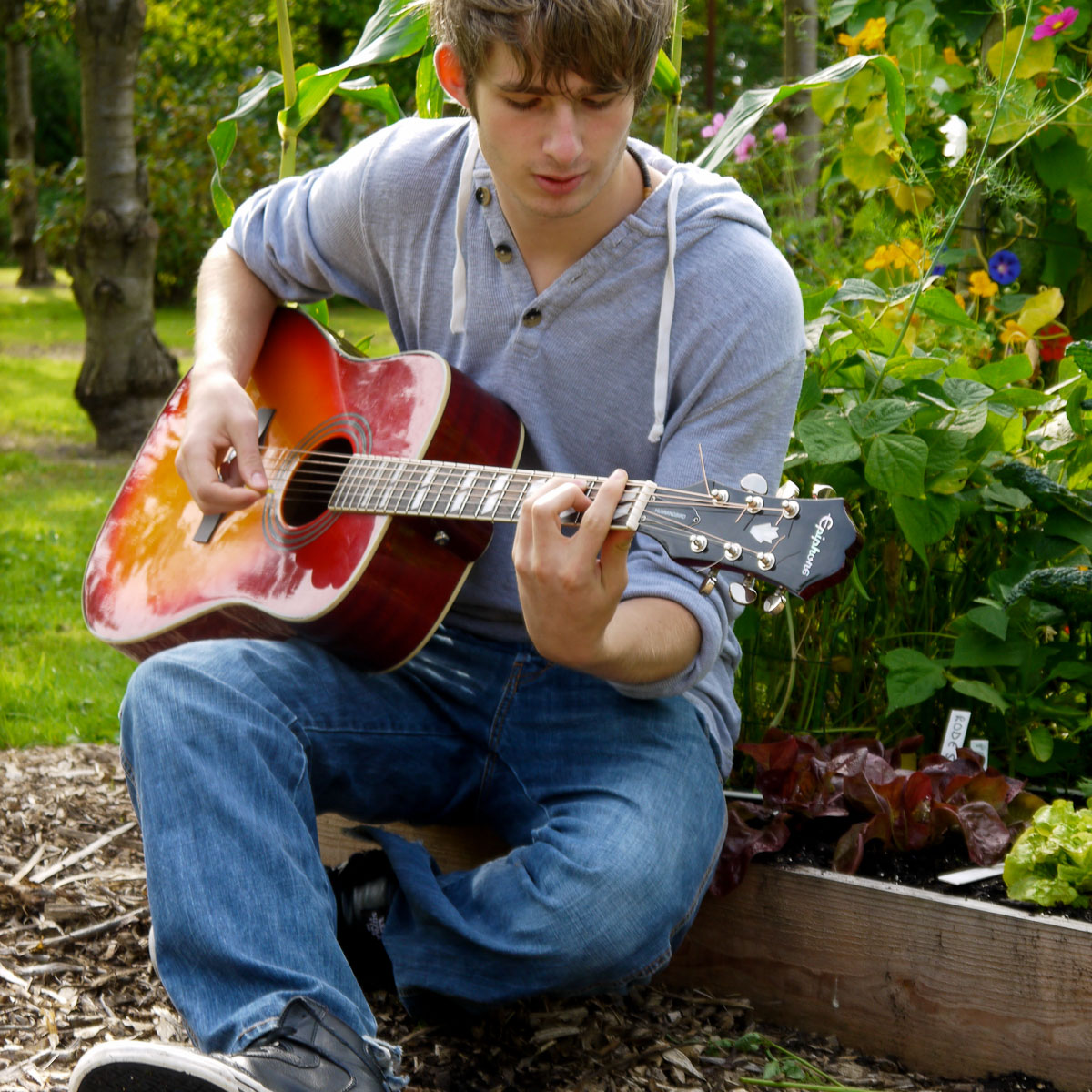
To be honest, I haven’t changed all that much. Yes, I now know a lot more about plants. Yes, I’ve made it my job. And no, I still don’t understand traditional vegetable gardening. What I really care about is making vegetable gardening possible for everyone.
Put the differences between a traditional vegetable garden and a Makkelijke Moestuin side by side and you’ll soon see what I mean.
Here they are:
Put the differences between a traditional vegetable garden and a Makkelijke Moestuin side by side and you’ll soon see what I mean.
Here they are:
What you need to know about plants and gardening
A traditional vegetable garden takes a lot of knowledge and experience, and it can take years to get good at it.
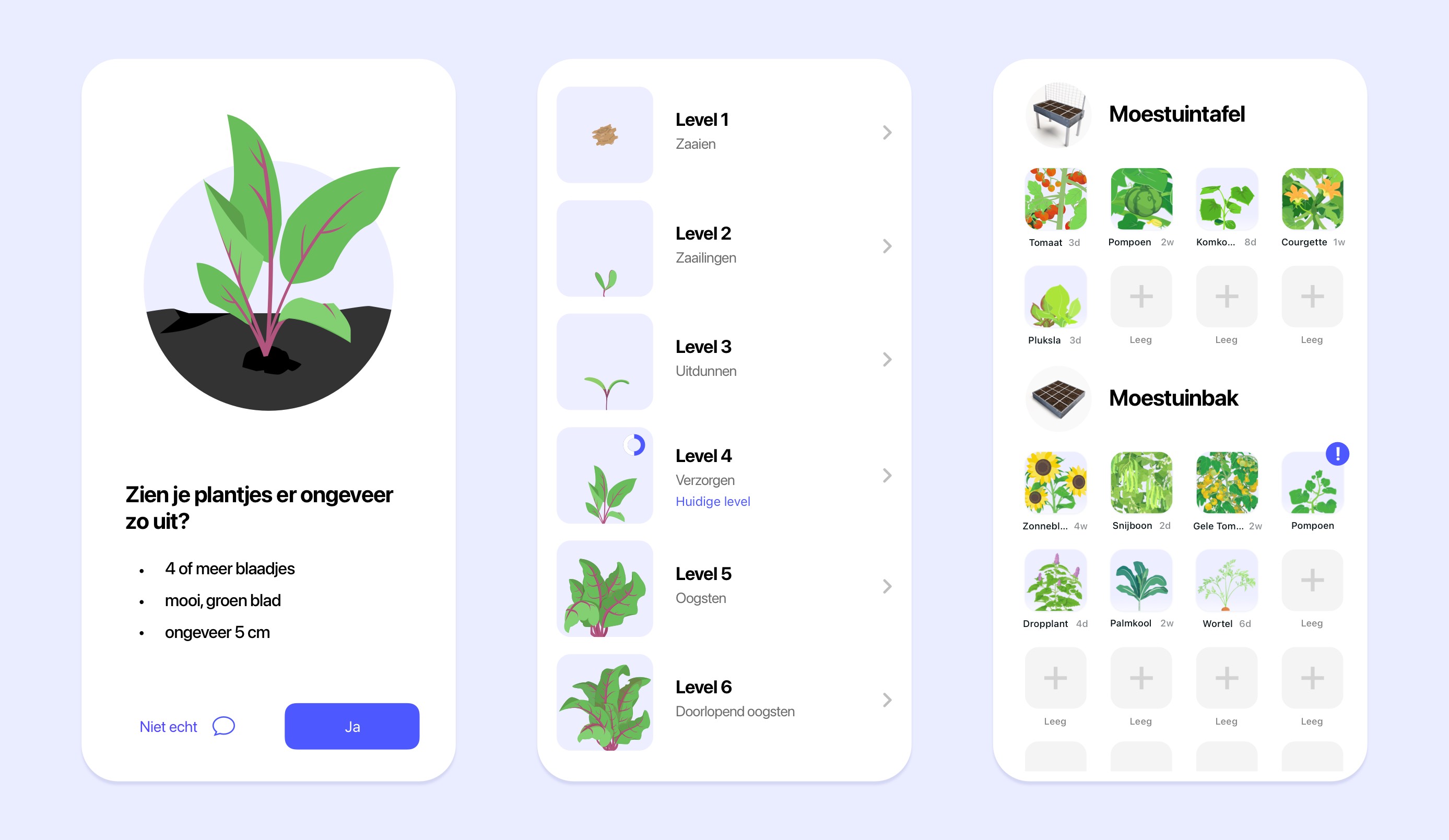
In a Makkelijke Moestuin, everything is designed to help your plants grow at their best. You also use an app that tells you exactly what to do and when. That means anyone can succeed, even a complete beginner.
In a Makkelijke Moestuin, everything is designed to help your plants grow at their best. You also use an app that tells you exactly what to do and when. That means anyone can succeed, even a complete beginner.
To grow a successful vegetable garden in the ground, you need to know quite a lot: what kind of soil you have and how to improve it, how to sow, transplant, care for and harvest plants, how to maintain your garden, how far apart to space plants, which plants grow well together, crop rotation, diseases and pests – the list goes on.
What’s more, it takes years to learn exactly when to do what and how to do it best.
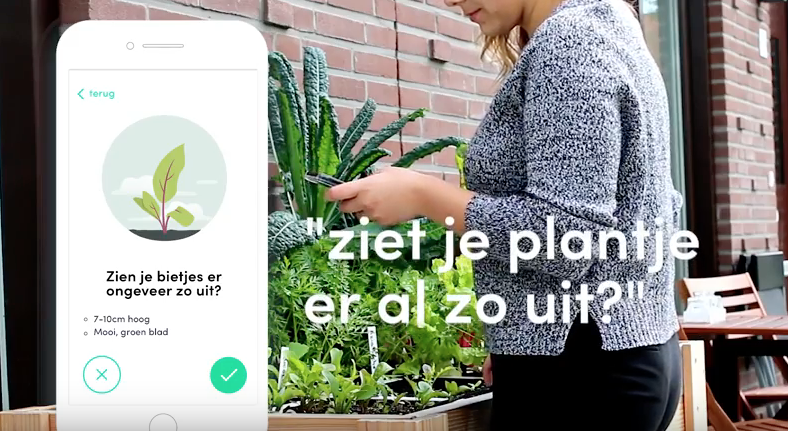
With a Makkelijke Moestuin, you don’t need to know all that because you have the app. It tells you everything you need to know, right when you need it. You always sow in the right place, you know what your plants should look like at every stage and what to do if something isn’t right.
You also use a carefully designed system in which everything works together: the garden boxes, the soil mix and the seeds. And there’s an active community where you can ask questions and share your experiences.
That makes vegetable gardening easy, and you’ll naturally become an expert as you go.
What’s more, it takes years to learn exactly when to do what and how to do it best.
With a Makkelijke Moestuin, you don’t need to know all that because you have the app. It tells you everything you need to know, right when you need it. You always sow in the right place, you know what your plants should look like at every stage and what to do if something isn’t right.
You also use a carefully designed system in which everything works together: the garden boxes, the soil mix and the seeds. And there’s an active community where you can ask questions and share your experiences.
That makes vegetable gardening easy, and you’ll naturally become an expert as you go.
Space
A traditional vegetable garden can easily take up around 100 m², so many gardeners rent an allotment. A Makkelijke Moestuin fits almost anywhere, even in a small city garden.
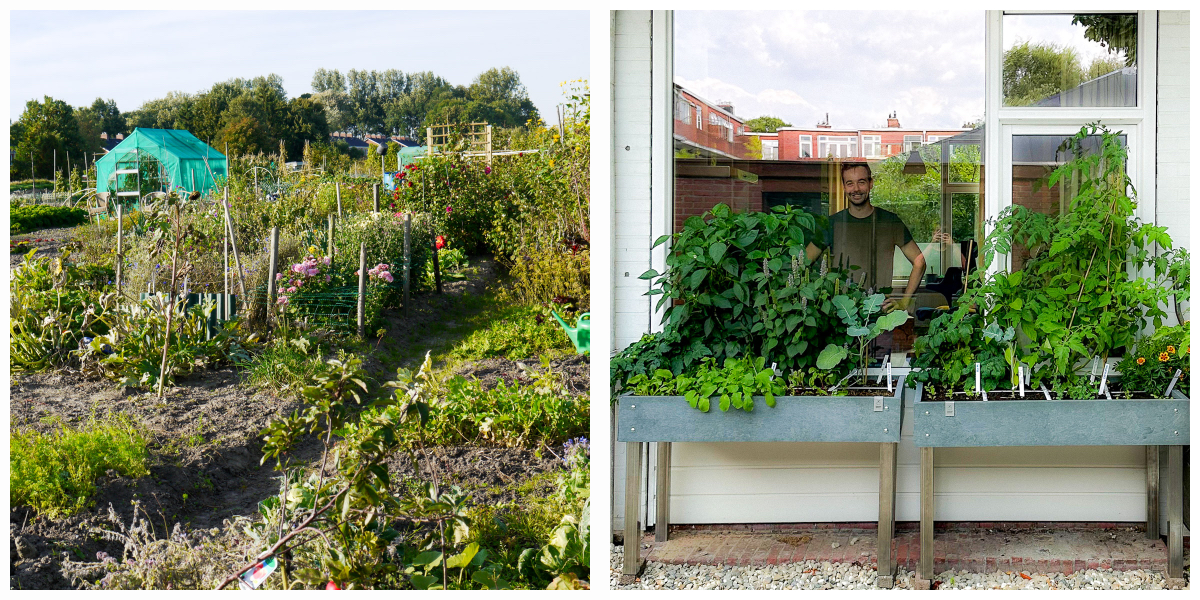
A traditional vegetable garden can easily take up around 100 m². That’s mainly because you need plenty of room between the beds and rows of vegetables.
Most people don’t have a garden that big, so they rent an allotment. Unfortunately, it’s often some distance from home. That means you can’t just pop outside to harvest something.
And because it’s out of sight, it’s easy to neglect. Perfect for weeds, which will happily take over the whole plot.
Just 20% of the usual space
With a Makkelijke Moestuin, you grow in boxes and choose vegetables that take up as little room as possible: courgettes and pumpkins trained up a trellis, palm kale that grows upwards instead of outwards, compact broccoli and kale, and lettuces that give you a huge harvest from a single square.
This helps you make the most of every square centimetre. You need only one fifth of the space for the same harvest.
This helps you make the most of every square centimetre. You need only one fifth of the space for the same harvest.
The boxes can also go almost anywhere: in your front or back garden, on a balcony or even on the roof of your shed. Picking something fresh for lunch or dinner couldn’t be easier.
And because the boxes are always in sight, you immediately notice what’s ready to harvest, whether any weeds have appeared and whether there’s anything else you need to do.
Preparing the soil
In a traditional vegetable garden, working and improving the soil is a tough job that comes back every year. In a Makkelijke Moestuin, it’s quick and easy.
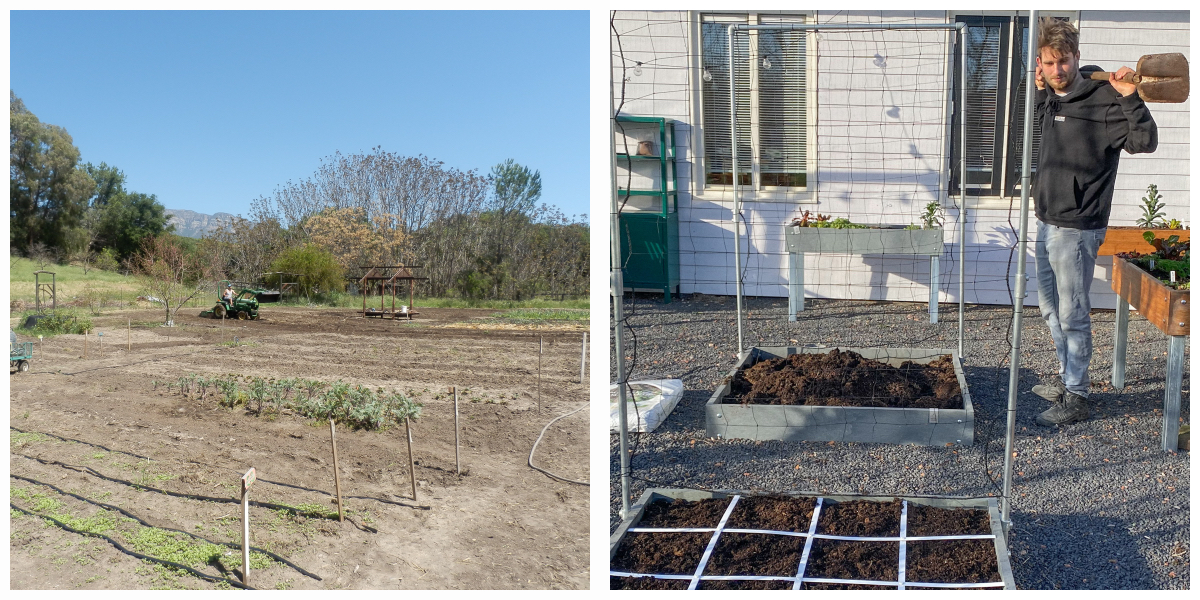
Preparing the soil in a traditional vegetable garden is hard work you have to repeat year after year. In spring alone, the soil has to be ploughed, tilled, dug over and fertilised.
And after all that heavy preparation, you’re still not done. You also have to make furrows, create paths and divide up the beds.
A Makkelijke Moestuin works differently. You set up one or more of our long-lasting boxes and fill them with Makkelijke Moestuingrond. That’s it.
And because everything lasts for years – including the soil – you only have to do that once. In the years after that, your spring job looks like this:
And after all that heavy preparation, you’re still not done. You also have to make furrows, create paths and divide up the beds.
A Makkelijke Moestuin works differently. You set up one or more of our long-lasting boxes and fill them with Makkelijke Moestuingrond. That’s it.
And because everything lasts for years – including the soil – you only have to do that once. In the years after that, your spring job looks like this:
- remove the last plant remains
- take out the grid and clean it
- sprinkle some MM plant food over the soil
- mix it through and loosen everything up again
- top up with a little fresh Makkelijke Moestuingrond if needed, then rake it level
- put the grid back in place
That takes no more than half an hour per box 🙂
Sowing and thinning
In a traditional vegetable garden, you sow in rows and soon have to thin out or transplant the seedlings. In a Makkelijke Moestuin, you don’t: you sow in squares, at the right spacing from the start.
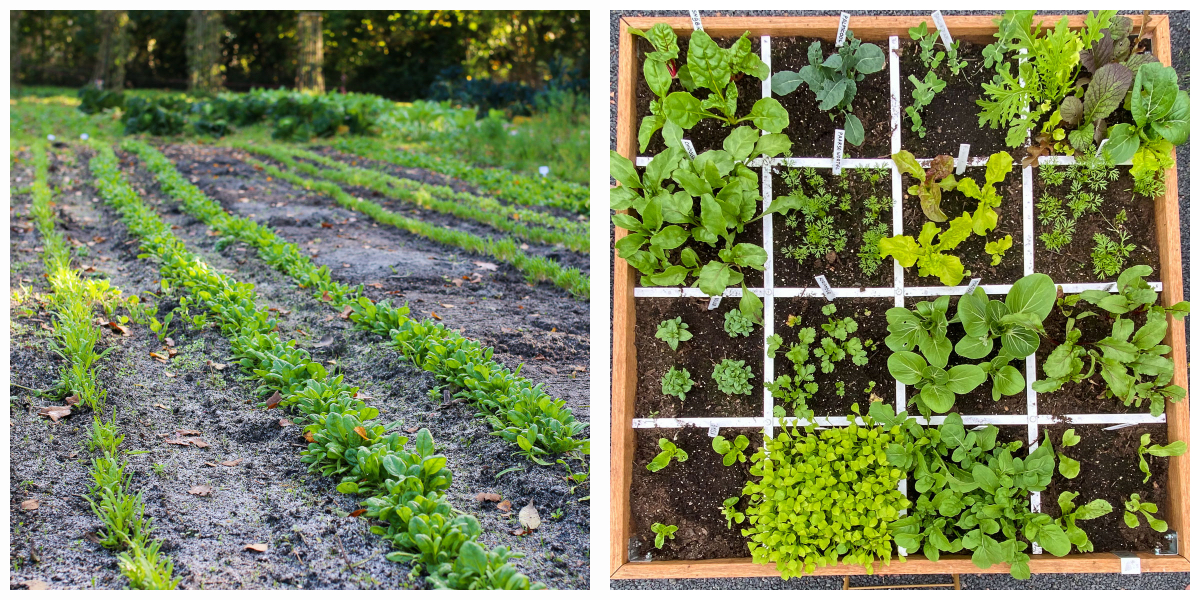
In a traditional vegetable garden, you usually sow in rows. You make furrows, scatter the seeds from the packet into them, close the furrows or cover them with soil or sharp sand, water them and keep the soil moist.
Once all those seeds come up, you either have to thin the seedlings out ruthlessly or transplant them by digging them up and moving them somewhere else. Most gardeners find that difficult, so the seedlings often stay far too close together and can’t grow properly.
In a Makkelijke Moestuin, your boxes are divided into square sections and you sow in those. You sow exactly as many plants as you want, at the right spacing from the start, so you hardly ever need to thin them out and never need to transplant them.
Another advantage: you use far fewer seeds than in a traditional vegetable garden.
Weeding and other maintenance
Maintaining a traditional vegetable garden takes a huge amount of time, especially the weeding. Weeds are rare in a Makkelijke Moestuin, and if one does appear, it’s easy to pull out. Everything else is much simpler too.
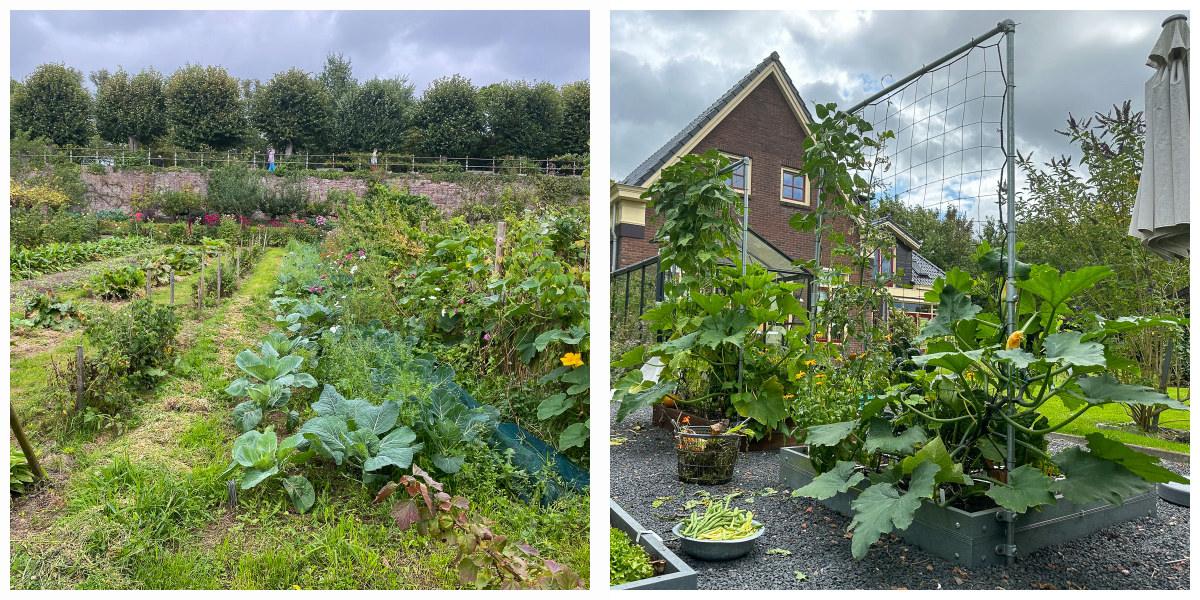
In every vegetable garden, weed seeds germinate alongside your vegetable and herb seeds.
In a traditional vegetable garden, they can be a real problem. Digging is one of the main causes, because it wakes up seeds that have been lying dormant deep in the soil for years. Then there are persistent weeds that spread mainly through their roots, such as ground elder and bindweed.
In a traditional vegetable garden, they can be a real problem. Digging is one of the main causes, because it wakes up seeds that have been lying dormant deep in the soil for years. Then there are persistent weeds that spread mainly through their roots, such as ground elder and bindweed.
Weeds grow like mad and flower just as quickly so they can produce the next generation. You need to remove them as soon as possible, but you often don’t spot them until their roots are already tangled up with your plants.
That’s why pulling weeds and hoeing can feel like a full-time job, leaving hardly any time to care for your vegetables and herbs.
In a Makkelijke Moestuin, weeds are rare. The Makkelijke Moestuingrond contains no dormant seeds or roots, and the weed-control fabric at the bottom of each box stops anything growing up from below.
The few weed seeds that blow in are easy to spot and pull out. It takes hardly any time at all.
The few weed seeds that blow in are easy to spot and pull out. It takes hardly any time at all.
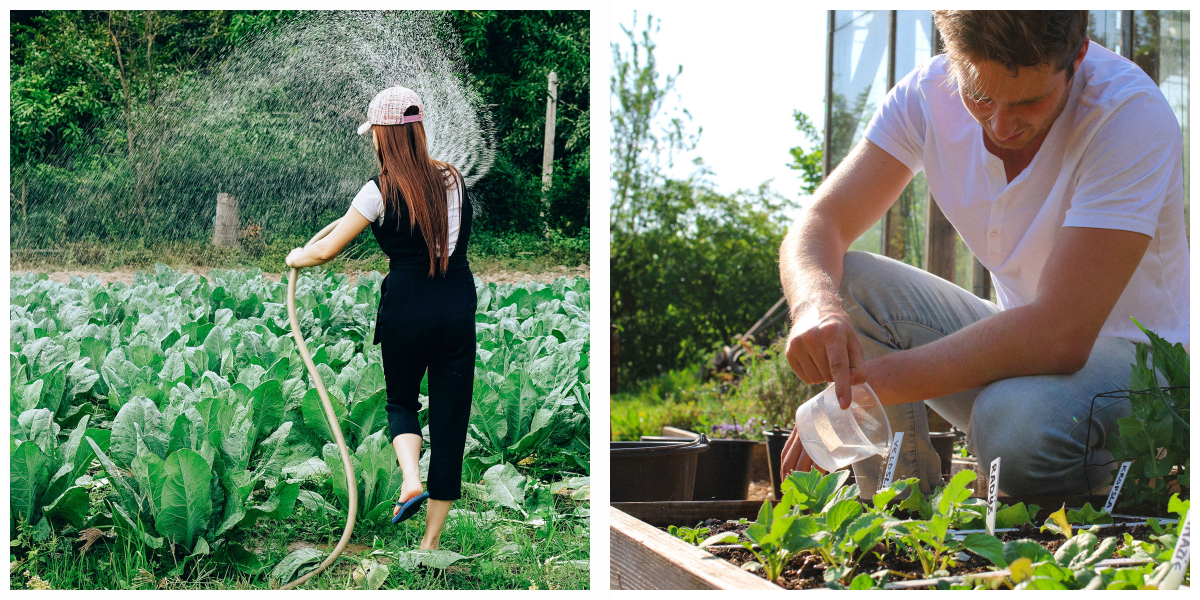
Vegetables grow best when the soil stays consistently moist. It shouldn’t be too dry, or plants may quickly bolt, but it shouldn’t be too wet either, because the roots need air and may rot.
In a traditional vegetable garden, you depend heavily on the weather, and it rarely does exactly what you want.
In dry, sunny weather, you have to water with watering cans, a hose or sprinklers. You water not only the plants but also all the soil around them. That isn’t very efficient, uses a lot of water and makes the weeds very happy.
But days of heavy rain cause problems too: how do you get rid of all that water?
In a Makkelijke Moestuin, you give each plant exactly the water it needs, right at its base.
And if you use our water reservoirs, you don’t even have to do that – as long as you top them up now and then.
Because the soil absorbs and holds moisture well, your plants’ roots never have to search for water. It’s both effective and economical.
And if you use our water reservoirs, you don’t even have to do that – as long as you top them up now and then.
Because the soil absorbs and holds moisture well, your plants’ roots never have to search for water. It’s both effective and economical.
Long rainy spells aren’t a problem either. Excess water simply drains out of the boxes or into the reservoir, so the soil can never become waterlogged.
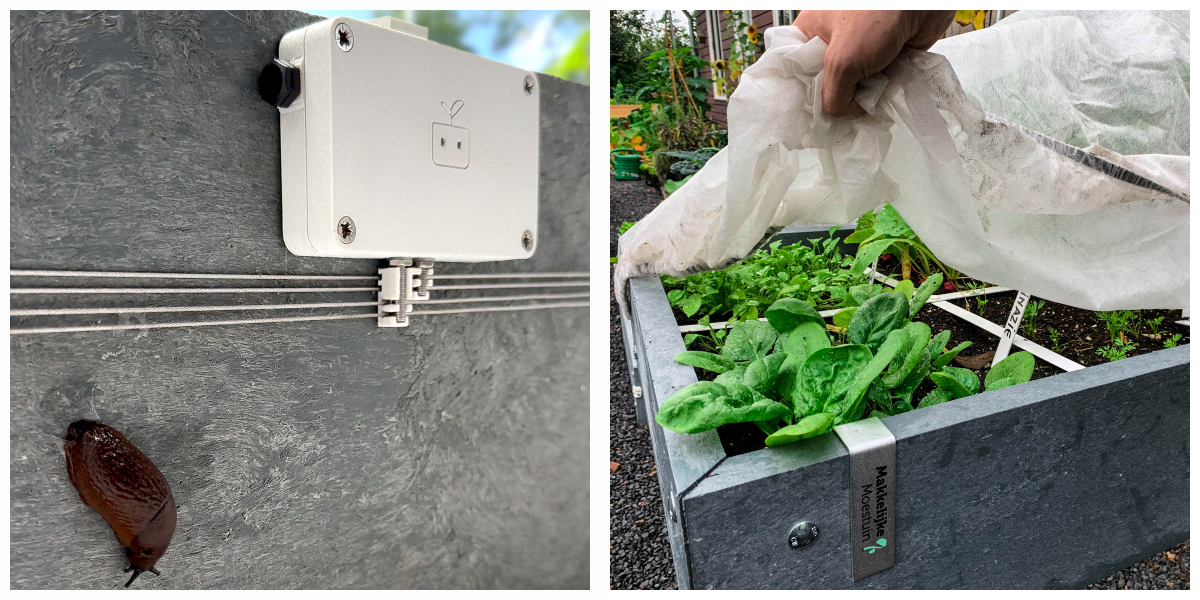
Birds and pests love to snack on the fresh green vegetables in any garden. If it isn’t slugs or nematodes, it’s fungi or disease. No gardener enjoys that, and neither do we 🙂
Because a traditional vegetable garden is large and usually some distance from home, you may not notice a problem until quite late. By then, limiting the damage may mean using all kinds of treatments, chemical or otherwise.
Gardeners try to prevent soil-borne diseases and fungi with crop rotation, sowing each plant family in a different place every year.
In a Makkelijke Moestuin, this is less of a problem because every square contains a different crop, so there are many different vegetables in one box. And because the boxes are in sight, you quickly notice when something is wrong and can act before it gets out of hand.
You can also turn your box into an almost impenetrable fortress for slugs with our electric slug fence. And it’s easy to cover a box with our cover made from fleece or mesh. That’s much harder with a large plot.
Because a traditional vegetable garden is large and usually some distance from home, you may not notice a problem until quite late. By then, limiting the damage may mean using all kinds of treatments, chemical or otherwise.
Gardeners try to prevent soil-borne diseases and fungi with crop rotation, sowing each plant family in a different place every year.
In a Makkelijke Moestuin, this is less of a problem because every square contains a different crop, so there are many different vegetables in one box. And because the boxes are in sight, you quickly notice when something is wrong and can act before it gets out of hand.
You can also turn your box into an almost impenetrable fortress for slugs with our electric slug fence. And it’s easy to cover a box with our cover made from fleece or mesh. That’s much harder with a large plot.
Harvesting: far too much or just enough?
In a traditional vegetable garden, the harvest is short and intense: lots of produce, all at once. In a Makkelijke Moestuin, you sow exactly what you need and spread the harvest out.
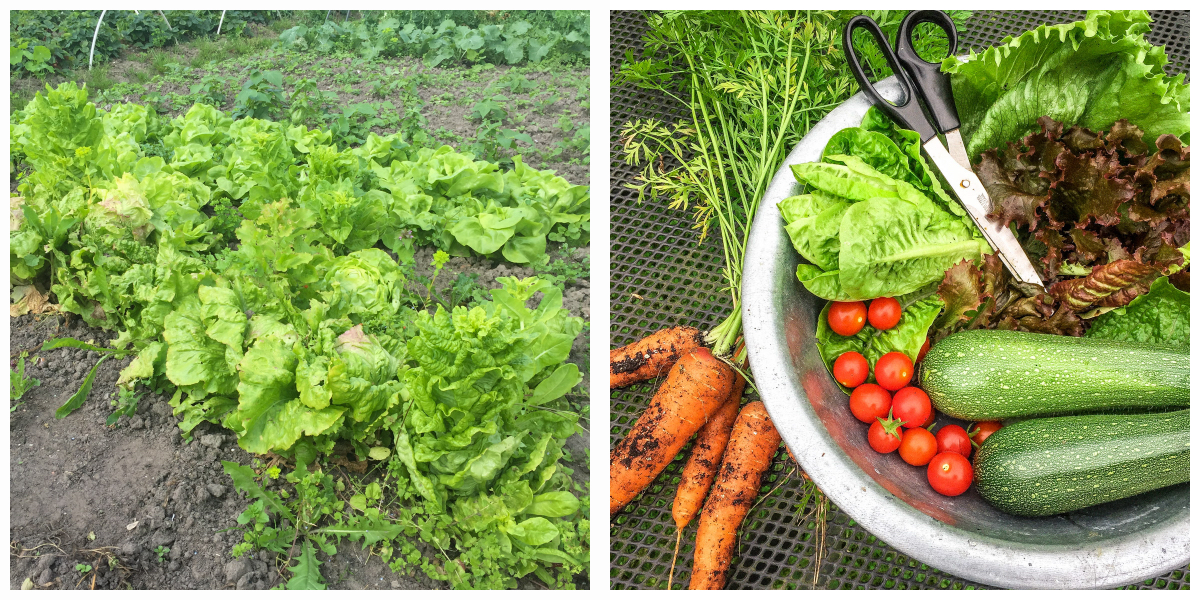
Because you sow in long rows in a traditional vegetable garden, everything comes up at the same time and is ready to harvest at roughly the same time too.
Before you know it, you have a massive harvest: kilos of beans, tomatoes and beetroot. But processing and freezing all of that is a lot of work, especially when the same vegetables are dirt cheap in the shops at that time of year.
And how many lettuces can you eat in one week? Not twenty. Half of them will bolt before you can harvest them.
In a Makkelijke Moestuin, you sow exactly what you like and expect to need. And because your plants get the right care and nutrition, they grow more strongly and give you a bigger harvest.
You start harvesting as soon as you can: a few lettuce leaves, the first radishes, a handful of spinach. The rest keeps growing. Once a square is empty, you immediately sow or plant a new vegetable there. You can use the same square three or four times in one season while spreading your harvest throughout the year.
Compare a traditional vegetable garden with a Makkelijke Moestuin of the same size, and the MM can produce as much as five times the harvest.
The cost of a vegetable garden
Every vegetable garden costs money, whether it’s a traditional one or one of ours.
At first glance, a traditional vegetable garden or allotment may look cheap, but the annual costs soon add up, especially if you have to rent the land. You also need a lot of expensive tools.
Setting up one or more of our long-lasting garden boxes will probably cost more at the start than beginning a traditional vegetable garden. But a traditional garden always requires more purchases than you first expect too.
At first glance, a traditional vegetable garden or allotment may look cheap, but the annual costs soon add up, especially if you have to rent the land. You also need a lot of expensive tools.
Setting up one or more of our long-lasting garden boxes will probably cost more at the start than beginning a traditional vegetable garden. But a traditional garden always requires more purchases than you first expect too.
The real savings come in the years that follow. Once your boxes are in place, they cost very little to maintain and you can keep harvesting from them year after year.
That means you’ll earn back your investment fairly quickly, which you can’t really say about a traditional vegetable garden.
Here’s a breakdown of the costs:
Here’s a breakdown of the costs:
If your garden isn’t big enough for a vegetable garden, you’ll probably need to join an allotment association and, in most cases, go on a waiting list first.
Annual rent varies quite a bit depending on the location. The Dutch allotment association lists amounts from €200 to €750, although rural areas – including here in Groningen – tend to be cheaper.
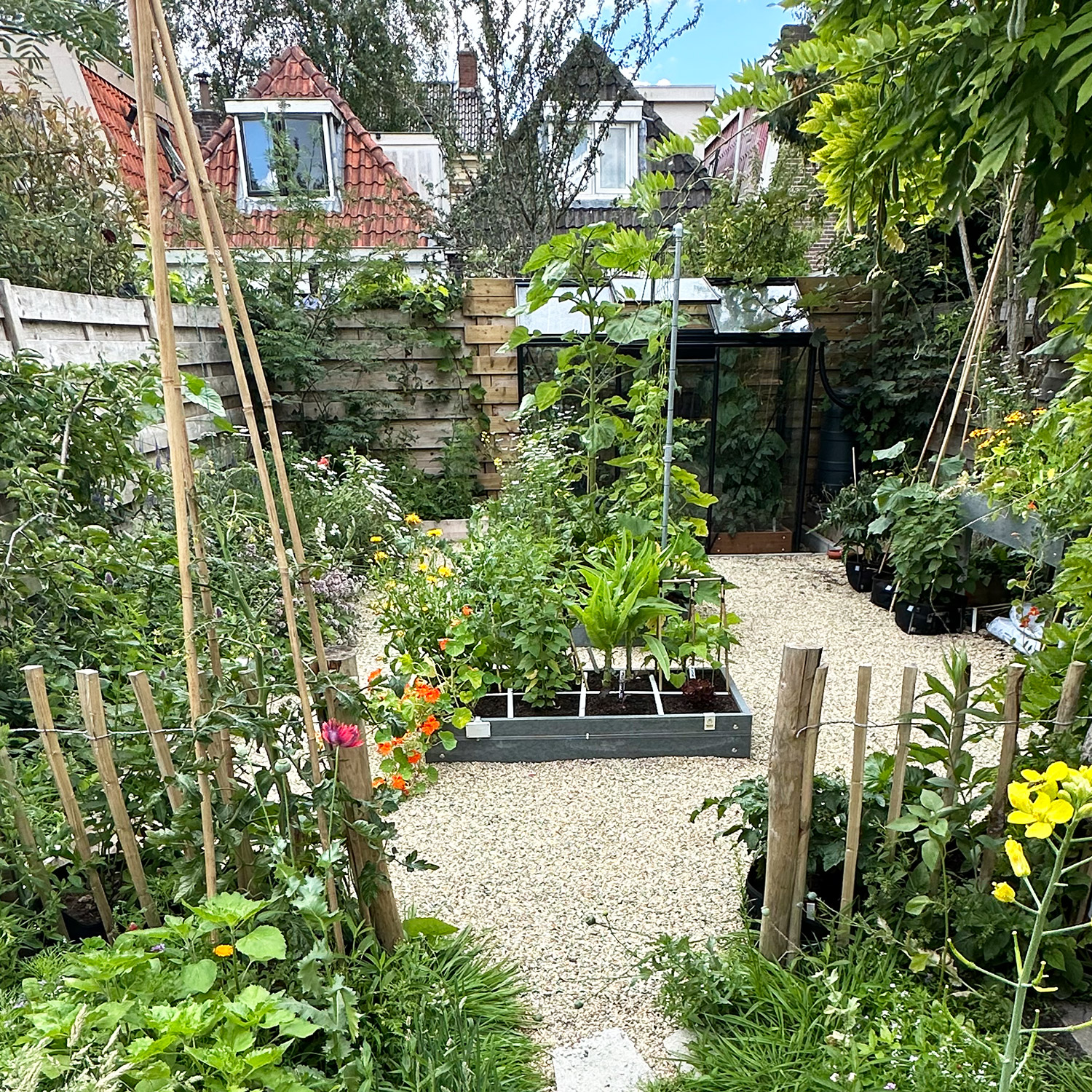
A Makkelijke Moestuin takes up very little room. You can almost always find a spot for one in your garden, and it looks great too:
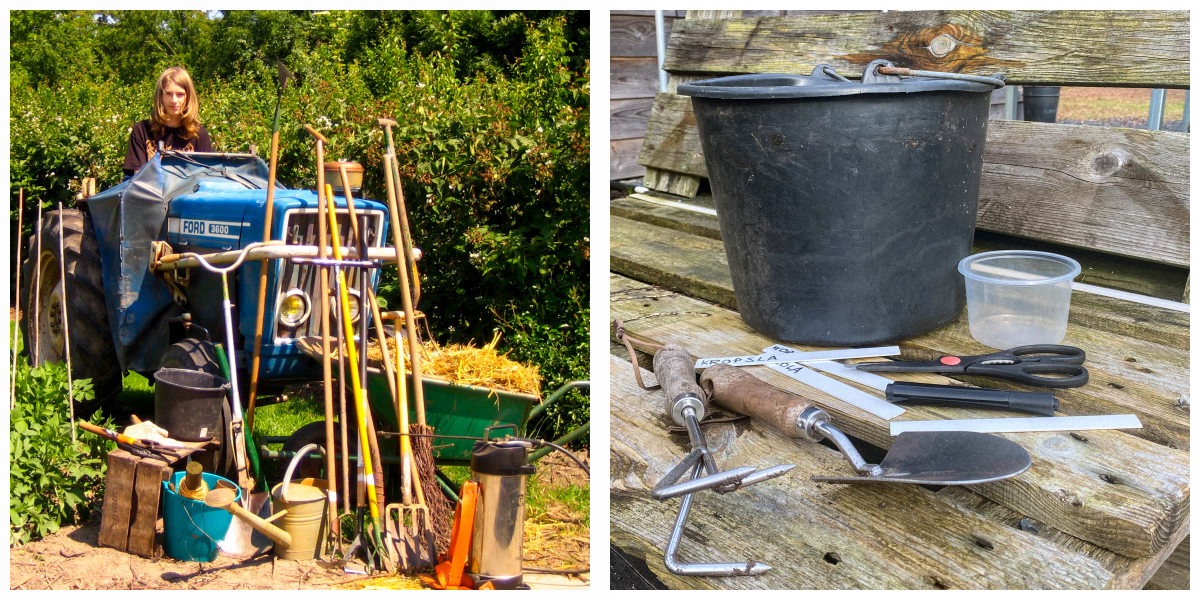
For the heavy work in a traditional vegetable garden, a beginner immediately needs all kinds of tools: a spade, shovel, digging fork, hoe, cultivator, wheelbarrow, watering can, buckets, garden hose, rake, secateurs and weed puller, to name just a few 😐
Good-quality tools are expensive. A decent spade alone can cost €50, and together the costs quickly run into hundreds of euros. And that doesn’t even include a shed to store everything in.
For a Makkelijke Moestuin, all you need is:
- one or more hand trowels and a small rake
- a few buckets and containers for watering
- plant labels and a marker, so you remember what you sowed
- an inexpensive pair of scissors
Total cost: a few dozen euros.
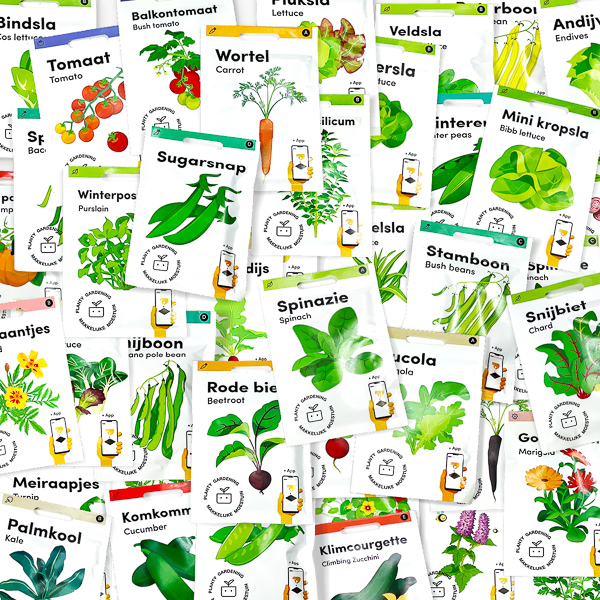
In a traditional vegetable garden, you can easily use a whole packet of seeds for each vegetable every time you sow.
In a Makkelijke Moestuin, you sow only what you need. A packet lasts much longer, so you spend less on seeds than you would in a traditional vegetable garden.
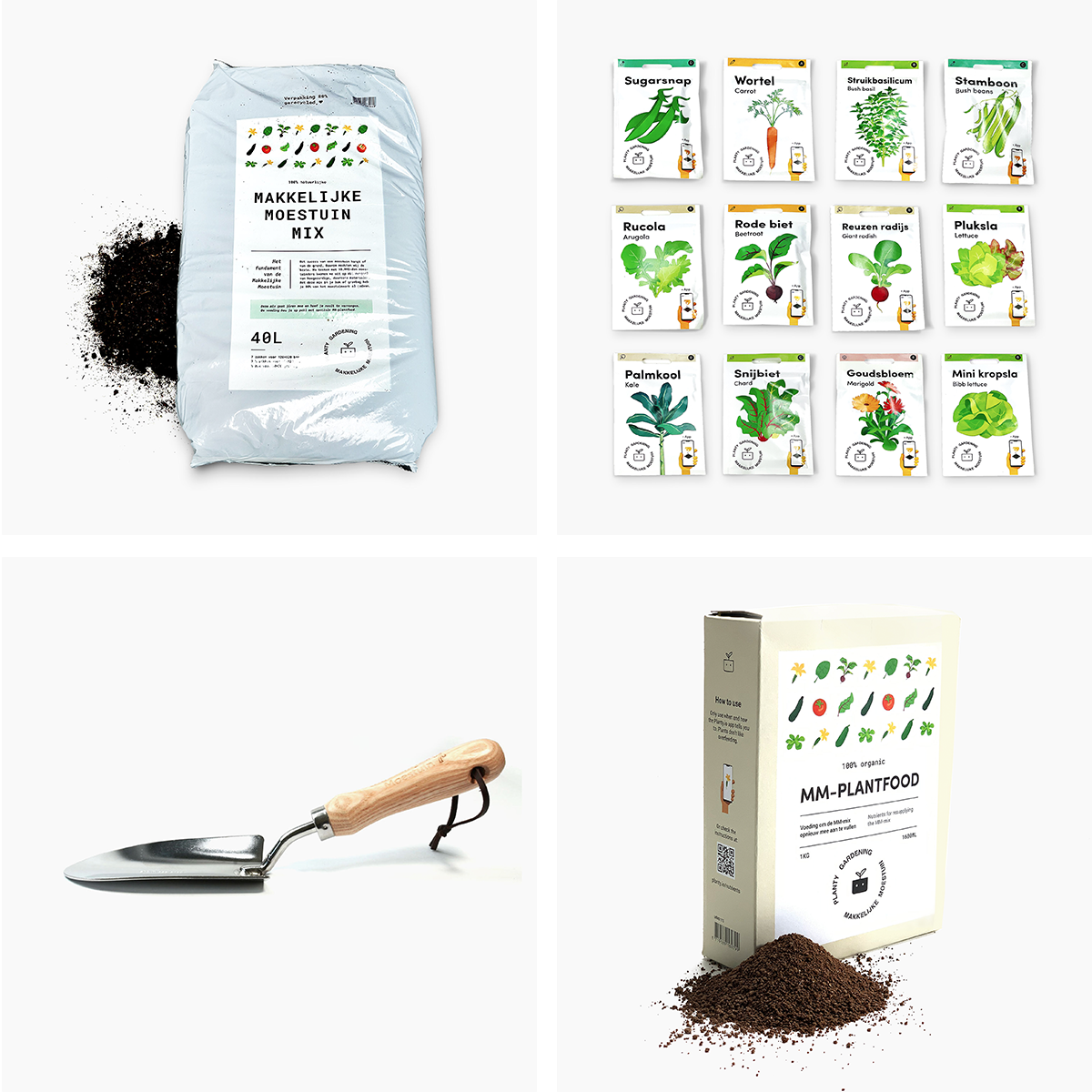
A traditional vegetable garden may need many different fertilisers, depending on the soil and what you grow: lime, horse or cow manure pellets, leaf mould, compost, bone meal, blood meal, seaweed meal, potash and so on. These are still fairly affordable, but you may also need special – and much more expensive – feeds for tomatoes, leafy vegetables, soft fruit, herbs, potatoes and cuttings.
In a Makkelijke Moestuin, we use the same garden soil for every plant. We only add a little MM plant food and occasionally some fresh soil to top up the boxes.
Garden centres are also full of pest-control products, whether they’re labelled eco-friendly or not: products for slugs, nematodes and aphids, plus slug pellets. I won’t get into whether you should use them, but they’re certainly not cheap. Ten euros for a bottle is nothing unusual.
In an MM, you usually don’t need any of that. At most, you might use simple household remedies such as pepper or garlic. You can also use a cover or some mesh against birds and butterflies. If slugs are a major problem, fit our electric slug fence to your box.

To create a truly successful traditional vegetable garden, you first need to learn all kinds of things, including soil, plants, maintenance, crop rotation, diseases and pests.
You can take courses, buy books and magazines, join a gardening association and so on. That costs money, although there is also plenty of free information online.
Unfortunately, most of that information gives only general advice. It doesn’t tell you exactly when to do something, so you’re often too early or too late and are left empty-handed when something goes wrong.
With a Makkelijke Moestuin, you have the app. It gives you all the knowledge you need, right when you need it.
The app is completely free and doesn’t even contain annoying ads. You can also find almost everything on the website, and there’s a super-active community. Again, completely free.
With a Makkelijke Moestuin, you have the app. It gives you all the knowledge you need, right when you need it.
The app is completely free and doesn’t even contain annoying ads. You can also find almost everything on the website, and there’s a super-active community. Again, completely free.
Convinced?
Are you now just as convinced as I am about the benefits of a Makkelijke Moestuin? Would you like to start your own?
It’s even easier now than it was when I started:
It’s even easier now than it was when I started:
- buy a garden box
- fill it with Makkelijke Moestuingrond
- download the app
- and get growing
Good luck! I hope you’ll show us how you get on. The best place to do that is in the community:
See you there!