
Help: my courgettes are falling off the plant
I hear this a lot in the summer months:
"Why do the fruits of my courgette, pumpkin, or cucumber fall off before they have a chance to grow?"
Good question.
It happens to me too sometimes. Here, look at this young courgette fruit:
"Why do the fruits of my courgette, pumpkin, or cucumber fall off before they have a chance to grow?"
Good question.
It happens to me too sometimes. Here, look at this young courgette fruit:
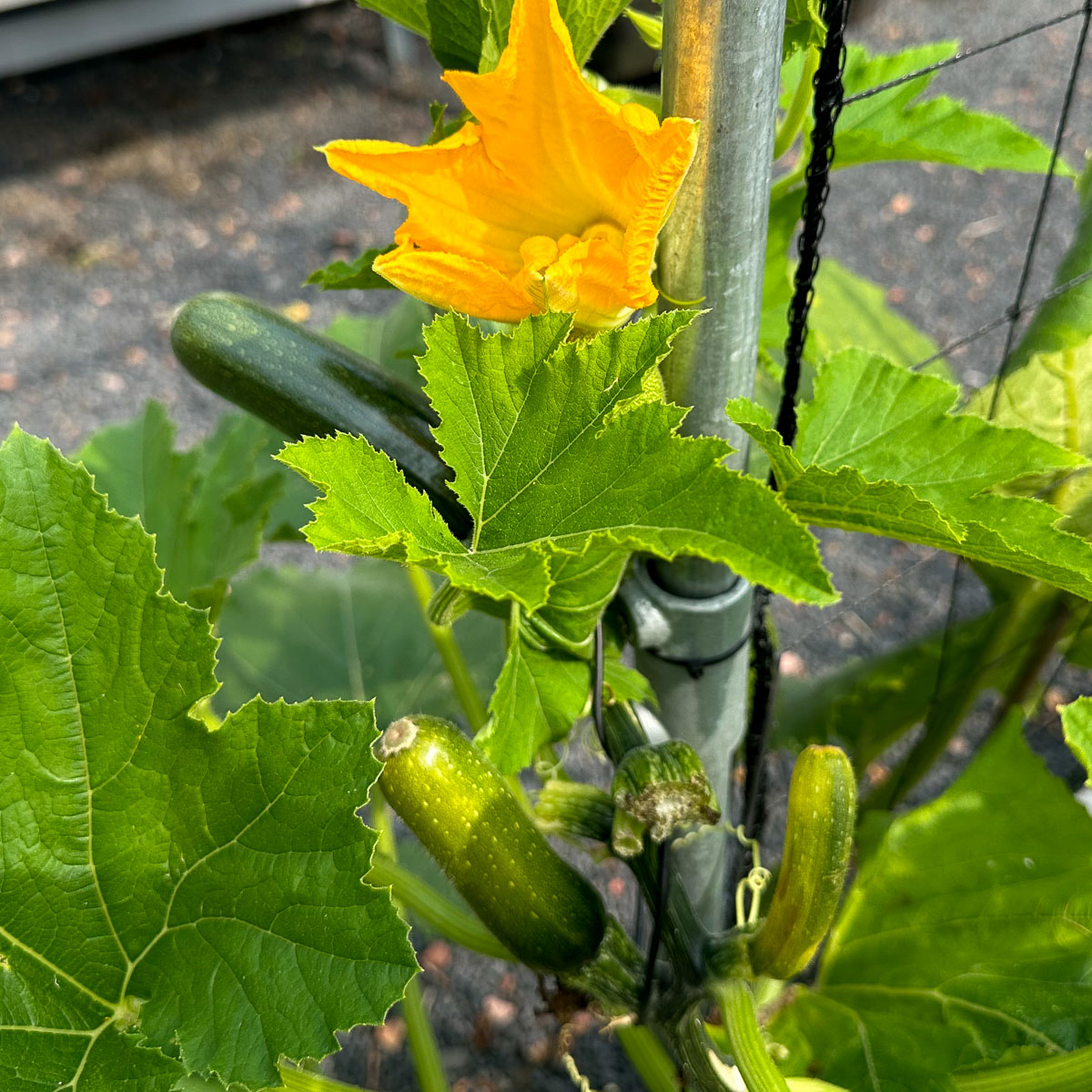
See how the flower turned yellow before it opened? In a few days, the courgette will fall off by itself. It is better to remove it yourself, so you avoid rot, mould, and other trouble.
Why does this happen?
First of all: do not worry. Young fruits falling off is very common. There are a few reasons for it:
There are already lots of fruits on the plant
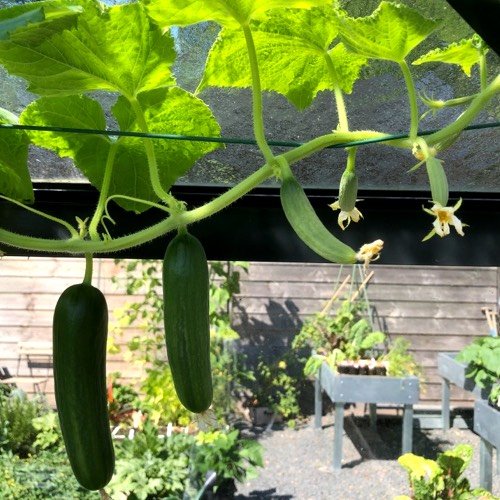
Often, it happens because the plant is already growing several courgettes or cucumbers. The plant decides it has enough to look after.
Just look at this little cucumber:
There are already lots of fruits on the plant
Often, it happens because the plant is already growing several courgettes or cucumbers. The plant decides it has enough to look after.
Just look at this little cucumber:
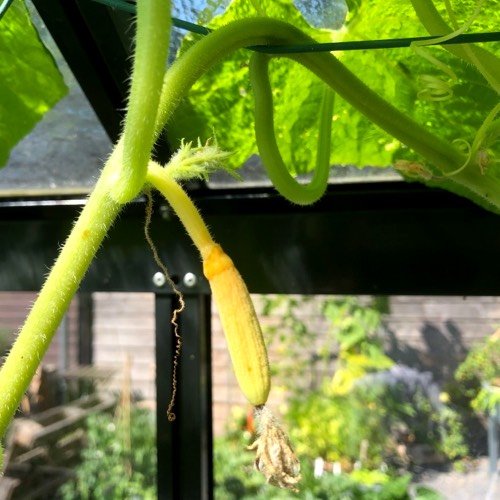
A little further down the vine, you can see why:
The plant is fully focused on producing seeds
Another reason is seed production. Once there is one really large fruit on the plant, the plant puts its energy into filling that fruit with seeds. It has less energy left for the smaller ones.
Another reason is seed production. Once there is one really large fruit on the plant, the plant puts its energy into filling that fruit with seeds. It has less energy left for the smaller ones.
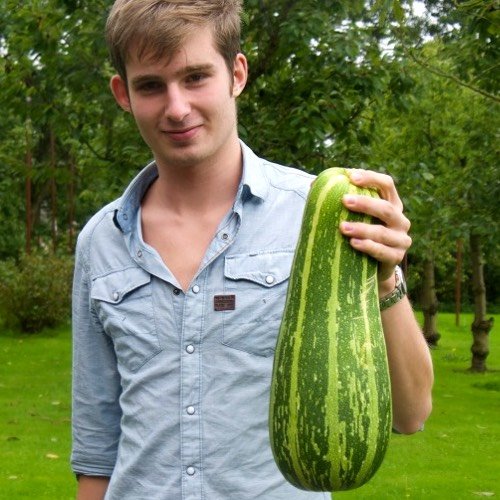
If you let courgettes or cucumbers become huge, the plant has less reason to produce new fruits. So it may stop.
It is too cold and too wet
Fruits can also fall off when the weather is cold and rainy. Courgettes and cucumbers are true summer vegetables. When conditions are too wet or too cold, the plant waits for better weather and drops some fruits.
It is too dry
If you do not water enough, the fruits do not get enough moisture. They shrivel and fall off.
Not enough plant food
Summer vegetables are hungry plants. If the soil mix no longer contains enough nutrients, the plant struggles. Once the plant starts producing fruit, give it extra MM plant food every 4 to 5 weeks.
So whether it is too wet, too cold, too dry, or short on nutrients, the plant decides whether it can support its fruits. If not, some fall off.
Disappointing, yes, but not a disaster: new ones will come along.
Rotting fruit?
Usually the flowers fall off once they have done their job. But sometimes the dead flower stays attached to your courgette.
It is too cold and too wet
Fruits can also fall off when the weather is cold and rainy. Courgettes and cucumbers are true summer vegetables. When conditions are too wet or too cold, the plant waits for better weather and drops some fruits.
It is too dry
If you do not water enough, the fruits do not get enough moisture. They shrivel and fall off.
Not enough plant food
Summer vegetables are hungry plants. If the soil mix no longer contains enough nutrients, the plant struggles. Once the plant starts producing fruit, give it extra MM plant food every 4 to 5 weeks.
So whether it is too wet, too cold, too dry, or short on nutrients, the plant decides whether it can support its fruits. If not, some fall off.
Disappointing, yes, but not a disaster: new ones will come along.
Rotting fruit?
Usually the flowers fall off once they have done their job. But sometimes the dead flower stays attached to your courgette.
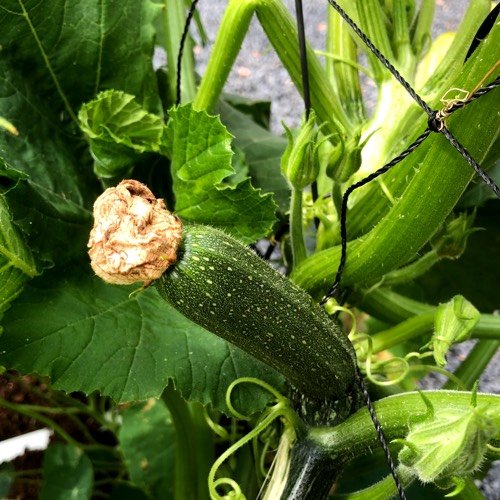
If the weather is rainy or humid, the flower can rot and infect the courgette itself. It is better to remove it:
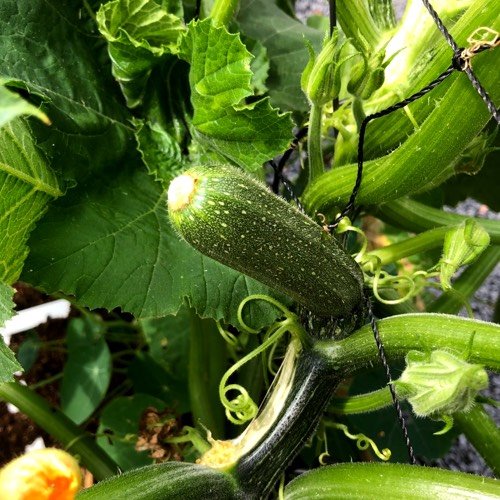
Flowers and pollination
It is also common for female flowers not to be pollinated. That means pollen from the male flowers has not reached the stigma of the female flower.
Usually bees and bumblebees do this work. Here you can see the male flower on the left and the female flower, with a bee inside, on the right:
Usually bees and bumblebees do this work. Here you can see the male flower on the left and the female flower, with a bee inside, on the right:
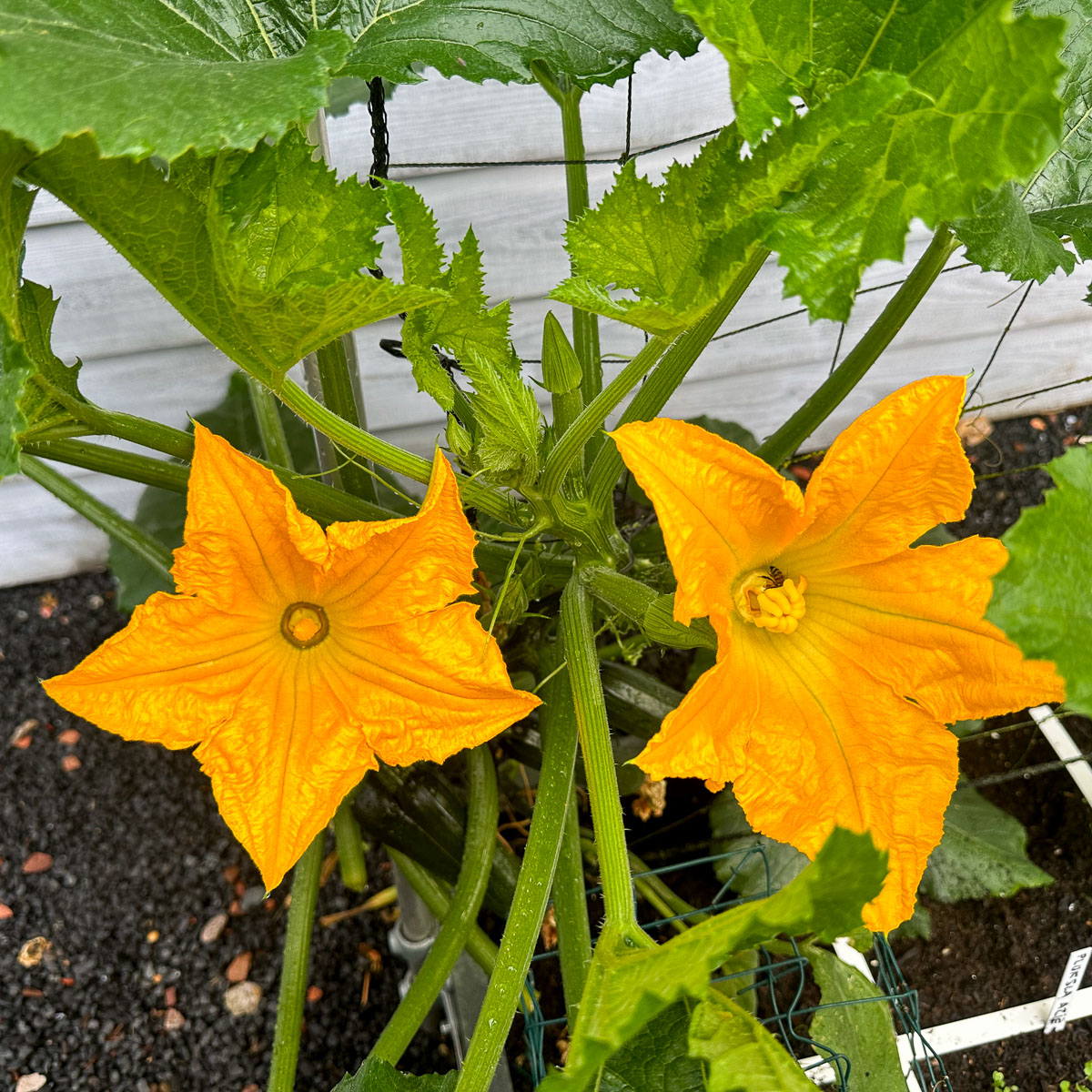
That is the ideal situation, but unfortunately it does not always happen. Sometimes only female flowers are open, and sometimes only male flowers are.
What can you do about it?
There is a solution: play the role of the bee yourself. It is not hard.
You just need one male flower and one female flower.
Male flowers usually bloom first. They look like this:
You just need one male flower and one female flower.
Male flowers usually bloom first. They look like this:
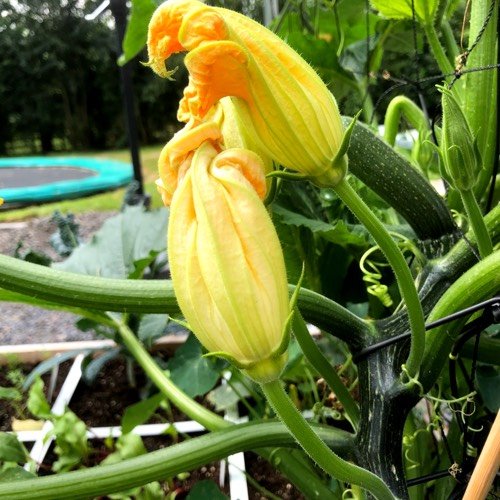
This is a female flower:
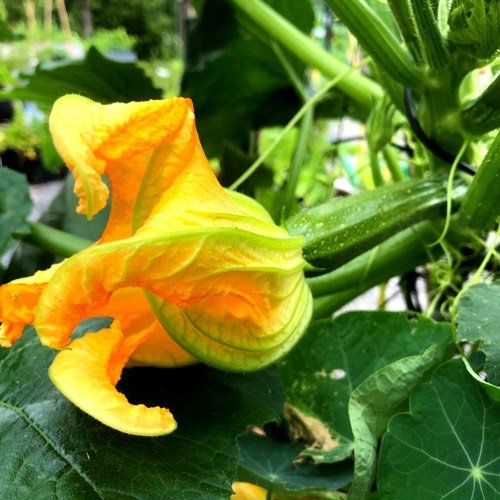
You can see the difference: male flowers have a skinny stem. Female flowers grow from what looks like a tiny courgette. Once pollinated, that mini courgette becomes the courgette fruit.
You can see it clearly even when the flower buds are still small and green:
You can see it clearly even when the flower buds are still small and green:
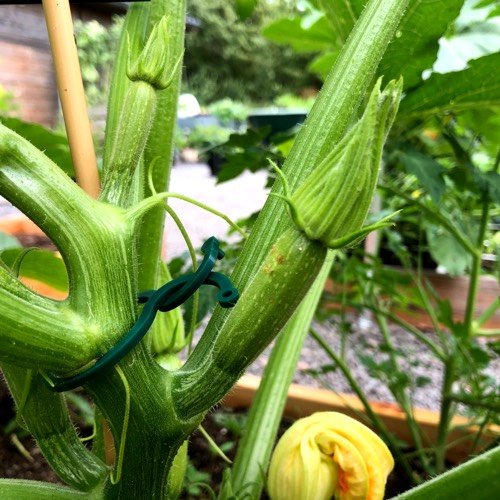
Pumpkin plants look really similar:
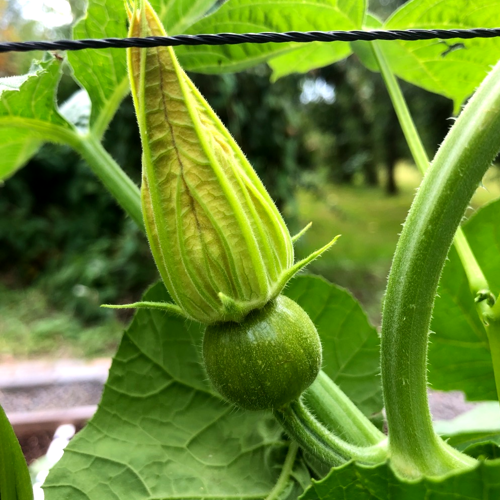
How do you pollinate a courgette yourself?
Hand-pollinating is simple: as soon as a female flower blooms, it is time to take action.
Pick a male flower and remove the petals. They are delicious in salads, or you can add them to a smoothie.
Pick a male flower and remove the petals. They are delicious in salads, or you can add them to a smoothie.
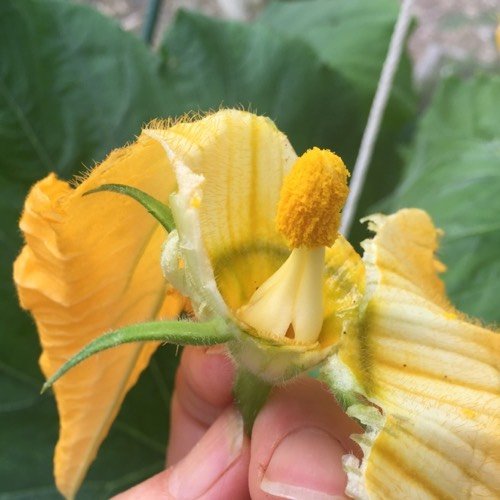
Then rub the male flower's stamen along the stigma of the female flower.
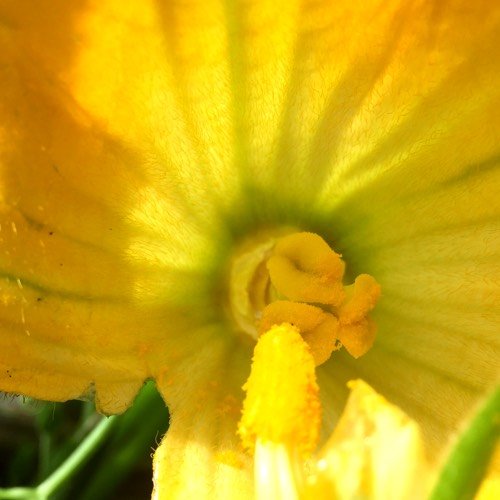
That is it: if it worked, the flower is now pollinated and the courgette can start growing.
If you, or the bees, only partly pollinated the flower, this can happen:
If you, or the bees, only partly pollinated the flower, this can happen:
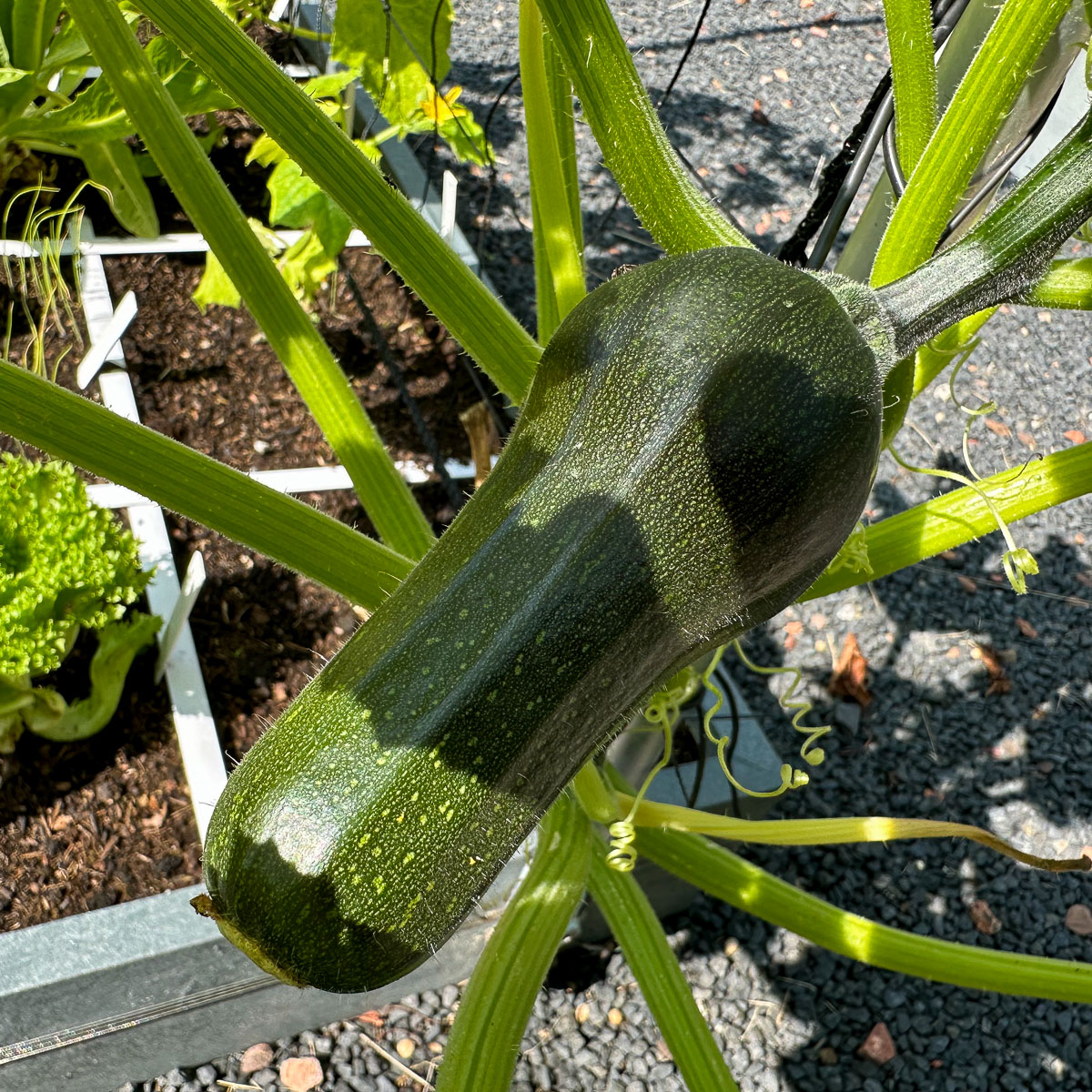
The courgette becomes nice and thick at the top, but much thinner at the bottom.
A courgette like this is still fine to eat, but harvest it fairly quickly. If you leave it hanging too long, it will start to rot after all.
A courgette like this is still fine to eat, but harvest it fairly quickly. If you leave it hanging too long, it will start to rot after all.
What about cucumbers?
Because cucumber flowers are both female and male, they all grow from a tiny fruit.
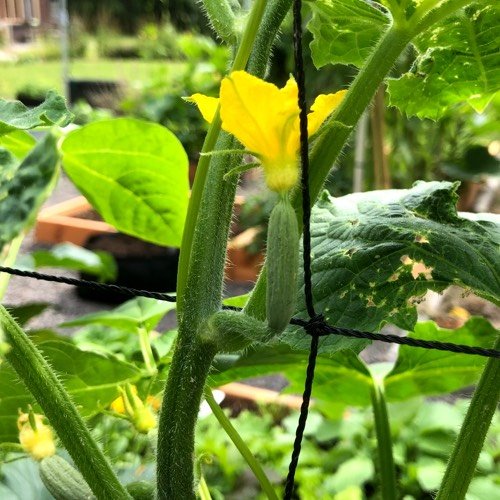
Cucumbers do not need to be pollinated. With old varieties, you often prefer that they are not pollinated, because that can produce seeds inside the fruit.
With the cucumber variety we sell, it does not really matter either way: it hardly forms any seeds.
That is all there is to it.
Good luck!
With the cucumber variety we sell, it does not really matter either way: it hardly forms any seeds.
That is all there is to it.
Good luck!