
All about Makkelijke Moestuingrond (with coconut)
Makkelijke Moestuingrond is specially made for raised beds with water reservoirs. It contains coconut, plant food and worm castings.
This combination gives your vegetables exactly what they need to grow healthy and strong: moisture, nutrients, water and air.
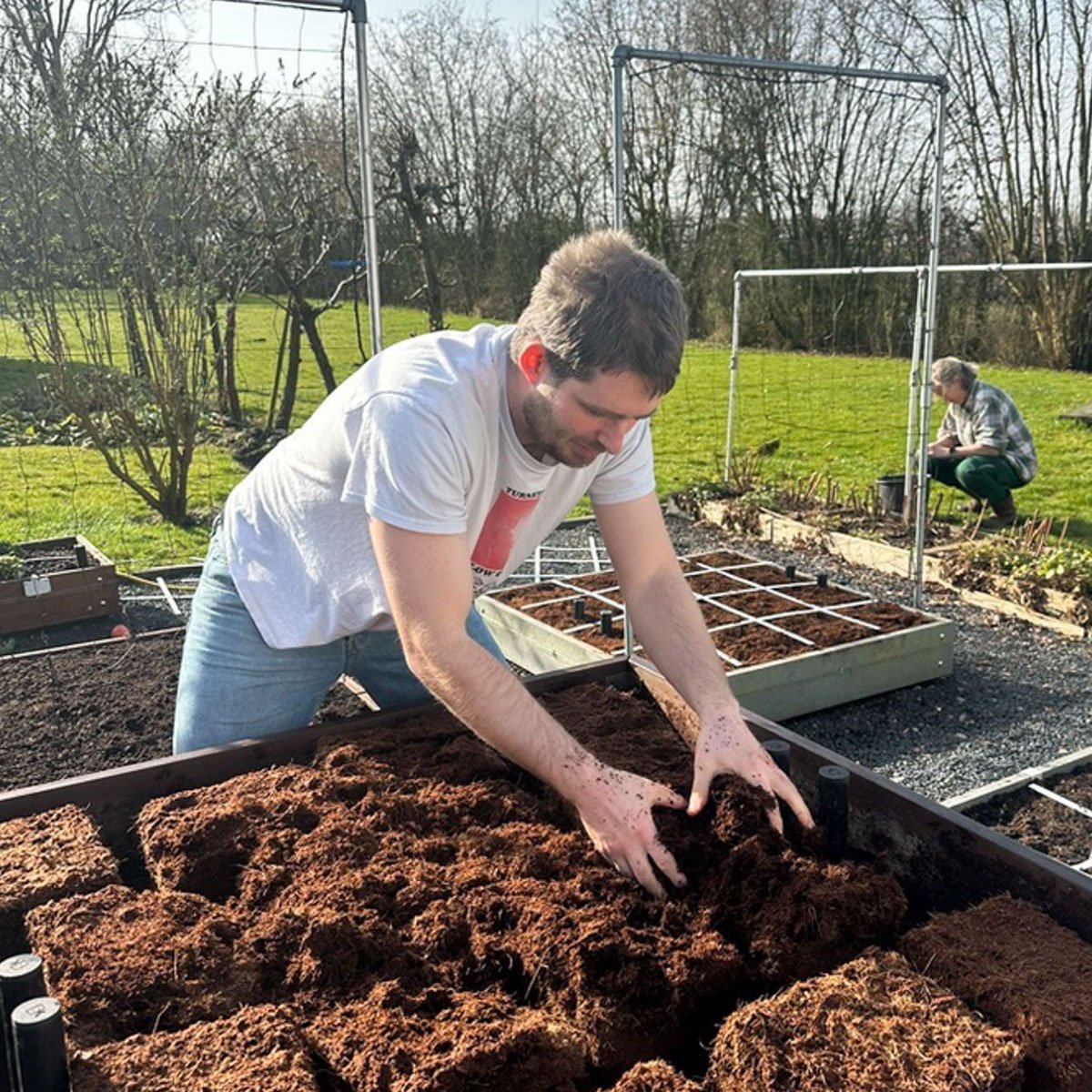
When you order this soil mix, you receive three separate components: compressed coconut blocks, a bag of MM plant food and a larger bag of worm castings.
You mix them together yourself, directly in your raised bed.
How do you prepare the soil mix at the start?
For a new raised bed, prepare the soil mix directly in the bed:
Place the coconut blocks on the water reservoirs, or put them in a bucket or tub first.
Add plenty of water so the blocks expand and the fibres loosen.
Mix in the worm castings.*
Mix in the MM plant food too.*
Spread the mix loosely through the raised bed and place the grid on top.
* It's even easier to put the worm castings and plant food in a tub or bucket and mix them together first. This helps you spread both evenly through the coconut.
You can then sow or plant.
The coconut provides structure and absorbs moisture, the worm castings add active soil life straight away, and the MM plant food gives your plants everything they need to grow healthy and strong.
View the step-by-step instructions here.
Please note: the worm castings are full of living microorganisms and are slightly moist. Prepare the soil mix as soon as possible. If you can't do it straight away, keep the bag closed and store it in a fairly cool, shady place.
Why did we create this soil mix?
During our first year using water reservoirs, we noticed that our classic MM-mix could dry out at the top in hot, dry weather, even when there was still enough water in the reservoir.
The dry mix would then stop drawing water upwards. The peat it contains holds moisture well, but once it dries out, it doesn't absorb water as readily.
You can prevent this, but you need to check the moisture regularly and add water from above when needed.
We wanted a soil mix where you rarely, if ever, need to do that. One that draws water evenly from the reservoir in all conditions, never becomes too dry or too wet, and always stays airy.
Ideally, we also wanted it to be peat-free.
After extensive testing, we arrived at this mixture. And it does exactly what we were looking for.
What's in our soil mix, and why?
Most of it is coconut:
Coconut fibres absorb moisture very easily and hold it well without becoming waterlogged. They draw water up from the reservoirs through the wicks, keeping the soil in your raised bed nicely moist.*
The small pieces of coconut husk alongside the fibres keep the soil mix airy. Plants need air around their roots too, so that's exactly what they need.
The combination of fibres and firm pieces keeps the top layer dry and loose. This makes leaves less likely to rot and attracts fewer slugs, which dislike dry conditions.
More about the coconut we use.
Please note: during prolonged periods of extreme heat and dry weather, like the summer of 2026, the soil can still dry out faster than the coconut draws water upwards. Check from time to time that the soil beneath the top layer is still moist enough, and add water from above if needed.
MM plant food
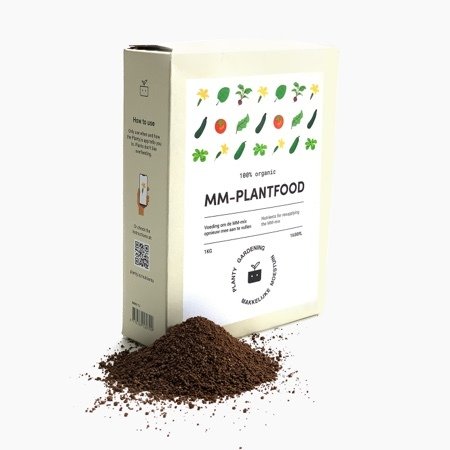
Worm castings
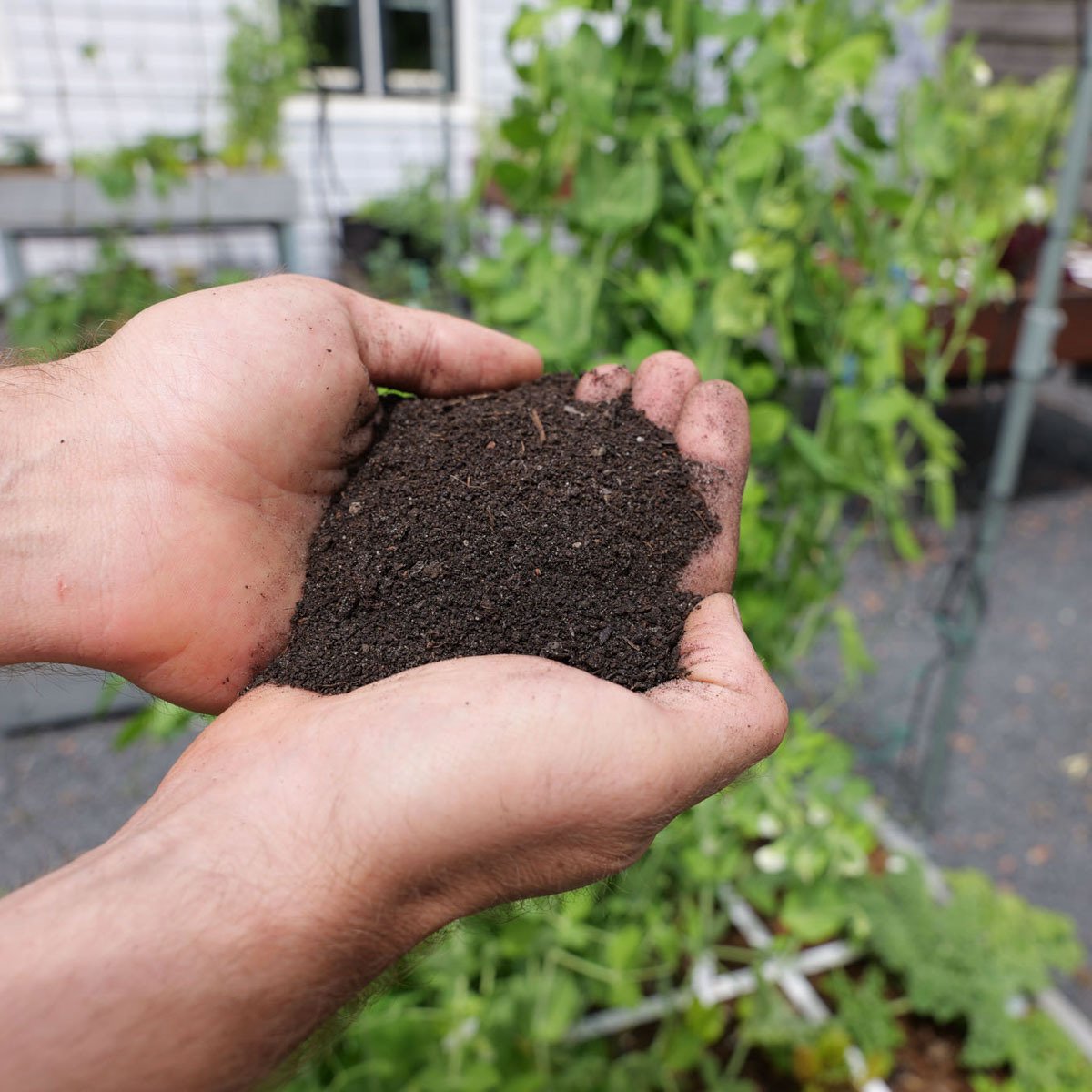
That soil life is extremely important. Your plants cannot use the nutrients you add straight away: they first need to be converted into minerals.
That requires bacteria and fungi.
The more active the soil life, the sooner your plants’ roots can absorb the nutrients. The worm castings also contain two special fungi that help the roots absorb water and nutrients.
That is why you add the worm castings right at the start, when preparing the garden soil and putting it in your garden box.
How much soil mix do you need?
That depends on the size of your raised bed and how many squares you want to fill.
We supply this soil mix in packs:
- 1 square: 20 litres
- 4 squares: 80 litres
- 8 squares: 160 litres
- 16 squares: 320 litres
How do you maintain this garden soil?
However, some fibres will always cling to your plants’ roots, so the level in your garden box will gradually drop. Simply top it up with more garden soil and you are done.
The same applies to the worm castings. The bacteria and fungi they contain sustain themselves very well.
This gives the soil life a substantial boost, making nutrients available more quickly and helping your plants get off to an easier start. (Half the initial amount is more than enough for this.)
You do, of course, need to replenish the plant food.
During the season, do this in squares that you prepare for the next round after harvesting: 3 tablespoons per square.
Plants that remain in a square for a long time and need plenty of nutrients – such as tomatoes – also benefit from an occasional extra feed: 2 tablespoons when planting, followed by another 2 tablespoons every 5 weeks.
Now you know what this soil mix is, why we created it, and why we recommend it for use with our water reservoirs.
Good luck!

PS: Already have something else in your raised bed or at home?
Is your raised bed already filled with our classic MM-mix? Or have you previously bought coconut, plant food or worm castings separately?
Don't throw anything away: you can still use it. Read on to find out how.
Already have a raised bed filled with our classic MM-mix? Or have you previously bought coconut, plant food or worm castings separately? Don't throw anything away. Here's what you might still need.
You use a water reservoir and your raised bed is already filled with classic MM-mix, with or without perlite?
Leave it in place. That mix is perfectly good and never needs replacing. We do recommend adding perlite to make it a little airier.
Don't let the mix dry out completely, as it will then struggle to draw up water from the reservoirs. Water from above when needed.
Need to top up the mix after a while? Use Makkelijke Moestuingrond for that.
You use a water reservoir, your raised bed is filled with MM coconut fibres, and you added plant food when filling it?
Mix in 1.5 litres of worm castings per square to give the soil life a boost.
Already have plants growing in the coconut? Make a few deep grooves around the edge of each square, put the worm castings in them and cover them over.
You don't use a water reservoir and your raised bed is filled with classic MM-mix?
You don't need to do anything: that's what the classic MM-mix is made for.
Need to top up the mix after a while? You can use either MM-mix or Makkelijke Moestuingrond.
Yes, certainly. You can also use it in pots and even for houseplants.
You'll need to water it regularly yourself, perhaps a little more often than the classic MM-mix.
The advantage is that even when this soil mix has dried out completely, it absorbs water again very quickly.