
Prepare your raised bed for winter
It's nearly the end of the year and time to prepare your vegetable garden for winter.
When you do this depends a bit on the weather. Sometimes it's already freezing in October, and sometimes January is still so mild that it seems like winter is being skipped.
That said, November's usually a good month to get your garden ready.
When you do this depends a bit on the weather. Sometimes it's already freezing in October, and sometimes January is still so mild that it seems like winter is being skipped.
That said, November's usually a good month to get your garden ready.
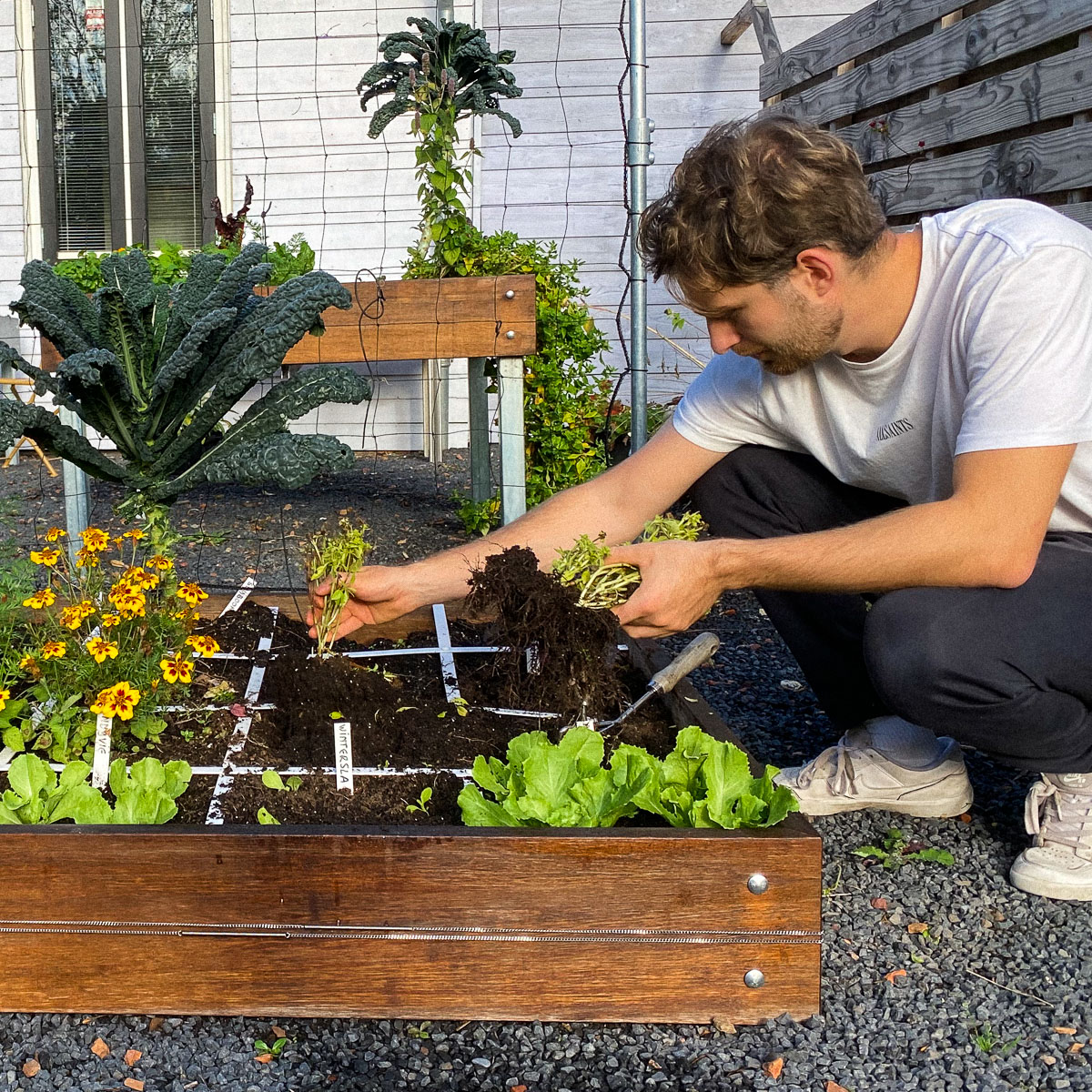
What do I mean? Get ready how?
It boils down to this:
- remove all the old plants
- make your vegetable garden completely weed-free
- make the soil mix light and loose
- tidy up everything you don't need: pots, labels, bamboo sticks, and garden tools
In a traditional vegetable garden - with rows of raised beds - this is a lot of work. Hard work.
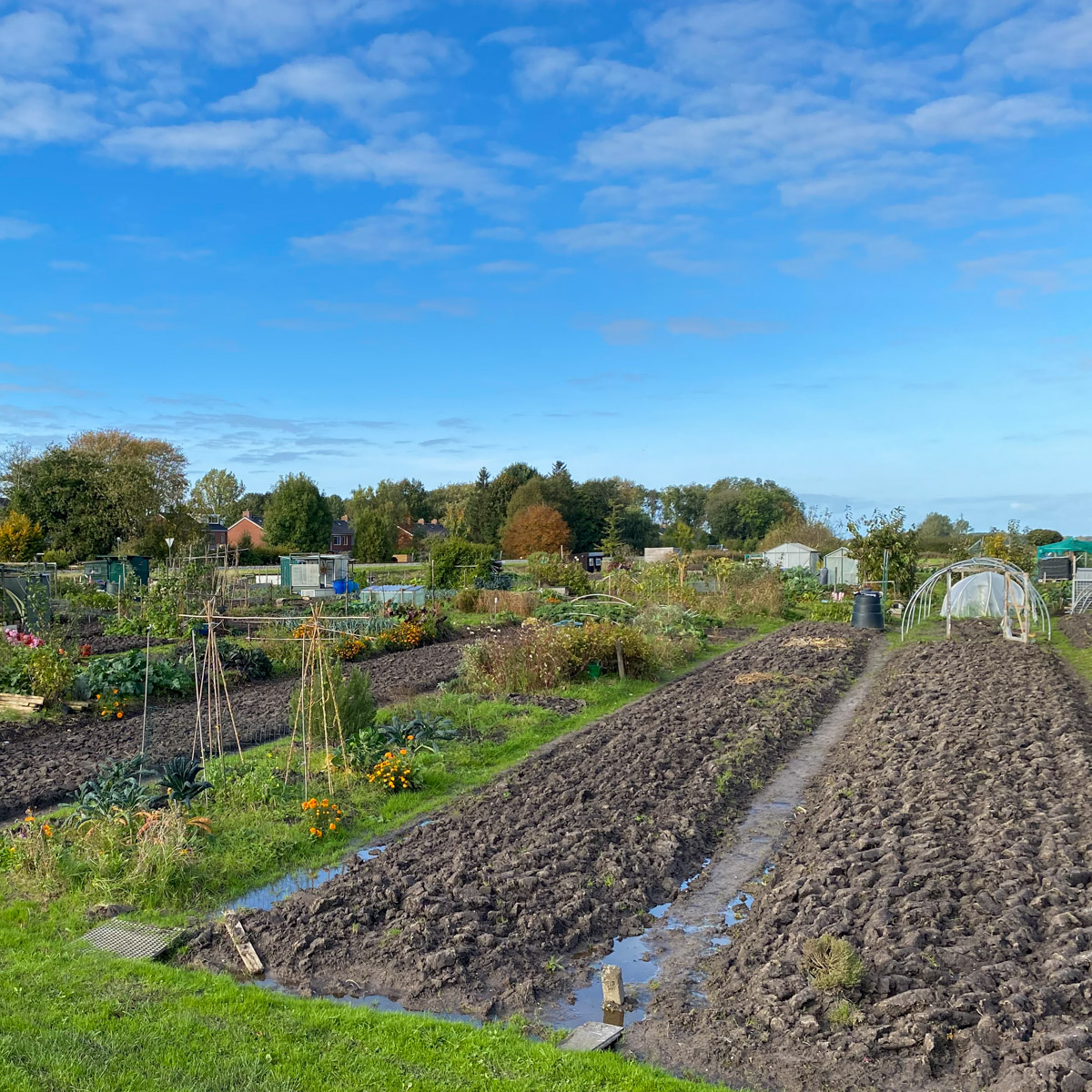
Just think about it:
- It takes a lot of effort to remove old plants: they grow huge root balls. You need a rake or a shovel to pull them up.
- It's a lot of work to remove weeds: they usually spread all over. If you leave them alone, your garden will be totally overgrown by spring.
- Once you've weeded everything, you have to turn the soil over. Clods of dirt freeze during the winter. So if you don't dig thoroughly in the fall, it'll be much harder to do later.
- Tidying everything up doesn't take all that long, but cleaning your tools before the winter does.
All in all, it can easily take a week. Even for a small backyard garden.
How does that work in a Makkelijke Moestuin?
You will be finished in no time because you are working in raised beds filled with Makkelijke Moestuin Mix. That makes a world of difference. Let me show you.
This is what my garden looked like in early November 2022:
This is what my garden looked like in early November 2022:
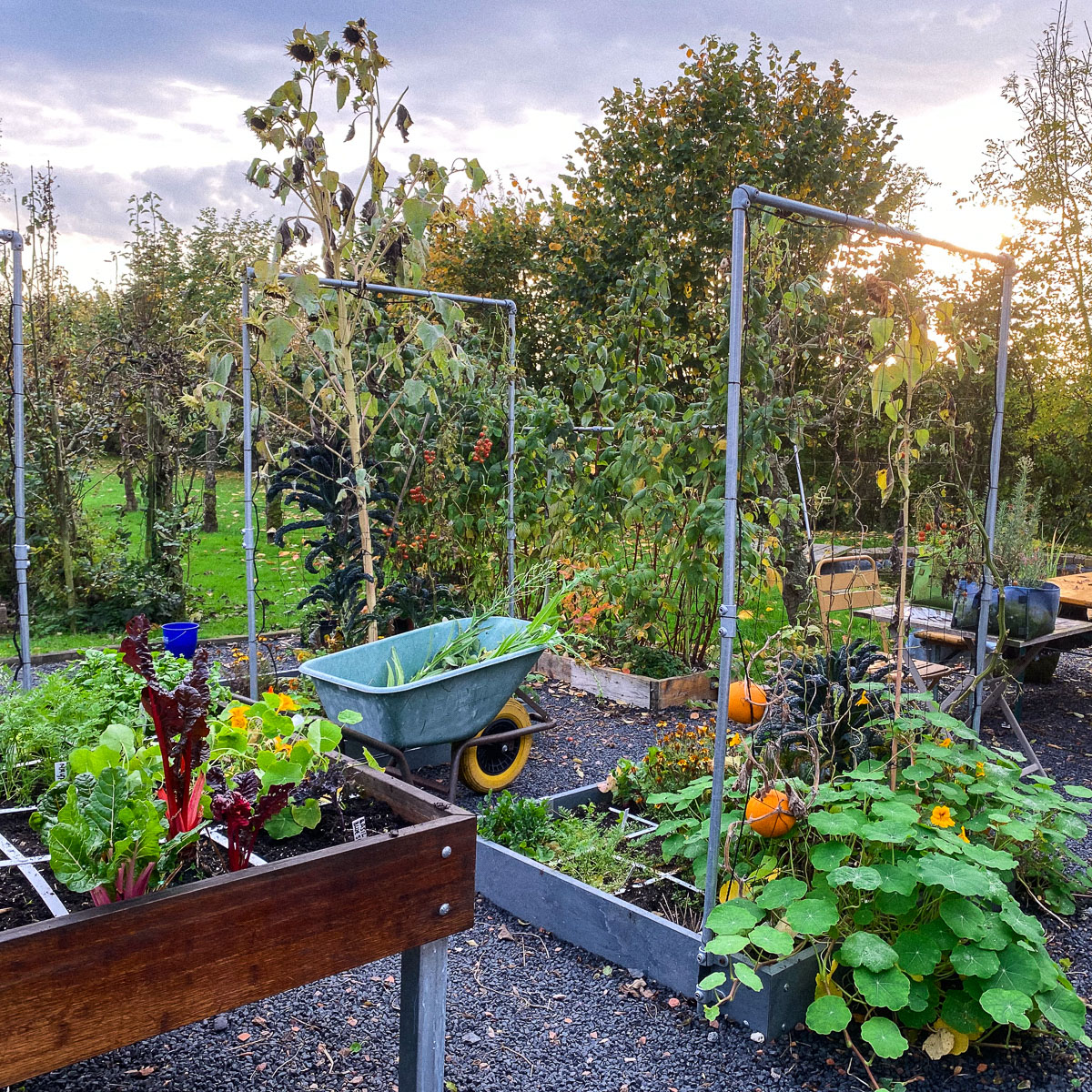
So. It's been cold for weeks and growth has pretty much stopped. Most of the vegetable patches have been harvested. The remaining plants are decaying or bolting. Even the sunflowers are just barely hanging on.
Let's roll up our sleeves and get to it.
Let's roll up our sleeves and get to it.
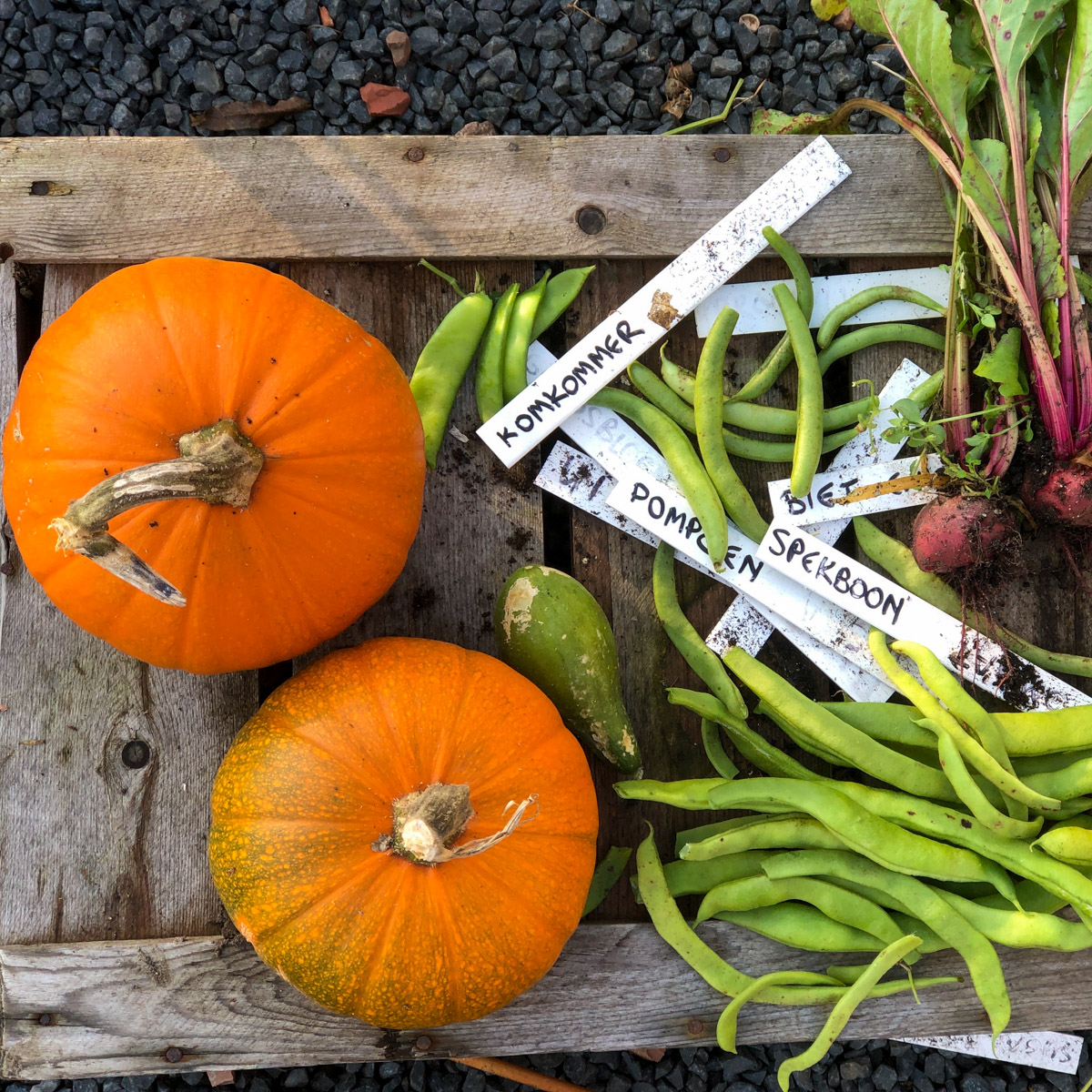
1. Harvest what you can still harvest
It is often a surprising amount.
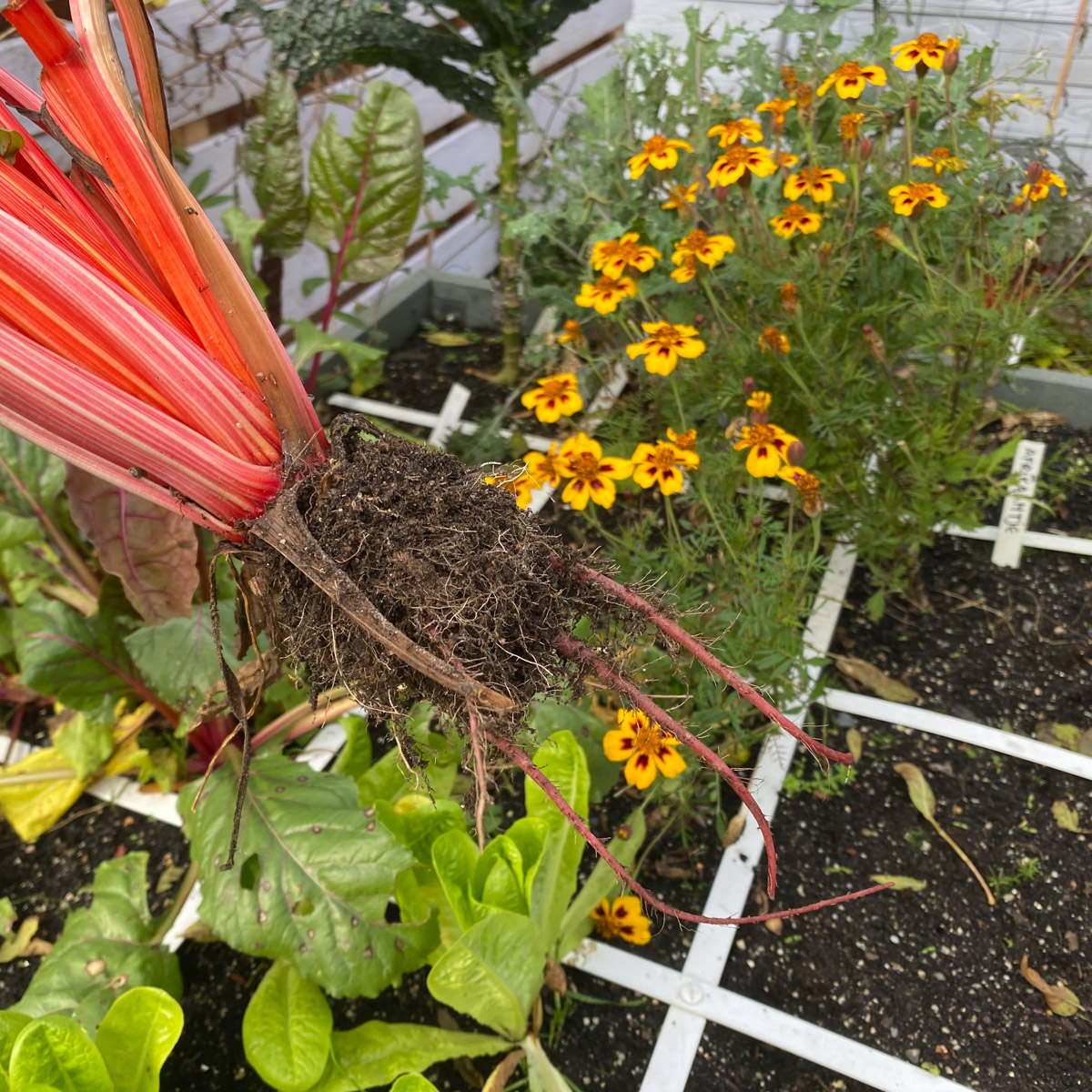
2. Remove old, bolted, sad-looking, or stunted plants
Easy. Because the MM-Mix keeps the root balls small. If you want to, use a garden claw - like our MM-harkje - or trowel. Knock off any clinging soil mix.
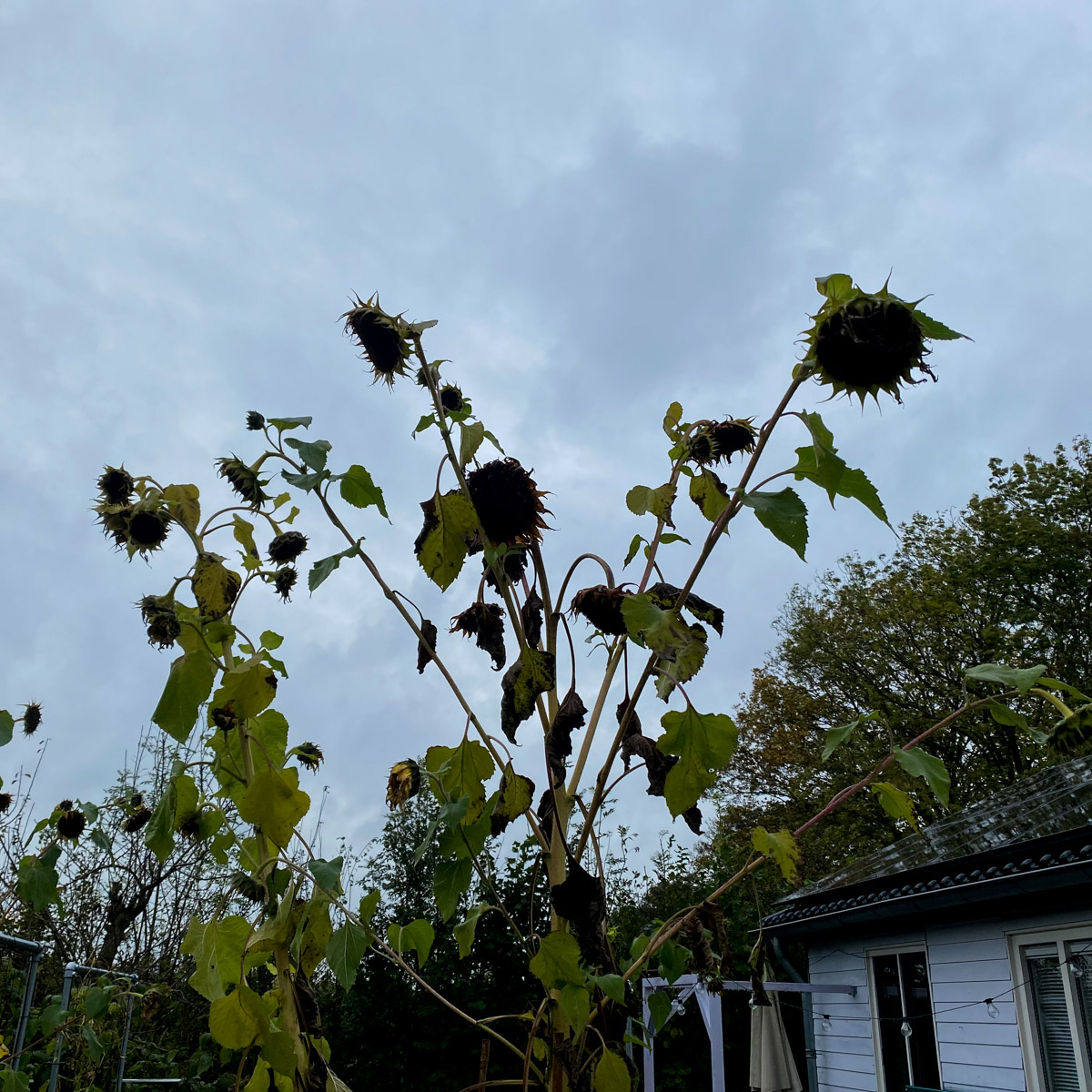
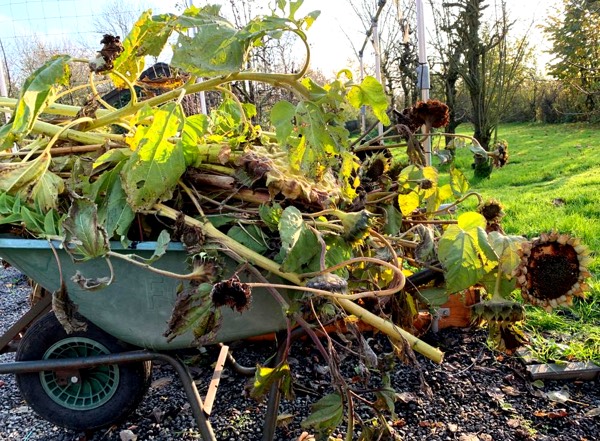
Break the sunflower stalks and remove the root balls. Check if there are any seeds left in the flower heads and leave them for the birds.
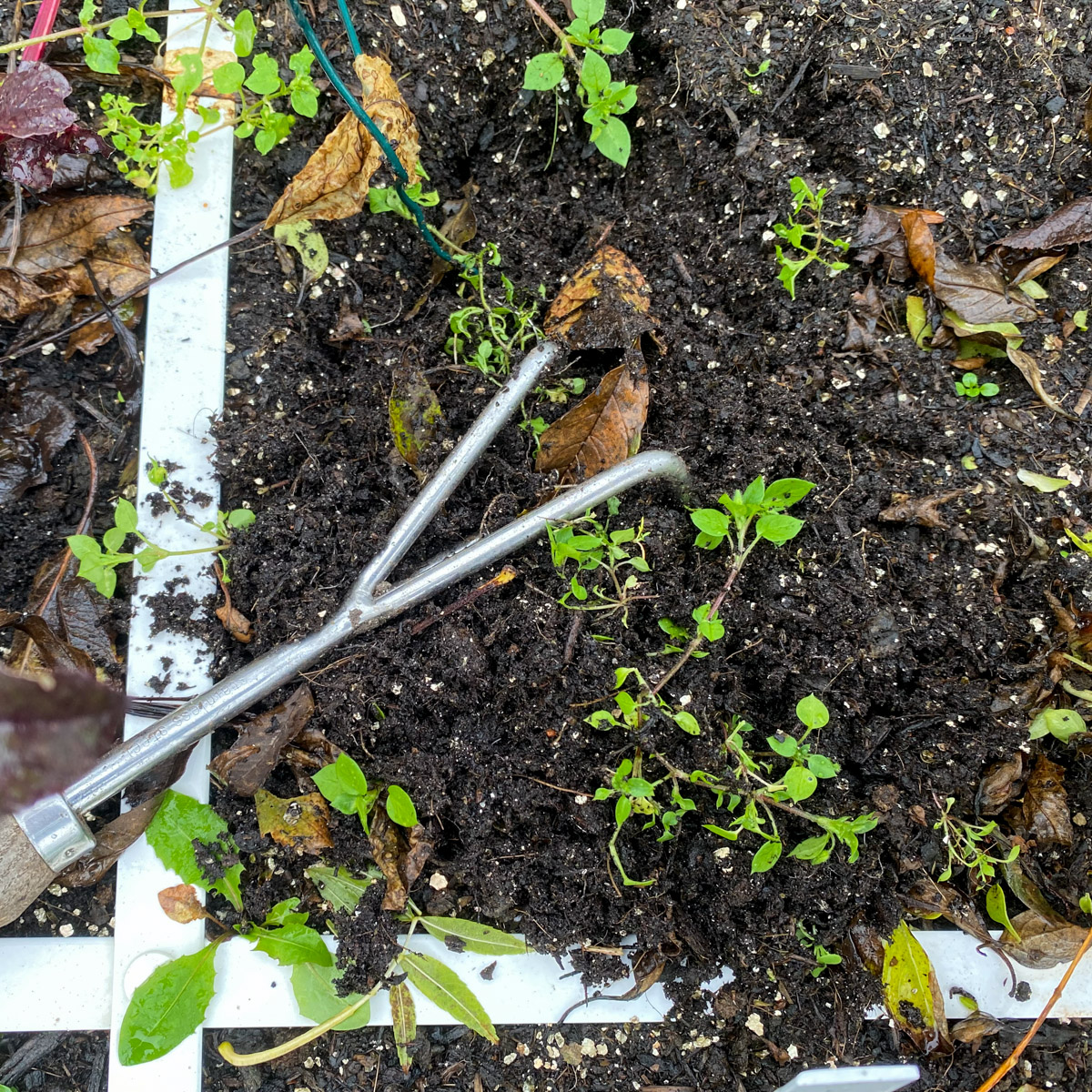
3. Remove windblown weeds and unwanted seedlings
With the MM-Mix, this is no trouble at all.
4. Collect any containers, pots, or labels lying around
Clean them up so they're ready for next year.
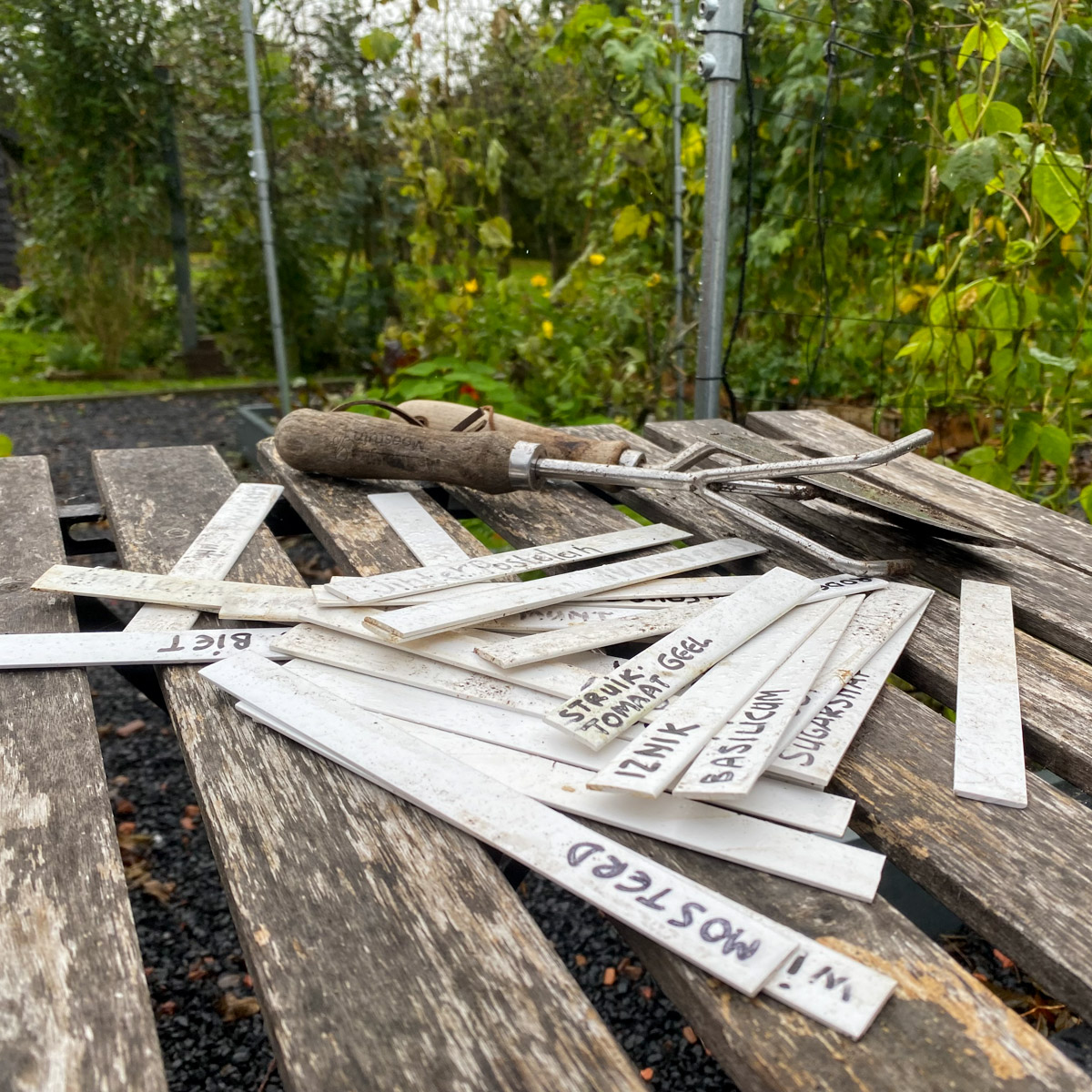
That's it. You're done.
Do you empty your raised beds completely?
Not at all. For starters, you leave the MM-Mix in there. It will last for years.
Also, some vegetables can handle cold weather, even severe frost.
Let's have a look at what's still growing:
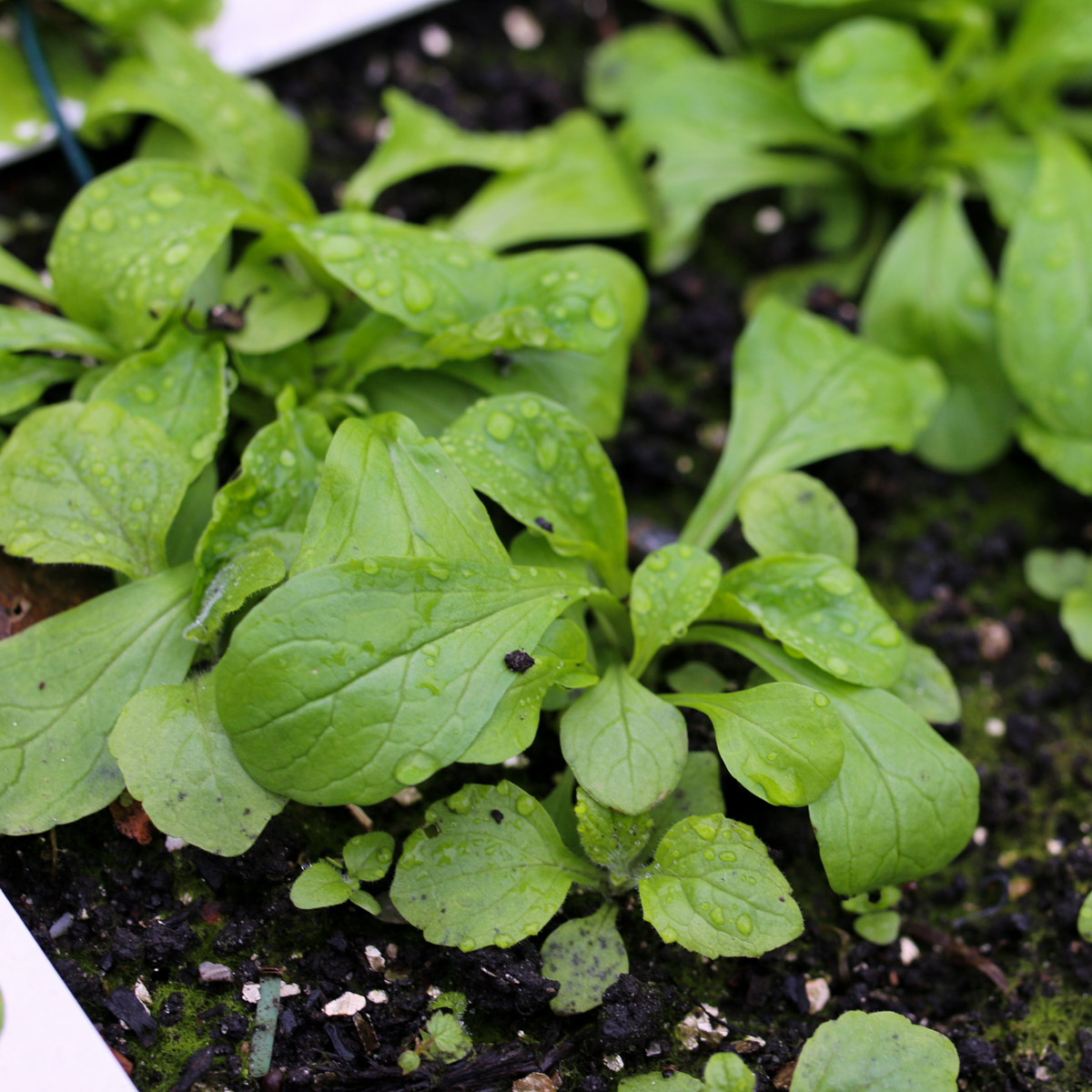
Lamb's lettuce
These compact plants are great for salad.
Also, some vegetables can handle cold weather, even severe frost.
Let's have a look at what's still growing:
Lamb's lettuce
These compact plants are great for salad.
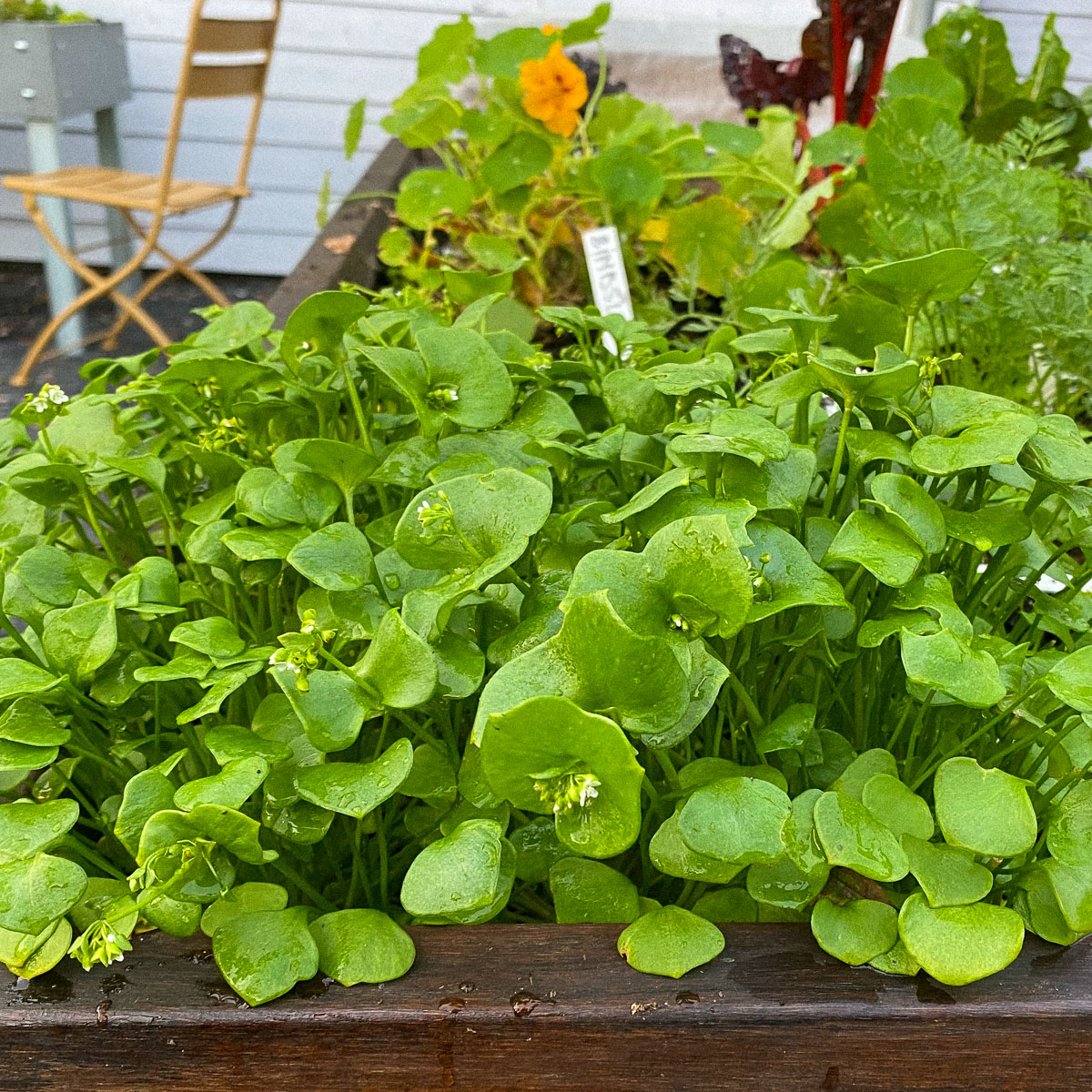
Winter purslane
I eat this all the time. In a smoothie, salad, or with mashed potatoes in a Dutch 'mash pot'.
If you cut off the leaves and leave the rest of the plant, they'll grow back on their own. They don't mind the cold:
I eat this all the time. In a smoothie, salad, or with mashed potatoes in a Dutch 'mash pot'.
If you cut off the leaves and leave the rest of the plant, they'll grow back on their own. They don't mind the cold:
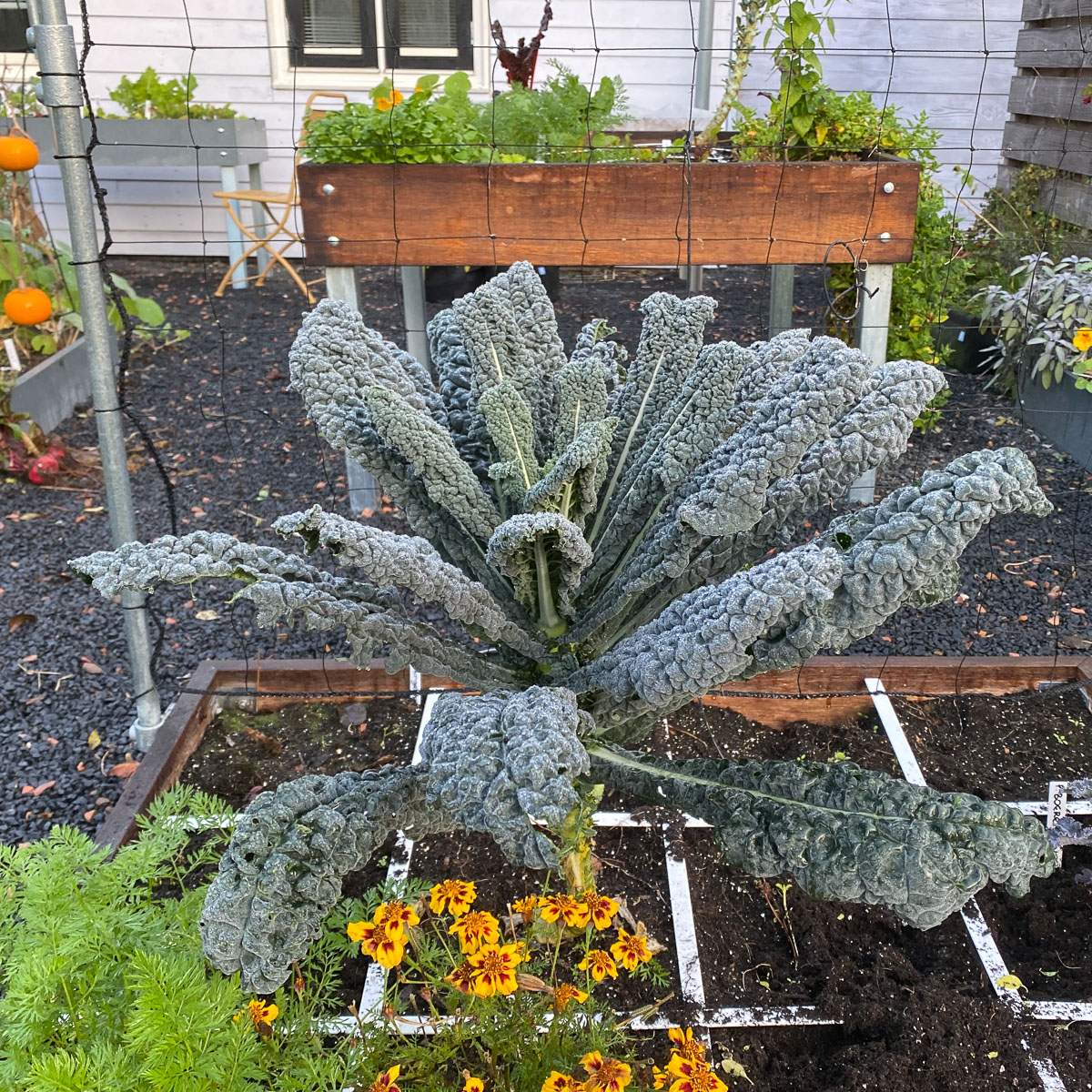
Dino kale (cavolo nero)
Survives the harshest winters. Pick the large leaves and leave the small ones: they'll grow again in the spring.
Survives the harshest winters. Pick the large leaves and leave the small ones: they'll grow again in the spring.
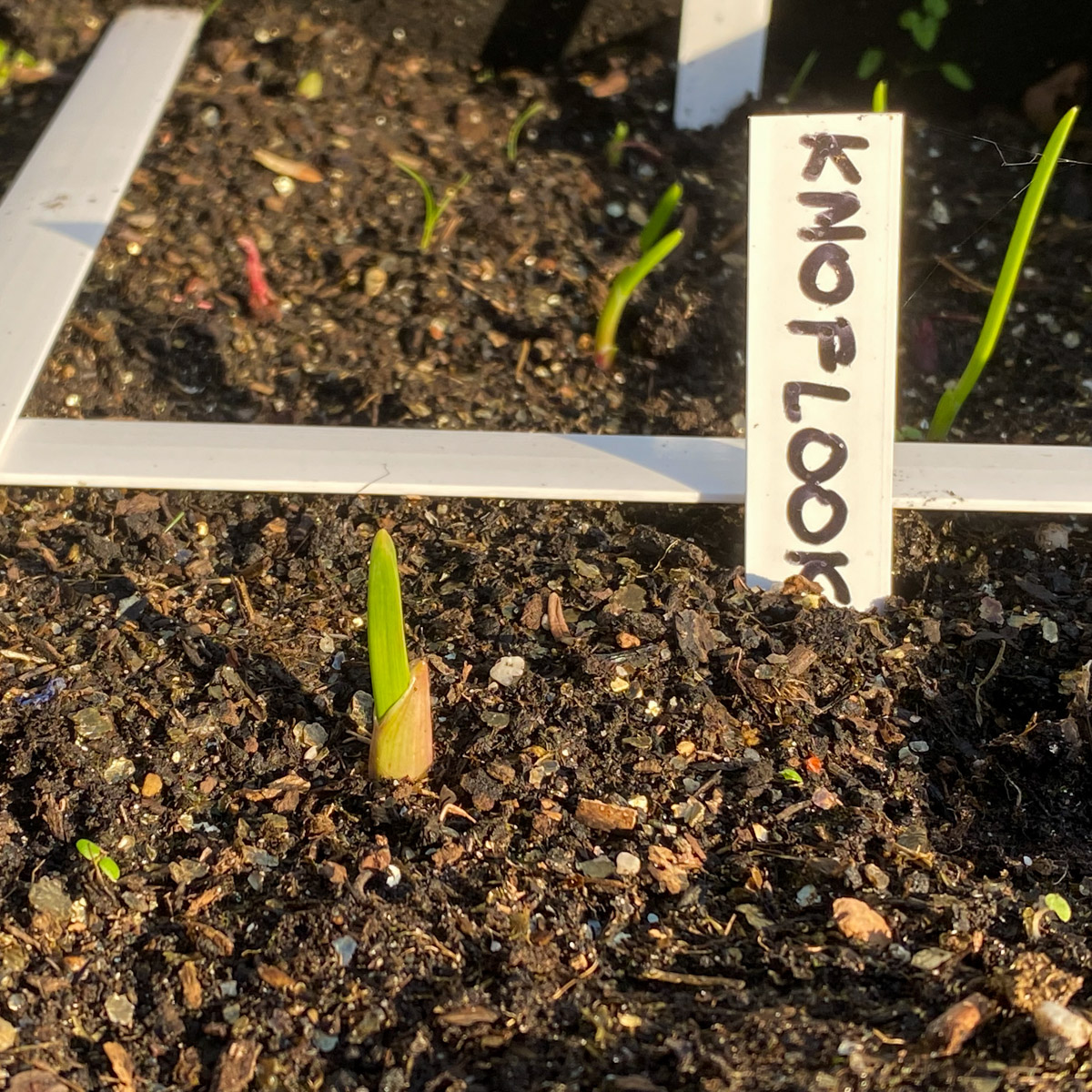
Garlic
Plant the cloves from September to November. The new cloves can be harvested next year and the green stems are ready to eat earlier:
Plant the cloves from September to November. The new cloves can be harvested next year and the green stems are ready to eat earlier:
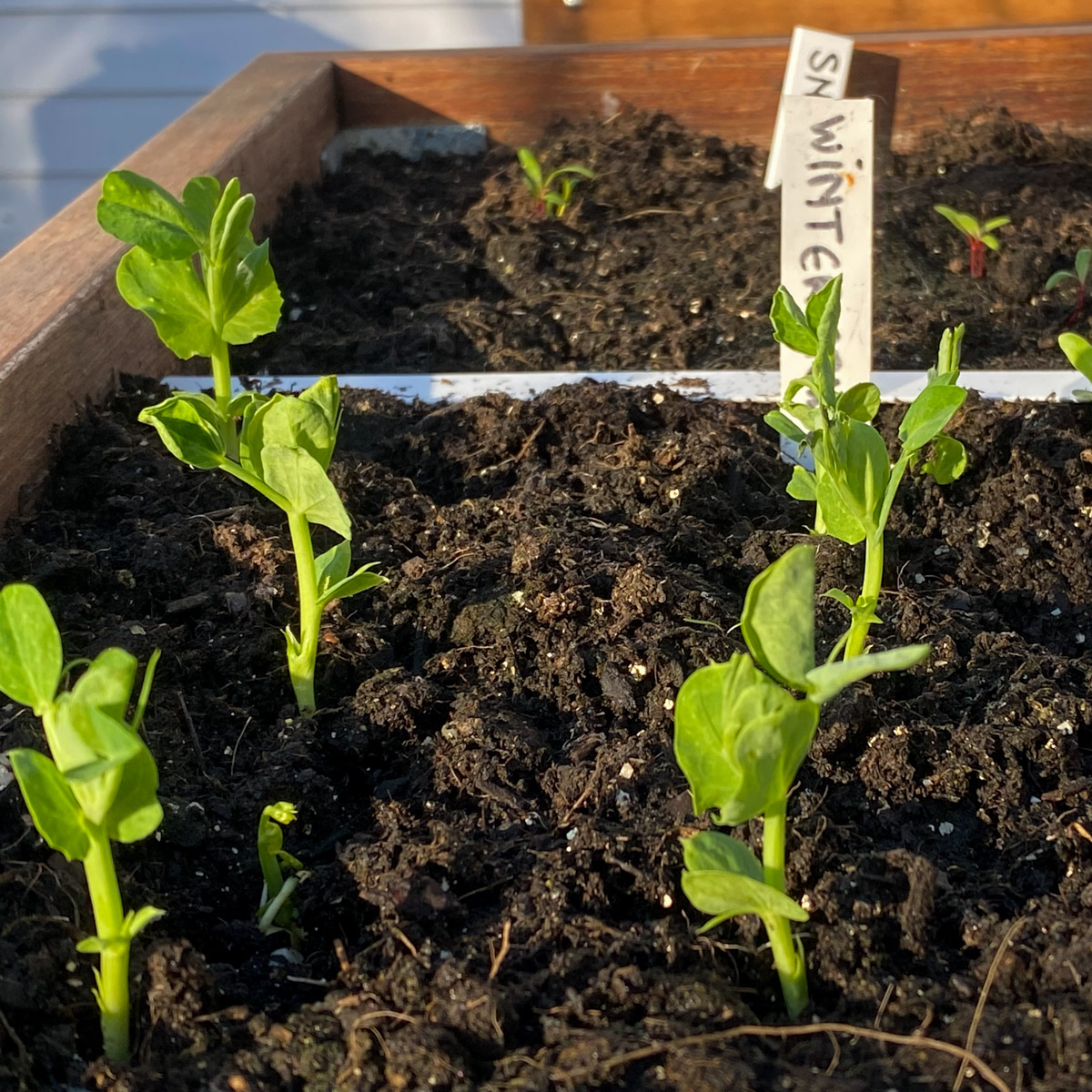
Winter pea
The young shoots and leaves should be harvested in winter: they taste like peas and are great in a stir fry. The plants continue to grow in spring and will flower quickly. So harvest the tastiest parts early on.
The young shoots and leaves should be harvested in winter: they taste like peas and are great in a stir fry. The plants continue to grow in spring and will flower quickly. So harvest the tastiest parts early on.
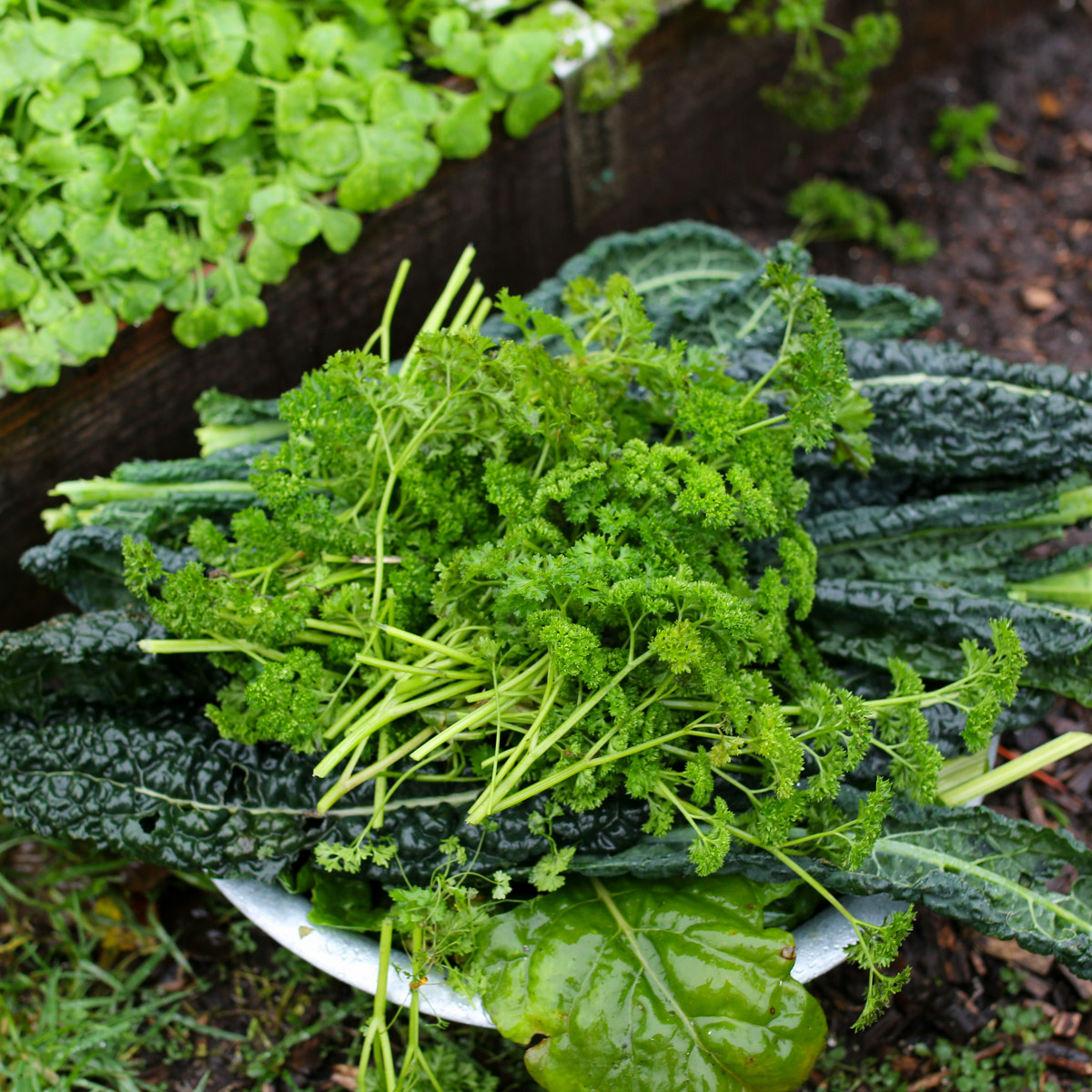
Chives and Parsley
Chives are perennials. When frost hits, everything above the ground dies, but the plants grow again in spring.
Parsley is biennial. The leaves last a little longer than chives do. The plants will start growing again in the spring. They'll flower quickly: best remove them then.
Chives are perennials. When frost hits, everything above the ground dies, but the plants grow again in spring.
Parsley is biennial. The leaves last a little longer than chives do. The plants will start growing again in the spring. They'll flower quickly: best remove them then.
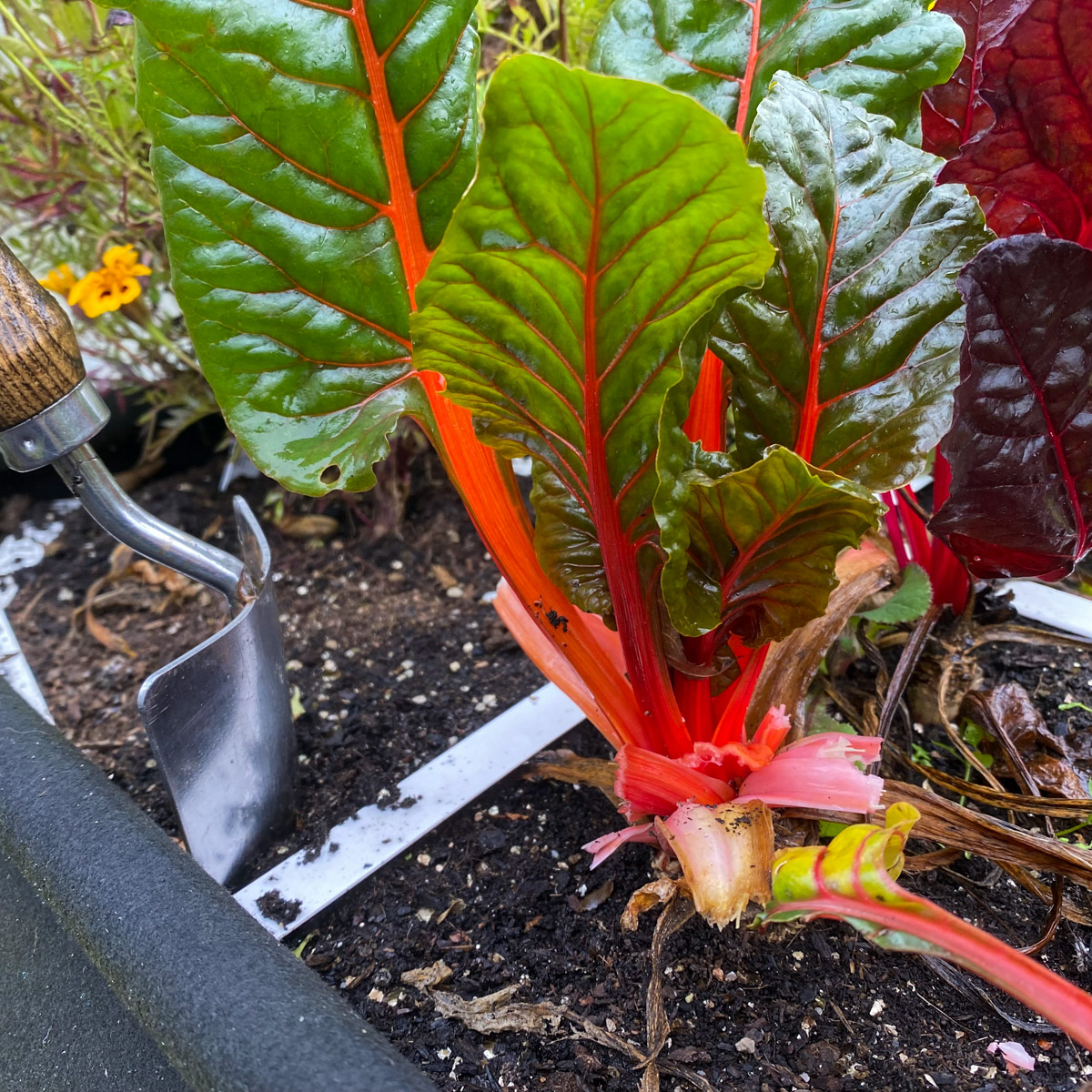
Chard and arugola
Leave the heart of of the plants in their patch: if the winter is mild, you can harvest next spring.
Leave the heart of of the plants in their patch: if the winter is mild, you can harvest next spring.
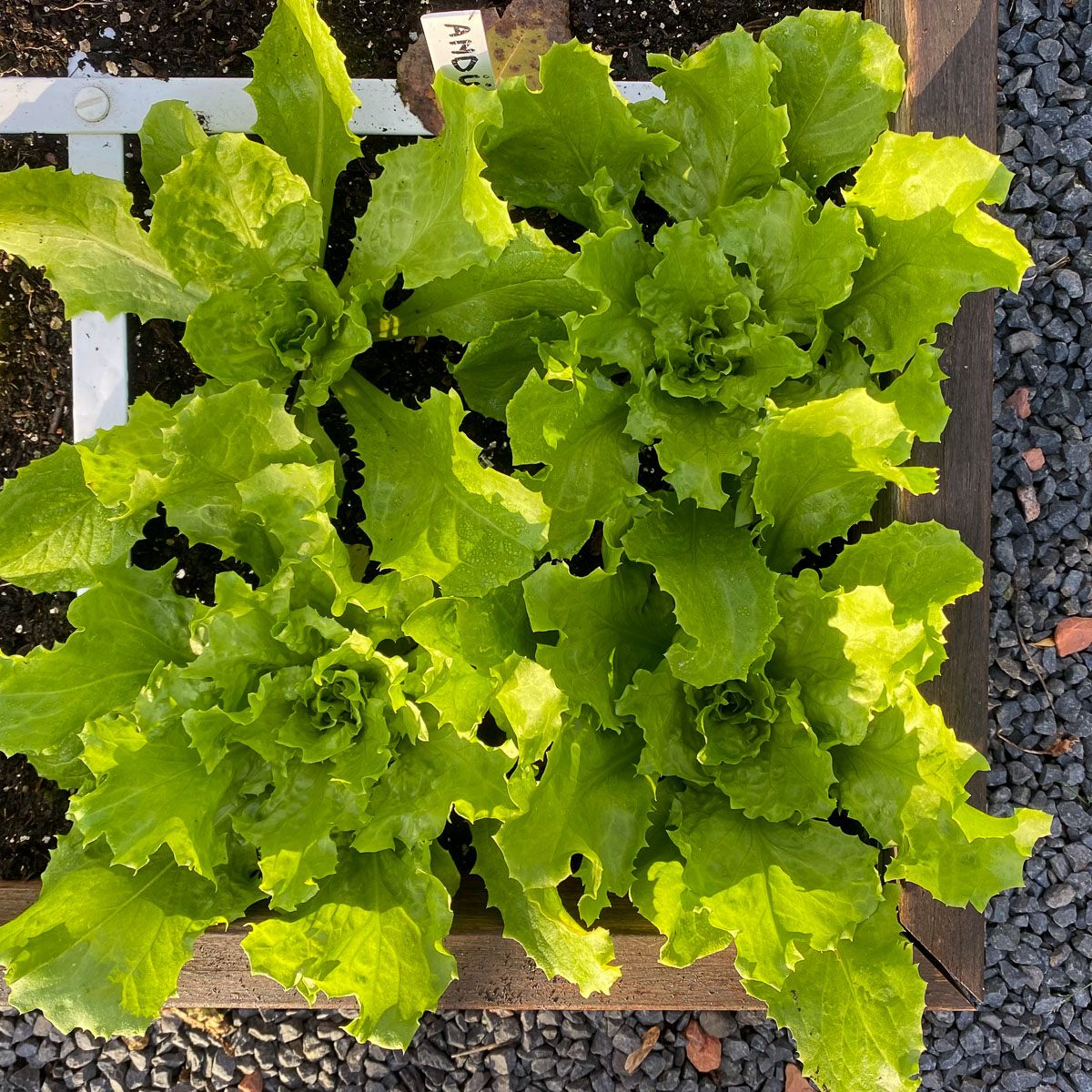
Endive
Endives can withstand the cold but are sensitive to moisture. Too wet, and they'll get mildewy.
Endives can withstand the cold but are sensitive to moisture. Too wet, and they'll get mildewy.
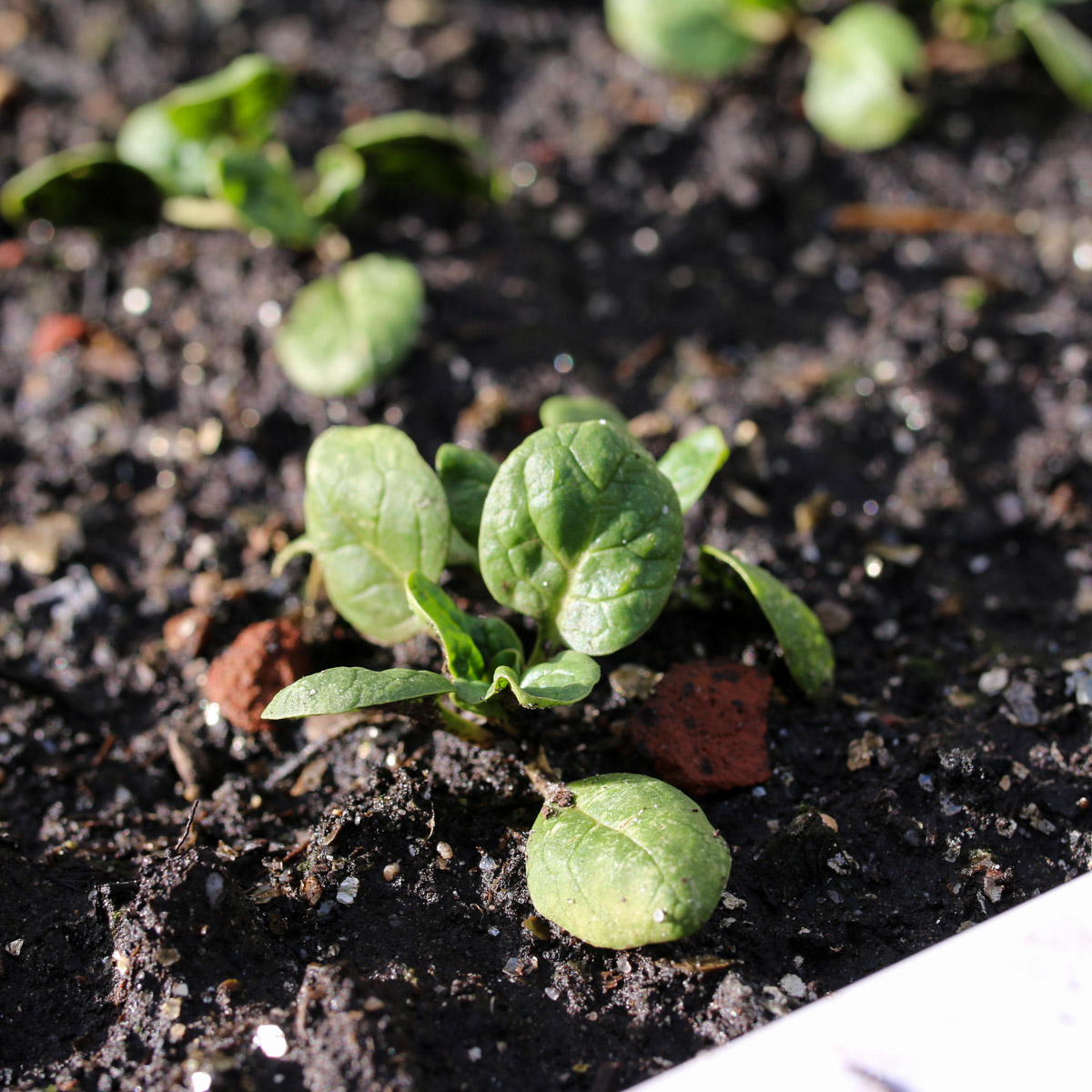
Spinach
Even the smallest spinach plants should start to grow again in spring.
Even the smallest spinach plants should start to grow again in spring.
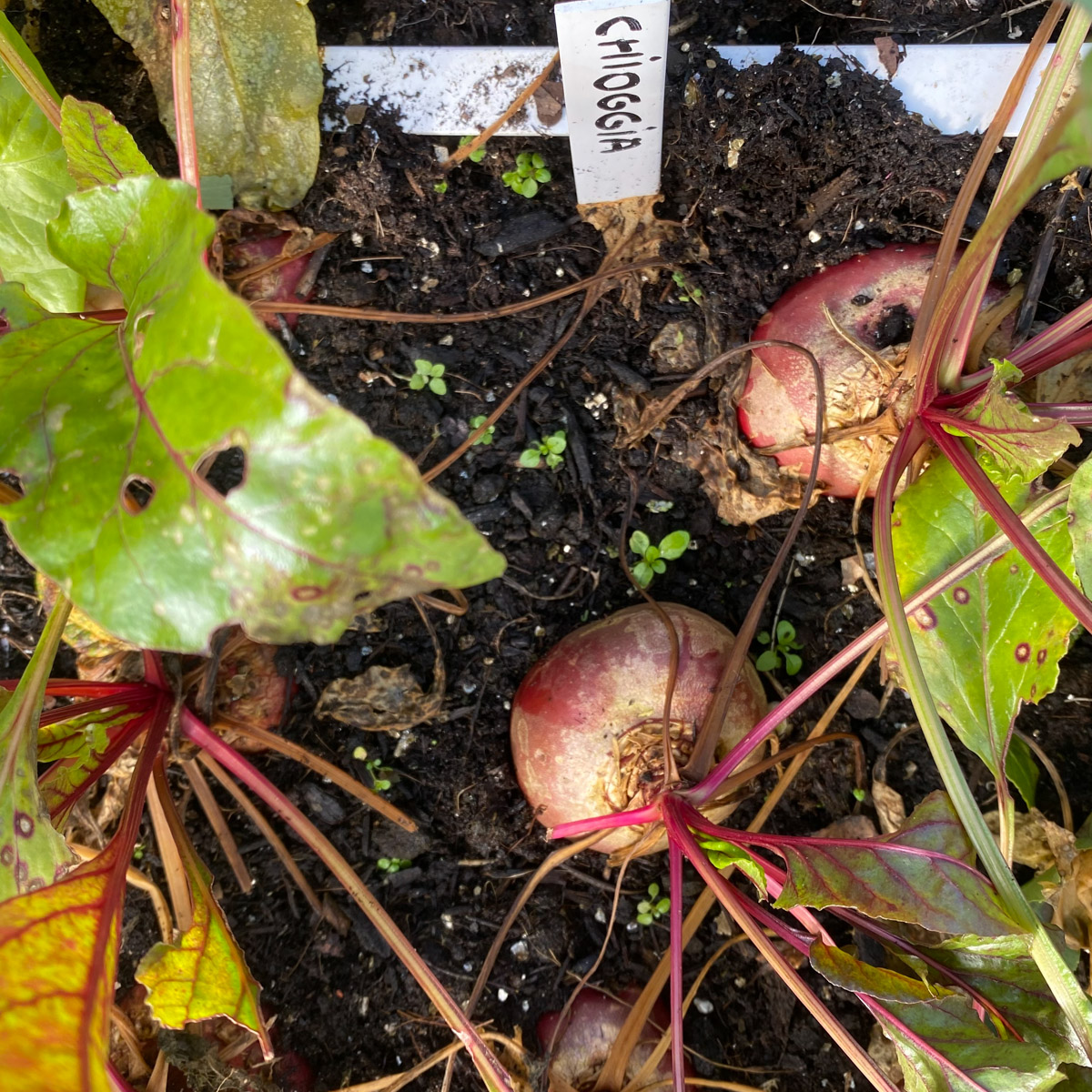
Beets
Beets can be left to rest peacefully. The colder it gets, the sweeter the taste.
Beets can be left to rest peacefully. The colder it gets, the sweeter the taste.
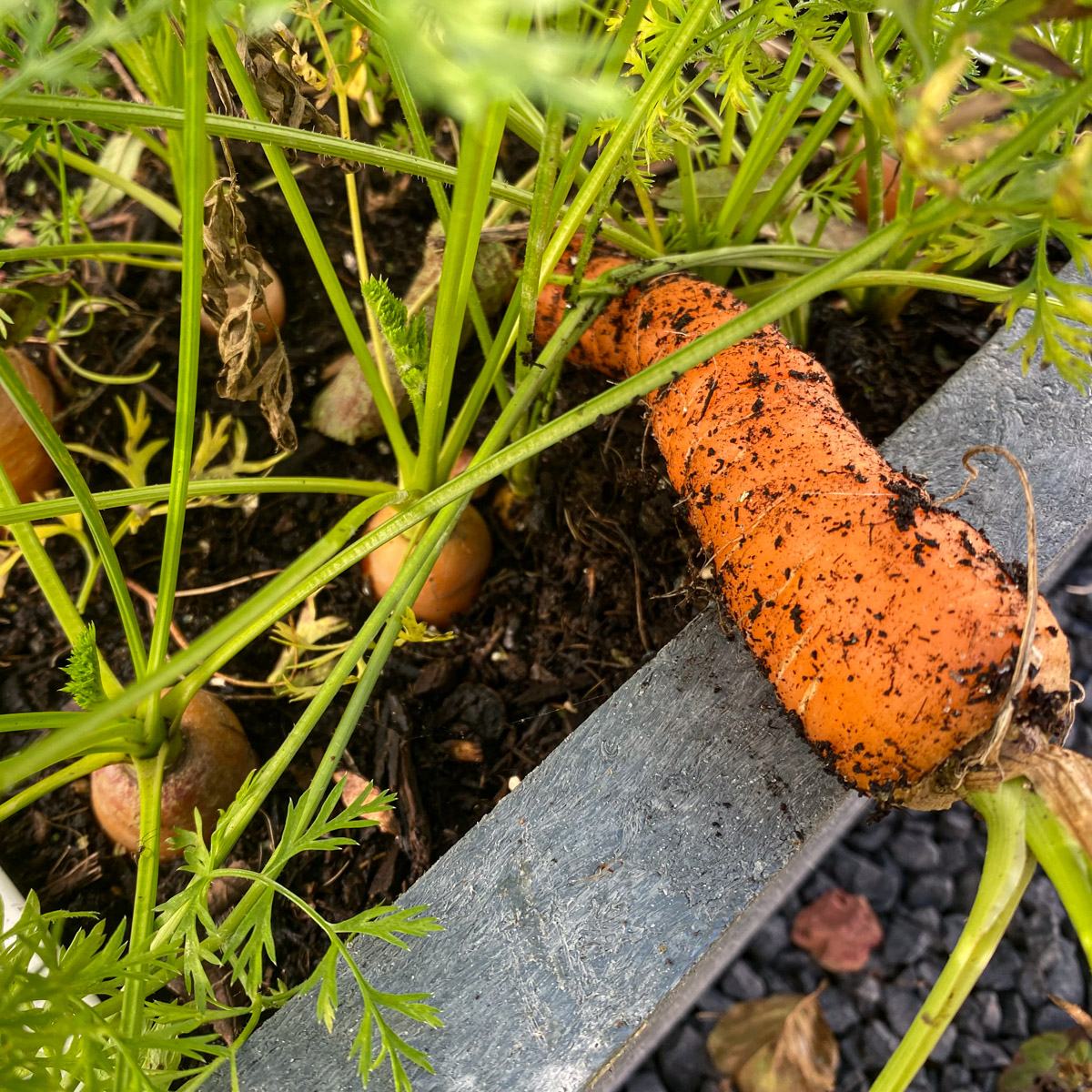
Carrots
For carrots the same applies: they stay better in your container than in the fridge.
But beware: if there are already larvae of the carrot fly in the carrot, they can survive the winter. So to avoid them the next year, you should harvest the carrots before the new year.
For carrots the same applies: they stay better in your container than in the fridge.
But beware: if there are already larvae of the carrot fly in the carrot, they can survive the winter. So to avoid them the next year, you should harvest the carrots before the new year.
Covering up helps
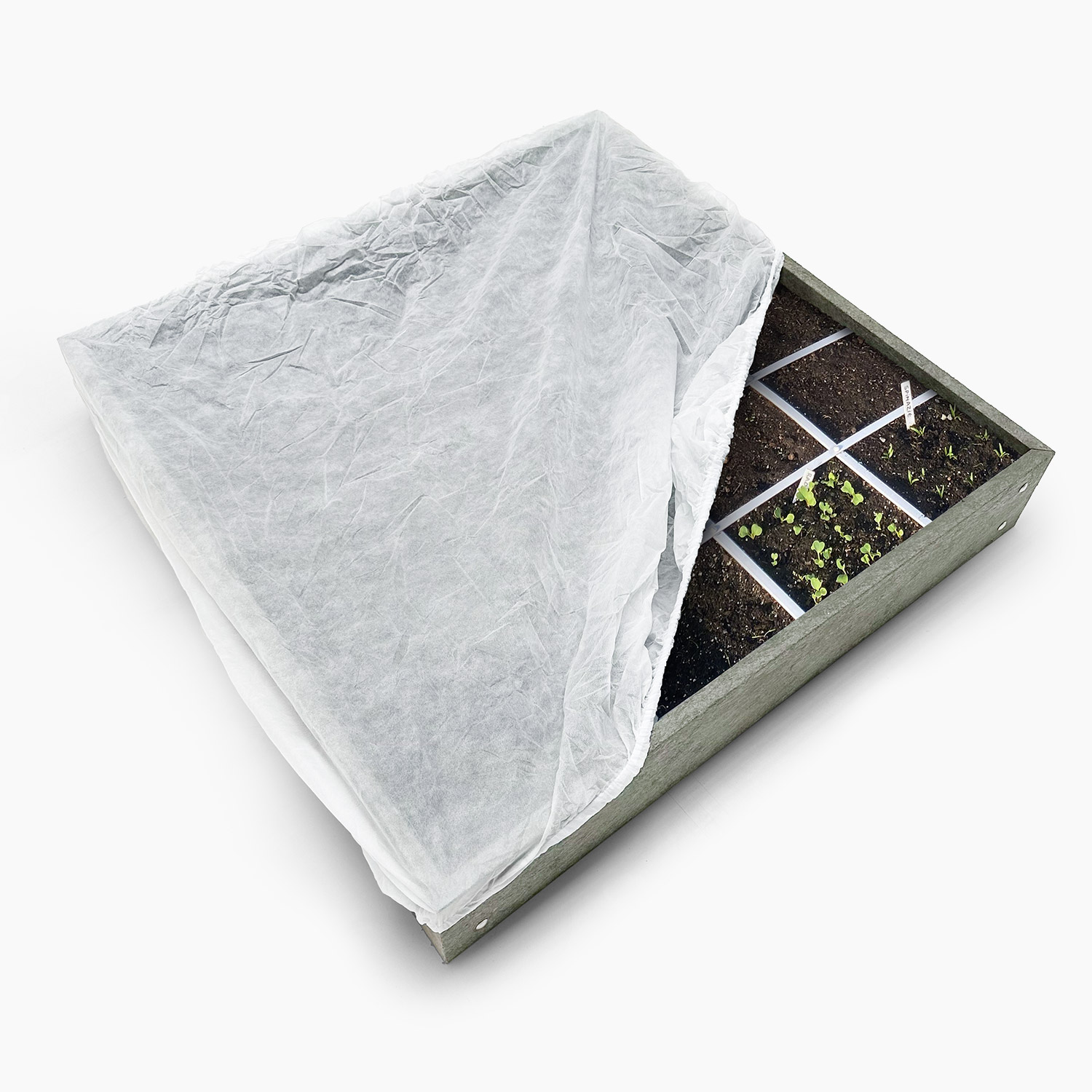
None of these vegetables grows much, if at all, during winter. The same applies to the October seedlings.
They do better when protected by an MM cover. It protects them from rain, snow, and the worst of the cold, as well as from birds.
Sarah made a wonderful video about it:
They do better when protected by an MM cover. It protects them from rain, snow, and the worst of the cold, as well as from birds.
Sarah made a wonderful video about it:
And the mix in your raised beds? What do you do with that?
Nothing. I simply leave it as it is. You never need to dig it over.
In spring, I top up the raised bed with a bag of fresh mix if necessary. I also add some plant food, turn everything over thoroughly, and the raised bed is ready for sowing again.
To sum it up
Now you know everything about preparing a Makkelijke Moestuin for winter.
In summary:
- harvest and empty as much as possible
- remove old plants
- remove any windblown weeds
- tidy everything up
Not much to it, is there?
In fact, if you do not feel like it and leave everything as it is, no real harm is done. You will simply have a little more work in spring.
But tidy raised beds do look nicer, don't they?
In fact, if you do not feel like it and leave everything as it is, no real harm is done. You will simply have a little more work in spring.
But tidy raised beds do look nicer, don't they?
Good luck!