How much space do you need for a Makkelijke Moestuin?
Makkelijke Moestuin raised beds give you a generous harvest from a small area. That's because your plants grow in 30 x 30 cm squares and get exactly what they need.
You can start with just 1 m², and 5 to 10 m² is enough for a generous harvest with little work.
Today, I'll look at how much space you need for your Makkelijke Moestuin.
How many raised beds do you really need?
Minder dan je denkt 🙂
Kijk: de meeste mensen denken dat een kleine moestuin amper iets opbrengt, maar met een Makkelijke Moestuin is het tegendeel waar. Want die levert per vierkante meter 5x zoveel op als een moestuin waar de groentes in de volle grond staan of in bakken zonder vakken.
Dat komt omdat je er niet zomaar wat groentes in zet, maar werkt met een compleet systeem. En daar zijn onze bakken speciaal voor gemaakt.
Dus als jij een geschikte plek hebt gevonden waar jij één - of zelfs meerdere - moestuinbakken kunt neerzetten, welke moet je dan kiezen? En hoeveel?
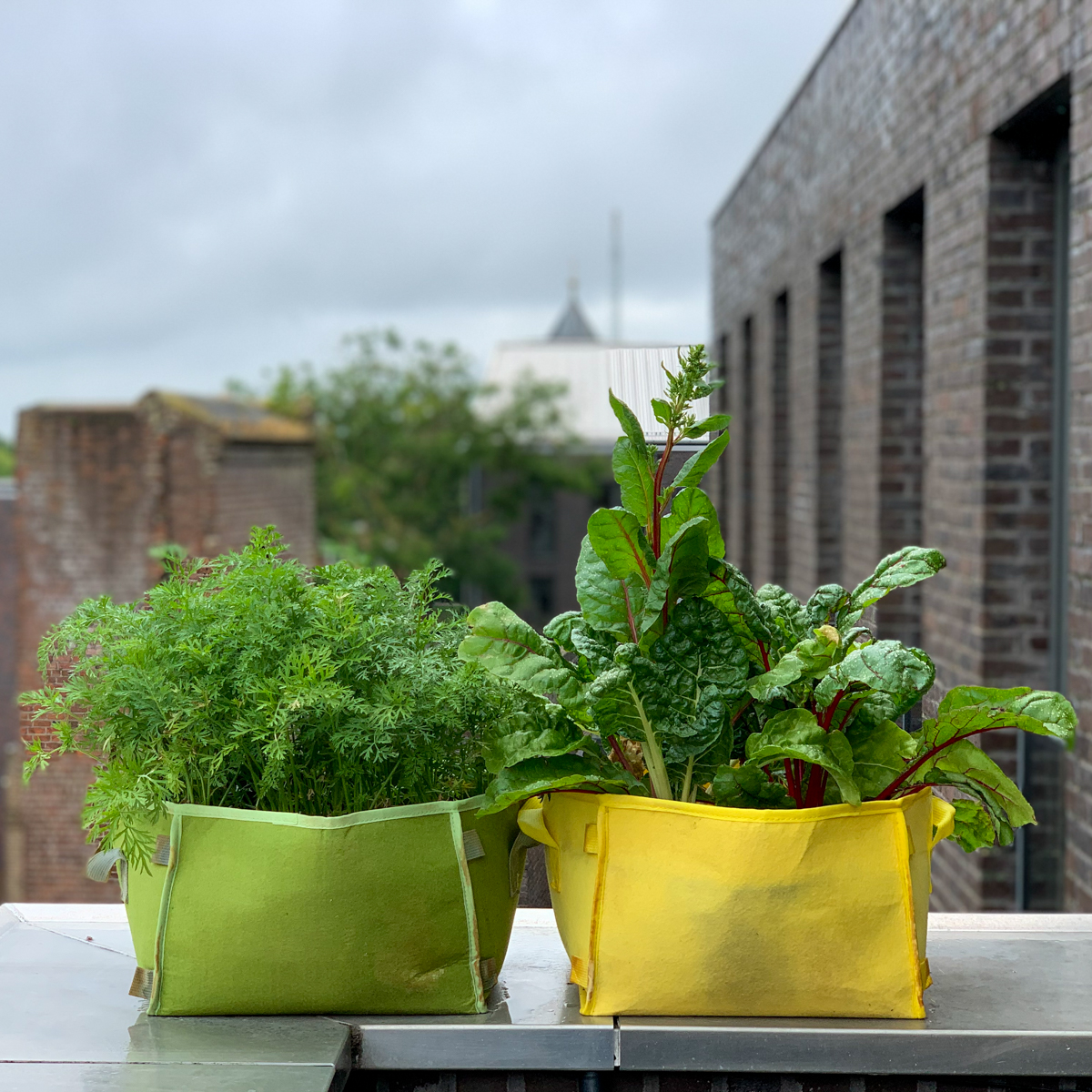
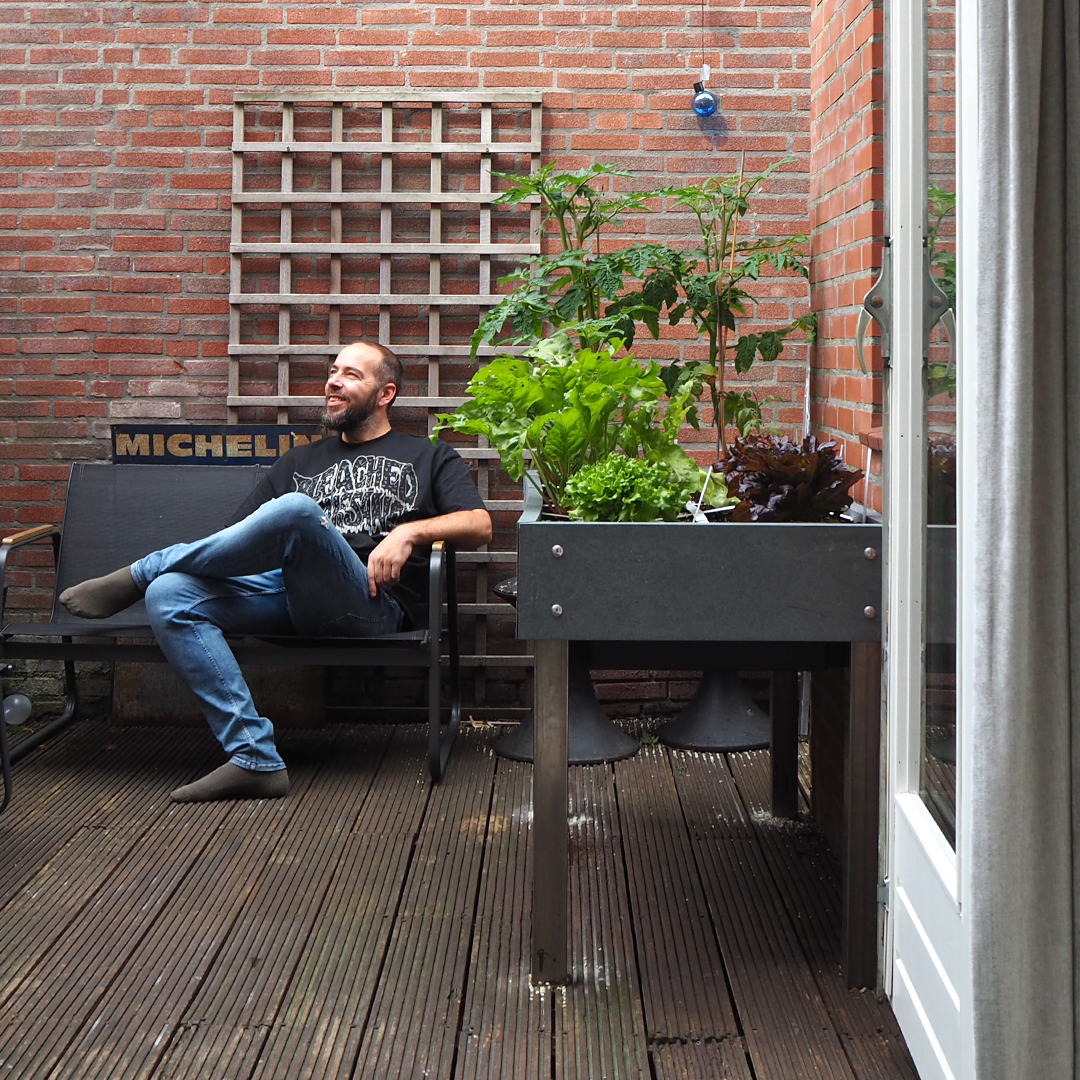
For salads and herbs: a small raised bed on legs by the kitchen door
For salads and herbs: a small raised bed on legs by the kitchen door
That largely depends on how much you want to harvest, so I'll explain a little more about that first.
How often, and how much, can you harvest from a square?
In the Makkelijke Moestuin, we sow in squares rather than rows. A single square can grow 3 or 4 different vegetables over the course of a year.
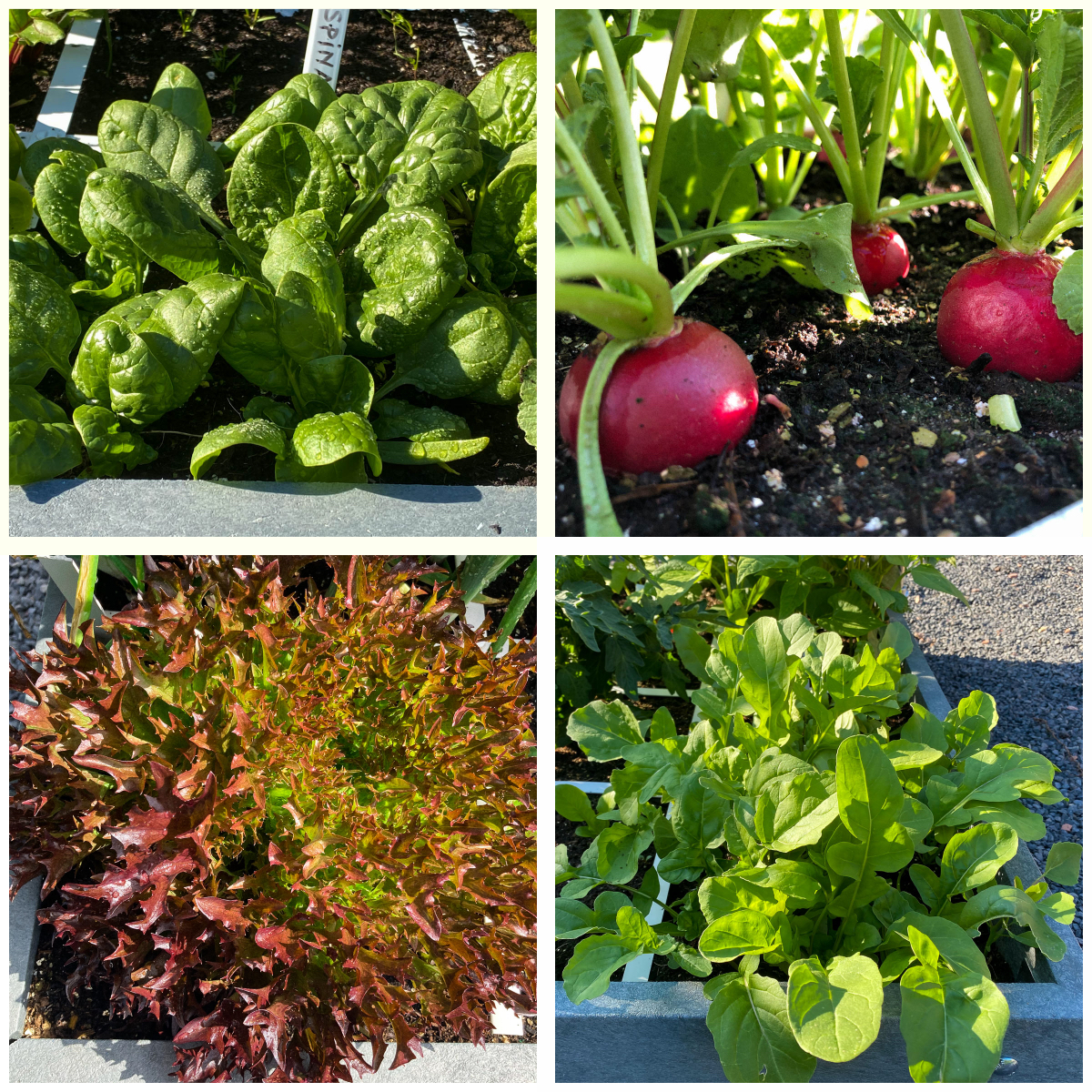
Here's an example. In early spring, you start with 9 spinach plants. Once you've harvested those, you sow 16 giant radishes. Next, you plant a lettuce you've started indoors, picking its leaves throughout summer. When that's finished, you sow 9 rocket plants in the square and harvest them until winter.
You can harvest four different vegetables a year from a single square in a Makkelijke Moestuin raised bed.
Even if you start with just one or two single-square MM-minis measuring 30 x 30 cm, you can already harvest quite a bit.
You'll be using the MM system and can try out vegetable gardening to see whether you enjoy it.
That's enough to supply 1 or 2 adults with fresh salad throughout the season, complete with herbs, tomatoes, cucumbers, carrots and beetroot.
If you keep growing through winter, you can add winter purslane and Tuscan or curly kale.
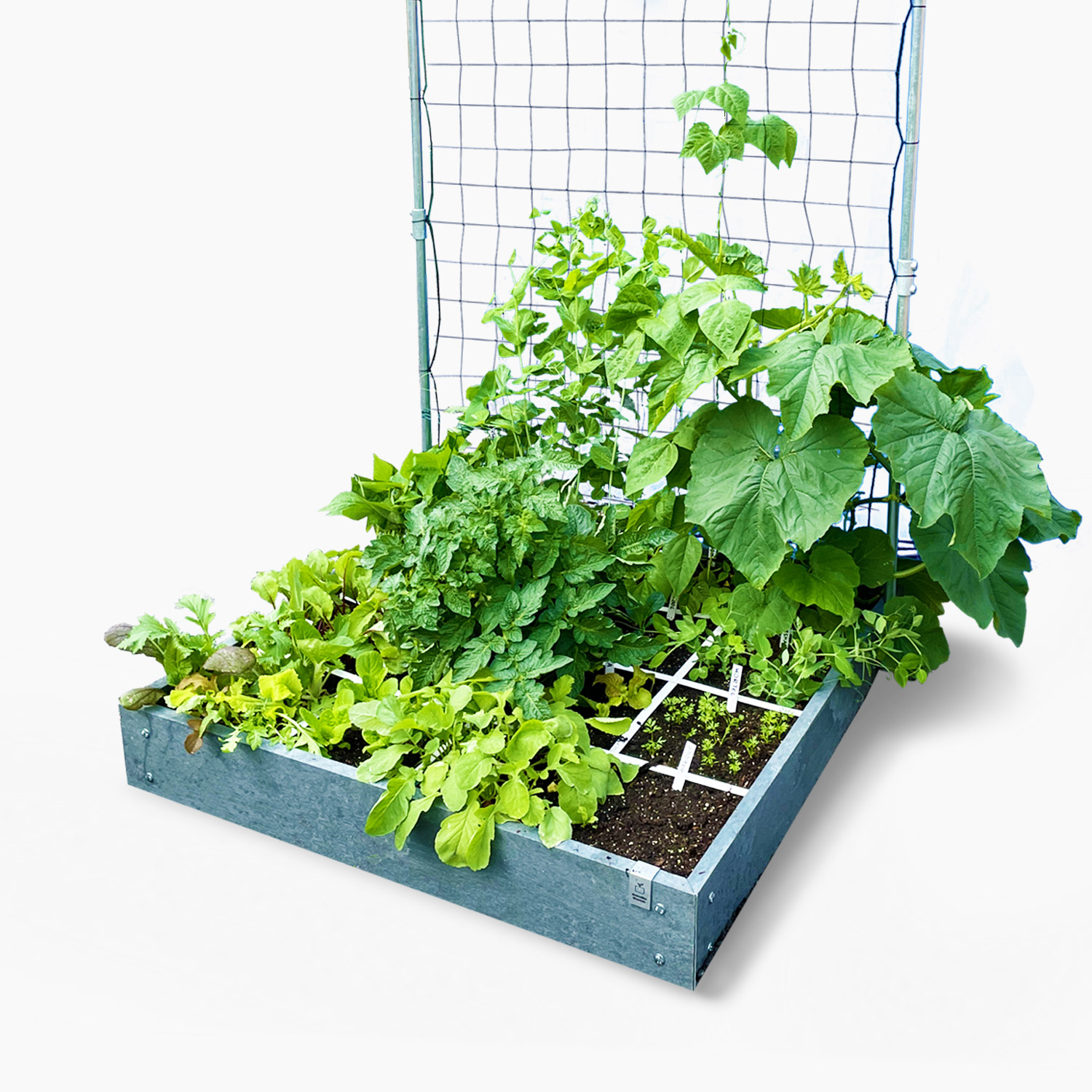
A 16-square MM-hero raised bed with a trellis
More raised beds, more to harvest
Hoe meer bakken je neerzet, hoe meer vakken je kunt inzaaien en hoe meer je kunt oogsten. Terwijl je nog steeds niet veel ruimte nodig hebt.
Met vier 16-vaks bakken (64 vakken) oogst je genoeg groentes voor een groot gezin.
En wil je helemaal losgaan, dan zet je er nog een paar bakken bij en oogst je ruim voldoende om het hele jaar zelfvoorzienend te zijn, in te vriezen en in te maken, en uit te delen aan familie en vrienden.
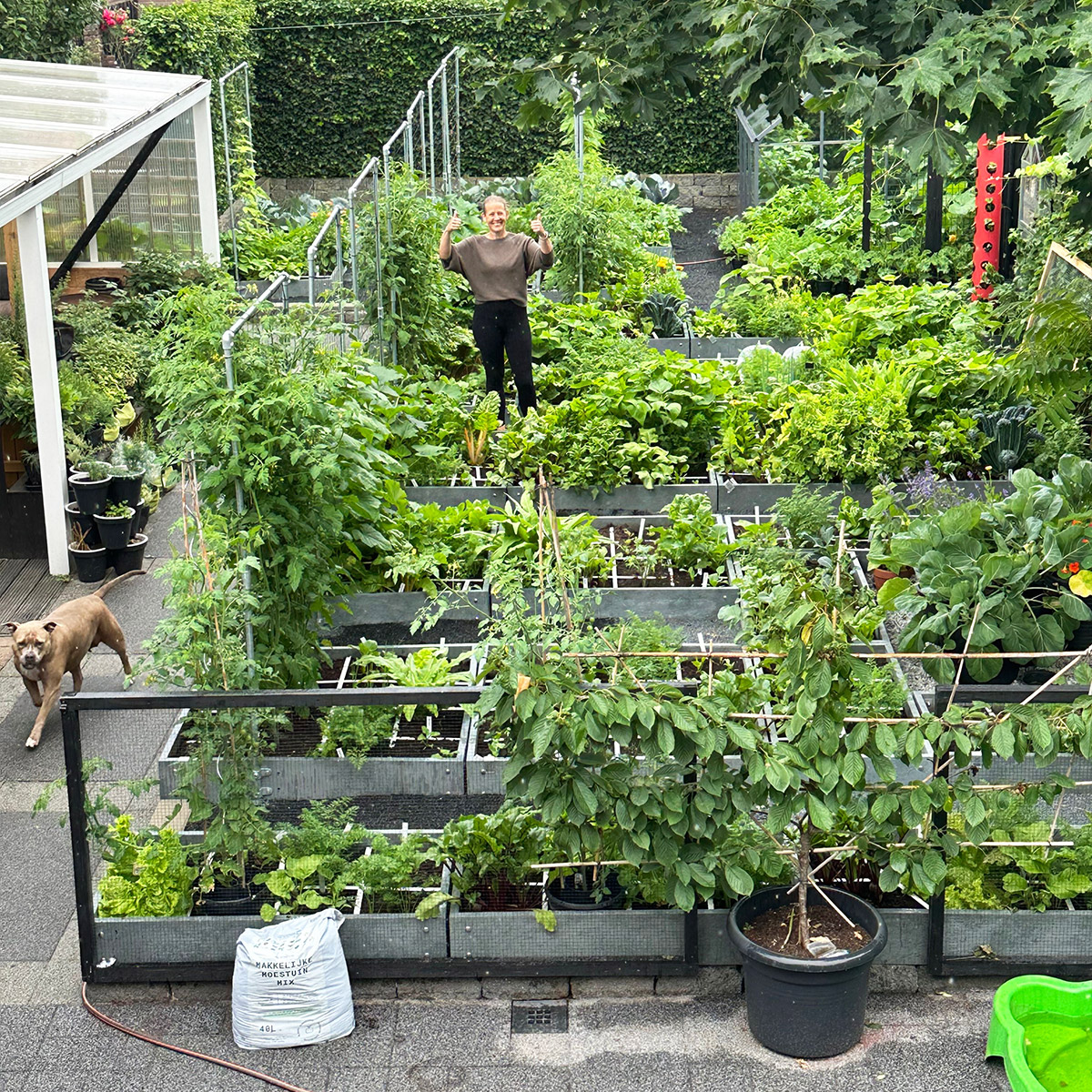
We regularly share the harvest from our demonstration garden in Den Andel.
We regularly share the harvest from our demonstration garden in Den Andel.
My advice? Start small
If you plant a raised bed well from the start and keep doing so throughout the year, you can harvest a lot from it.
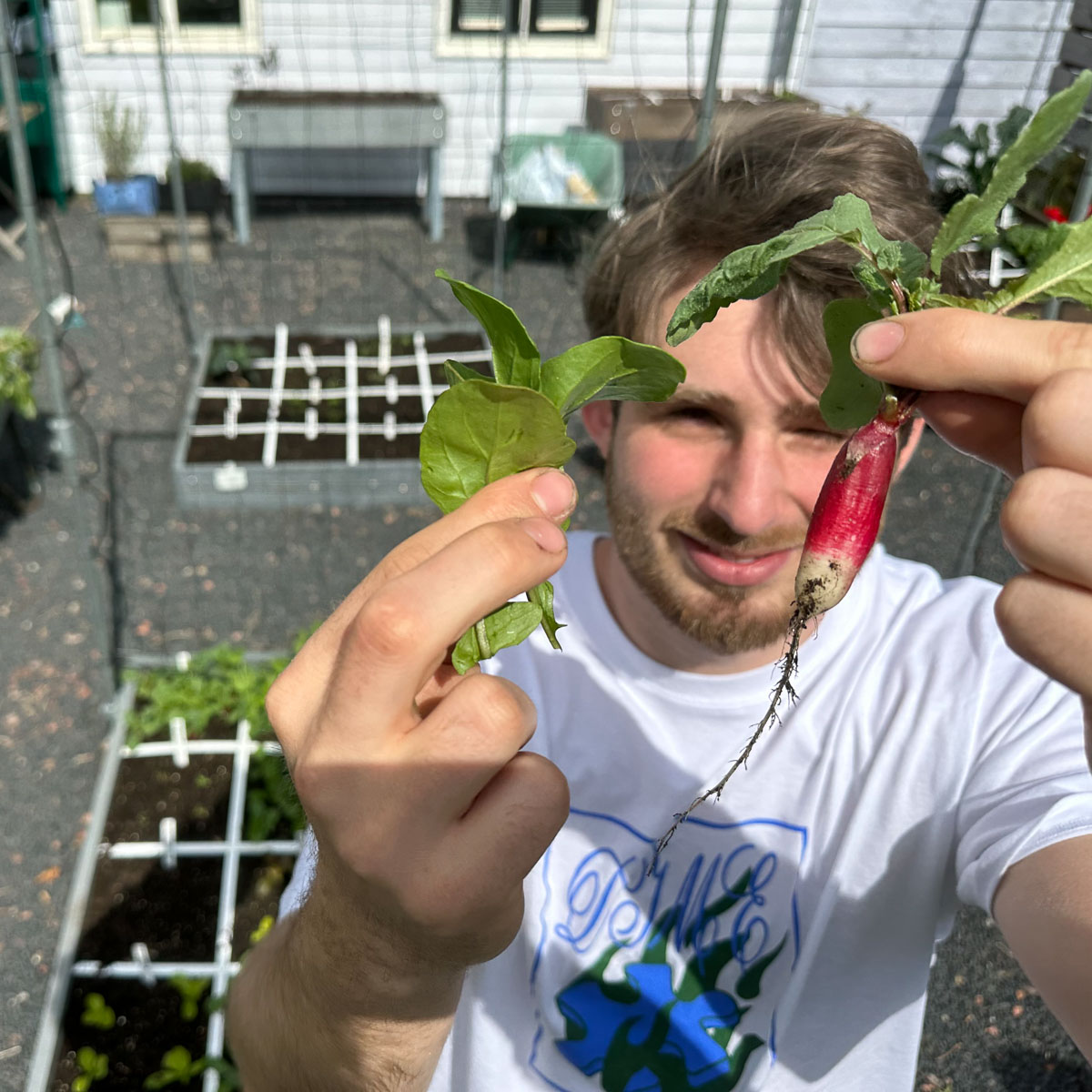
In 2023, I couldn't harvest the first radish until late April.
The risk of having too many raised beds
People often get so enthusiastic that they start big straight away. Of course, that can work well and be great fun.
We did exactly that ourselves:
Our first raised beds in Den Andel
But we soon discovered that you can have too many raised beds.
It wasn't because they were too much work. Looking after our 16 beds only took us a couple of hours a week.
But if you have more raised beds than you need, it's easy to stop giving them enough attention. You no longer follow the system, sow vegetables here and there, and don't refill squares as soon as you've harvested them.
Those beds produced less than half of what they could have.
Another reason to start small
If you put in one raised bed and decide at the end of the year that vegetable gardening isn't for you, it's easy to remove. Start with 12 beds and it's a different story: a waste of materials.
You can also easily add a few MM-minis during that first year. They're ideal for plants you'd still like to grow but don't quite have room for.
You can always add more raised beds later.
MM-minis are a useful addition
Real-life examples
Trial beds in Den Andel
In Den Andel, we're always testing something, whether it's different vegetables, the mix or the water reservoirs.
We usually use our smallest raised beds for this. They have four squares and take up less than 1 m²:
Four-square MM-bamboo raised beds in Den Andel
A small city balcony
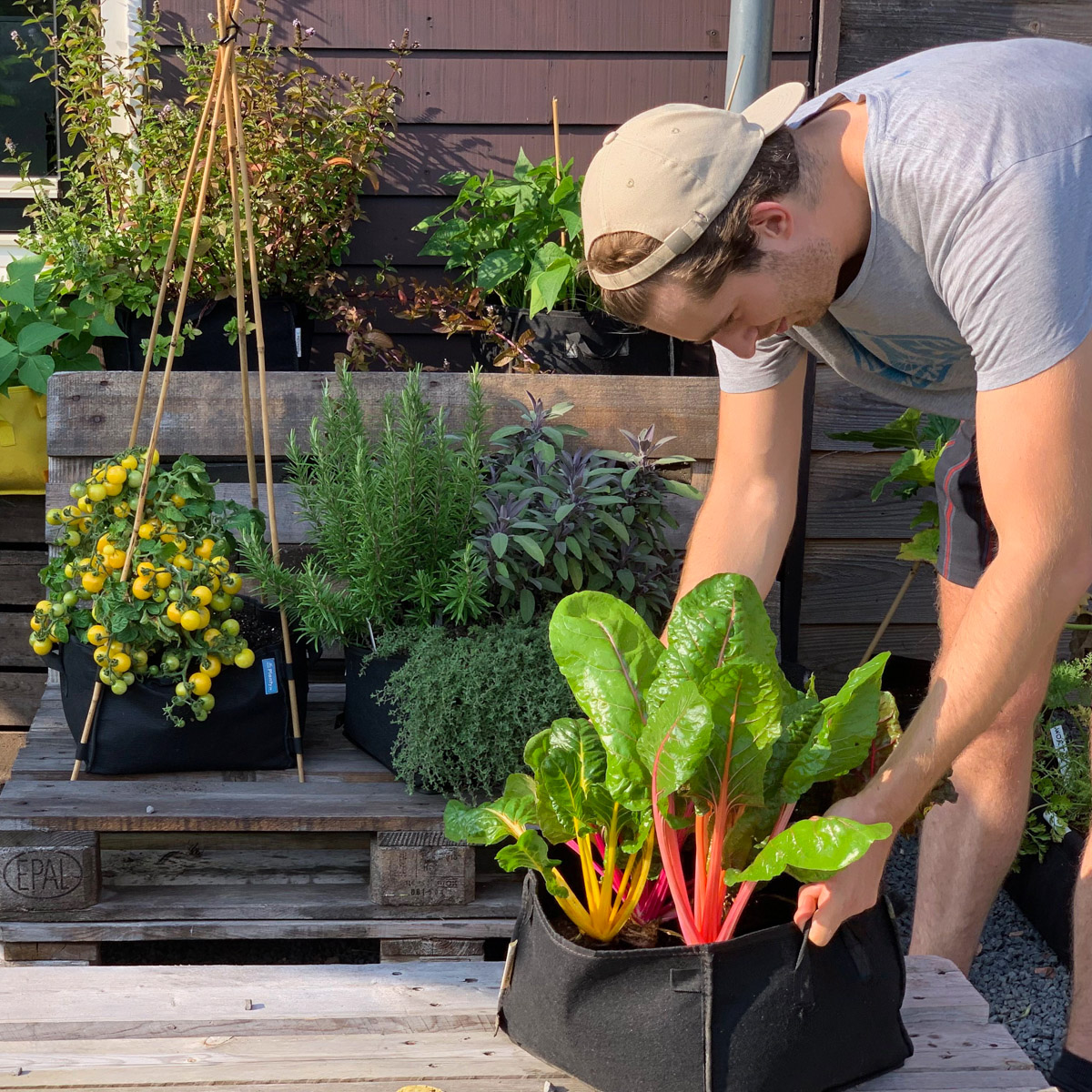
Nathan lives in the centre of Groningen. Most of his balcony is in shade, but a small spot gets just enough sun, even for tomatoes.
Since last year, he's had an 8-square MM-hero raised bed on legs there. It needs about 1.5 m²: 1 m² for the bed itself and another half a square metre as working space.
Nathan is still amazed by how much he harvested from that small bed.
Even on a small balcony, an 8-square raised bed can give you a generous harvest.
The back garden of a new-build home
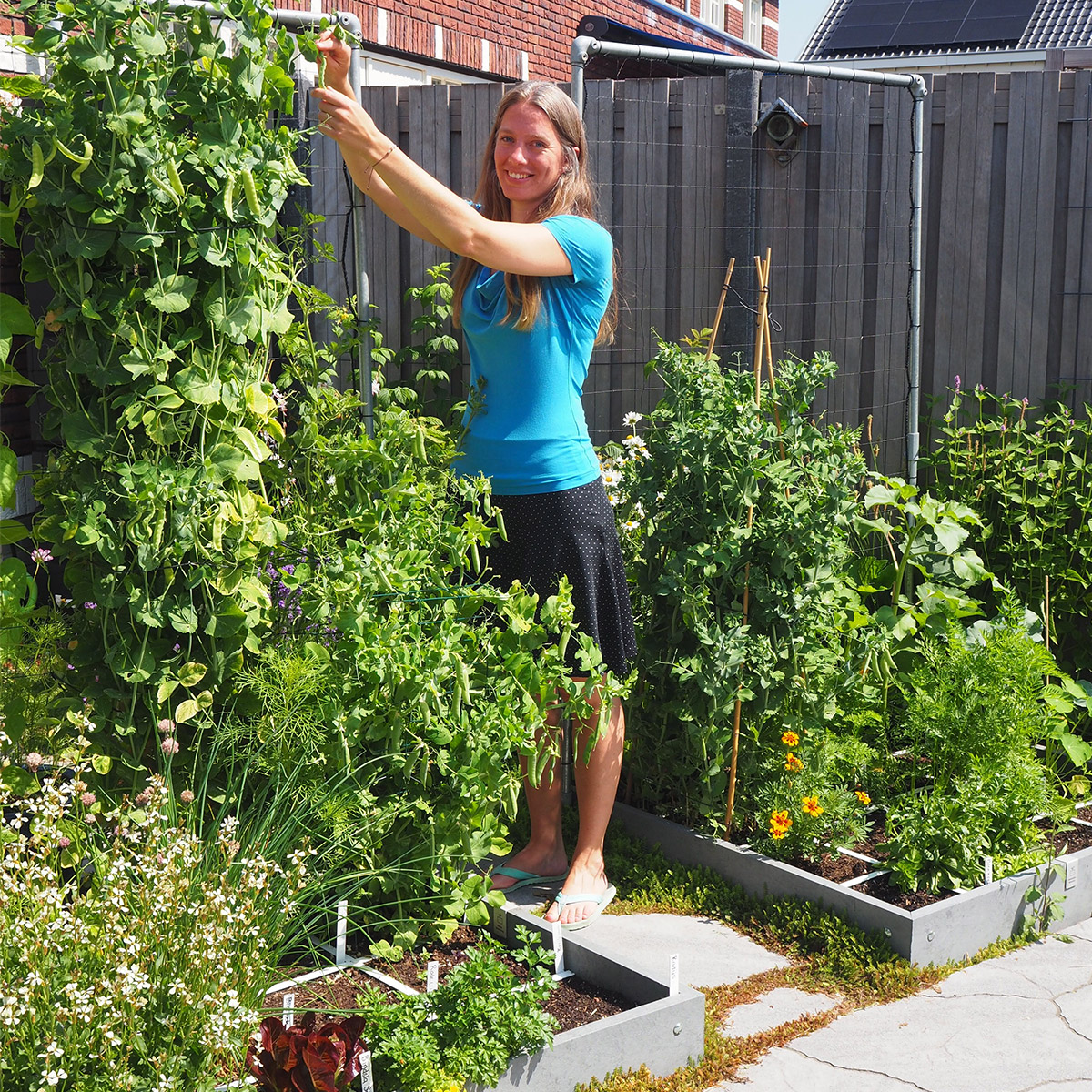
Moesmuis moved to a new home in 2024 and included a Makkelijke Moestuin in her garden plans straight away.
She put in two 16-square MM-hero raised beds with trellises and now harvests more than enough for her family all year round, in barely 5 m²:
Two large 16-square raised beds with trellises in the back garden: enough for Moesmuis's family. Moesmuis is her name in our community.
A large harvest garden
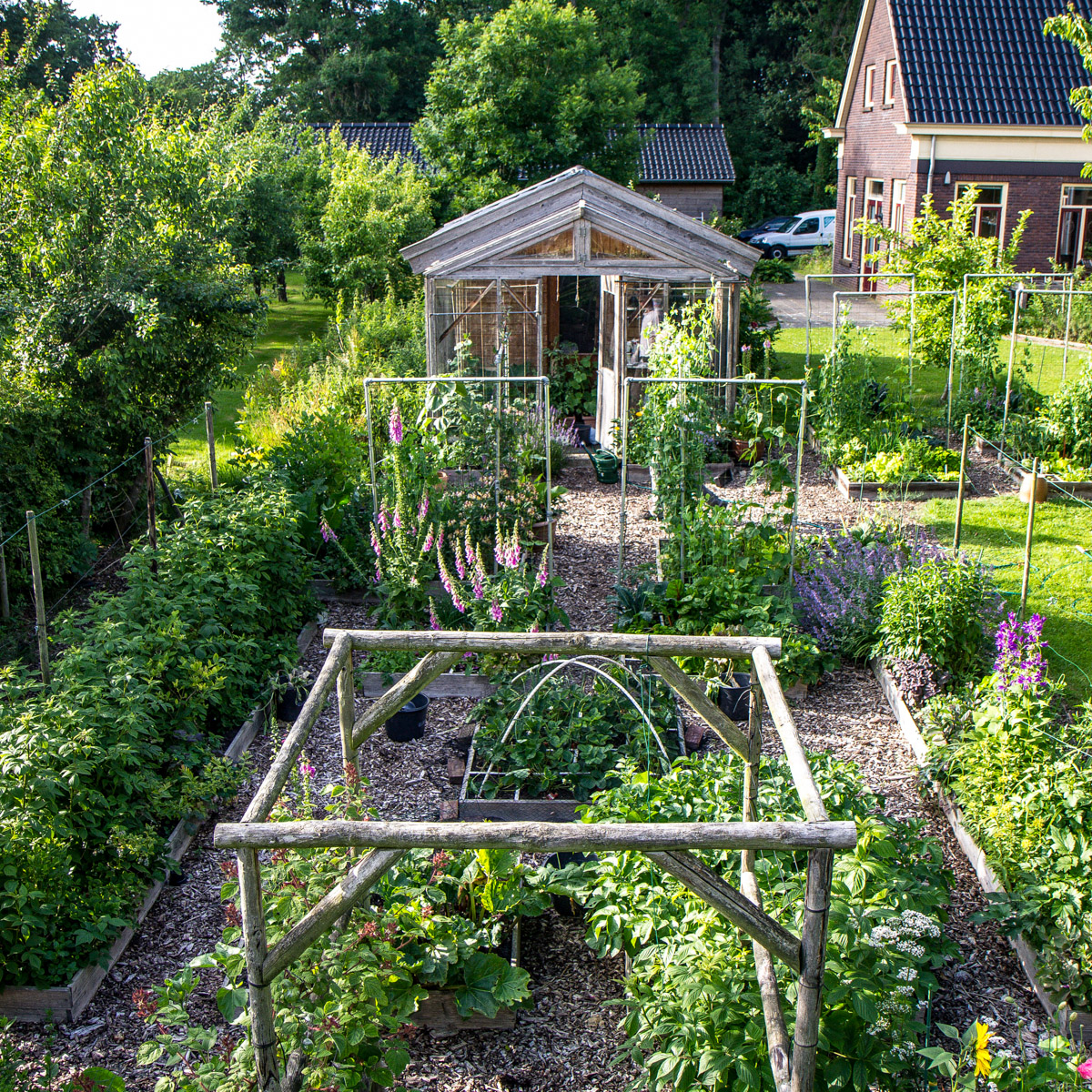
If you'd like to use the Makkelijke Moestuin commercially, you can go much bigger, with the same ease.
Groenbietje, for example, created a large harvest garden of about 50 m². She sells the vegetables and now has plenty of customers. They can pick their own vegetables from the raised beds, which they really enjoy.
Groenbietje's production garden. Groenbietje is her name in our community.
Space to walk and work
When working out how many square metres you need, allow enough room to work comfortably in the squares. It's frustrating when raised beds are right next to each other with too little space around them.
As plants grow, they always spread a little beyond the edges. With wide paths between the beds, that's no problem.
If you put two raised beds with trellises one behind the other, leave at least 90 cm between them so they don't shade each other.
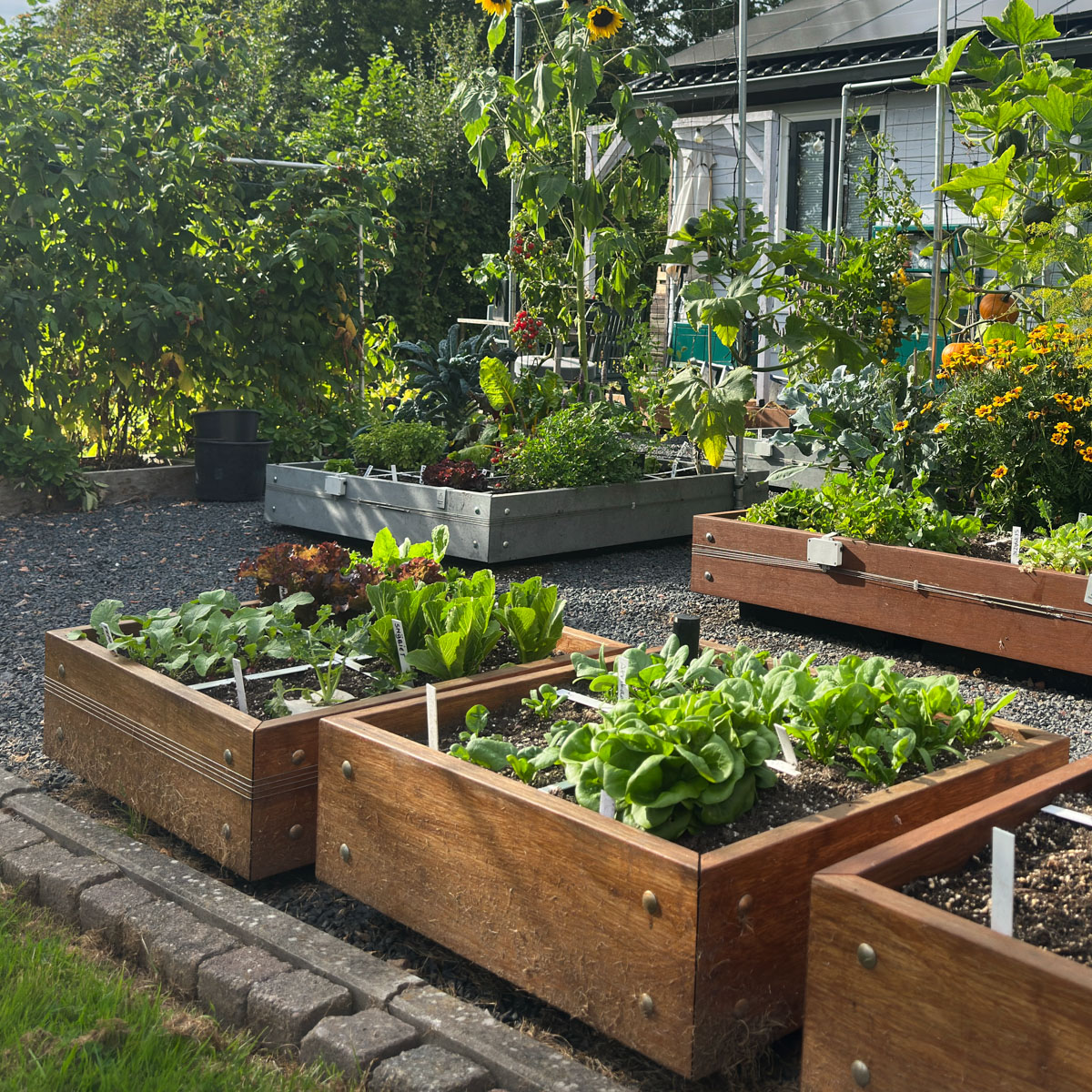
Plenty of space to walk between the raised beds, even when they're full.
Plenty of space to walk between the raised beds, even when they're full.
That's all for today
The next blog is about our way of sowing.
I'll show you how we grow as many different vegetables as possible in a single raised bed, what the benefits are, and why this helps you make the most of your beds.